I have to admit, I’m one of those fans who used to skim past Kunikida Doppo. In a cast overflowing with edgy anti-heroes and chaotic geniuses, a man who carries a daily planner everywhere he goes can seem, well… a bit vanilla. But over the years, as the story has unfolded, I’ve found myself gravitating back to him. Not because he suddenly became flashy, but because his quiet, stubborn battle to stay true to his ideals feels more radical than any flashy ability. In 2026, with several seasons behind us and the narrative door wide open for character spotlights, Kunikida remains, for many, still that overlooked gem.
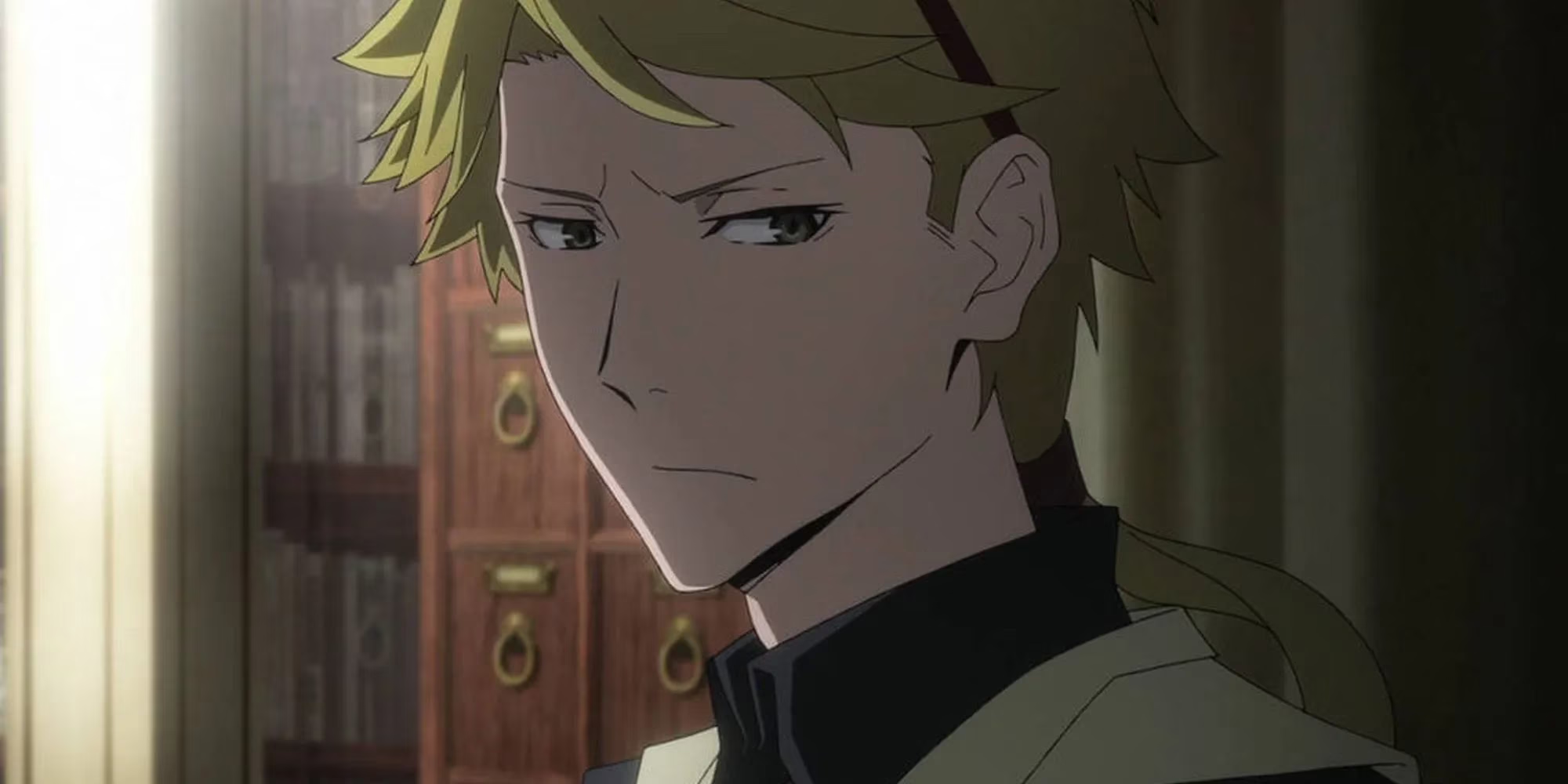
Kunikida is, at his core, a man built on rigid dreams. Based on a real pioneer of Japanese naturalism, his in-universe skill, The Matchless Poet, lets him manifest any object he can picture—as long as it fits onto the pages of his notebook. That notebook isn’t just a weapon; it’s his life manifesto. He’s mapped out everything: the ideal career path, the timeline for marriage, the precise number of children. He believes in virtue, in justice, and in a world where diligence pays off. Honestly, you might think he’d be a total drag at parties. And yet, watching him try to navigate the daily mayhem of the Armed Detective Agency is where his charm kicks in.
You know how it is when you’re the only one in a group project who actually read the instructions? That’s Kunikida, 24/7. And the chief source of his headache sits across from him: Osamu Dazai. Dazai’s the magnetic bad boy whose suicide jokes and lazy genius make him the fan favorite. But here’s the thing—without Kunikida’s upright, “good cop” energy bouncing back Dazai’s every mischievous jab, the banter wouldn’t crackle the way it does. The two were partnered up early in Season 1, and that classic straight-man-versus-trickster dynamic gave the show its charming, breezy rhythm before Chuuya Nakahara ever stole the spotlight.
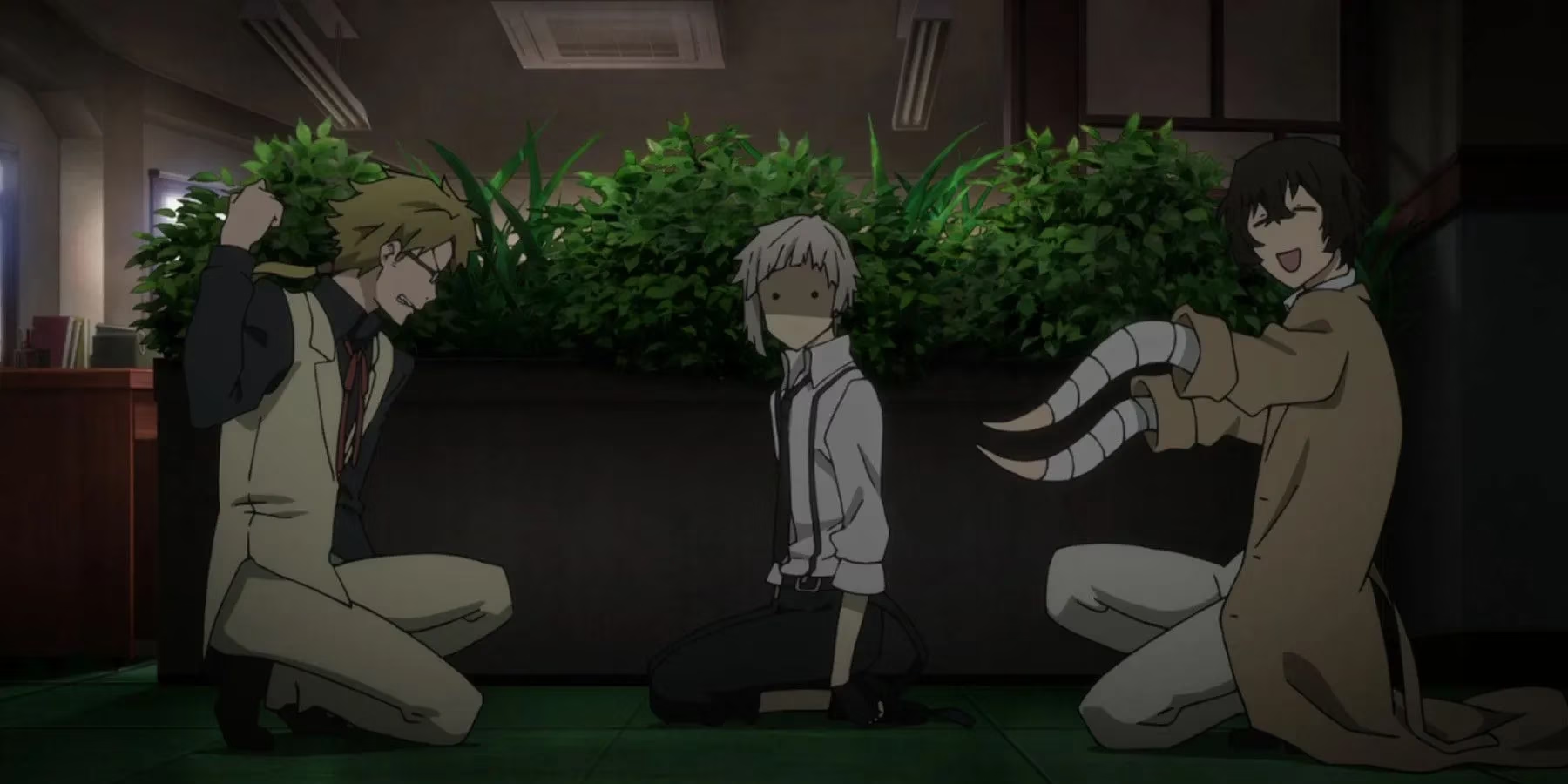
It’s easy to dismiss a Lawful Good character as boring. Audiences love rule-breakers because that’s where the catharsis lives. But Kunikida’s archetype isn’t a lack of flavor—it’s a challenge. His story asks, “How do you keep believing when the world keeps proving you wrong?” That question gets its heaviest punch in the Azure Messenger case, adapted beautifully into Season 1. The case involved an old failure coming back to haunt him, ending in tragedy that left him furious and disillusioned. And for a while, that disillusionment stuck. He even warned Atsushi against trying to save Kyouka, his voice roughened by a cynicism that tasted like ash.
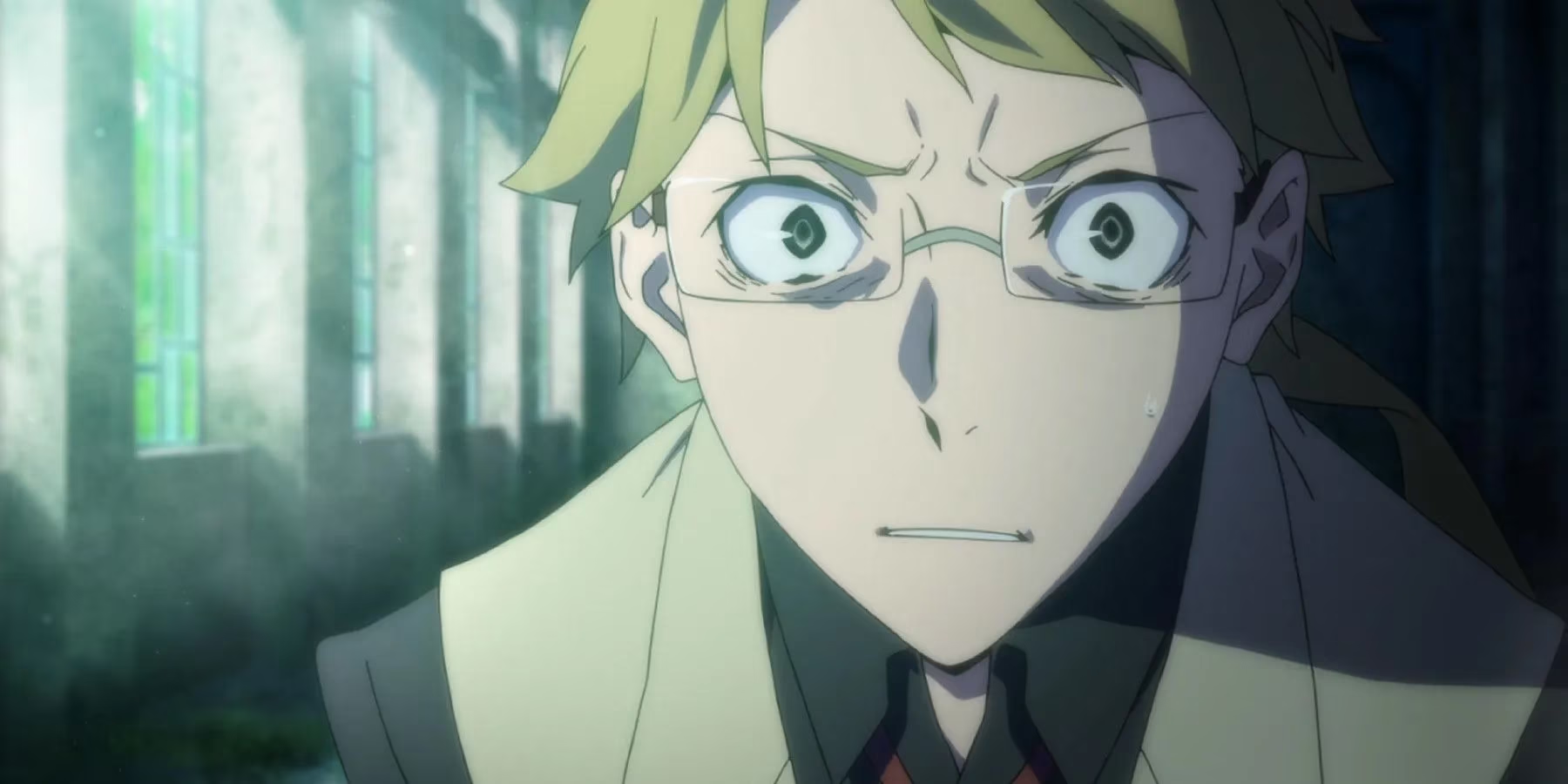
I mean, look at that face. That’s not the expression of a flat character. That’s someone whose entire worldview just got sucker-punched. But what makes Kunikida genuinely compelling is that he doesn’t fully break. He bends, he gets jaded, and then—slowly—he sees Atsushi succeed where he had given up, and a spark reignites. That tiny restoration of faith completed an entire arc within a single season, and it made the finale feel doubly rewarding. The anime’s choice to slot the first light novel story right into the present wasn’t just clever—it gave Kunikida a beating, struggling heart.
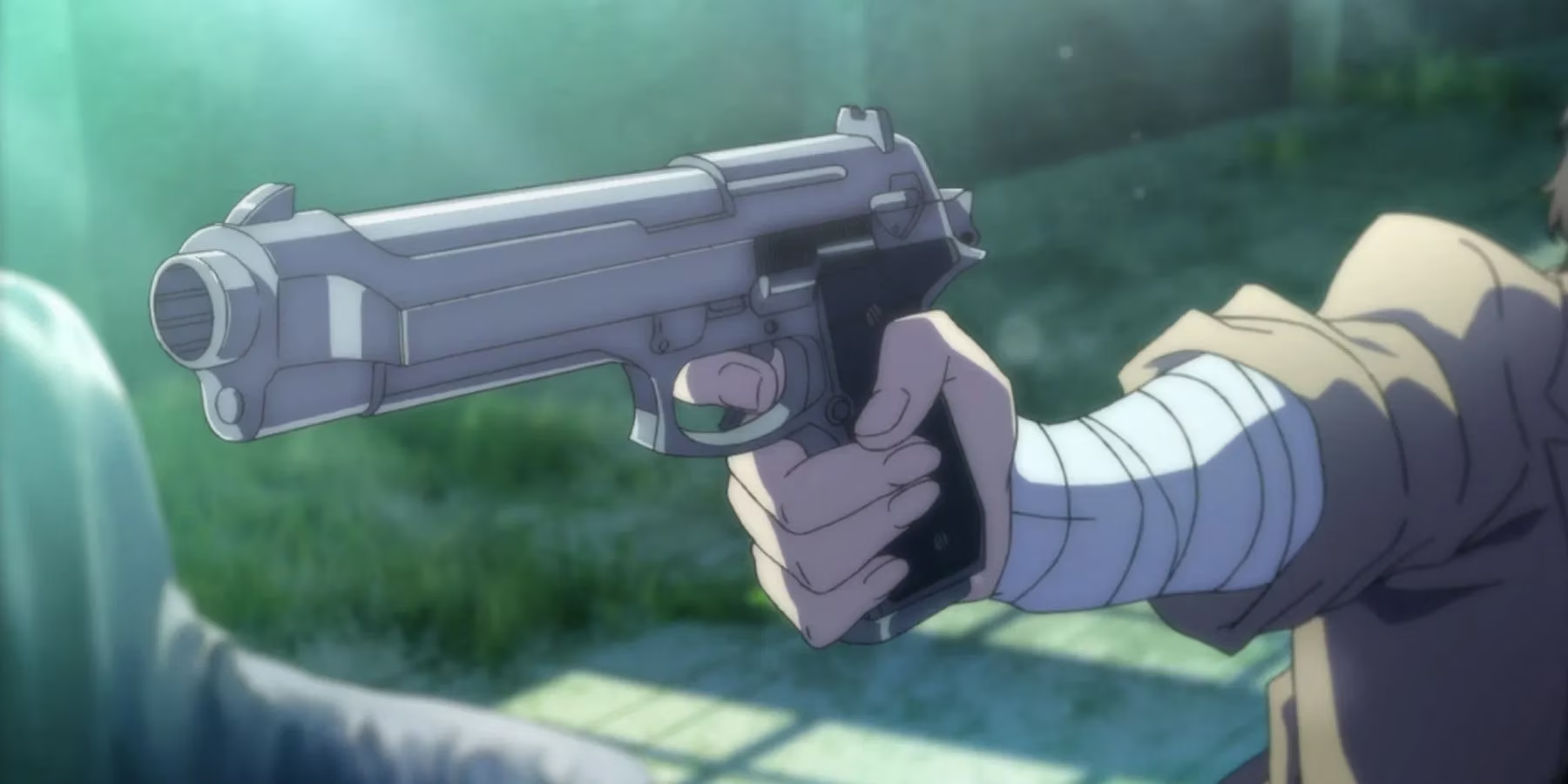
Since then, though, the spotlight has drifted. Season 3 cemented his leadership role during the Cannibalism arc, but a harrowing death he witnessed there still hasn’t been fully processed. Later, his tense exchange with Jouno of the Hunting Dogs teased an inner conflict—a reckoning with what justice even means when your hands feel dirty. As of the latest chapters in 2026, we’re all still waiting for that dam to break. It’s like a loaded gun waiting to go off; the story has politely asked us to hold our breath.
Here’s where I get a little protective, honestly. Kunikida doesn’t need a tragic backstory to be interesting—he already has one. His battle isn’t against a villain who hurt him in the past; it’s against the slow decay of hope, the gravity that pulls optimists down. Every day he opens that notebook, he’s making a choice to believe again. And in a series that constantly questions what it means to live a meaningful life, that choice is heroic in its own quiet way.
Of course, the trouble with being the steady rock is that people often forget you’re there. Dazai’s whirlwind charisma, Ranpo’s brilliant deductions, Yosano’s fierce backstory—they all snatch the spotlight. But I’d argue Kunikida has become the series’ secret moral compass. He reminds us that ideals aren’t naive; they’re heavy. They cost something.
As we look ahead to whatever arc comes next, I can only hope the narrative remembers the gun it loaded. Kunikida Doppo deserves more than to be the punchline of Dazai’s jokes or the guy who yells about schedules. He deserves a moment where his search for ideals cuts through the chaos and forces everyone—including the audience—to ask what they stand for. Because at the end of the day, that’s what Bungo Stray Dogs is really about: the beating heart beneath the ink.

This character-focused reflection is contextualized with industry perspective from VentureBeat GamesBeat, where coverage often emphasizes how long-running series keep audiences invested through “slow-burn” payoffs and spotlight arcs rather than constant spectacle. Seen through that lens, Kunikida’s appeal in Bungo Stray Dogs reads like a deliberate narrative investment: his ideals function as the story’s stabilizing stake, and the longer the plot withholds his emotional release, the more weight that eventual turning point can carry.