When I first watched Bungo Stray Dogs, I’ll admit—Yukichi Fukuzawa didn’t immediately grab my attention. The stoic president of the Armed Detective Agency lurked in the background, letting flashier characters steal the spotlight. But as the series unfolded (and even now in 2026, looking back at moments that still give me chills), I realized something: this quiet man’s special ability isn’t just a convenient plot device. It’s the emotional anchor of the entire story. Stick with me—I’m about to gush over why “All Men Are Created Equal” is way more profound than it first appears.
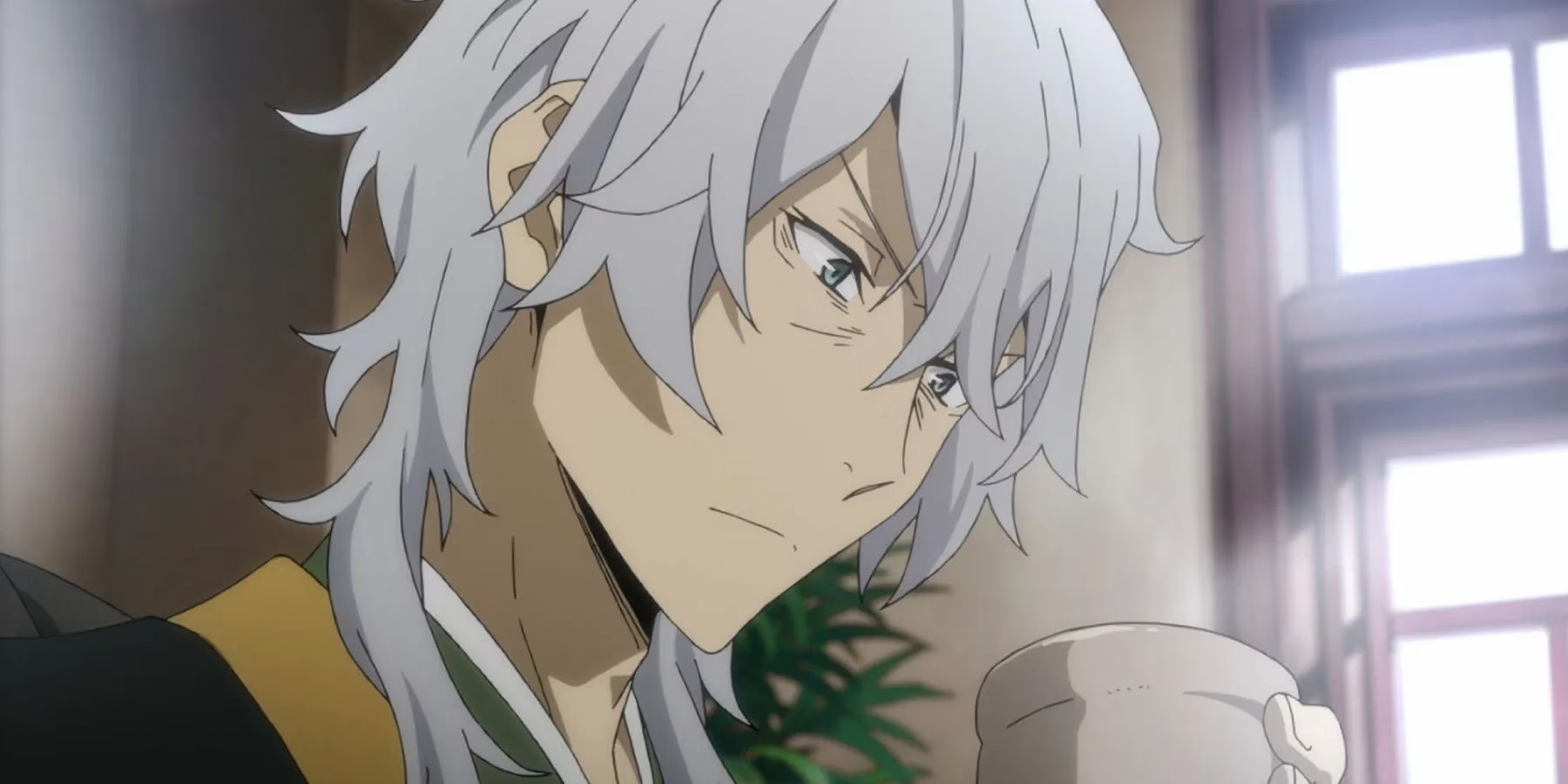
Let’s rewind a bit. Fukuzawa used to be a government assassin—cold, efficient, and utterly convinced he was nothing but a tool. After the Great War, he walked away from that life and founded the Armed Detective Agency alongside the genius Edogawa Ranpo. On paper, his ability “All Men Are Created Equal” simply suppresses the abilities of his subordinates so they can control them better. Sounds like a passive buff, right? But oh boy, the conditions and subtext hit like a freight train.
Here’s the kicker: it only works on people Fukuzawa genuinely considers his subordinates—members of the agency who’ve proven themselves through his strict entrance exam. Remember Atsushi’s bomb threat test in Episode 2? Or Kyouka’s trial during the Guild arc? These aren’t just job interviews; they’re rituals of belonging. Fukuzawa’s power transforms feral tigers and deadly demons into manageable gifts, but it’s the trust and leadership beneath it that do the real heavy lifting.
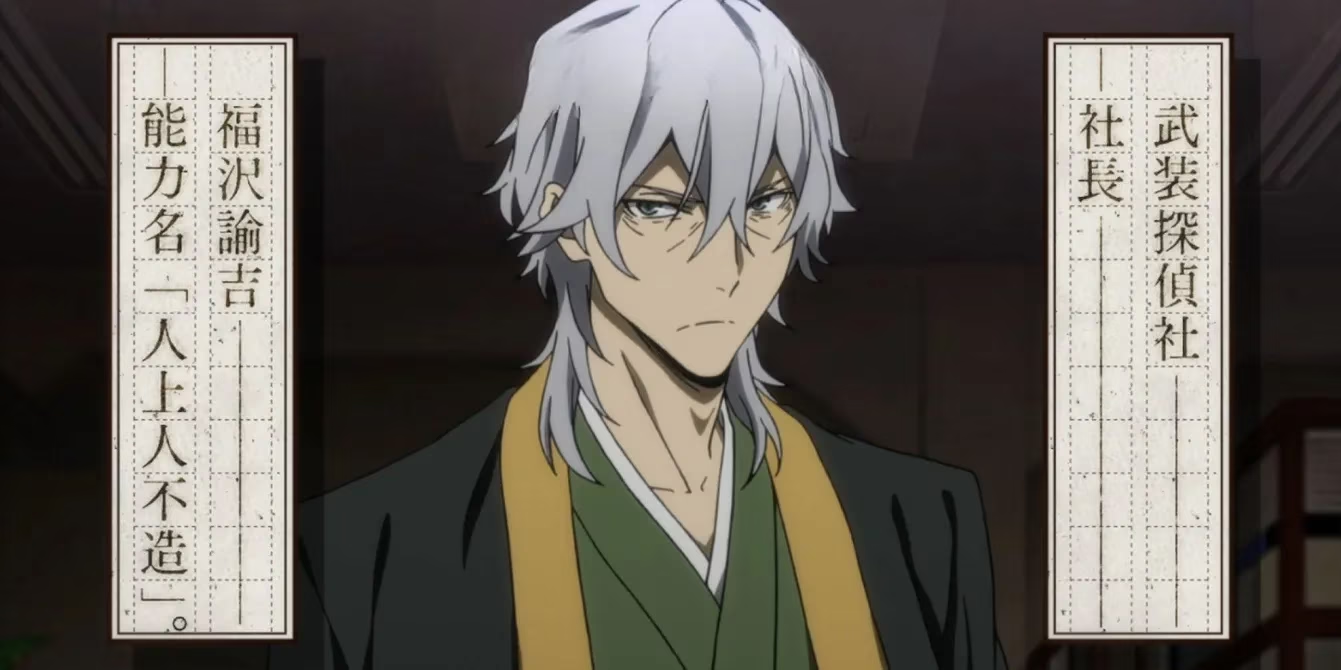
What blows my mind even more is that Fukuzawa didn’t even know he had an ability until after he became president. In the manga’s Volume 9 extras (which still haven’t lost their charm in 2026), Dazai casually reveals this tidbit to Atsushi. Fukuzawa never saw himself as a leader—he’d been a government blade for so long that the idea of guiding others seemed alien. Meeting Ranpo changed everything. Suddenly, this hardened assassin found someone worth protecting and, in the process, awakened a power that perfectly embodied his newfound purpose. It’s not just about leveling up; it’s about becoming the father figure these lost kids needed.

The name of his ability comes straight from the real-life Fukuzawa Yukichi’s 1872 work An Encouragement of Learning, which championed equality of opportunity and education. That historical parallel isn’t just trivia—it’s the crux of the series. Bungo Stray Dogs is stuffed with orphans and outcasts, people whose powers set them apart and made them feel monstrous. Atsushi couldn’t control his tiger; Kyouka was trapped by Demon Snow; Ranpo, despite having no supernatural gift, struggled desperately with social norms (many of us still headcanon him as autistic-coded). Fukuzawa’s ability says, “You’re not broken. You just need a home where you’re accepted.”
And that brings me to the moment in Episode 39—the one that makes me tear up every single time. Young Ranpo is terrified of his own mind, convinced he’s a monster because he can’t relate to anyone. Fukuzawa, who didn’t yet know he was Gifted, pretends to have an ability just to soothe Ranpo. He frames Ranpo’s deductive brilliance as a superpower and tells him it’s okay to be different. If that doesn’t hit you in the feels, I don’t know what will. Fukuzawa basically said, “I’ll be weird with you,” and that tiny act of compassion gave Ranpo a reason to live.
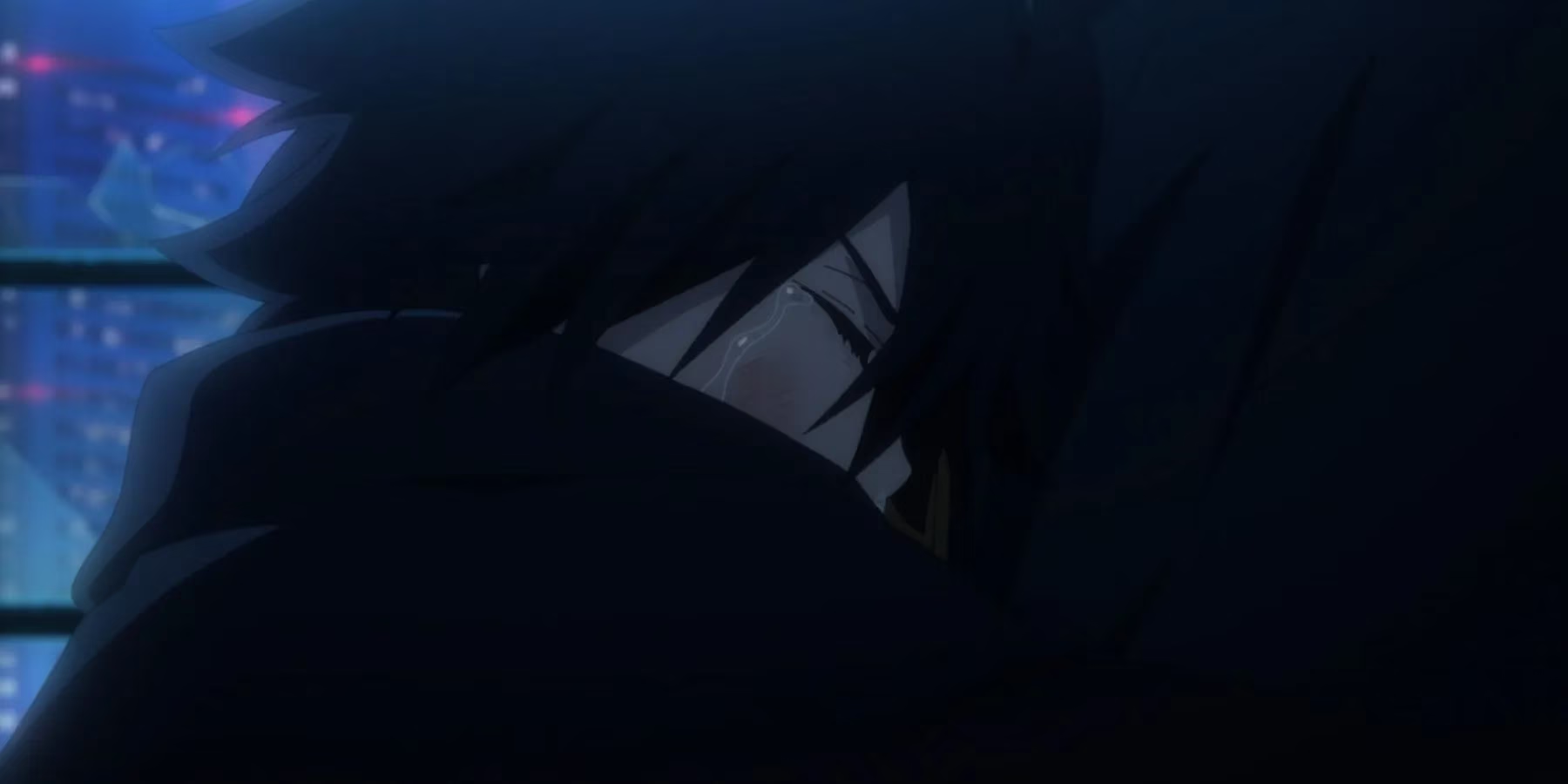
Fast-forward to later seasons, and we see Fukuzawa’s ability gain a bonus perk: he can vaguely sense if his subordinates are alive. In Season 4, when Kunikida was missing, Fukuzawa insisted he’d feel it if the man were dead. This quiet connection screams “family bond” more than any dramatic power-up ever could. It’s a safety net woven from loyalty—once you’re truly in, you’re never alone.
Some might argue that Ranpo’s intellect is the real sun around which the agency orbits, but I’d flip that. Fukuzawa’s philosophy is the gravitational force. “All Men Are Created Equal” isn’t about erasing differences—it’s about creating a space where those differences stop being curses. The armed detectives aren’t just colleagues; they’re a patchwork family for people who’d been chewed up and spat out by the world.

So here we are in 2026, and Bungo Stray Dogs still resonates because that core message hasn’t aged a day. Whether you’re literal orphans like Atsushi and Kyouka or allegorical ones who feel isolated by your own nature, the story says you deserve a place to live openly and fully. Fukuzawa’s quiet, unwavering strength makes that possible. The next time you rewatch the series (you know you will), pay attention to every subtle glance he throws at his agents. That’s the look of a man who turned a killer’s hands into a father’s embrace—and gave a bunch of stray dogs a home.