It was a drizzly Tuesday in 2026 when Leo, a lifelong gamer, scrolled through his library and realized something unsettling — he couldn’t remember the last game that made him feel truly at peace. His fingers had danced over triggers and attack buttons for years, yet a quiet part of him craved something different. Could a game without combat truly be captivating? The answer, as he soon discovered, was not just yes; it was a resounding, soul-stirring yes. In an era where blockbuster titles often measure success in body counts per minute, a parallel universe of action-adventure experiences has been thriving — worlds where the only enemy is a puzzle, the only weapon is curiosity, and the only prize is a story well told.
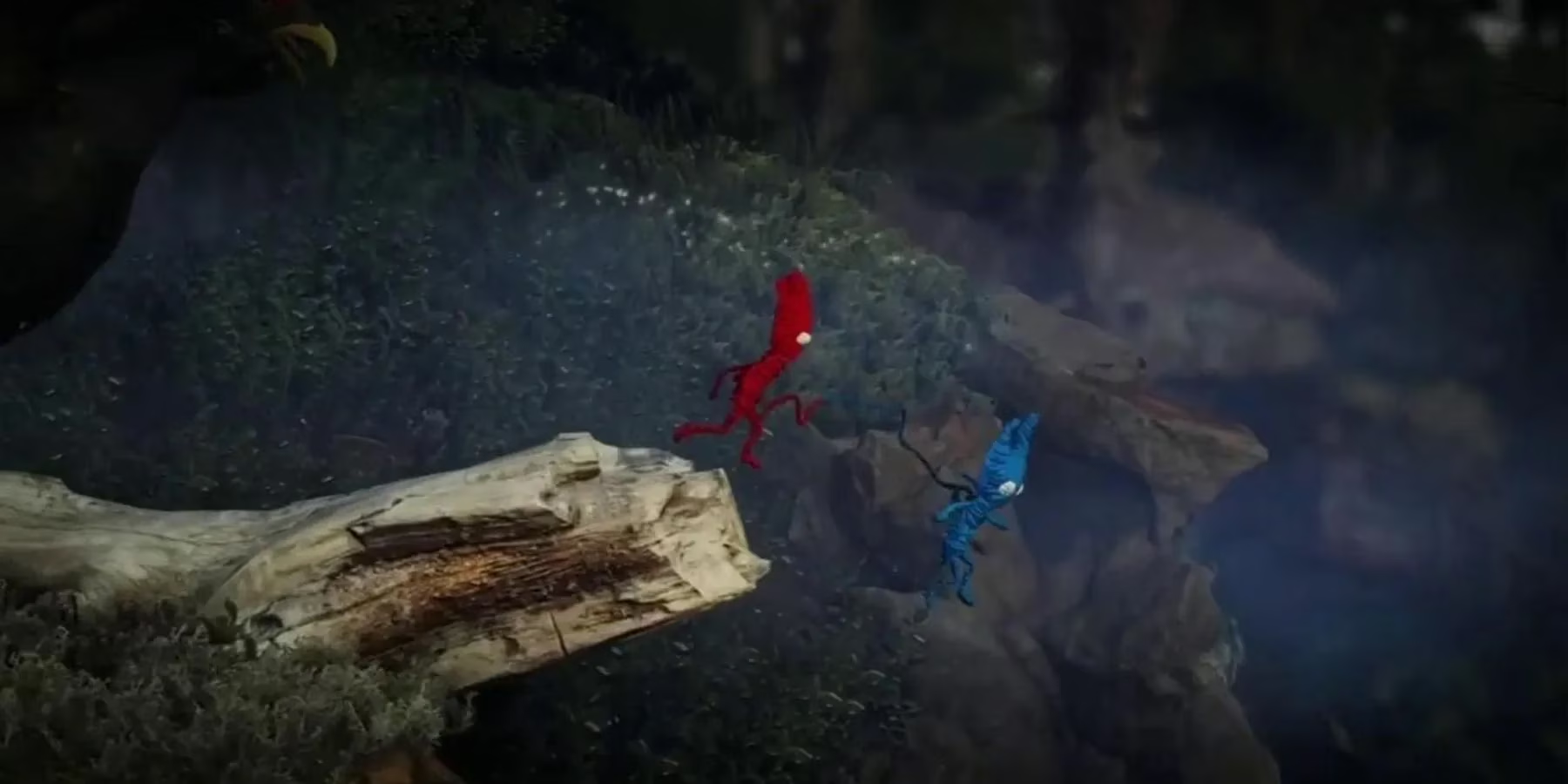
Leo’s journey began with a pair of tiny red and blue figures stumbling through a windswept forest. Unravel Two doesn’t hand its hero a sword — instead, it gives him a body of yarn and a companion to depend on. Watching the two Yarnys solve platforming puzzles by literally tying themselves together, Leo felt a surge of teamwork he hadn’t encountered since his childhood couch co-op days. Each swing across a chasm demanded synchronization, not slaughter. But could two little yarn creatures really carry a whole adventure? The answer came as he finally guided them back to their owner, his own heart tugging alongside the threads. No boss fight was needed; the connection was the victory.
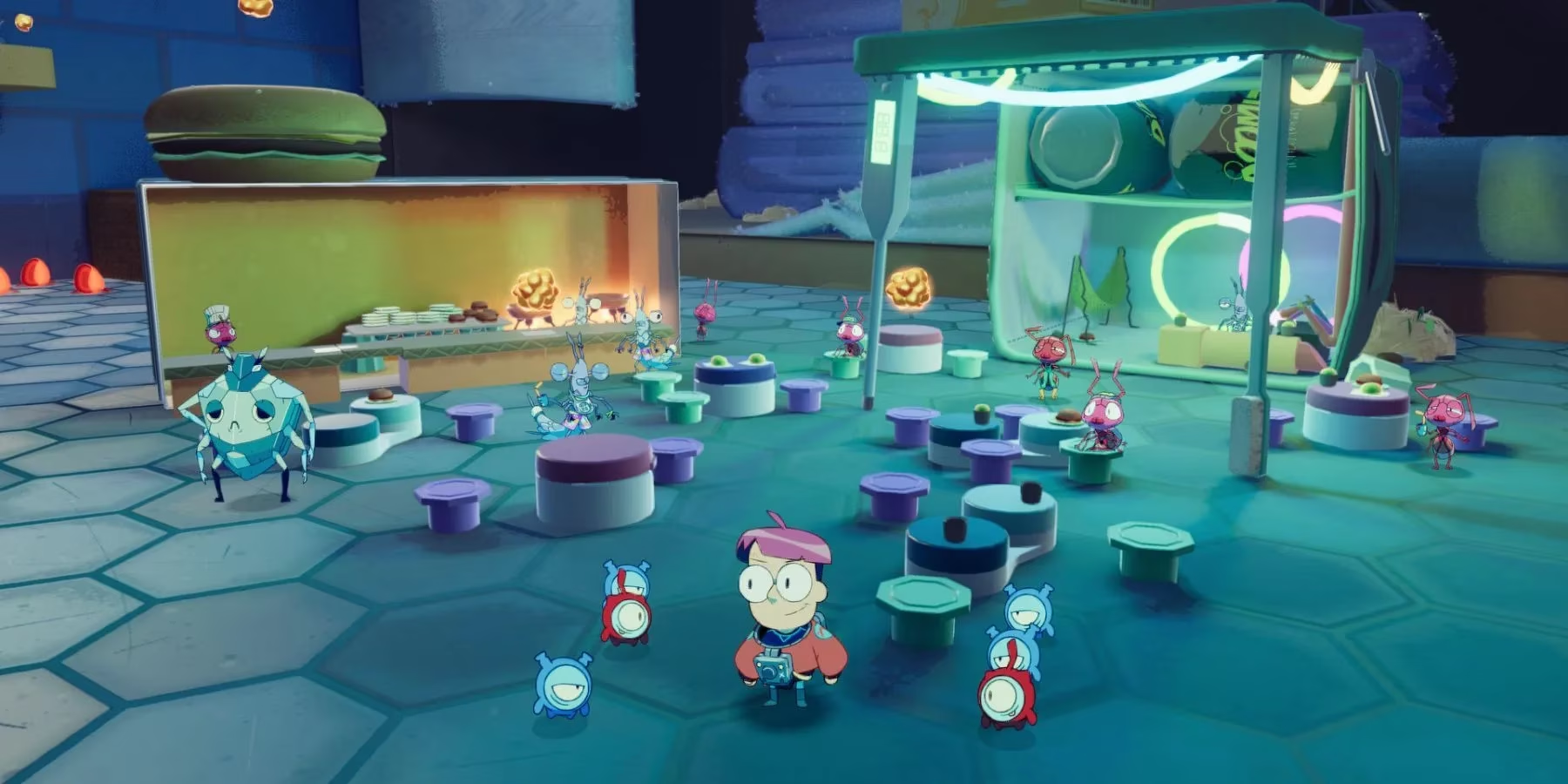
Curious about what else the non-violent landscape offered, Leo tumbled into the whimsical world of Tinykin. Here, the interstellar explorer Milodane didn’t zap aliens — he collected chirping little critters that hatched from eggs. Tinykin built bridges with their bodies, carried massive objects, and transformed a giant house into a playground of ingenuity. Leo often found himself chuckling aloud: “Who needs a rocket launcher when you have an army of loyal, matchstick-sized helpers?” The blend of 2D characters in a 3D space felt like stepping into a living cartoon, and the only danger was running out of clever ideas.
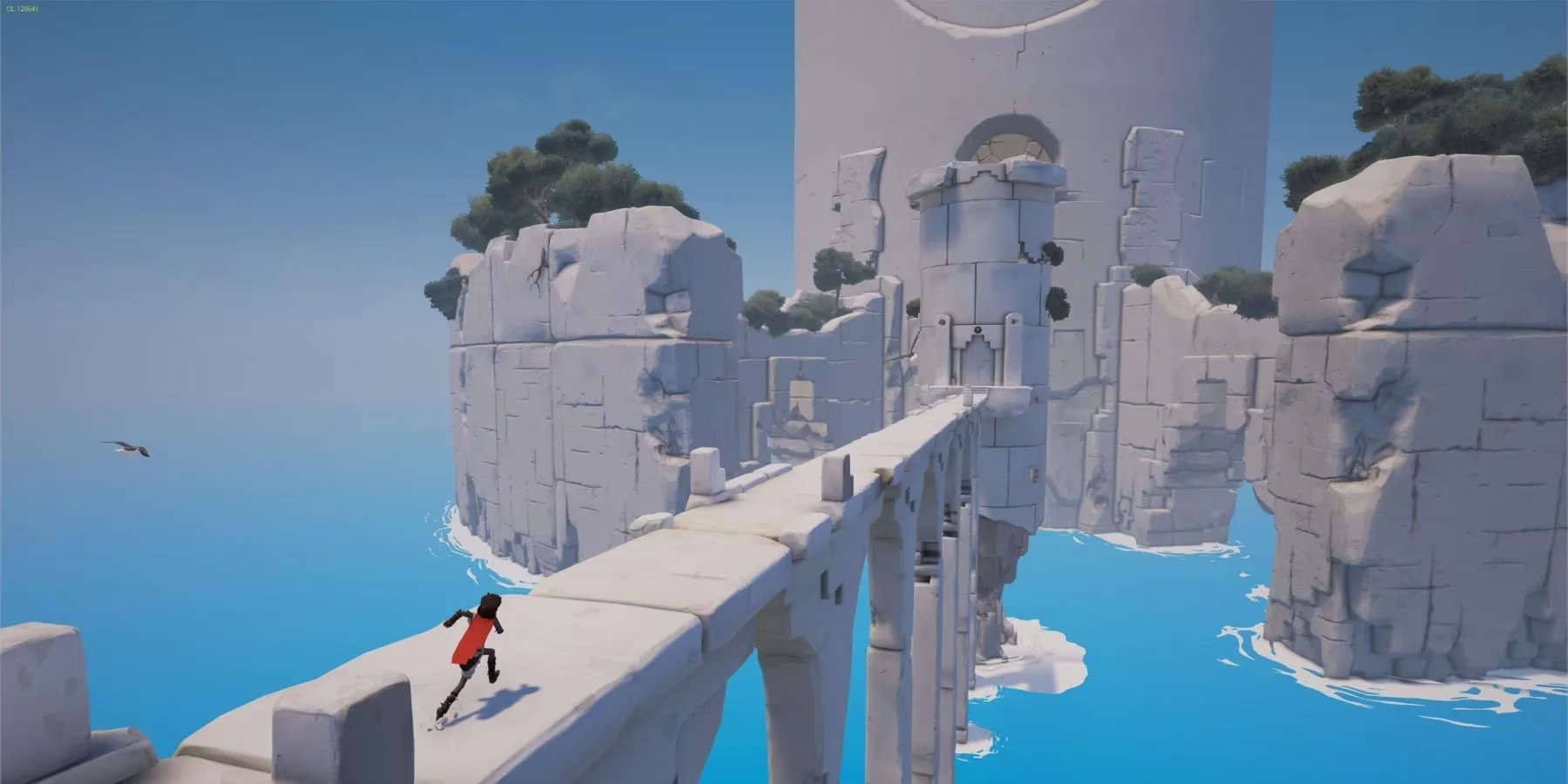
But what about games that told deeper stories without a single word of dialogue? Leo’s answer washed ashore on the sun-bleached island of RiME. A boy, a silent ruin, and a towering peak — that was all the game gave him. No villain, no combat tutorials. Instead, the very landscape became a puzzle-box of emotions. Why did shifting stone pillars and aligning shadows feel more profound than any grand battle? Because, Leo realized, the island was a metaphor, and every solved riddle peeled back a layer of a personal tragedy. By the time he reached the summit, tears welled up, proving that silence can scream louder than any explosion.
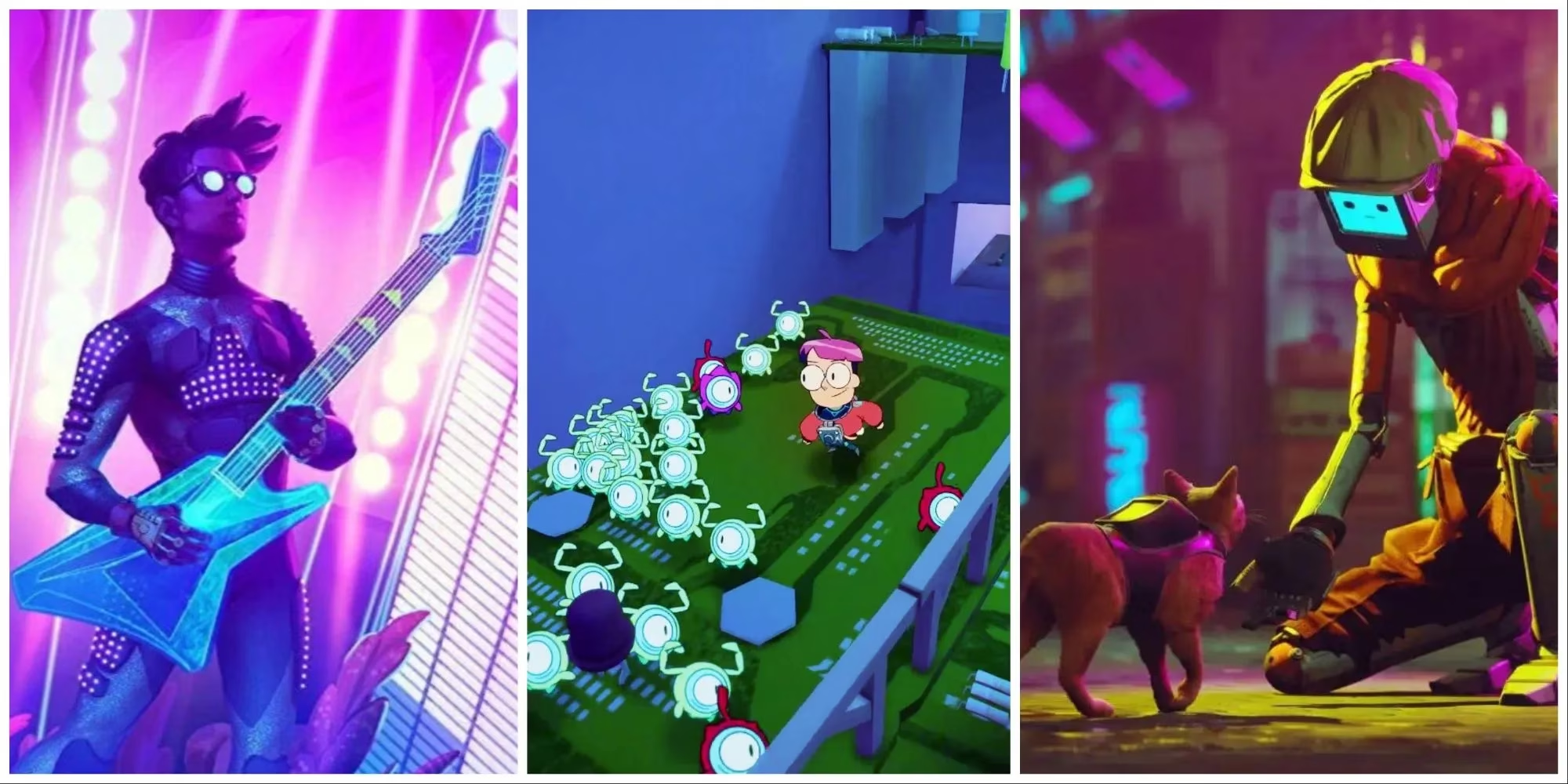
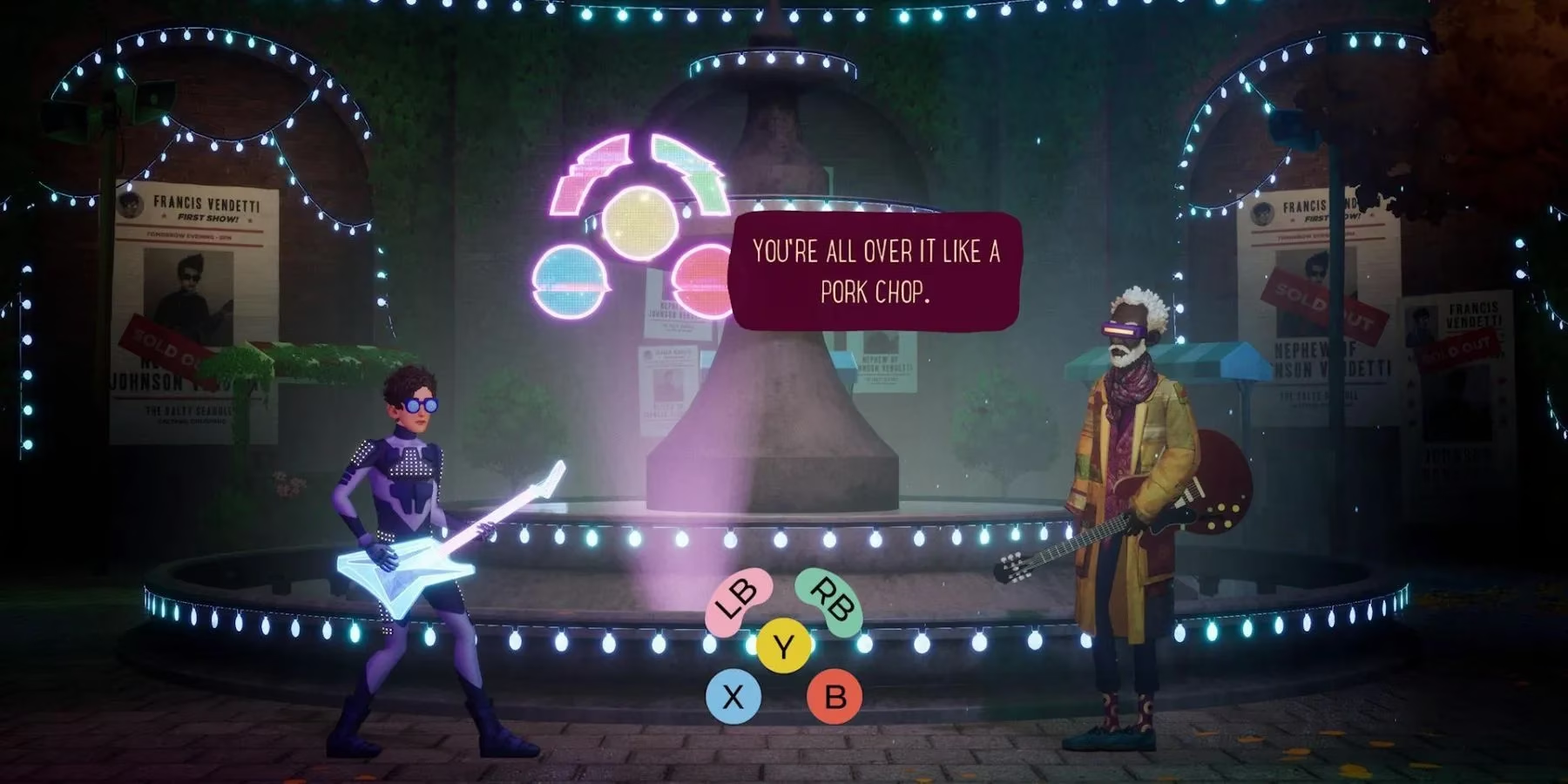
Perhaps the boldest surprise waited in the cosmos. The Artful Escape handed Leo an electric guitar and sent him shimmering across psychedelic alien landscapes. Combat? The only battles here were musical duels against extraterrestrial mega-stars, where shredding the right riff defeated a boss more satisfyingly than any sword swing. With a cast including Jason Schwartzman and the late, great Carl Weathers, the game asked: can self-discovery be an action in itself? As Francis jammed through his interstellar coming-of-age, Leo felt his own creative spirit reawakening — no health bars, only harmonic catharsis.
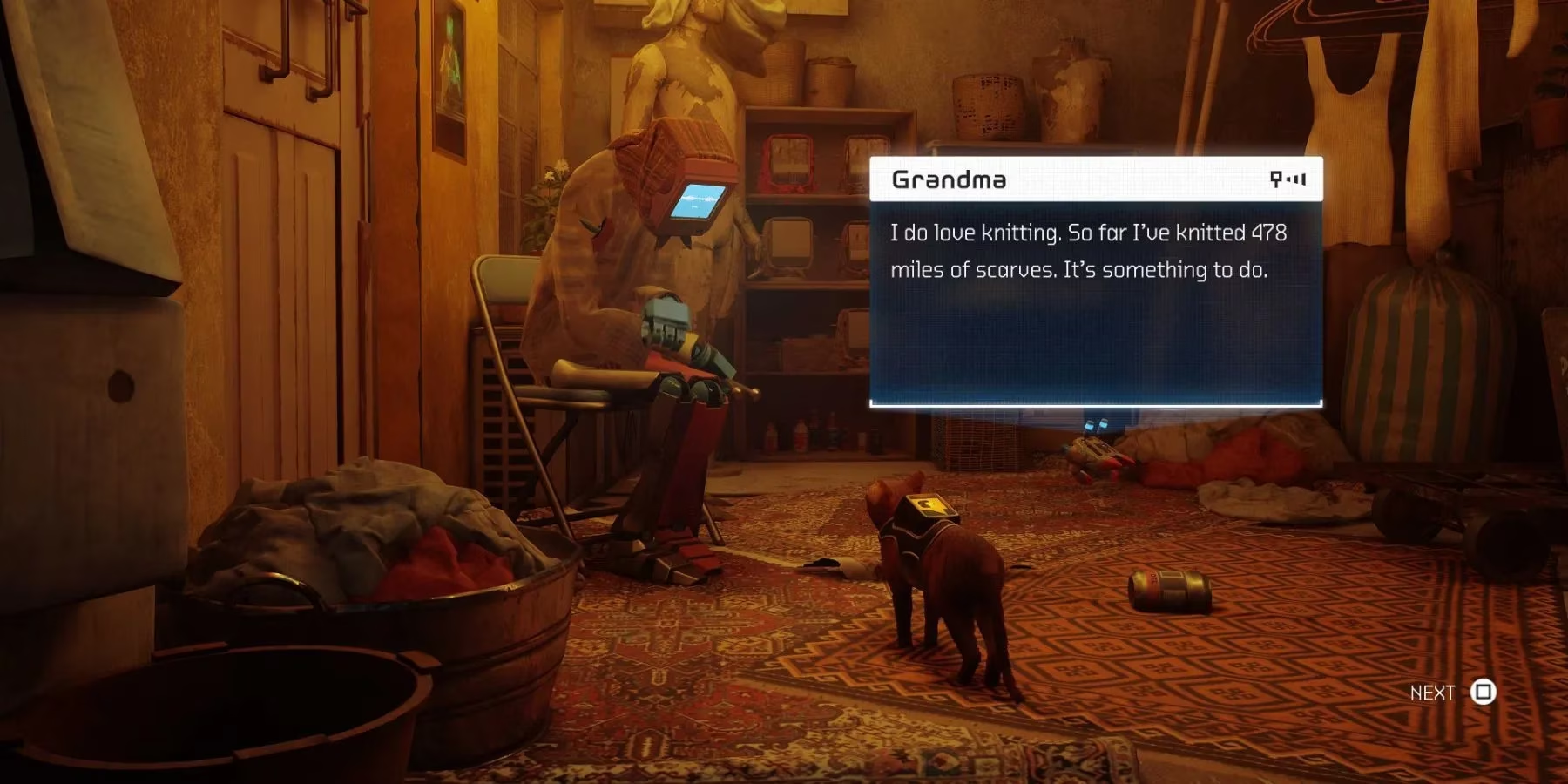
Then came a more grounded yet equally captivating furry protagonist. In Stray, Leo slipped into the paws of an orange tabby navigating a neon-drenched city of robots. He didn’t fight the machines; he nuzzled them, knocked paint cans off shelves, and curled up on cozy cushions. The city told its own story of loss and hope, all seen from knee height. Who would have thought that meowing at a drone companion named B-12 could feel like the most important interaction in a post-human world? Leo marveled at how a cat’s simple agility could replace the adrenaline of combat with the thrill of pure, fluid movement.
If solitude and mystery were the goal, Outer Wilds was the ultimate classroom. Leo was an unnamed spacefarer trapped in a 22-minute time loop, exploring handcrafted planets that transformed with each cycle. No enemies lurked — only the ancient secrets of the Nomai civilization waited. What caused the loop? The game never fired a bullet; it fired questions. Leo learned to measure his progress not in experience points, but in knowledge. Every whirlwind and crumbling planet taught him that sometimes the greatest adventure is understanding.
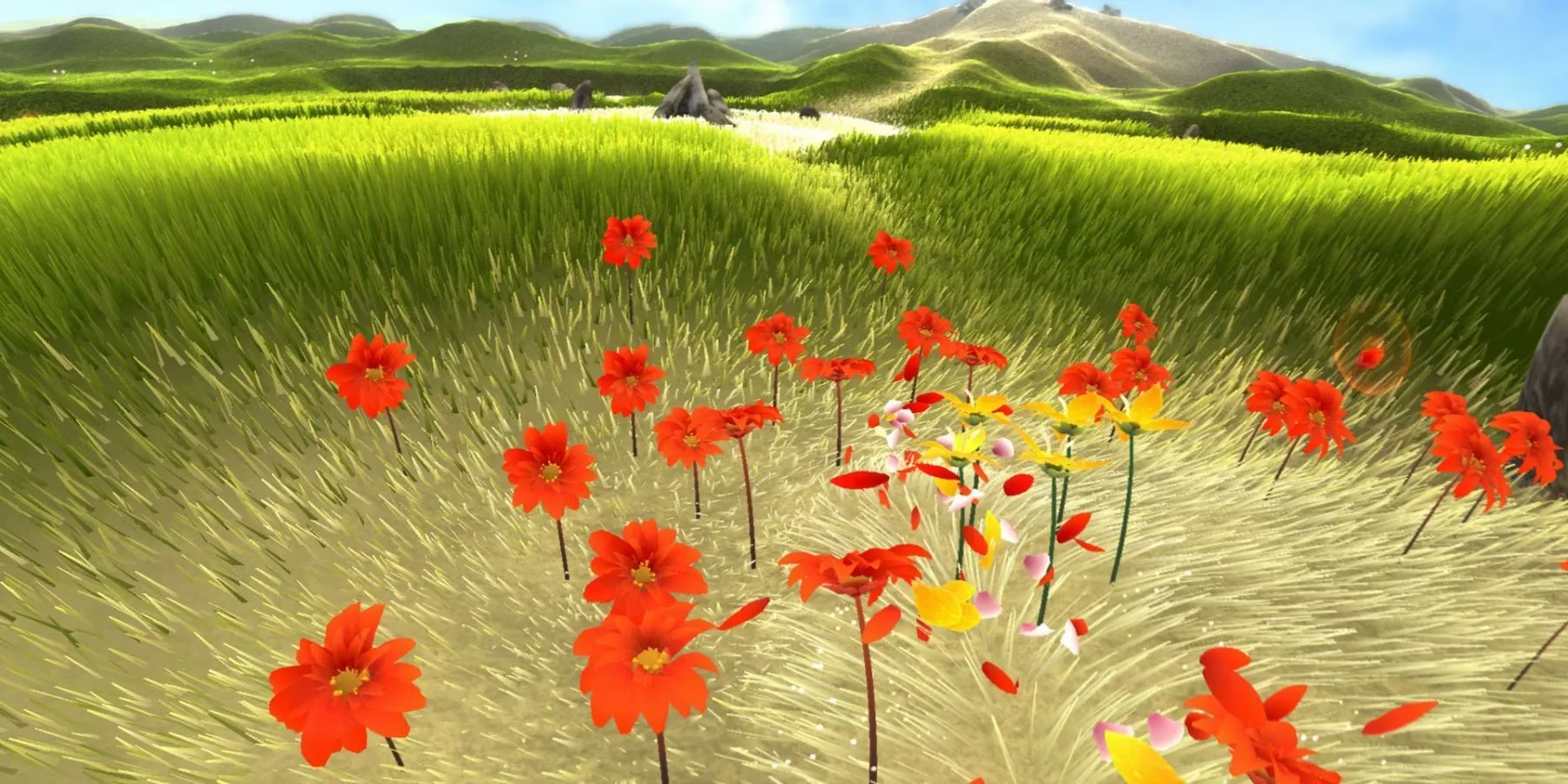
After so much mental exertion, Leo craved serenity — and Flower delivered a gentle embrace. He guided a single petal across windswept fields, triggering blooms that turned gray landscapes into riots of color. There was no score, no fail state, no urgency. Why did such a simple interaction feel so rich? Because, perhaps, 2026’s endless noise made the act of creating beauty its own quiet form of action. Each swoosh through grass was a declaration: games can be meditative too.
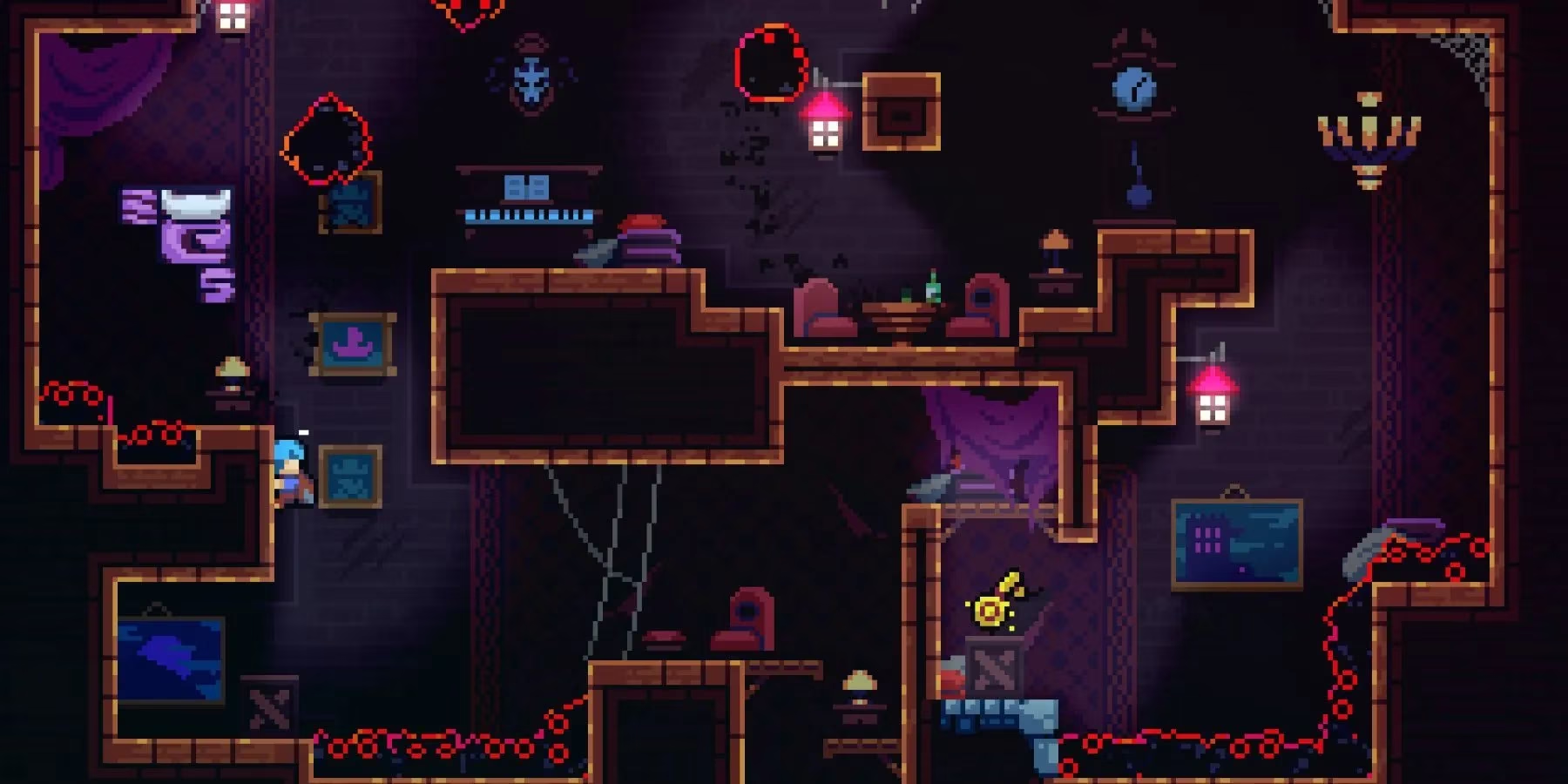
Finally, Leo dared to climb Celeste. Madeline’s journey up the mountain wasn’t free of conflict — but her enemies were her own self-doubt and fear. No damage numbers appeared; she simply pushed forward through screens of pixel-perfect platforming. How could a game about mental struggle be so heart-poundingly intense? Because, Leo found, the tight air dashes and wall jumps required just as much focus as any boss pattern, and overcoming each ledge felt like conquering a piece of himself.
By the end of his experiment, Leo’s gamer heart had changed. The action-adventure genre, it turned out, didn’t need violence to thrill, challenge, or move players. From yarn puppets to time loops, from musical odysseys to petal-riding, the world in 2026 was overflowing with experiences that replaced the sword with soul. And for any player still asking “Can a game without combat be an action game?” — the door is wide open, and all you have to do is step through it.