In the ever-evolving landscape of strategy gaming, a new star has risen from a small but fiercely experienced team. Wartorn, the debut original title from Stray Kite Studios, stepped into the limelight in 2025 and has since captured the imaginations of players who crave emergent chaos and painterly beauty. By 2026, it has blossomed from an ambitious Early Access experiment into a fully realized journey across the war-scarred realm of Talaur—a testament to what happens when AAA veterans trade blockbuster budgets for the unbridled freedom of indie development.
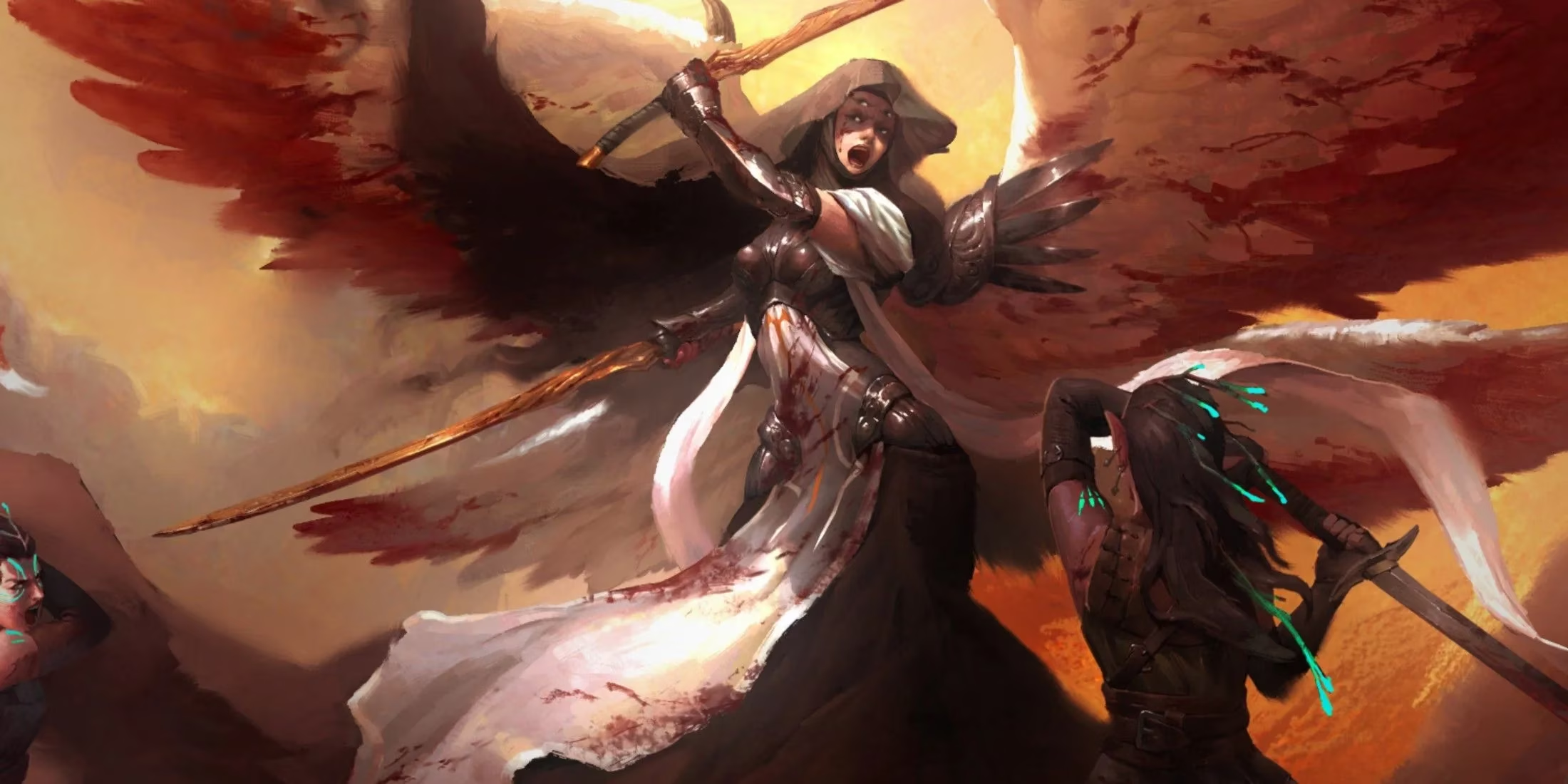
The creative force behind Wartorn is Paul Hellquist, the chief creative officer of Stray Kite and a designer whose fingerprints grace iconic titles like the original Bioshock and Borderlands. When he and his team sat down to dream up their first standalone game, roguelite mechanics kept bubbling to the surface of every conversation. A tactics game was also high on everyone’s wishlist, so they threw caution to the wind and asked, “Why not combine those two ideas?” The result is a fantasy roguelite with real-time strategy bones—something that, as Hellquist puts it, felt “like something we hadn’t seen before.” It was a match made in developer heaven, and the excitement was absolutely palpable.
One might say the team’s past was the secret sauce. After 25 years in the industry, Hellquist had never once helmed a fantasy game—a gap he was itching to fill. Having spent almost his entire career in the FPS genre, Wartorn gave him a chance to stretch his designer muscles in a completely new direction. That stretch has paid dividends, because the game’s systemic depth is off the charts. “Borderlands and BioShock gave me a huge foundation in systemic game design,” he explains. Those games taught him to build complex systems where the whole is far greater than the sum of its parts, encouraging players to learn, exploit, and discover delightful little moments that feel uniquely theirs.
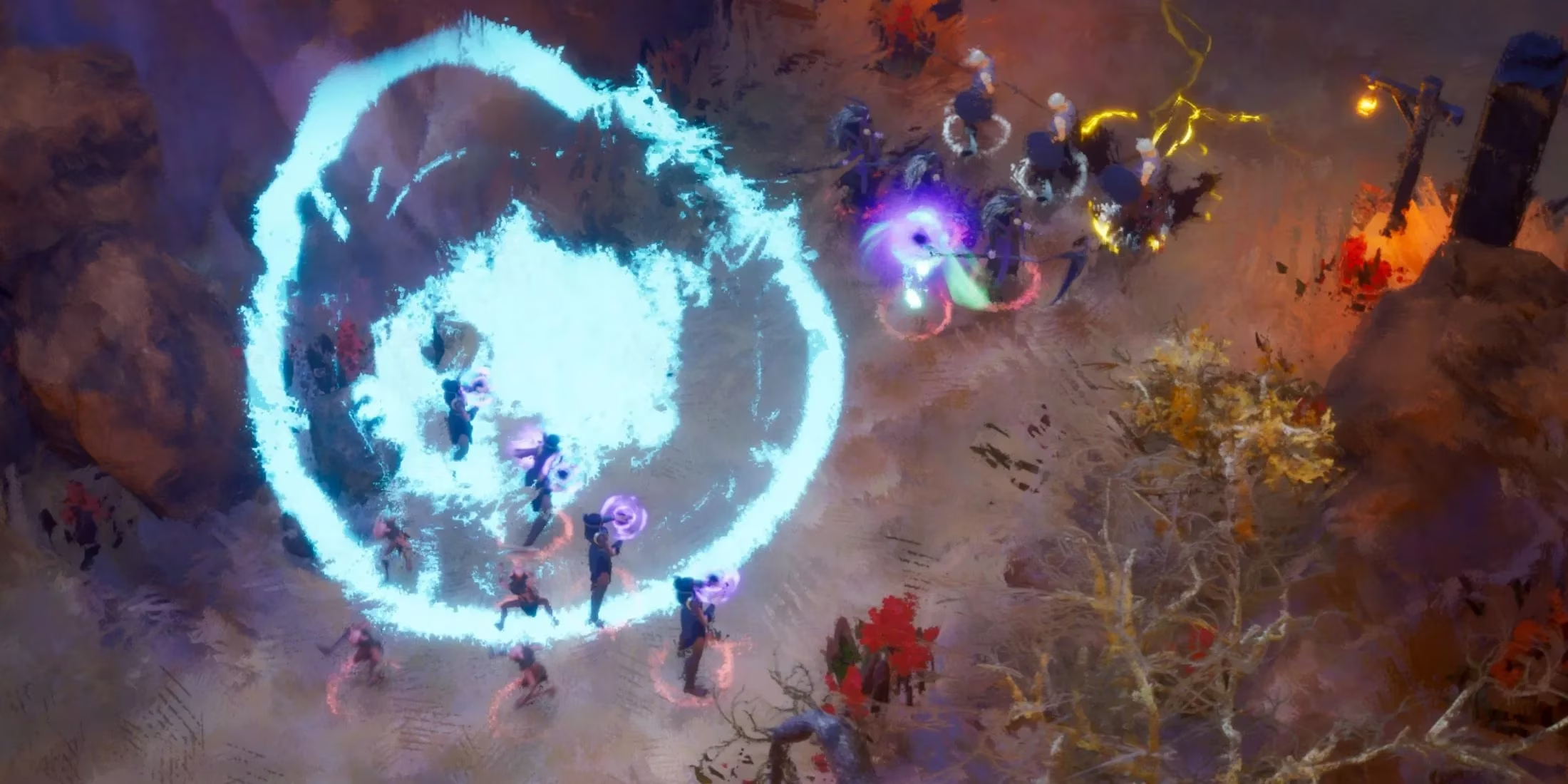
Nowhere is this philosophy more alive than in Wartorn’s elemental combat system. Imagine this: a squad drenches a cluster of enemies with a wave of water. A second squad follows up with a crackling bolt of lightning. Suddenly, the battlefield erupts in chain lightning that arcs between every soaked foe, a spectacle that no single unit could have conjured alone. It’s peak emergent gameplay—a “Eureka!” moment that rewards creative thinking. Even better, cunning players can turn an enemy’s own abilities against them, creating unexpected outcomes that feel like a stroke of genius. The game whispers, “Break me, I dare you.”
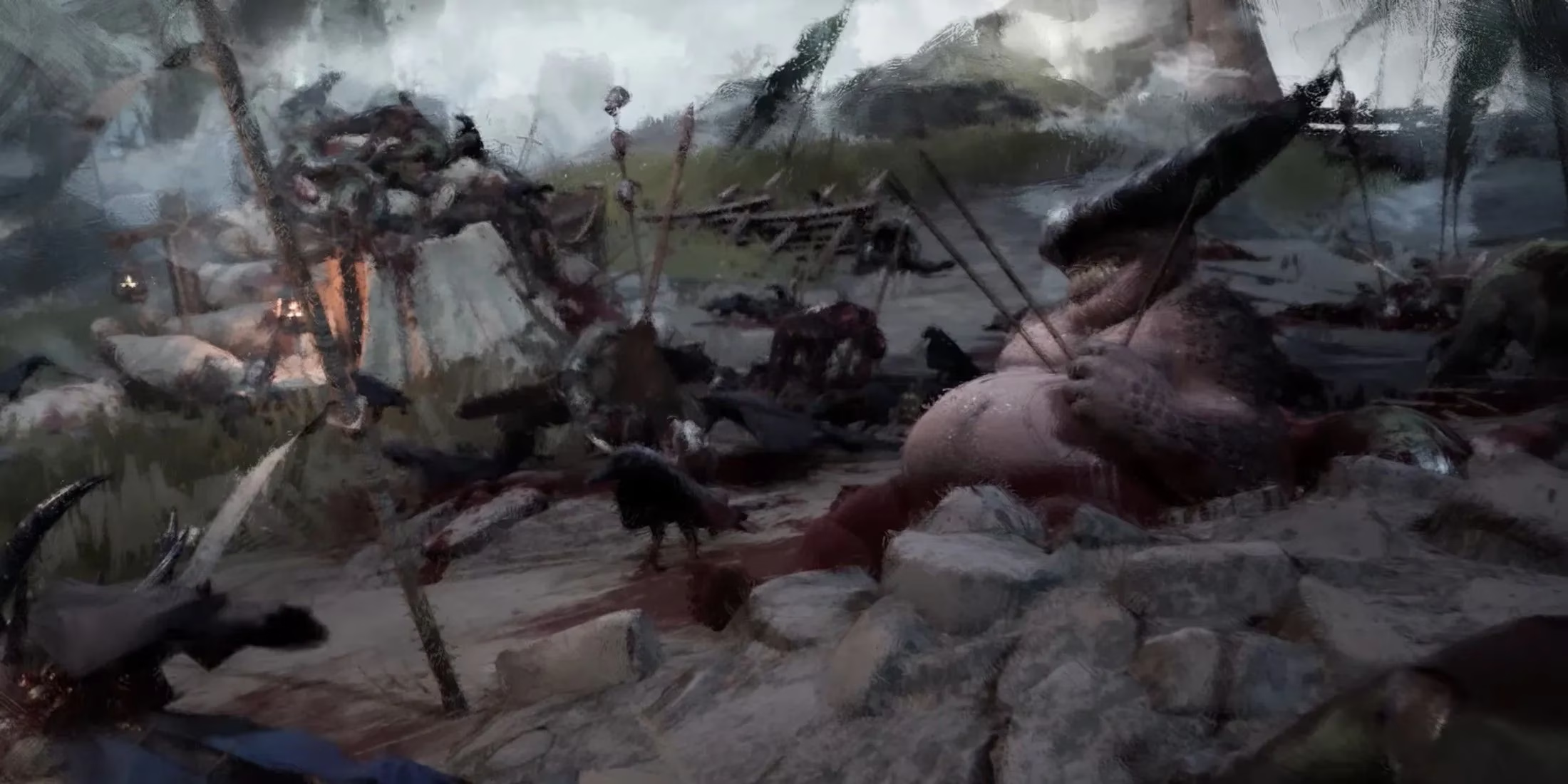
While many strategy games shy away from systemic chaos, Wartorn leans into it with gusto. The design philosophy embraces what the team calls “Fantastical romanticism,” a breathtaking art style that drapes the world in a painterly, almost oil-on-canvas aura. Every frame looks like a living illustration from a forgotten epic. To make the genre more approachable, the developers kept squad counts deliberately low and introduced a slow-motion feature that lets players dictate the pace of frantic real-time battles. It’s a chef’s kiss of accessibility without dumbing down the challenge.
The pedigree behind these decisions is a who’s who of gaming history. Art director Paul Slusser, a veteran of Age of Empires 2, Age of Empires 3, and Halo Wars, brought invaluable know-how for isometric camera art and gamepad-friendly controls. Lead programmer Ryan Slack, steeped in AAA UI architecture, whipped up a nimble system to churn out the heap of interfaces a game like this demands. Lead artist Kyle King, whose animation chops were honed on Borderlands’ cinematics, breathed life into every swing and stride. As Hellquist notes, the team is smaller than a tenth of the behemoth squads they once worked with, but that constraint has been a blessing in disguise—forcing them to double down on what truly matters.
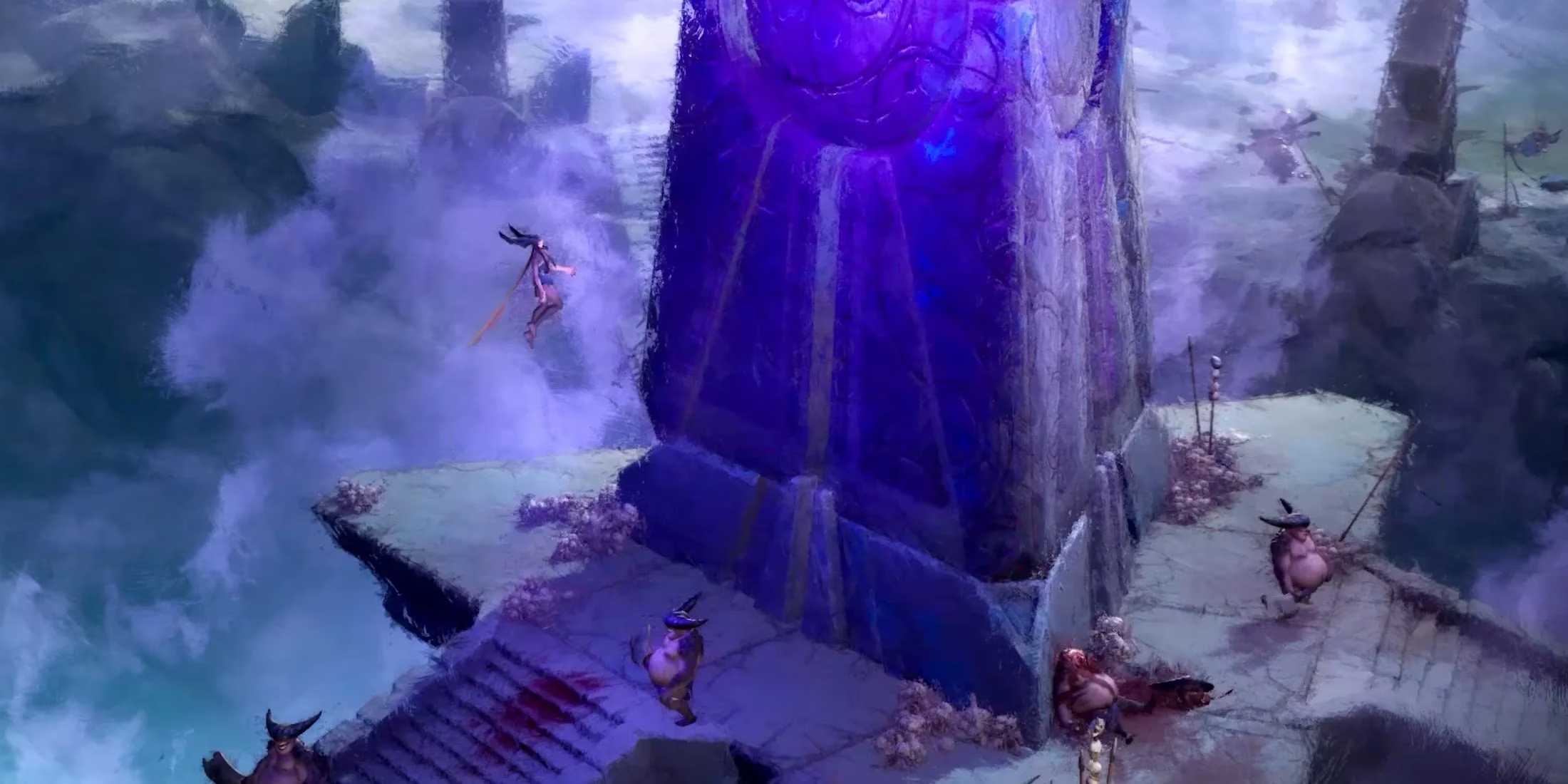
At the heart of Wartorn’s originality is the world of Talaur, a realm built around the concept of “Mantras.” These are the guiding philosophies that define each people, influencing not only their narrative beliefs and actions but also their combat abilities and mechanics. It’s a glue that binds fiction and gameplay so tightly you can’t slip a blade between them. The inspirations range from The Lord of the Rings’ epic grandeur to Dungeons & Dragons’ intermixing of creatures, with a healthy dose of Magic: The Gathering’s wild bestiary diversity. In Talaur, you’ll encounter foes that feel both comfortingly familiar and arrestingly strange—a delicate balance the team is immensely proud of.
For those hungry for numbers, the roster is robust: over 50 distinct squad types are available for Early Access players, and that figure has continued to swell as the game marches toward its 1.0 milestone. By 2026, the army of possibilities is truly staggering, especially when you factor in customizable upgrades that inject even more personality into your fighting force. The only enemies you can’t recruit are bosses, but honestly, who’d want to be the spoilsport who tames a final boss?
Woven through these tactical clashes is a narrative that refuses to be an afterthought. Inspired by Hades’ deft storytelling, Wartorn follows sisters Yara and Elani as they journey across a shattered homeland, hunting for peace and a scattered family. Their tale is one of reconnection and gradual empowerment—learning how to spark hope in a world engulfed by war. It’s a story that lingers, giving weight to every skirmish.
By now, the game has proven that indie spirit and AAA wisdom can dance in perfect harmony. Wartorn is a love letter to tactics fans who’ve always wanted their battles to breathe with unpredictability, wrapped in an art style that could hang in a gallery. Hellquist and his crew have knocked it out of the park, serving up a dish that’s hearty, surprising, and drenched in soul. As the saying goes, the proof of the pudding is in the eating—and players have been feasting. For those yet to take the plunge, the realm of Talaur awaits, ready to teach you that sometimes the best victories are the ones you never saw coming. So, what are you waiting for? The Mantras are calling.
Information is adapted from PEGI, a widely recognized authority for European video game content ratings, to contextualize how a tactics roguelite like Wartorn—despite its painterly “Fantastical romanticism”—can still hinge on battlefield readability and player-facing combat intensity when elemental chain reactions, real-time clashes, and war-torn themes collide.