In modern gaming, players are trained to expect a recognizable face at the center of the box art. Big-budget titles often pass through market testing until the lead becomes a safe, sturdy mascot: heroic jaw, tragic backstory, and a marketing plan that can survive a hundred focus groups. That formula can work, but it also makes plenty of protagonists blur together. Every so often, a game shrugs at the checklist and hands the controller to a cat, a loaf of bread, or a detective who wakes up in his underwear. Those choices sound like jokes. They are also some of the most memorable decisions the medium has produced.
A cat pads softly through the neon ruins of Stray, and the game builds its entire identity around curiosity rather than combat. The hero cannot speak. It cannot wield a gun. It can knock objects off shelves, curl up in a corner, and look at a robot with those enormous eyes. The world whispers back through environmental clues and small acts of trust. Let’s be honest: nobody predicted that a feline protagonist would become one of the most discussed leads of its release window. Yet the cat’s vulnerability makes every jump feel important. The game does not need a gruff soldier to sell its sadness; it just needs a small animal trying to find a way home.

Yakuza 5 pulls a similar trick in a very different register. The series is famous for shirtless brawls and melodramatic crime plots, so players expected another round of punches and heat moves. Then Haruka’s chapter arrives and turns the brawler into an idol simulator. The shift could have been a disaster. Instead, it gives the game room to breathe and lets a different kind of performance carry the emotional weight. Haruka does not punch her way through problems; she rehearses, performs, and tries to hold her family together under public scrutiny. No one saw that coming, and that is exactly why it works. The developers trusted players to follow a quieter, stranger thread.
Goat Simulator takes the opposite route. It does not ask for emotional investment; it asks players to cause as much chaos as possible as a goat with a taste for property damage. The game revels in bugs and physics glitches, turning broken systems into comedy. There is something oddly engaging about a creature whose only goal seems to be headbutting the nearest fence and launching itself into a trampoline. The premise is ridiculous, and the game knows it. That self-awareness gives the experience a scrappy charm. Players remember the goat because it refuses to behave like a hero, a soldier, or even a remotely sensible animal.
Disco Elysium places a broken, amnesiac detective at the center of one of the smartest detective stories in games. He begins in his underwear, hungover and barely able to hold a conversation. The game smirks at his wreckage, then slowly reveals the sharp mind underneath. This is not the usual hard-boiled investigator who solves everything with a cigarette and a grim one-liner. He is a mess, and his mess becomes the mystery. The writing treats his failures with humor and tenderness, letting players shape a protagonist who is as thoughtful as he is self-destructive. The result is a lead who feels painfully human.

Leisure Suit Larry belongs to a different era, and his motivations have not aged gracefully. He is shallow, lustful, and often ridiculous. That is the point. The classic point-and-click games ask players to laugh at Larry while still hoping he somehow stumbles into success. Modern audiences may wince at some of the humor, but the character remains a fascinating artifact: a protagonist who is not aspirational at all. He is a cautionary tale with a punchline, and the series would lose its identity without him.
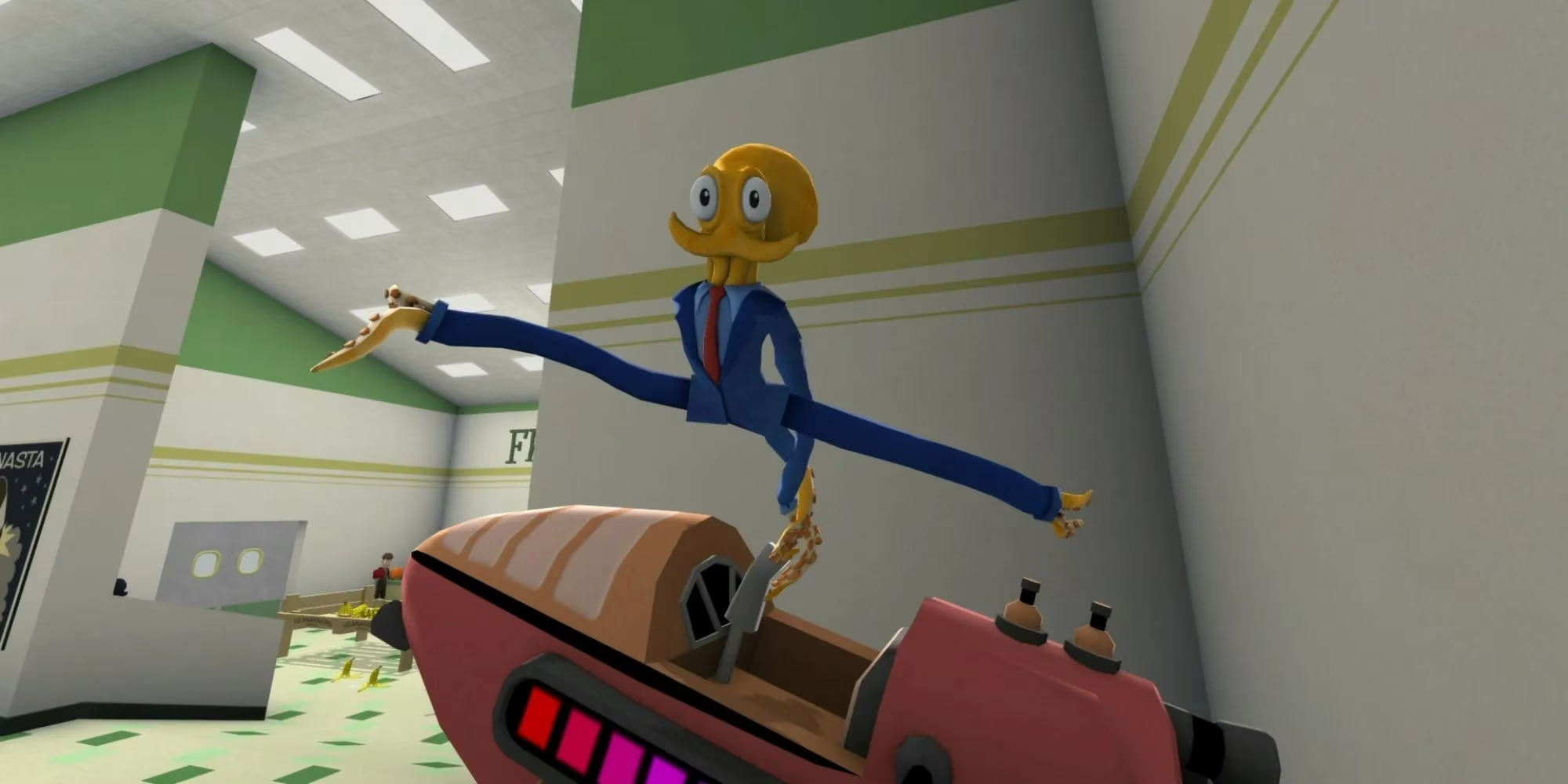
Octodad pushes the joke even further. The lead is an octopus pretending to be a human, complete with a family and a suburban routine. The control scheme is deliberately awkward, turning ordinary tasks into slapstick. Players wobble through the house, trying not to blow their cover, while the game winks at the absurdity of it all. Octodad is not a hero in any traditional sense. He is a disguise, a gag, and a surprisingly tender portrait of a parent trying to keep it together. You’ve got to hand it to the developers for making such a ridiculous premise feel oddly sweet.
I Am Bread goes further still. The protagonist is a slice of bread. The goal, at least at first, is to reach a toaster and become toast. The premise sounds like a throwaway joke, and the formula can wear thin after a while, but the early novelty is genuine. Controlling a piece of bread is a strange, silly pleasure that few other games can replicate. It is not a character with dreams and dialogue; it is a carbohydrate on a mission. That is enough to make players remember it.
| Game | Unconventional lead | Why it sticks |
|---|---|---|
| Stray | A cat | Curiosity and vulnerability replace combat |
| Yakuza 5 | Haruka | An idol chapter interrupts a brawler and deepens the story |
| Goat Simulator | A goat | Chaos and self-aware glitches become the punchline |
| Disco Elysium | A broken detective | Failure and humor reveal a deeply human lead |
| Leisure Suit Larry | Larry Laffer | A shallow antihero who is impossible to forget |
| Octodad | An octopus in disguise | Awkward controls turn suburban life into slapstick |
| I Am Bread | A slice of bread | A ridiculous goal becomes a memorable novelty |
These protagonists share one useful quality: they do not fit the marketing template, and that is why players talk about them years later. A safe lead can carry a franchise, but a strange lead can carry a feeling. The cat, the goat, the detective, and the bread slice all invite players to adjust their expectations. They ask for patience, humor, or a willingness to look silly. In 2026, as the industry still chases recognizable faces and proven formulas, that willingness matters more than ever. The weirdest leads are not a bug in the system. They are a reminder that games can still surprise the people who play them.
That’s the point. Simple. Strange. Memorable.