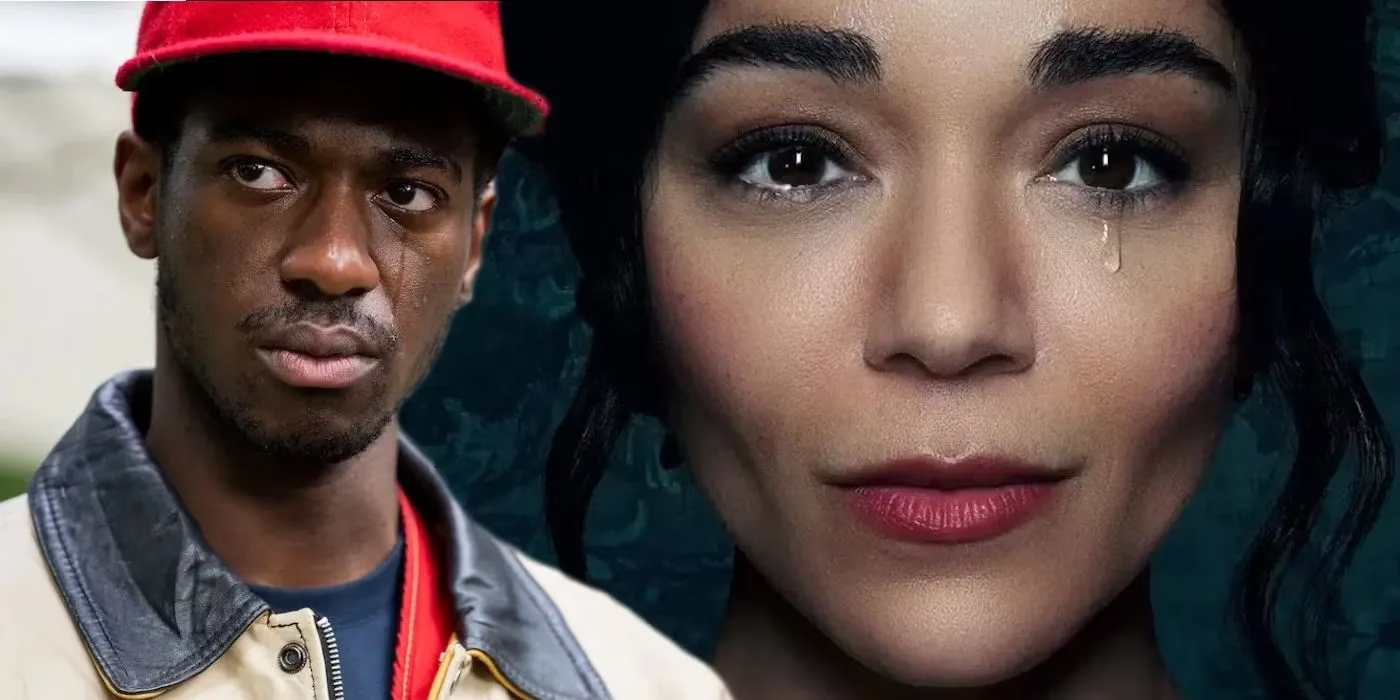
When The Strays first landed on Netflix in 2023, it slipped into homes like a slow-moving storm, and even into 2026 viewers are still dissecting its final act. The twisted horror thriller follows Neve, an upper-class woman whose carefully curated existence shatters when two strangers named Carl and Dione appear from the shadows of her past. Though the film received a mixed critical reception, its final scene generated intense conversation precisely because it refuses to hand the audience a comfortable resolution. The movie works like a psychological trapdoor: the more Neve struggles to maintain her polished surface, the faster it collapses beneath her.
Hair as a Mask and a Mirror
Hair functions as the film's most persistent visual language, and Neve's relationship to her own hair becomes a window into her fractured sense of identity. In the first third of the story, Neve hides her natural hair under sleek, well-maintained wigs even though her husband Ian has no problem with whatever style she chooses. Those wigs are not merely cosmetic; they operate like a lacquered chrysalis, a second skin she has built to prove she belongs in the affluent white world she has married into. The wig is also a form of erasure, a way of smothering the person she used to be.
When Dione and Carl first appear, Neve develops a nervous itch that constantly reminds her of the natural hair hidden beneath the wig. In one hallucination, her own hair seems to attack her, as though the parts of herself she tried to bury have grown teeth and turned against her. That image is one of the film's strangest and most telling flourishes: Neve does not see her natural hair as heritage or beauty, but as something monstrous that must be controlled. This explains why she reacts so coldly to her daughter Mary's own hairstyle choices, and why Mary becomes such a painful mirror for Neve's unresolved self-hatred.

Why Carl and Dione Returned
Carl and Dione are not random intruders. The film reveals they are Neve's estranged children from an earlier life, abandoned when she was still known as Cheryl. After their return, Neve tries to pay them off, offering them money as if their suffering could be itemized and settled like a debt. She hopes they will take the cash and vanish, but Carl and Dione do not want a transaction. Their return is more like ink spreading through the fibers of a crisp white page; once they enter Neve's home, the stain cannot be removed.
They return because the offer itself is an insult. Neve has ascended into a comfortable suburban existence and now believes she can put a price on abandoning her Black children in order to pass into white English society. Carl and Dione have no intention of accepting payment. Instead, they want to take over the life Neve built, especially the pampered position enjoyed by Mary and Sebastian. The film shifts in its final hour from standard Netflix horror into a tense, slow-boiling thriller where a dinner table becomes a battlefield of manners and buried rage.
Why Carl Killed Ian
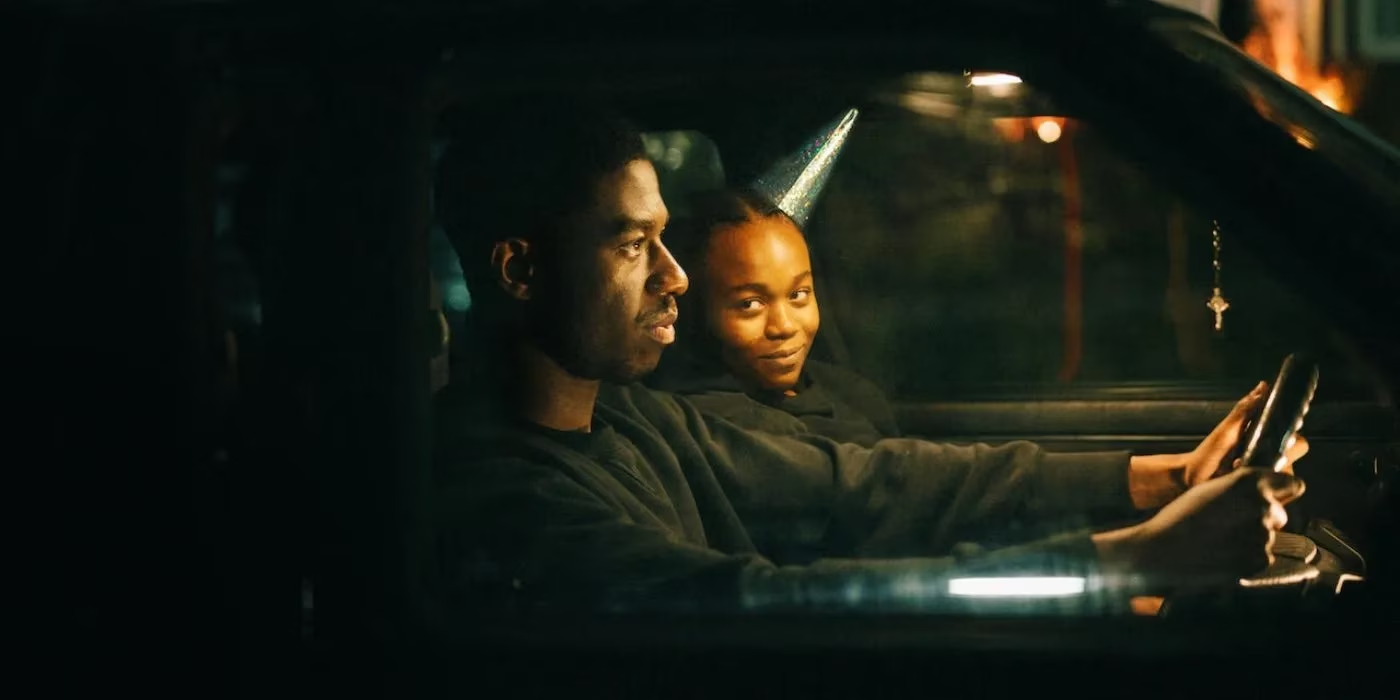
Ian is, in many ways, an innocent bystander caught inside Neve's web of secrets. He did not participate in the payoff attempt, but Carl still turns on him. The chilling logic is not personal vengeance against Ian. Carl needs Ian gone because Ian does not fit into the imagined life Carl and Dione are trying to claim. In their vision of a complete family, Ian is the obstacle standing between them and the mother who left them behind. His death is not an accident of rage; it is a necessary deletion in a fantasy of belonging.
This is where The Strays becomes especially disturbing. Carl's violence is not directed at Neve, the person who actually abandoned him, nor at Mary and Sebastian, the children who inherited the life he never had. Instead, he removes the interloper in the middle. It is a perverse family reordering, one that reveals how deeply abandonment has warped his idea of love and home.
Cheryl Became Neve to Erase Herself
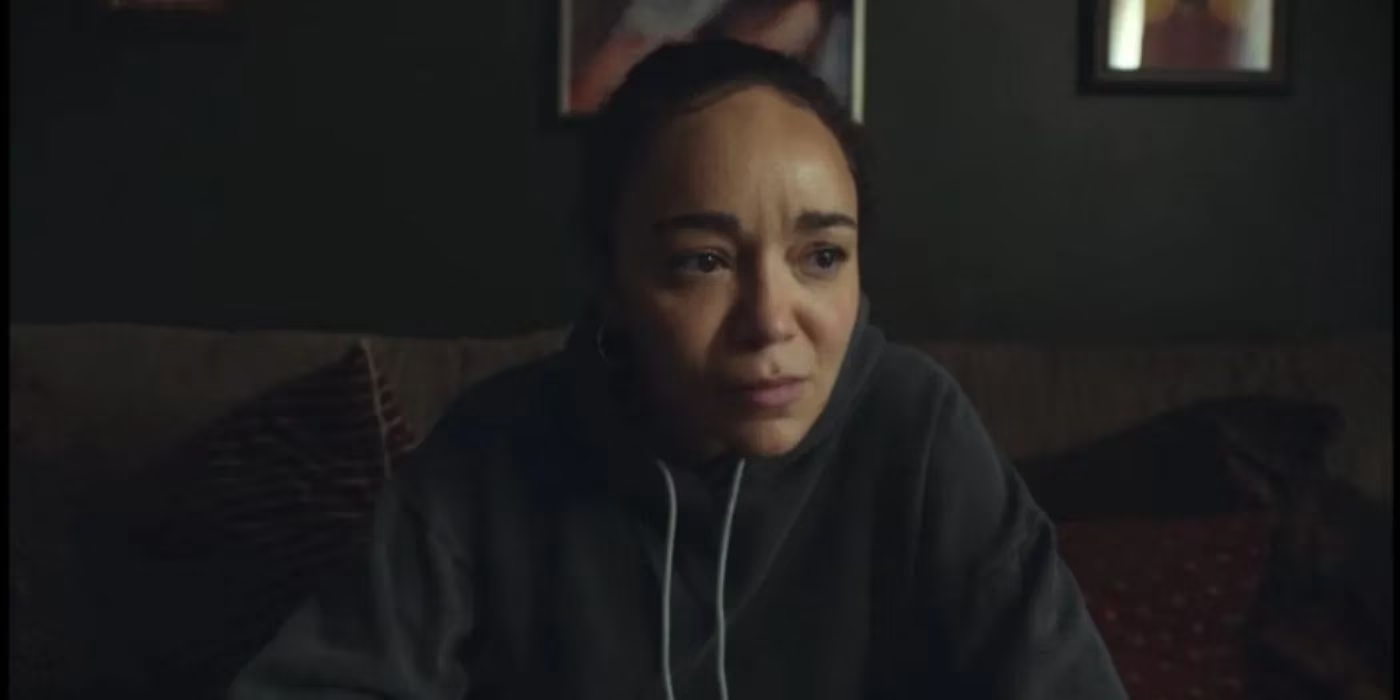
The transformation from Cheryl to Neve is not simply a fresh start. Neve claims she fled an abusive relationship and had no choice but to leave her children behind, but the ending quietly demolishes that defense. She changed her name, her hair, her accent, and her social coordinates not just to escape a man, but to escape the person she was. Cheryl became Neve because a new name made her harder to trace and allowed her to slip through the keyhole of whiteness without looking back.
That rebranding is central to the film's horror. Neve has not merely moved on from her past; she has built an entire identity around denying it. Her wigs, her home, her friendships, and her marriage all depend on the old Cheryl staying dead. When Carl and Dione resurface, they do not bring a simple secret. They expose the lie that Neve's whole life is built on.

Why Neve Leaves Again
The ending reveals Neve to be more villain than victim. After the bloodshed and chaos, she abandons Mary and Sebastian as well, proving that her earlier story about Carl and Dione was never the whole truth. She leaves because her idealized life has collapsed and she cannot see a way to remain without facing what she did. Her white-picket fantasy had become an aquarium with the glass suddenly cracked, and the outside world was rushing in from every side.
Instead of staying to repair the damage, Neve does what she has always done: she runs. The movie uses that final choice to emphasize the cyclical nature of trauma. Mary and Sebastian are now caught in the same loop that once swallowed Carl and Dione. Neve's departure is not an escape; it is the first stitch in another generation's wound.
Ashley Madekwe on Filming the Final Scene
Ashley Madekwe, who plays Neve and Cheryl, has said the ending required several attempts before the creative team landed on the right tone. The filmmakers went through different iterations of the final moment, including versions with and without a wig and changes of costume. Madekwe explained that she always inferred Neve would leave, and the final version allowed a sliver of ambiguity without fully erasing what had happened.
"We went through different iterations of it. ...I always inferred that the ending that is there now, that was what was happening, with me leaving. We did that in so many different ways. We did it with a wig, without a wig, change of costume, and I think the way we went was the right way. We left a little room for ambiguity but not really. She's gone, she's out of there, she did what she had to do."
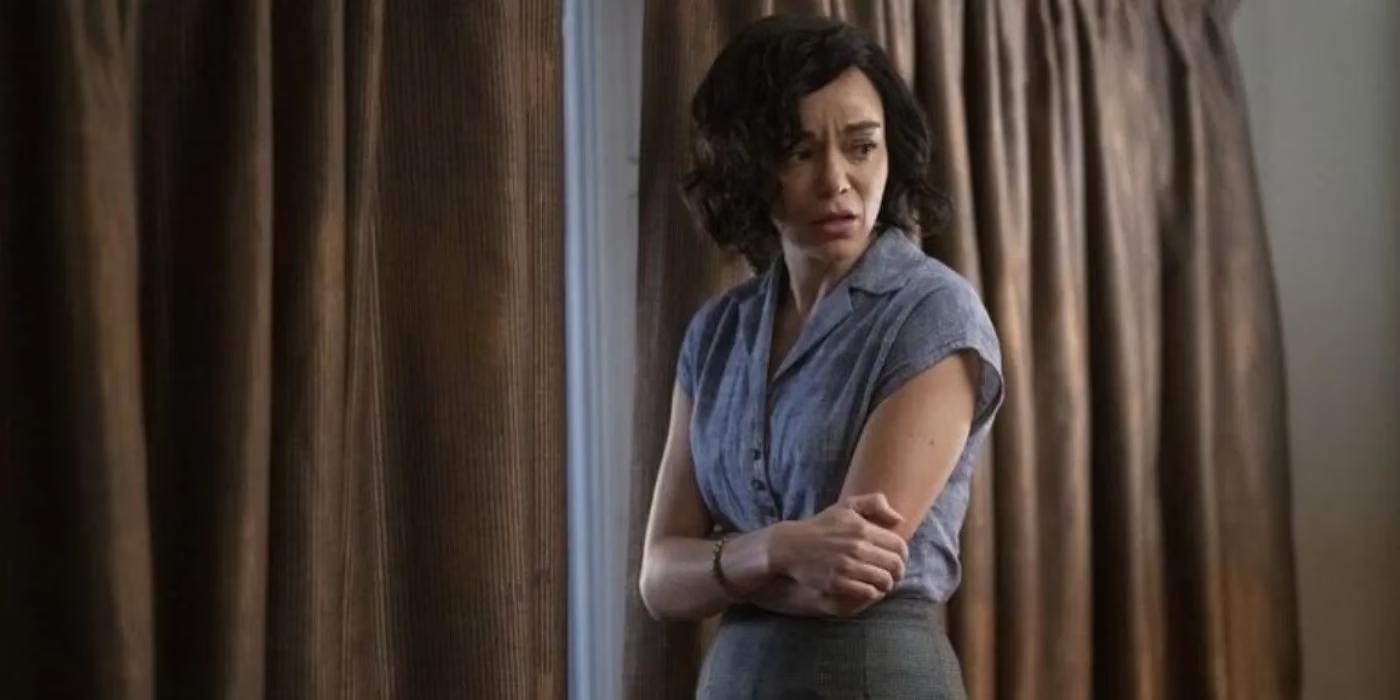
Madekwe also noted that every take in the final sequence was long, so the practical effects—water, blood, and broken props—had to be reset each time. That repeated effort mirrors the film's own theme: no matter how many times the past is washed away, it always returns.
The Real Meaning of the Ending
Though Neve emerges as the film's villain, she is also a product of a society that pushed her to the margins and made her believe her survival depended on suppressing her Blackness. The film does not excuse her actions, but it places them inside a larger pattern. Trauma in The Strays behaves less like a scar and more like a loom: every abandonment weaves another row into a fabric that eventually smothers the next generation.
Carl and Dione were left behind because Neve believed she could not climb the social ladder while dragging them with her. Mary and Sebastian are then left behind because Neve's carefully built illusion cannot survive the truth. The ending suggests that Cheryl's trauma, and the cruel choices it produced, will now live on through Mary and Sebastian. The cycle has not been broken. It has simply found new hands to repeat it.
This perspective is supported by coverage from Game Informer, and it helps frame The Strays ending as a deliberate refusal of catharsis: like many psychological thrillers that weaponize identity, the film uses surface details (Neve’s wigs, accent, and “perfect” home) as gameplay-like tells that her constructed persona can’t survive contact with the truth. Reading the final abandonment through that lens, the last act isn’t a twist meant to shock so much as the inevitable consequence of a character who keeps “resetting the save” on her life—only to discover the past remains in the file, waiting to overwrite the future.