In the vibrant, chaotic, and wonderfully unpredictable world of independent video games, success stories are celebrated like mythical legends. It takes a potent cocktail of creative genius, relentless passion, and a dash of serendipity for a small project to erupt from obscurity into the mainstream spotlight. Yet, within this arena of underdog triumphs, a curious phenomenon persists: the ascent of titles that, while competent, are catapulted to stratospheric acclaim that far exceeds their actual merit. These are the games that ride cultural waves, exploit charming gimmicks, or simply benefit from impeccable timing, earning a reputation that a sober, critical examination reveals to be... inflated. As we stand in 2026, with the indie scene more saturated and brilliant than ever, it's time to cast a discerning eye on ten such titles—games that are good, sometimes even great, but are ultimately showered with more praise than they rightfully earned.
10. The Artful Escape: A Psychedelic Sizzle with Little Steak

Kicking off our list is the audacious, neon-drenched rock odyssey, The Artful Escape. This title is the quintessential example of style utterly eclipsing substance. It is a visual and auditory tour de force, a masterclass in psychedelic artistry that bombards the senses with a kaleidoscope of colors and a pulsating, sublime soundtrack. However, beneath this mesmerizing facade lies a surprisingly hollow core. The narrative is forgettable, serving merely as a flimsy scaffold for the next visual spectacle. The much-touted musical gameplay sections suffer from a fundamental flaw: a lack of rhythmic synchronicity between player input and on-screen action, creating a deeply unsatisfying disconnect. The platforming mechanics are rudimentary, offering no challenge or innovation. It's a brief, beautiful excursion that ultimately feels like an interactive music video—a testament to the adage that looks can, indeed, be profoundly deceiving.
9. Stray: A Purr-fect Premise with Clunky Paws
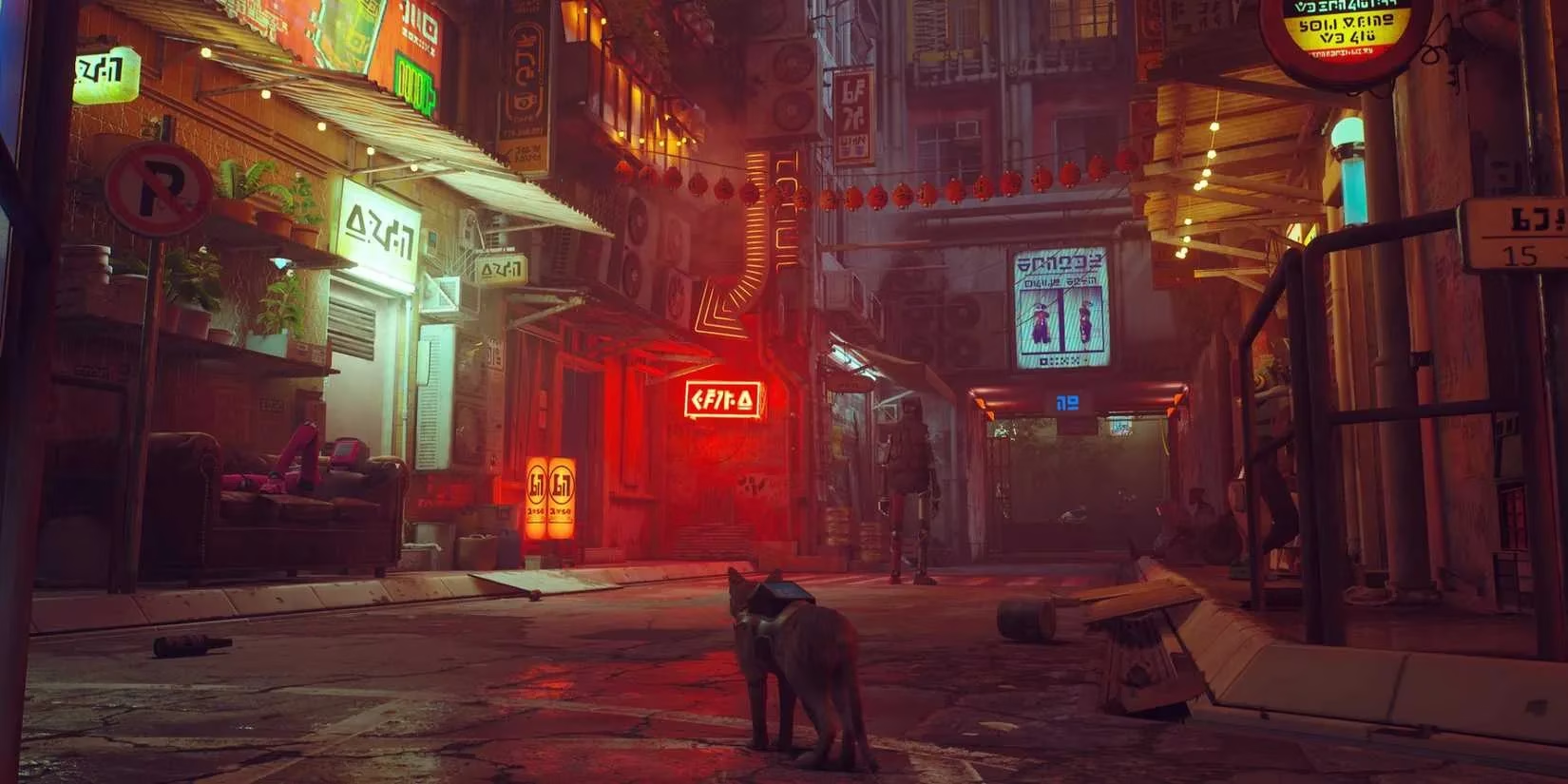
Ah, Stray—universally known as "that cat game." Its success is a fascinating case study in the power of an irresistible central hook. Who could resist the allure of exploring a haunting, cyberpunk dystopia from the perspective of a ginger feline? The game's atmosphere is thick with melancholy, and its story packs an emotional punch that feels earned. Yet, the gameplay struggles to match the premise's elegance. For a game centered on a creature synonymous with grace and agility, the platforming feels oddly rigid and restrictive. The overall gameplay loop lacks variety, often devolving into awkward chase sequences or forced stealth sections that disrupt the flow. While undoubtedly a solid and memorable experience, one can't help but feel that its monumental success was fueled more by the undeniable charm of its protagonist than by groundbreaking interactive design.
8. Neva: A Beautiful, Yet Uninspired Sequel
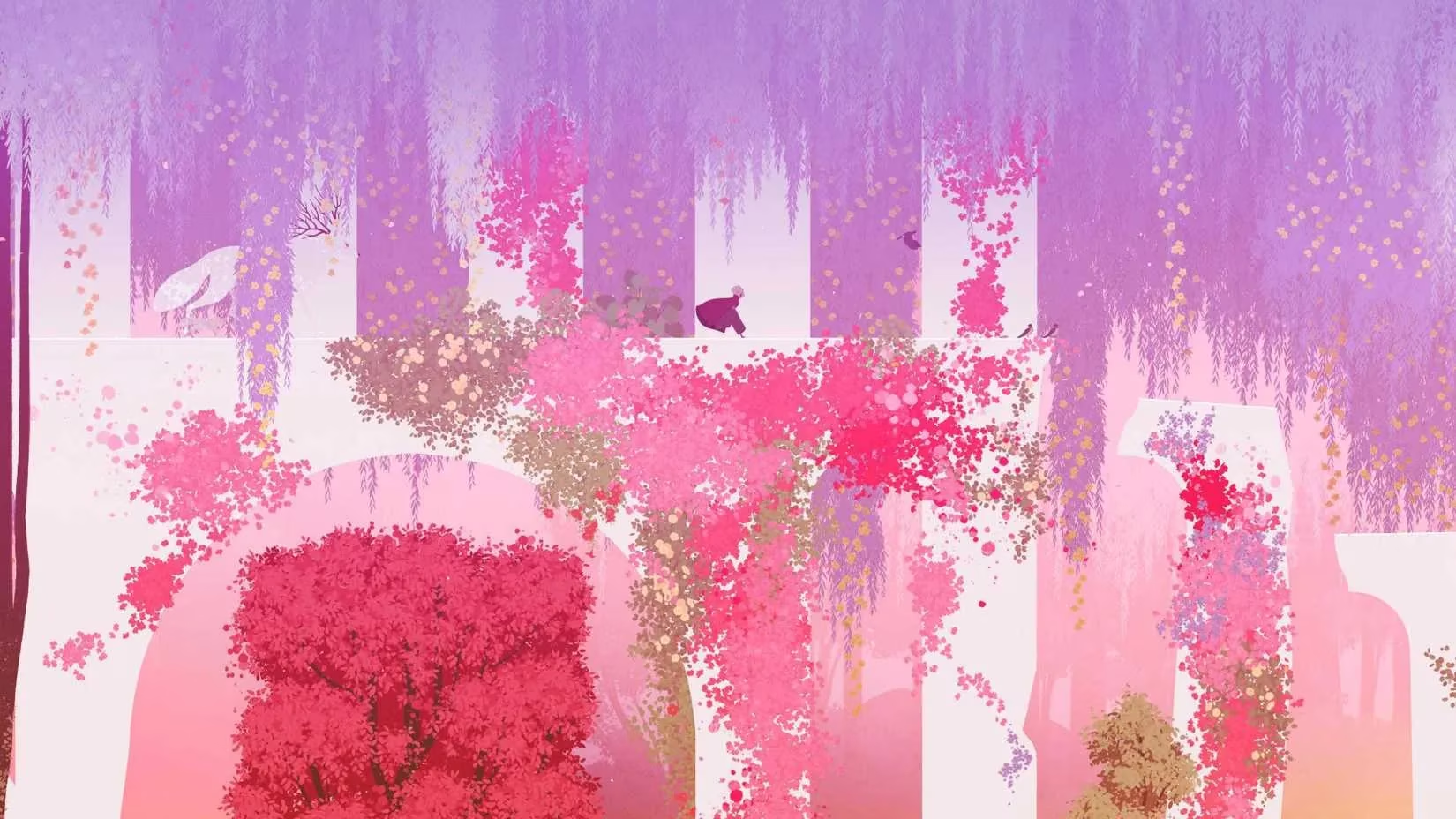
Following the breathtaking, emotionally resonant masterpiece that was GRIS, expectations for Neva were astronomically high. The game delivers artistically, presenting a world of staggering beauty and painterly detail that is a feast for the eyes. However, it stumbles where it matters most: evolution. Instead of building upon the profound narrative depth and inventive puzzle-platforming of its predecessor, Neva plays it safe. The story, while touching, lacks the same poignant, universal resonance. The puzzles and platforming feel conventional, missing the innovative spark that defined GRIS. The introduction of combat is a novel but underbaked addition, failing to meaningfully elevate or redefine the core experience. It is a wonderful game in a vacuum, but as the follow-up to a genre-defining titan, it feels like a visually stunning step backward.
7. What Remains of Edith Finch: A Masterpiece... in Pieces
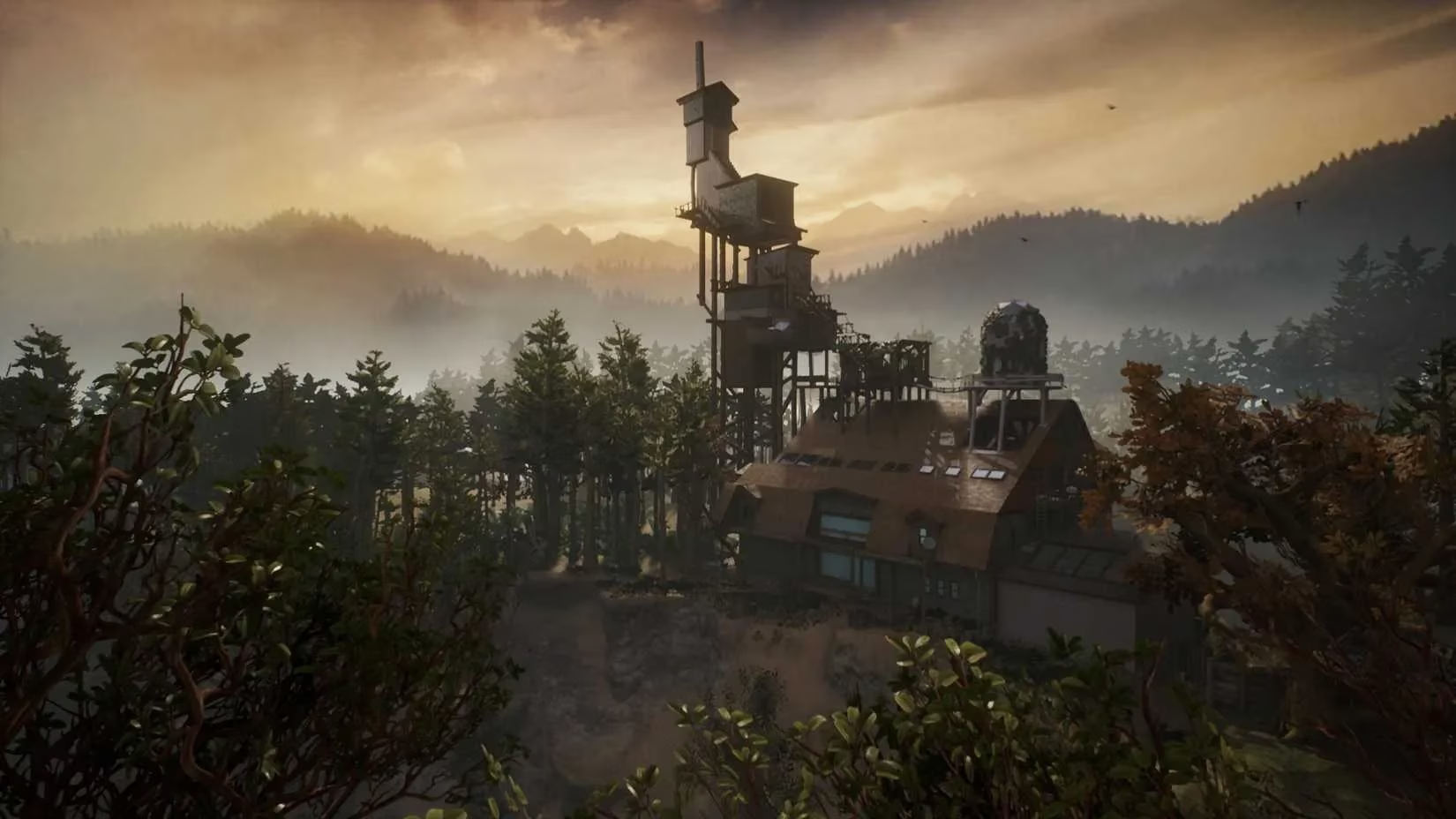
This is where we might ruffle the most feathers. What Remains of Edith Finch is heralded as a landmark walking simulator, and for good reason—in its highest moments. The game is a collection of brilliant, experimental vignettes that use gameplay mechanics to tell heartbreaking short stories with unparalleled creativity. One moment you're soaring as a kite, the next you're daydreaming as a cannery worker. These peaks are stratospheric. Yet, the valleys are cavernous. The experience is wildly uneven, with some segments feeling unpolished or even laughably janky (the infamous shark sequence). The game often presents magnificent concepts that are abandoned as quickly as they are introduced, leaving the player wishing for deeper exploration. The final product is a poignant, innovative, but frustratingly inconsistent journey that gets credit for its best ideas, even if the whole is less than the sum of its occasionally brilliant parts.
6. Viewfinder: A Photographic Concept Exposed Too Soon

Viewfinder burst onto the scene with one of the most ingenious premises in recent memory: using photographs to literally reshape reality. The mind-bending, perspective-altering puzzles where you place a picture of a bridge into the world to create a real one are moments of pure gaming magic. The potential here was infinite. Tragically, the game fails to fully develop its own genius. For every breathtaking "picture within a picture" brain-teaser, there is a mundane fetch quest or a simplistic battery puzzle that feels like filler. Just as the game introduces more complex, time-sensitive challenges that finally harness the concept's true potential, it abruptly concludes. The result is a thrilling proof-of-concept that feels prematurely developed, leaving players to forever wonder about the deeper, more challenging game that could have been.
5. Cult of the Lamb: A Jack of All Trades, Master of None
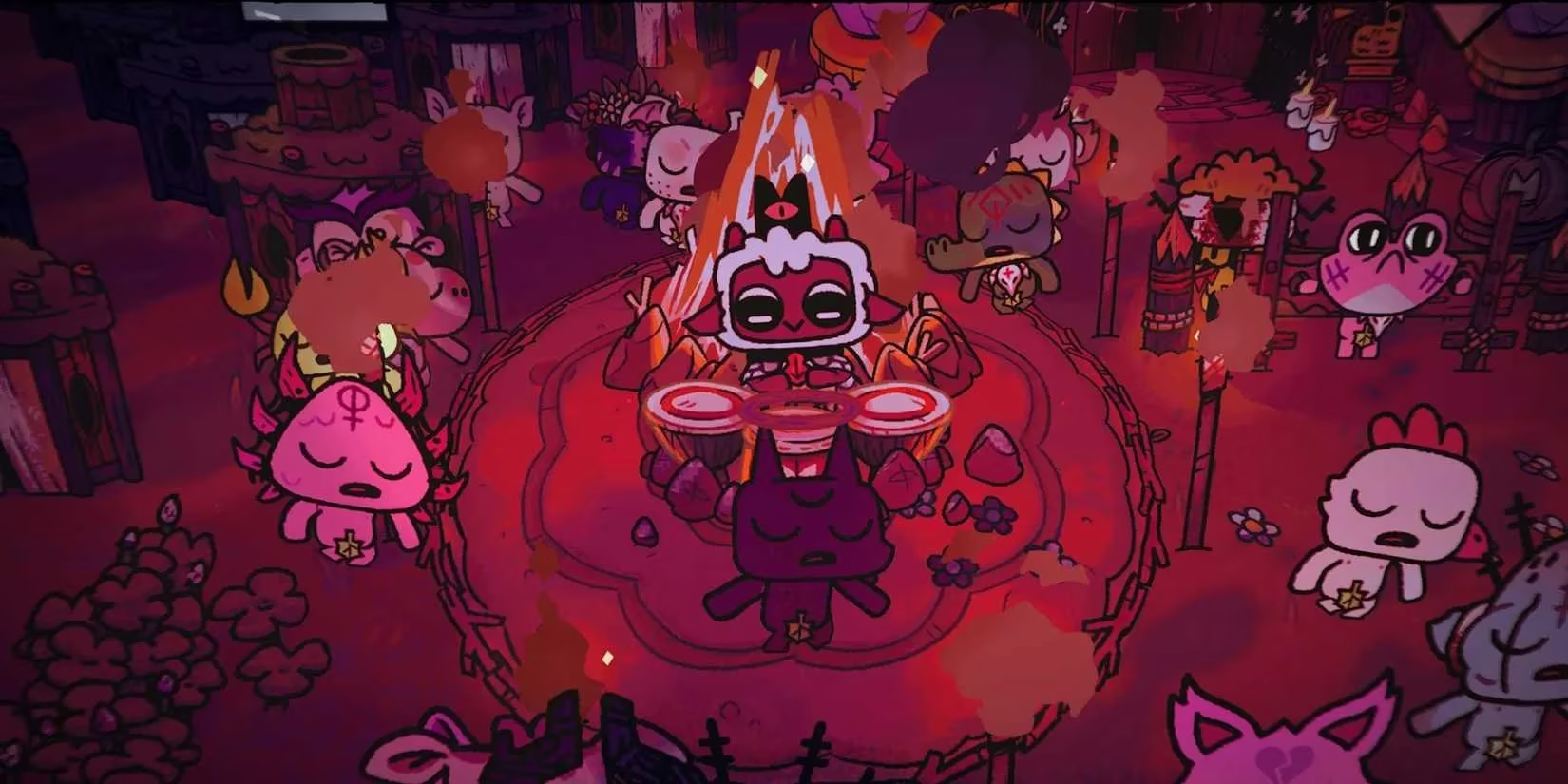
Merging roguelike dungeon crawling with cult management simulators, Cult of the Lamb had a recipe for success. Its aesthetic—adorably creepy—is instantly iconic, and the humor derived from juxtaposing cute animals with dark, ritualistic themes is undeniable. However, when dissected, neither half of its hybrid soul excels. The combat is a competent but shallow imitation of superior titles like Hades. The cult management, initially engaging, becomes unbalanced and trivial once your flock grows beyond a certain point. It's a game comprised of several good ideas executed decently, but none executed exceptionally. Its massive popularity is a testament to its stellar style and unique premise, but delve beneath the surface, and you'll find that every mechanic has been implemented with more depth and finesse in other, more specialized games.
4. Everybody's Gone to the Rapture: A Sleepwalk Through Shropshire
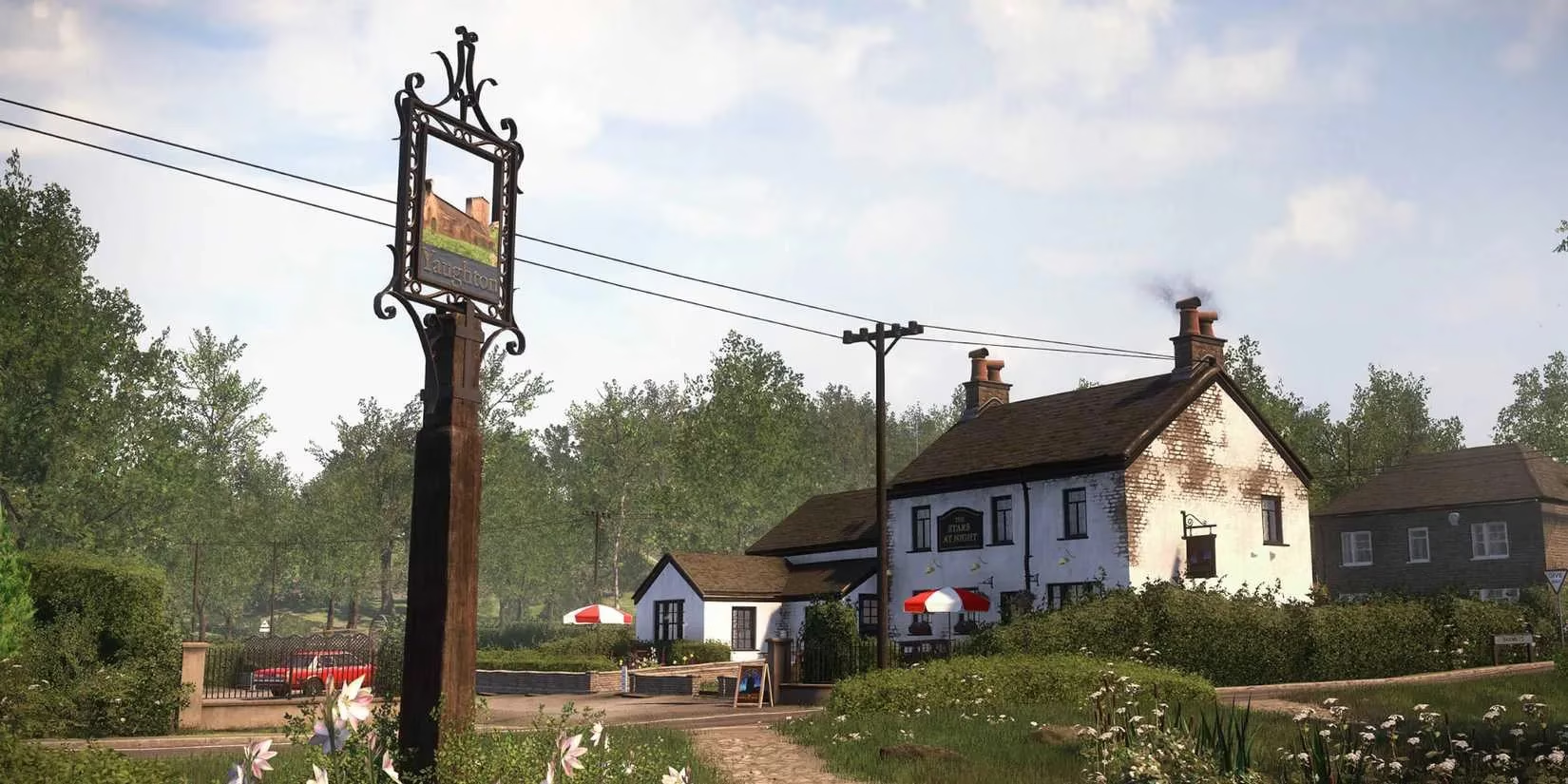
The Chinese Room is renowned for atmospheric walking simulators, but Everybody's Gone to the Rapture represents a significant misstep. The game impeccably captures the serene, haunting beauty of an empty English village, and its sound design crafts a palpable sense of eerie, apocalyptic dread. These are monumental achievements. Yet, they are shackled to a experience of agonizingly slow pace—even for the genre—and a narrative that is both lukewarm and easily missable. Crucial story fragments can be bypassed without player error, leading to a fragmented and unsatisfying conclusion. The result is a beautiful, atmospheric shell containing a plodding and often disengaging core, ranking it among the least compelling major walking simulator experiences.
3. Dredge: A Horror That Loses Its Bite
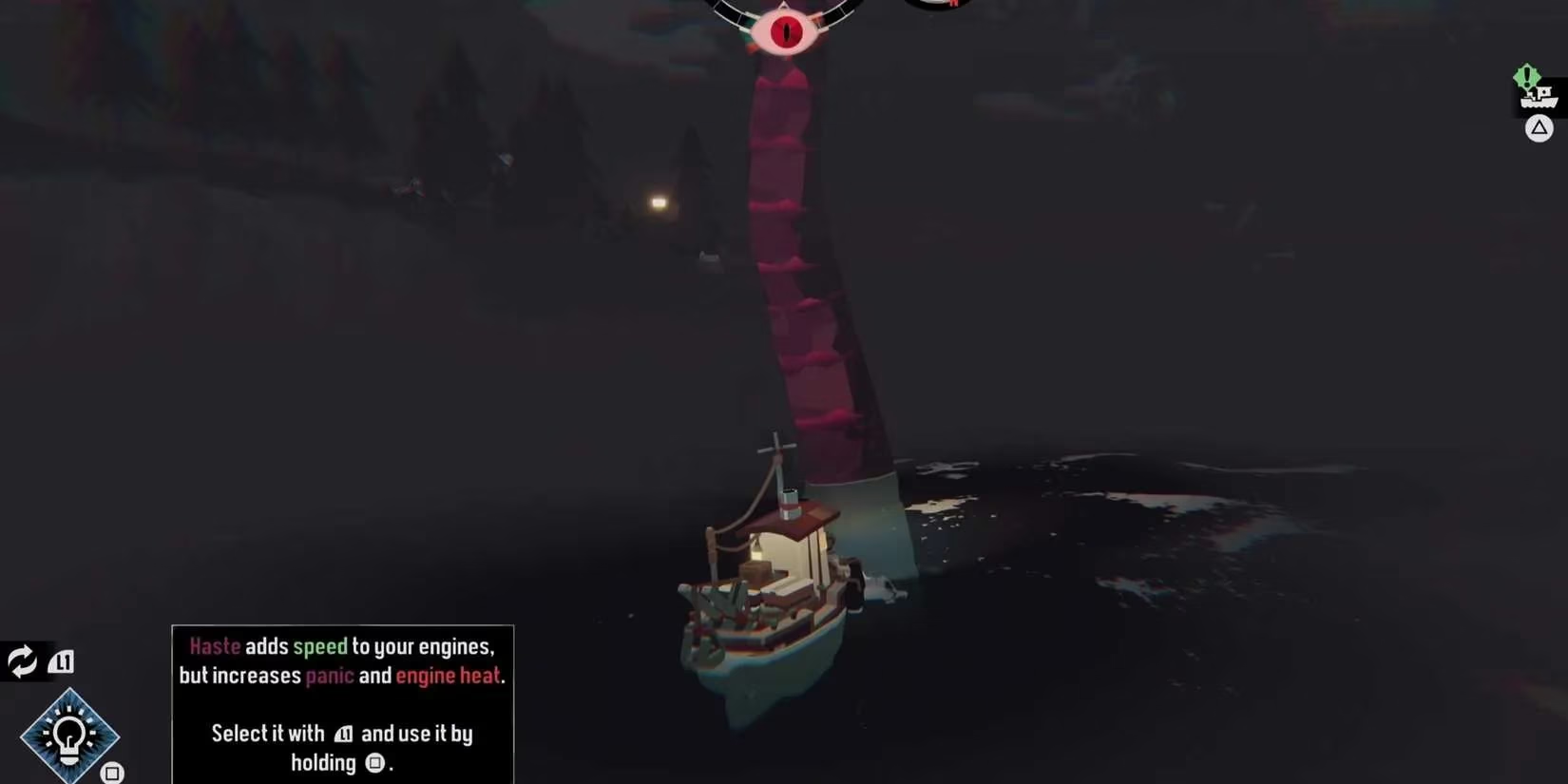
Dredge begins with a masterful blend of genres: a relaxing fishing sim slowly infected by a creeping, Lovecraftian horror. The early hours are tense and magnificent, as you balance risk and reward while mysterious terrors lurk in the fog. The upgrade system, however, becomes its own undoing. As your boat becomes faster and stronger, the once-terrifying seas become trivial. The pervasive sense of dread evaporates, replaced by the repetitive grind of a comfortable "dad game." The narrative momentum fades, culminating in a predictable finale. It's a game with a phenomenal first act that fails to maintain its tension or narrative intrigue, transforming from a unique horror mystery into a routine collection simulator long before the credits roll.
2. Five Nights at Freddy's: Lore Over Load
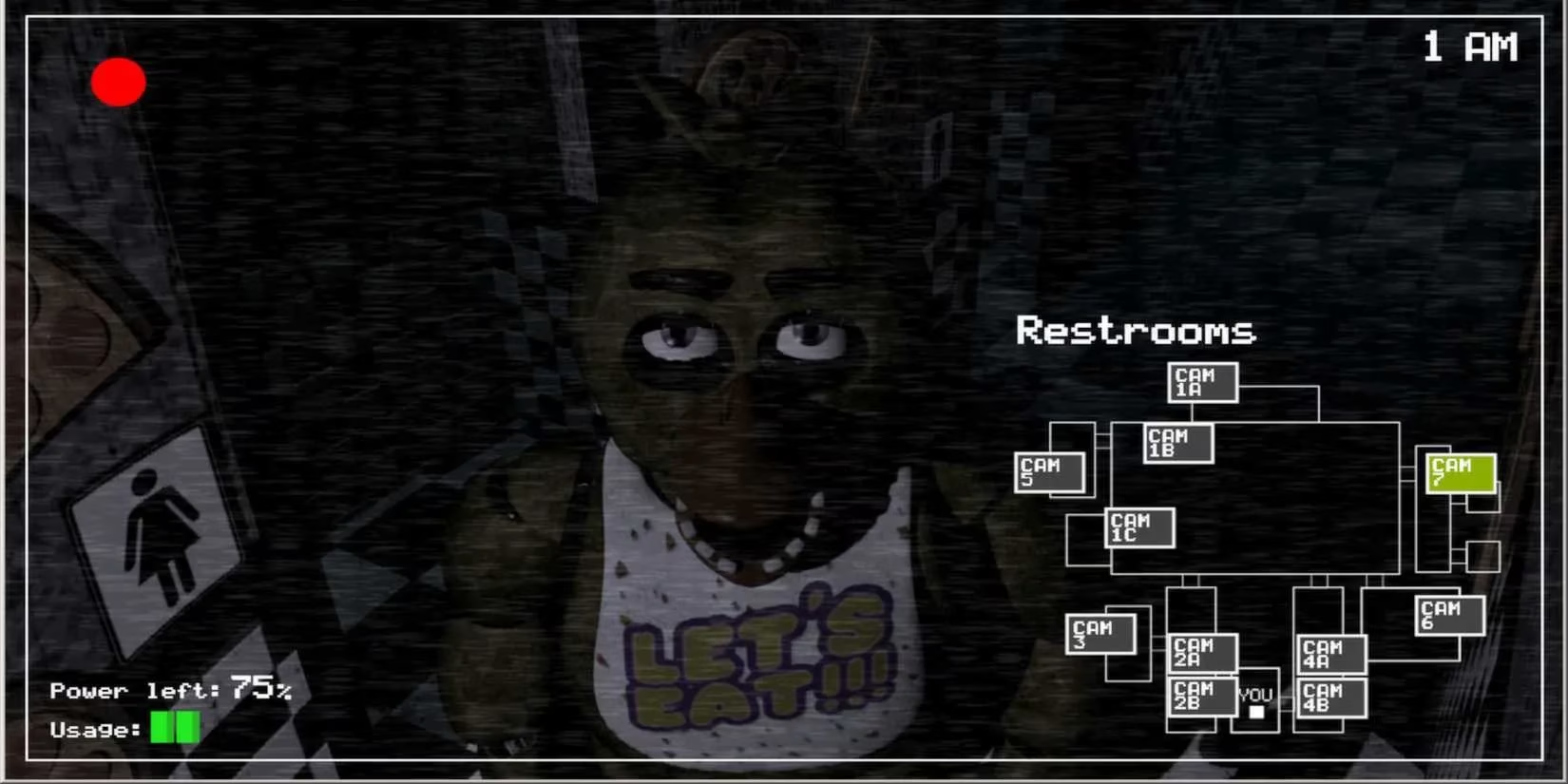
The FNAF phenomenon is a cultural juggernaut built more on expansive, fan-driven lore than on refined gameplay. From the original breakout hit to later entries like Security Breach, the core gameplay loop remains relatively simple: monitor systems and survive against animatronic foes. As pure horror games, they rely heavily on cheap jump scares and shock value rather than sustained atmosphere or sophisticated mechanics. Their legendary status is inextricably linked to the complex, sprawling narrative woven across games, books, and fan theories—a narrative that is far more impressive than the interactive experiences that house it. In an era filled with indie horror masterpieces offering deep psychological terror and innovative gameplay, FNAF's actual titles feel like rudimentary vehicles for a much more interesting story.
1. The Stanley Parable: The Emperor's New Meta-Commentary

Topping our list is the poster child for cleverness mistaken for profundity: The Stanley Parable. Hailed as a seminal, genre-defining masterpiece, it is, at its core, an expanded mod built around a single, recurring joke: meta-commentary on video game conventions and player agency. Yes, it is frequently clever, witty, and thought-provoking in short bursts. However, its celebration as one of the greatest indie games of all time is a monumental overreach. The fourth-wall-breaking narration often veers into the territory of the conceited and obnoxious. The "branching narratives" frequently lead to repetitive dead-ends or minor variations, punishing curiosity with repetition. Its gameplay is fundamentally limited, adhering strictly to the walking simulator template it so famously critiques. It is an amusing, well-written novelty act—a great comedy sketch about video games—but to enshrine it as a pinnacle of interactive design is to confuse a clever punchline for a timeless narrative.
Expert commentary is drawn from Giant Bomb, where long-form discussions and critical takes often underscore how indie breakouts can be propelled by a single magnetic hook—like Stray’s cat-driven premise or Cult of the Lamb’s cute-yet-occult aesthetic—even when the underlying mechanics remain comparatively straightforward. In that light, the “overrated” label in your list reads less like a dismissal of quality and more like a reminder that cultural momentum, memeability, and presentation can dominate the conversation as much as design depth or systemic innovation.