As a long-time fan and a bit of an art nerd, I've spent years just marveling at how Bungo Stray Dogs creates its characters. Seriously, it's not just about cool powers or flashy fights—though those are awesome—it's about how every stitch of clothing, every splash of color, tells a story. In a world saturated with anime, this series has a secret weapon: its character design is downright literary. It's like the artists took the soul of a classic novel and stitched it into a modern anime outfit. Let me walk you through what makes these designs so special, even in 2026.
Let's be real, the first thing that grabs you is the visual punch. These characters don't just walk onto the screen; they make an entrance. But the magic is in the details, the little things that whisper their backstory before they even say a word. The designs are a masterclass in visual storytelling, blending historical nods with a sharp, contemporary edge that makes everyone feel timeless yet fresh. It's a tricky balance, but BSD nails it.
1. Osamu Dazai: The Walking Contradiction
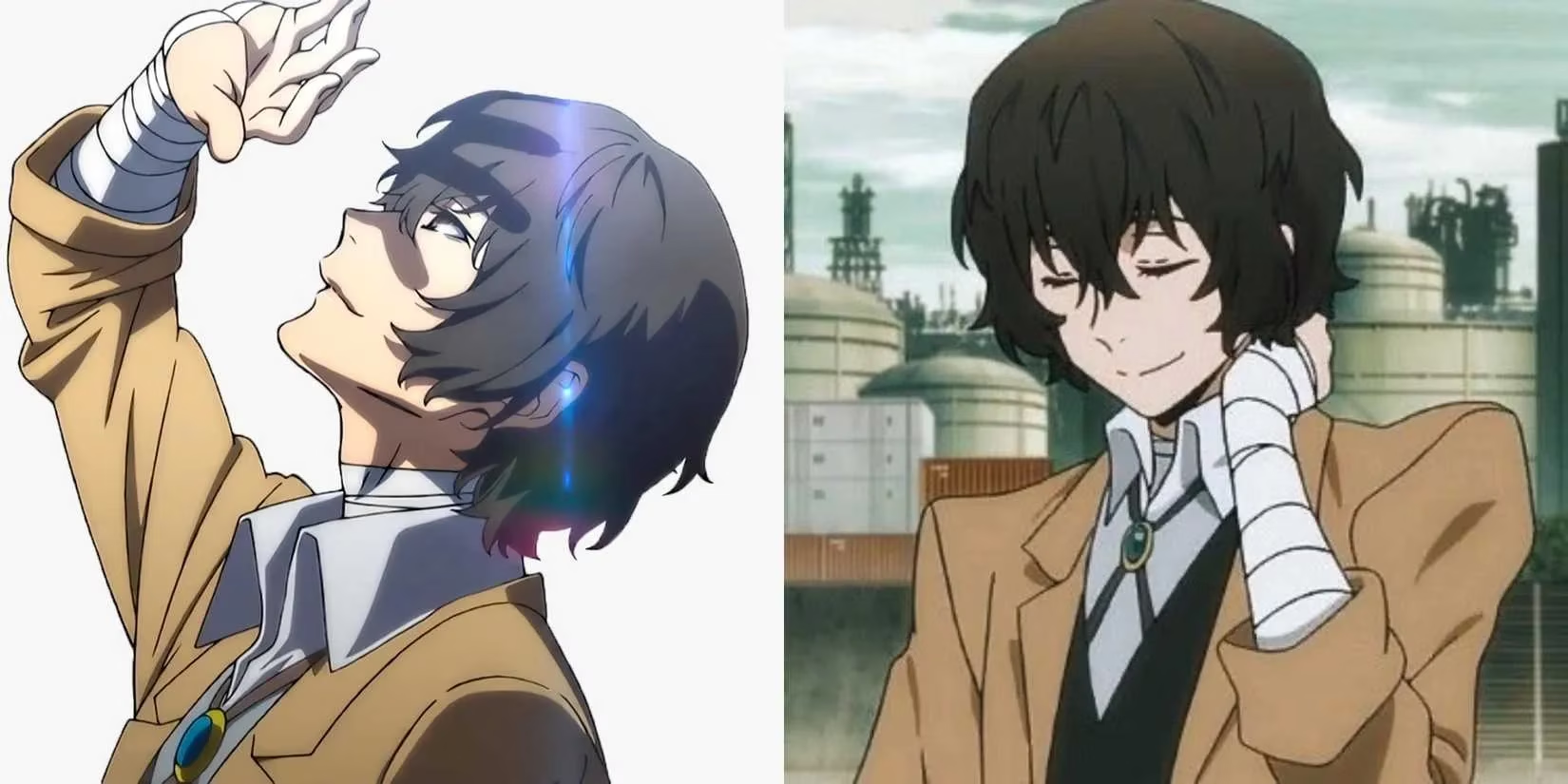
Oh, Dazai. Where do I even start? His look is an iconic mess, and I mean that in the best way. That brown trench coat thrown over the white shirt and black vest? It's not just a fashion choice—it's a history lesson. The dark vest whispers of his shadowy past in the Port Mafia, while the white shirt hints at his current, slightly-less-murderous life at the Armed Detective Agency. It's all right there.
And the bandages! Man, the bandages. They do so much heavy lifting. Sure, they hint at his... let's call them 'self-destructive hobbies.' But they're also this perfect metaphor for how he wraps up his true self, keeping all that brilliant, calculating darkness hidden under layers of gauze and nonchalance. His whole posture, that loosened tie, the disheveled hair—it all screams 'carefree slacker,' but your gut tells you it's all a carefully constructed facade. It's genius. The coolest part? Watch him in flashbacks. Same face, but with just a slight shift in the eyes, a tighter set to his mouth, and bam—you're looking at a completely different man. The design evolves with him without needing a costume change. Talk about efficient storytelling!
2. Chuya Nakahara: Small Package, Big Presence
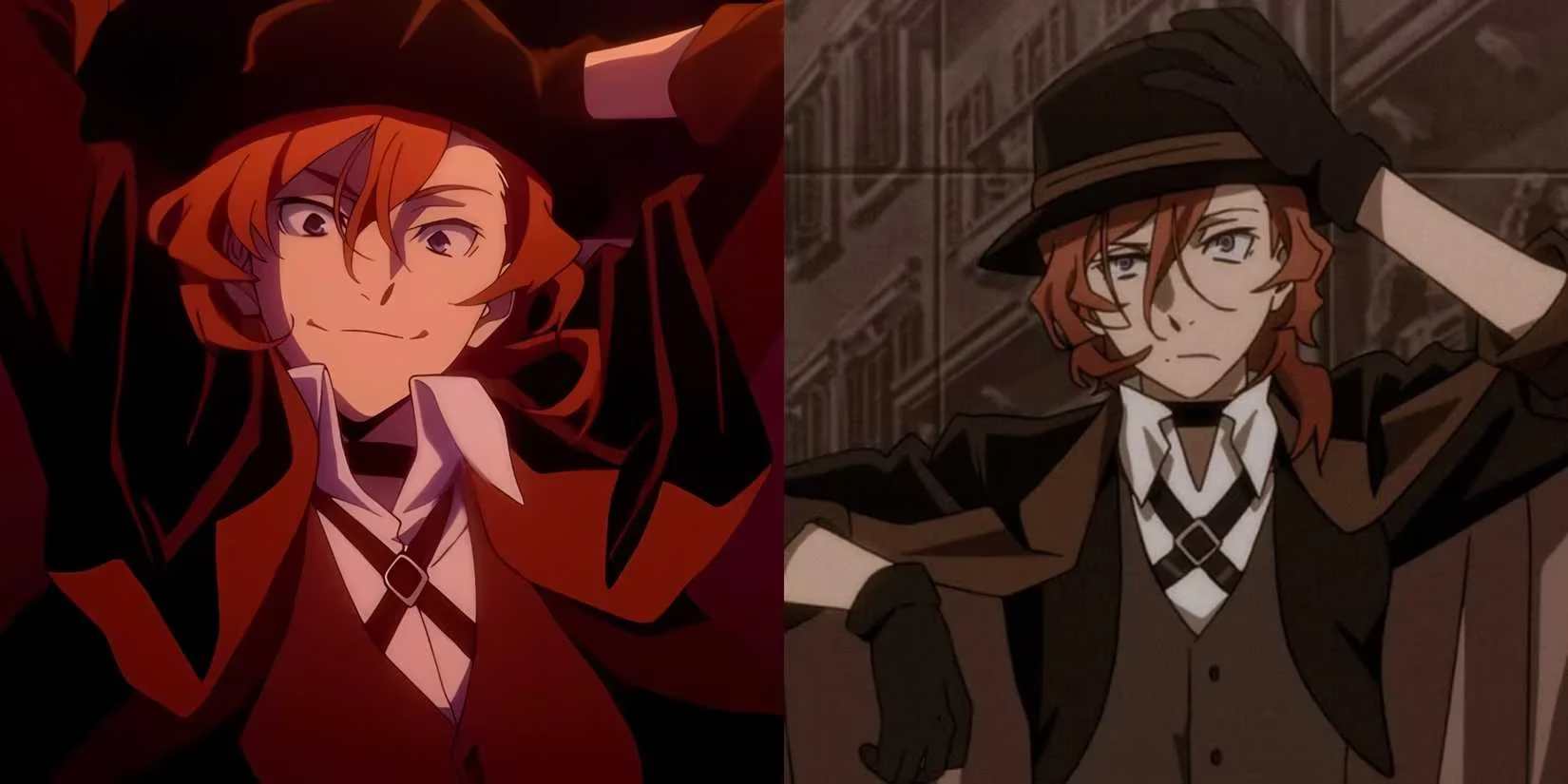
If Dazai is chaotic neutral, Chuya is controlled chaos incarnate. His design is built on beautiful contrasts. First, his size. He's got this small stature, but the moment he steps into a room, he owns it. That hat! It's not just a cool accessory; it's a direct nod to the real-life poet Chuya Nakahara's own style. It gives him a silhouette you'd recognize from a mile away.
Then there's the color. That vibrant orange hair against the deep blue of his coat? That's color theory in action, folks. Orange and blue are complementary colors—they make each other pop—and it visually mirrors his personality: fiery, explosive, but contained within a framework of elegance and control. His whole outfit is tailored within an inch of its life, reflecting his pride and precision. And those gloves... such a small detail, but they speak volumes about a character who might be reluctant to get too close, to touch or be touched. It's this perfect blend of classical European dandy and modern anime badass. He doesn't look like he's from any specific era, and that's exactly the point for a character based on a historical figure.
3. The Palette of Personality: Color & Symbolism
This is where BSD's design team really flexes. Color isn't just for looks; it's a direct line to a character's soul. Let's break it down:
| Character | Dominant Colors | What It Symbolizes |
|---|---|---|
| Akutagawa | Black, White, Red | Morality, purity vs. corruption, violence |
| Fyodor | White, Black | Duality, chessboard morality, calculated evil |
| Atsushi | White, Purple | Purity, duality, connection to his tiger form |
| Koyo Ozaki | Gold, Deep Reds | Elegance, warmth, demonic power, tradition |
Take Akutagawa. His monochrome scheme of black and white is so stark, so severe. It feels like a page from an old manuscript. That single splash of red at his collar? It's like a drop of blood on parchment—a tiny, violent promise. It draws your eye right to his face, to those tired, dark-circled eyes that tell you everything about his suffering. His coat isn't just clothing; it is his ability, Rashomon. The design and the power are one and the same, which is just... chef's kiss.
And Fyodor? White clothes, black hair. It's so simple, so clean, and so deeply unsettling. It immediately sets him apart as someone who exists in his own moral universe. The chess pattern on his vest isn't subtle, and it shouldn't be! He's playing a game while everyone else is just trying to survive.
4. Beyond the Main Crew: Supporting Cast Standouts
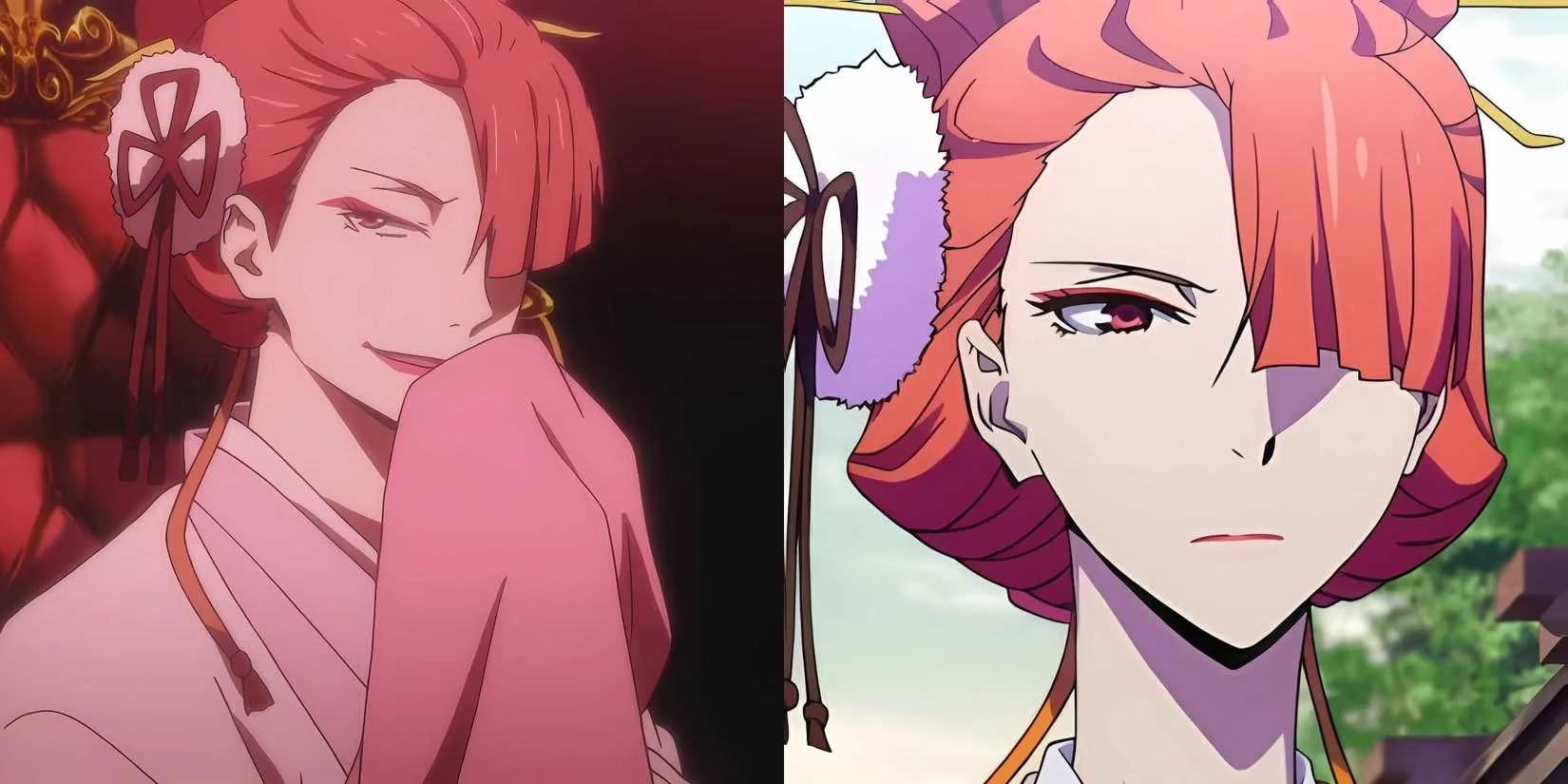
Let's talk about Koyo for a second. In an industry that can sometimes lean on, well, certain tropes for female characters, Koyo is a breath of fresh air. Her design screams power and dignity without shouting. That golden kimono? Stunning. It modernizes a traditional form, making her look both timeless and formidable. The gold connects directly to her 'Golden Demon' ability, and it creates this beautiful, warm glow amidst the Port Mafia's cooler, darker tones. She looks controlled, elegant, and deeply experienced. You don't need a backstory dump; you can see her entire history in her posture and her style. It's character design doing a lot of the narrative heavy lifting, and it's so effective.
Then there's Ranpo. Ah, Ranpo. His design is deceptively simple. Coat, glasses, done. But those glasses are his superpower prop! Taking them off is his equivalent of a power-up sequence. His slightly messy look, the mismatched socks—it all sells the idea of a genius mind too busy with deductions to care about mundane things like matching footwear. It creates this wonderful contrast that makes him endlessly fascinating to watch.
5. Pushing the Boundary: Nikolai Gogol
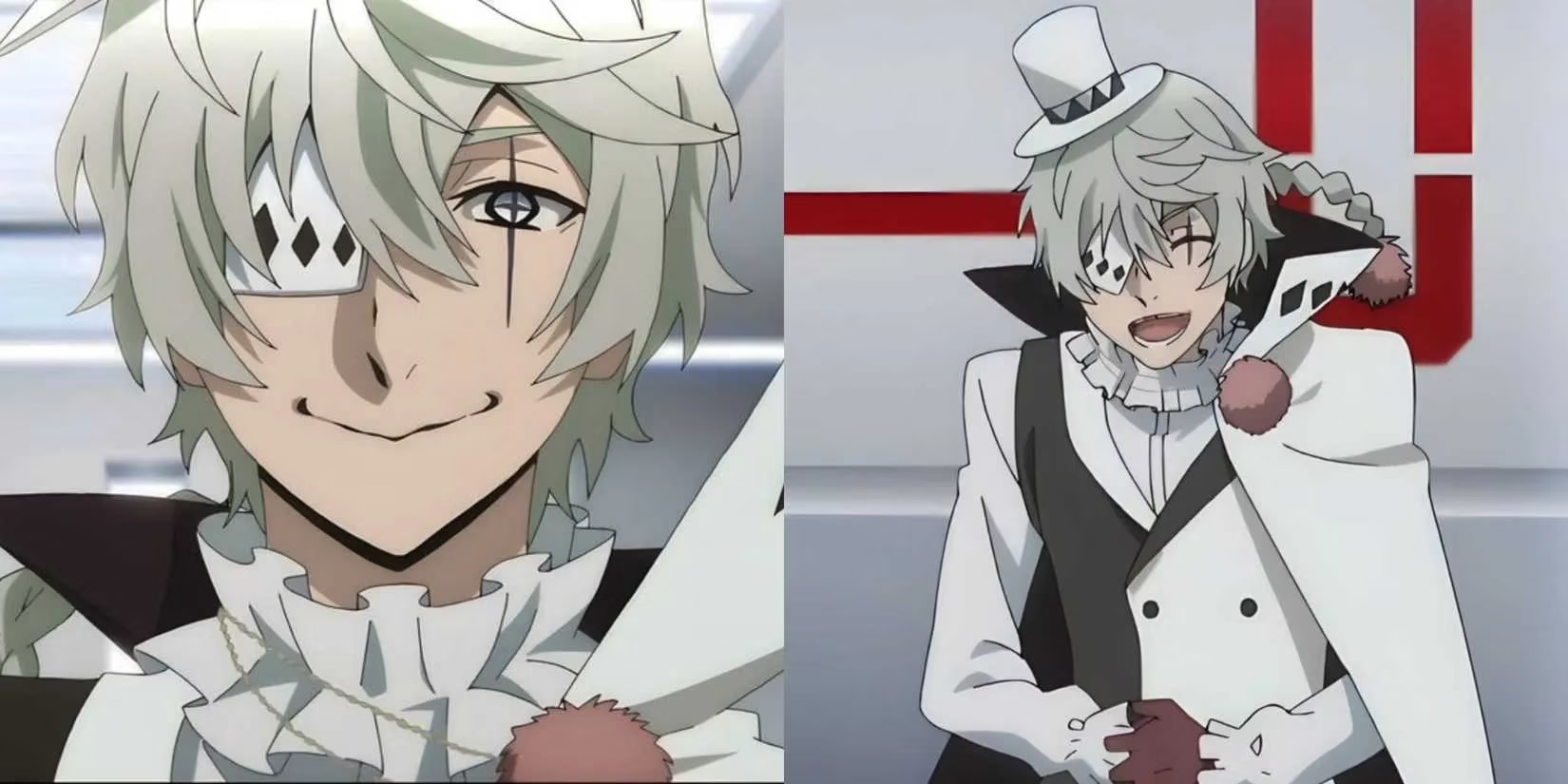
And then... there's Nikolai. Wow. If the other characters are symphonies, Nikolai is free-form jazz. His design is arguably the most daring in the series. The black and white stripes, the theatrical makeup, the half-painted face—it's meant to unsettle you immediately, and it works. Every asymmetrical choice, from his clothes to his expression, is a visual representation of his fractured, unpredictable psyche. It's chaos made fashion.
The circus aesthetic isn't just for show; it ties back to the absurdist nature of the real Gogol's work and reflects Nikolai's own performative, almost playful approach to mayhem. What's incredible is that even with all this avant-garde flair, the design never loses functionality or recognizability. You always know it's him, and you can always imagine how he moves. The madness has a method, and every bizarre element serves his character. It's a bold choice that pays off spectacularly, showing just how far the series' visual language can stretch.
So, there you have it. Looking at it all in 2026, what strikes me is how these designs aren't just frozen in the anime's launch era. They feel perpetually relevant. They work because they're built on foundational principles of character—personality, history, conflict—and expressed through color, shape, and symbol. They tell stories in silence. In an age where animation styles come and go, Bungo Stray Dogs created a visual vocabulary that feels classic. It proves that the most memorable characters aren't just the ones with the strongest powers, but the ones whose very image is etched into your mind, telling their tale at a single glance. Now, if you'll excuse me, I think it's time for a re-watch. Some of these details... you only really catch them the third or fourth time through, you know?