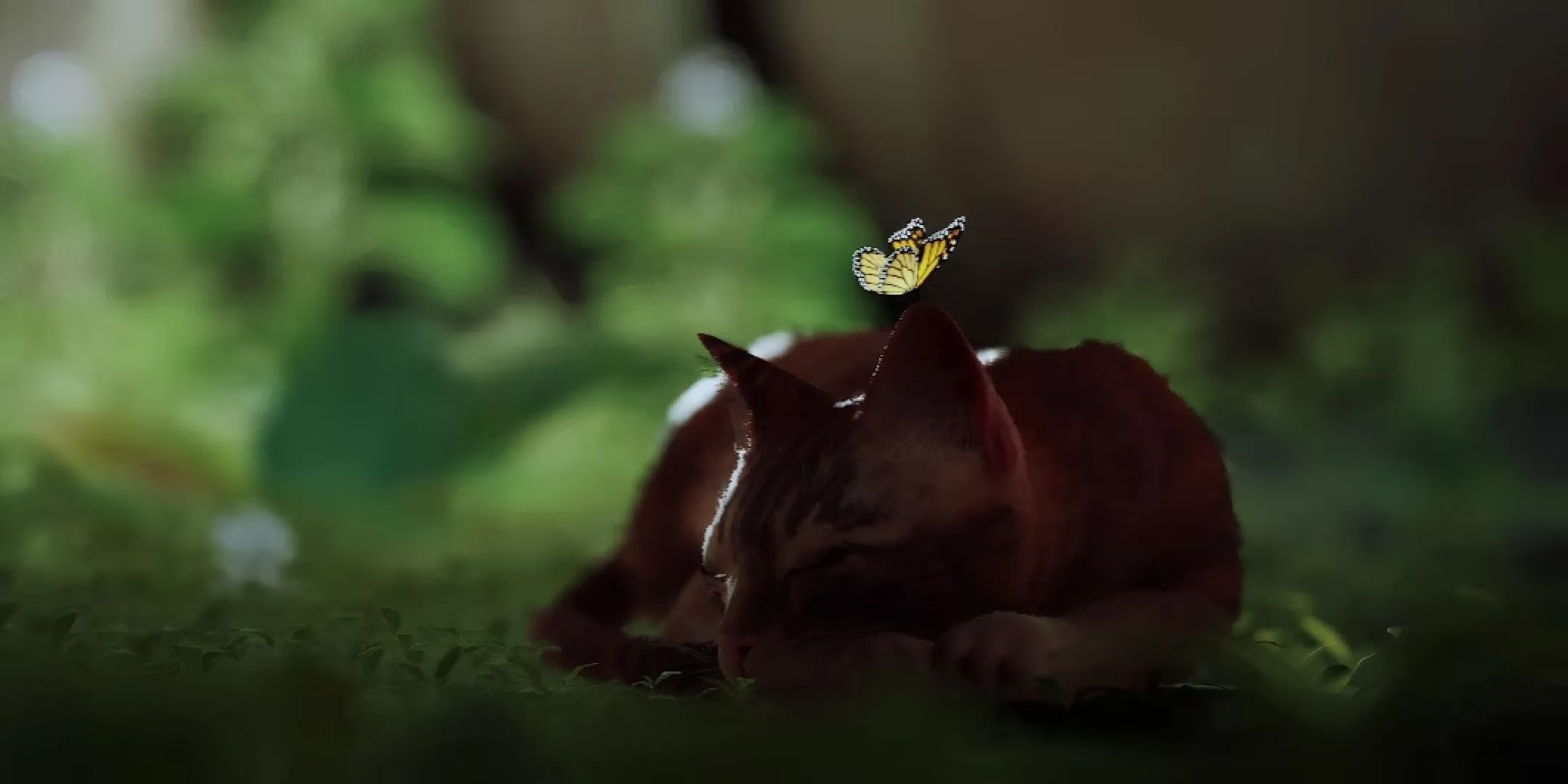
Cats have carved out a unique niche in modern gaming, not merely as companions but as the stars of their own adventures. Two titles that exemplify this phenomenon are Stray and Little Kitty, Big City. Both put players in the paws of a feline protagonist, yet they offer strikingly different experiences. From the rain‑slicked neon alleys of a cyberpunk dystopia to the sunlit sidewalks of a cozy urban neighborhood, each game asks a distinct question: what does it really mean to be a cat? Comparing them reveals not a simple winner, but a fascinating study in how design philosophy shapes our relationship with virtual animals.
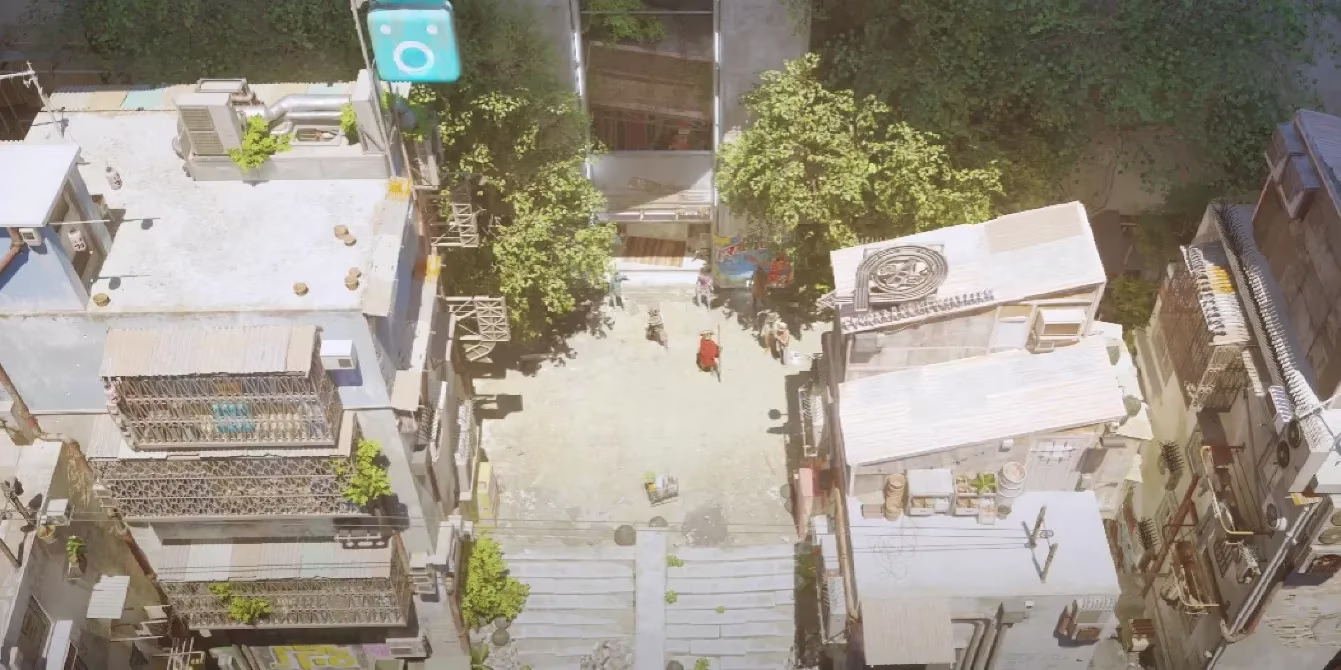
Visuals become an immediate differentiator. Stray paints a world of breathtaking decay, where every surface tells a story of a civilization long vanished. Players leap from the rusting peaks of a mega‑structure to the bioluminescent gloom of a forgotten sewer, the art direction shifting dramatically from one chapter to the next. The cluttered verticality of the slums, dotted with flickering holograms and humming machines, creates a dense, lived‑in atmosphere even without a single human in sight. Little Kitty, Big City adopts a cheerful, cartoonish aesthetic that fits its lighthearted tone, but its smaller map lacks the visual ambition of its counterpart. Stray’s meticulous lighting and environmental storytelling make its world feel vast and unknowable, while Little Kitty’s charm lies in its cozy, manageable streets — a pleasant postcard compared to an oil painting.
Collectibles and completion loops highlight a different kind of contest. In Little Kitty, Big City, gathering every hat, exchanging shiny trinkets with crows, and freeing trapped ducklings become a natural part of wandering. The game structures its side activities so that players rarely need to backtrack through agonizing sequences; everything feels achievable during a single lazy afternoon. Stray, by contrast, hides memories and badges inside linear chapters, locking some behind missable moments. Completing the full collection often demands replaying entire segments, which can feel at odds with the otherwise urgent narrative.
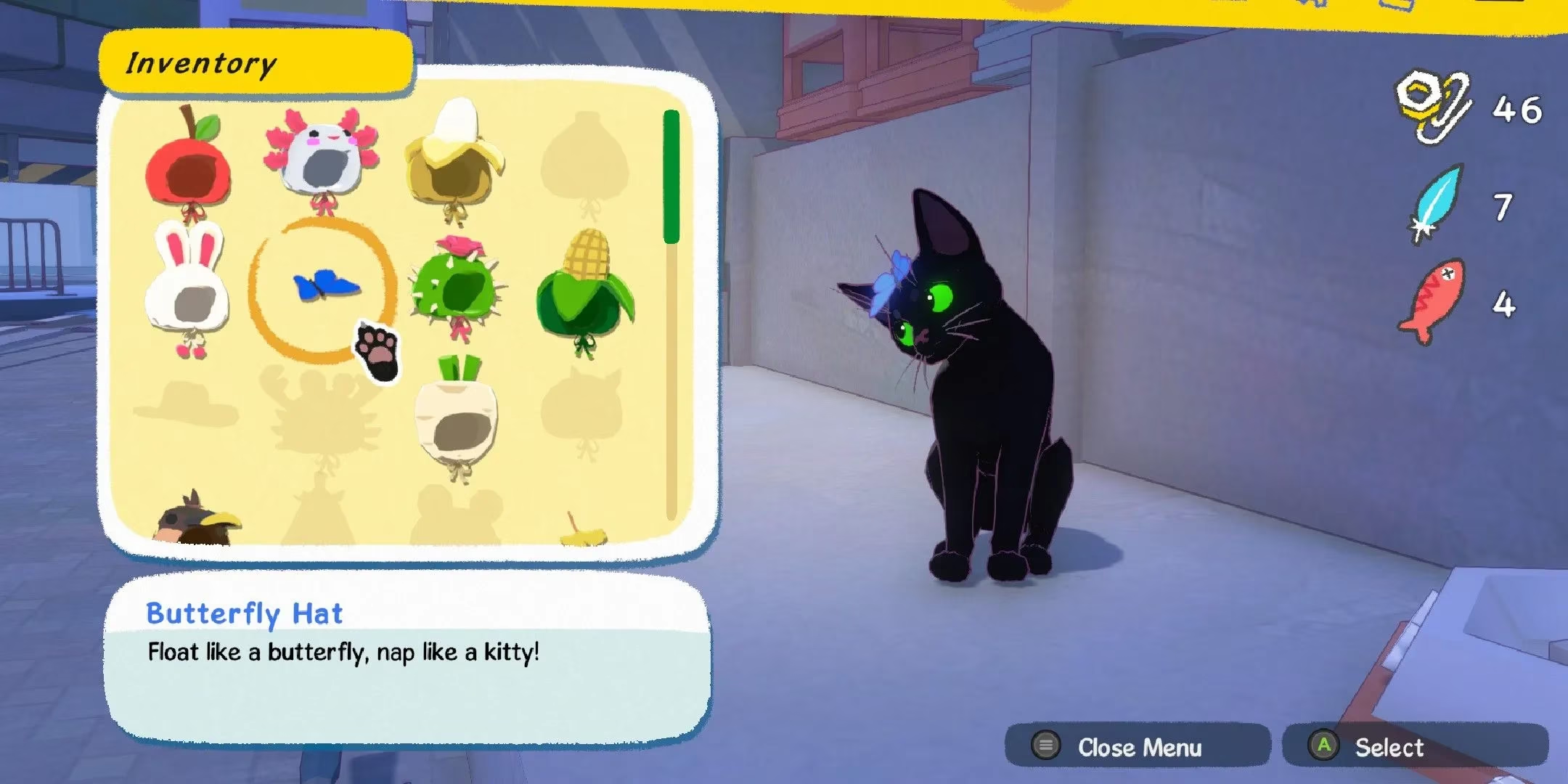
While both games reward exploration, Little Kitty’s forgiving design encourages a completionist mindset without punishment. A player is far more likely to unlock every pointless yet delightful accessory for a house cat than to scour the dangerous depths of the Walled City 99 for a single lost memory.
When it comes to gameplay, the divide grows steeper. Stray embraces action‑adventure tension, throwing the cat into frantic chase sequences through collapsing tunnels or across rooftops while swarms of hungry Zurks snap at its heels. Failure carries real weight; misjudging a jump or losing momentum forces the player to restart, injecting genuine stakes into the journey. Little Kitty, Big City, in the spirit of games like Untitled Goose Game, prizes mischief over mastery. The puzzles involve knocking objects off shelves, tripping humans, and performing tiny acts of feline chaos, but none of it demands precise timing or coordination. It is a sandbox of whimsy where the only punishment is a patient reset. Stray offers challenge, whereas Little Kitty supplies pure, undemanding play — both valid, yet fundamentally different.
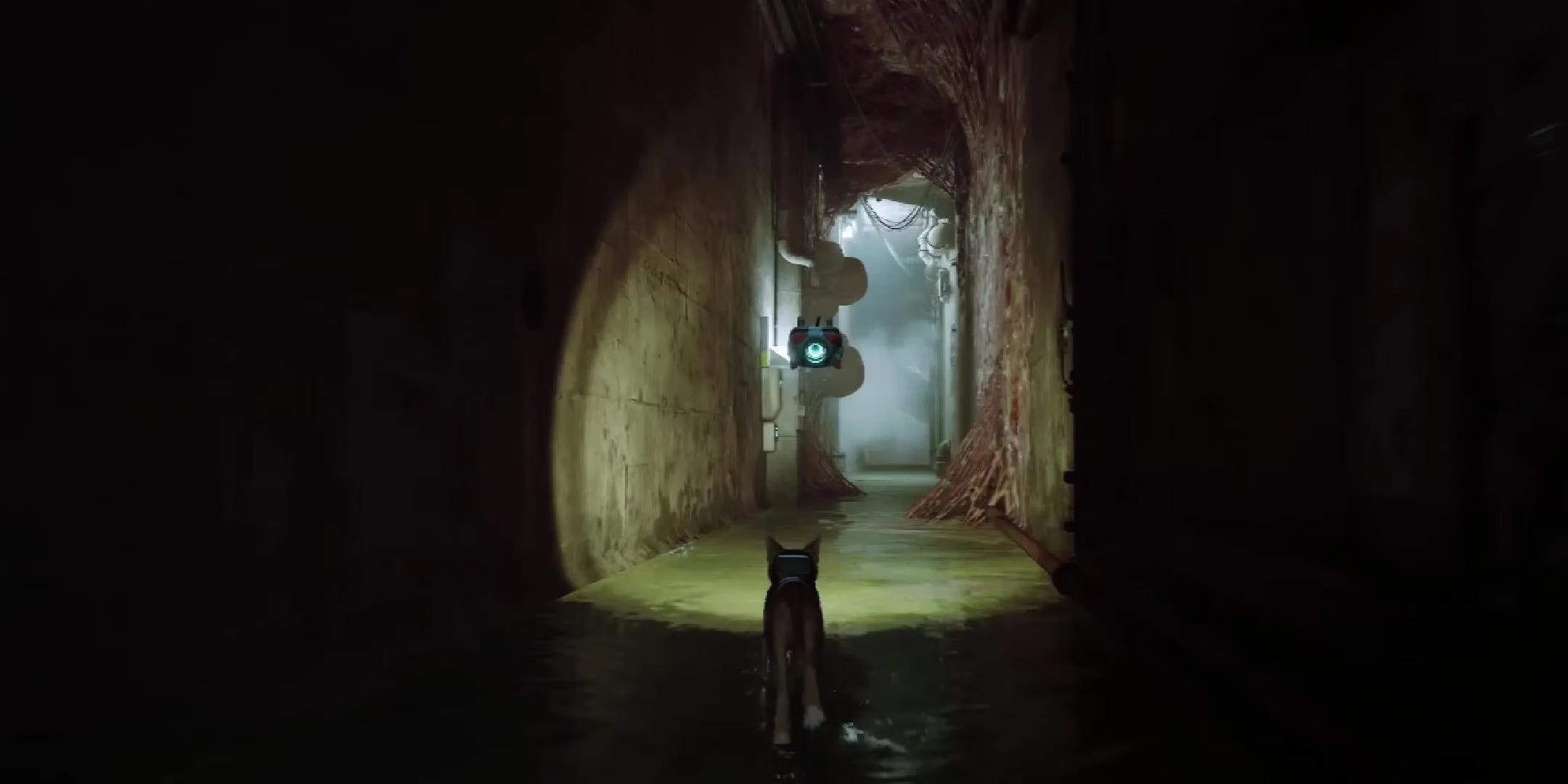
Surprisingly, the title that best simulates the authentic existence of a cat is not the one with the grander story. Little Kitty, Big City excels at translating mundane feline behavior into interactive mechanics. Arching the back for a stretch, pouncing on unsuspecting birds, deliberately swatting objects off ledges — these moments capture the essence of being a small, curious creature in a world not built for it. In Stray, the protagonist acts more like an intelligent survivor wearing a cat’s body; it purrs and scratches, but it also communicates through a drone, opens electronic locks, and battles mutant bacteria. The adventure is epic, but it often feels like a human mind dressed in fur. For those who want to experience the unbridled, slightly egocentric joy of being a household cat, Little Kitty delivers with purring sincerity.
Narrative proves to be Stray’s strongest suit. On the surface, it is a tale of a lost animal trying to reunite with its clowder, but the emotional core belongs to B‑12, a tiny drone whose fragmented memories unveil a heartbreaking history of human extinction and robot sentience. The bond between cat and drone gives the journey a mythic quality, transforming a simple escape into a meditation on companionship and legacy. Little Kitty, Big City has no such depths; its story begins with a nap‑induced fall from a windowsill and ends with a climb back home, and that is perfectly fine. It does not need a grand conspiracy to be satisfying. Yet when placed side‑by‑side, Stray’s layered storytelling leaves a far deeper impression.
Characters, oddly enough, blossom more memorably in the smaller game. Little Kitty, Big City populates its district with a vibrant cast of animals, each one brimming with personality. A shady crow runs a black‑market hat shop, a gecko worries about its lost children, and a chihuahua offers encouragement in exchange for simple favors. These encounters feel spontaneous and often hilarious, turning the city into a living, breathing neighborhood. Stray’s robot inhabitants, while conceptually poignant, begin to blend together after several hours. They mimic human routines out of habitual programming, but their individual longings rarely differentiate themselves enough to stand out. The world fascinates; its inhabitants, less so.
World‑building, however, tilts the scales back decisively. The universe of Stray is a masterpiece of environmental lore. Every rusted pipe, every holographic advertisement, every whispering surveillance camera builds a picture of a post‑human society where machines have inherited the earth but not the soul of its creators. The mystery of what lies beyond the city walls lingers long after the credits roll. Little Kitty, Big City’s world, by design, is small and self‑contained — a single weather‑vaned apartment complex and a few adjacent streets. There is no buried history to unearth, and that compactness serves its purpose, but it cannot compete with the sense of wonder woven into Stray’s every corner.
Both games ultimately succeed as exemplars of cat‑centric design, yet Stray emerges as the more complete package. Its fusion of evocative world‑building, cinematic set‑pieces, and emotional storytelling creates an experience that resonates across a wide spectrum of players. Little Kitty, Big City remains a pure, joyful playground for those who simply want to inhabit a cat’s daily life — filled with careless antics and gentle laughs. One is a great adventure with a feline lens; the other is a great feline simulation. In the end, the choice depends on whether you want to be a hero who happens to be a cat, or just a very good kitty trying to find its way home.