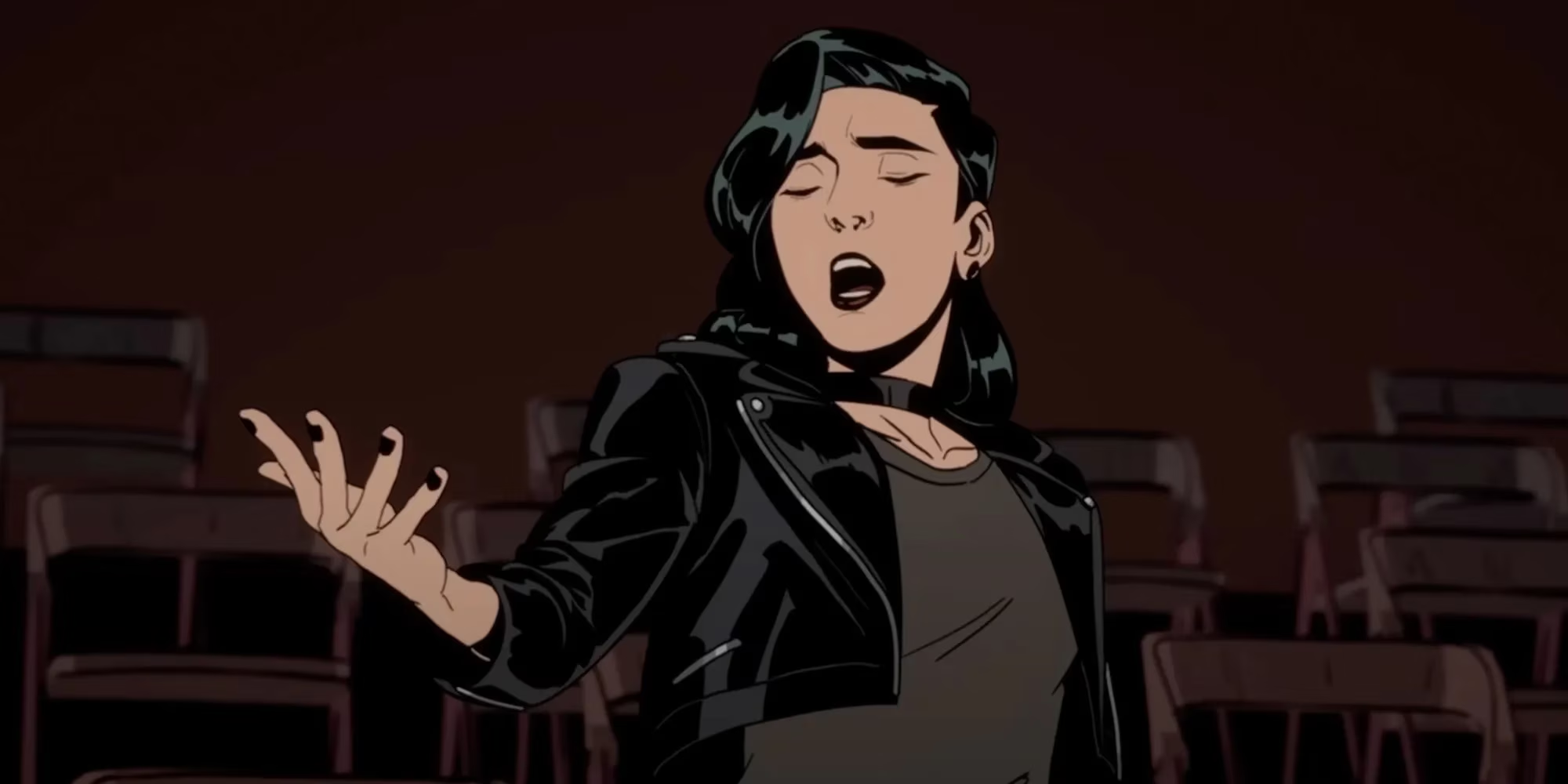
In 2026, the legacy of Stray Gods: The Roleplaying Musical continues to resonate, a testament to its groundbreaking fusion of narrative choice and interactive song. The game, the debut title from Summerfall Studios co-founded by Dragon Age creator David Gaider, captivated audiences with its innovative system where player decisions could instantly transform a song's genre and emotional tone. A year after its acclaimed release, players were invited back into its modern mythic world with the Orpheus DLC, a comedic side-story focusing on the titular, self-important musician and his unlikely road trip with the cheerful messenger god, Hermes. This expansion not only delivered new songs and laughs but also reflected on the creative journey of its developers and cast, offering a glimpse into the future of narrative gaming.
Crafting a Comedic Road Trip: The Genesis of Orpheus
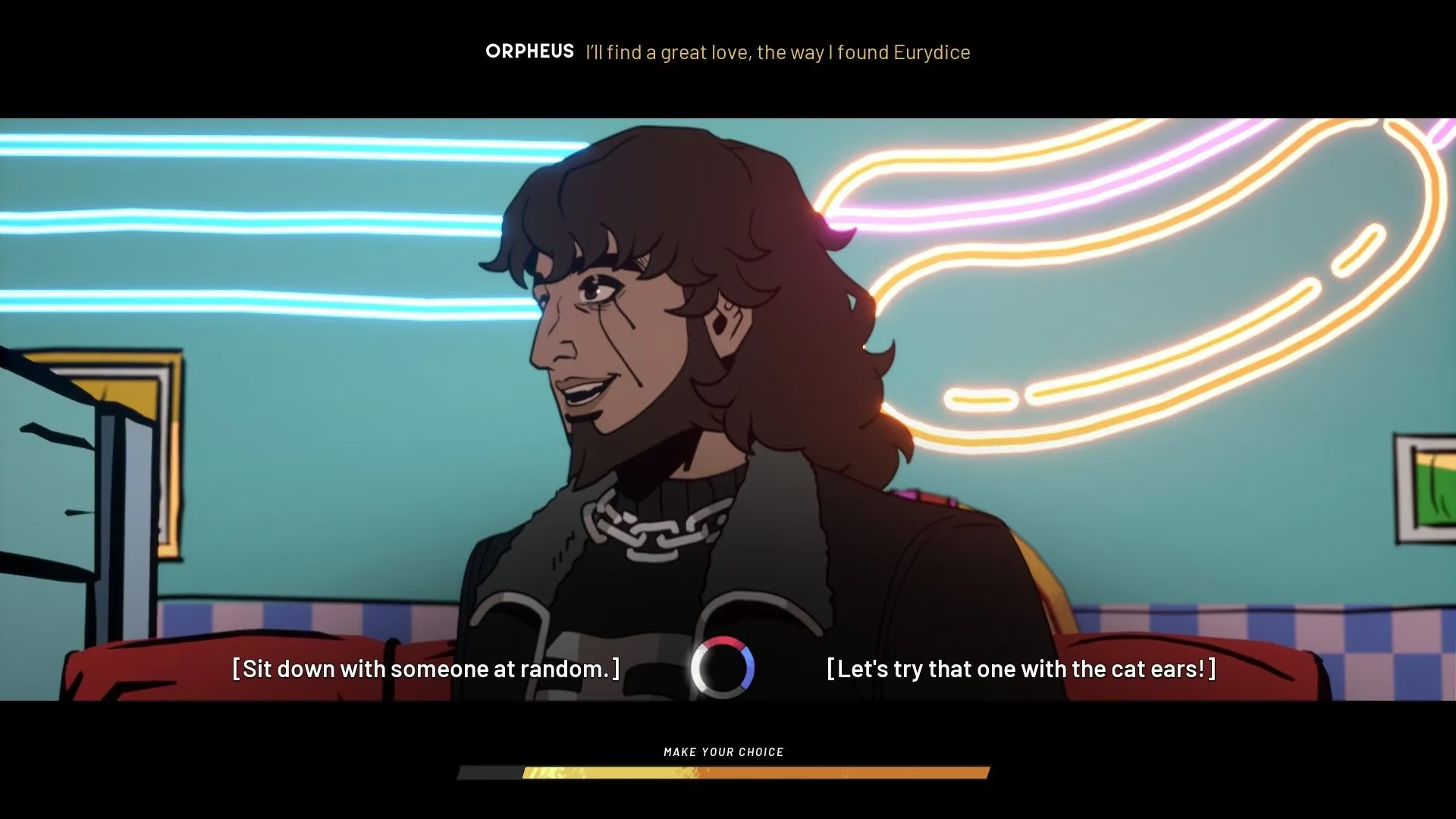
The decision to focus the DLC on Orpheus and Hermes was a deliberate creative pivot. David Gaider explained that a full-scale romance DLC involving the main game's protagonist, Grace, would have been too resource-intensive. "I couldn't revisit Grace and the romances... if we're going to keep it really small, then let's keep it tight and let's explore doing something funny instead of angsty," he said. The character of Orpheus, brimming with pretension, reminded Gaider of the classic TV character Frasier. Pairing him with the optimistic Hermes created a perfect "odd couple" dynamic. "Those kind of characters, it's like too much of them can be almost detrimental," Gaider noted, "but I think if you get them in a small dose, and especially when they have a foil... it seems like it's just enough."
This shift to comedy allowed the team to experiment with laugh-out-loud musical numbers, most notably the "speed dating" song created with comedian Tom Cardy. Gaider recalled the recording session with voice actor Laura Bailey for one of the date's reactions: "'Can you just give us a laugh that builds until you sound insane?' She did it on the first take, and we were just dying in the booth. Every time I hear that... I just kill myself laughing."
The Actor's Perspective: Joy, Challenge, and Collaboration
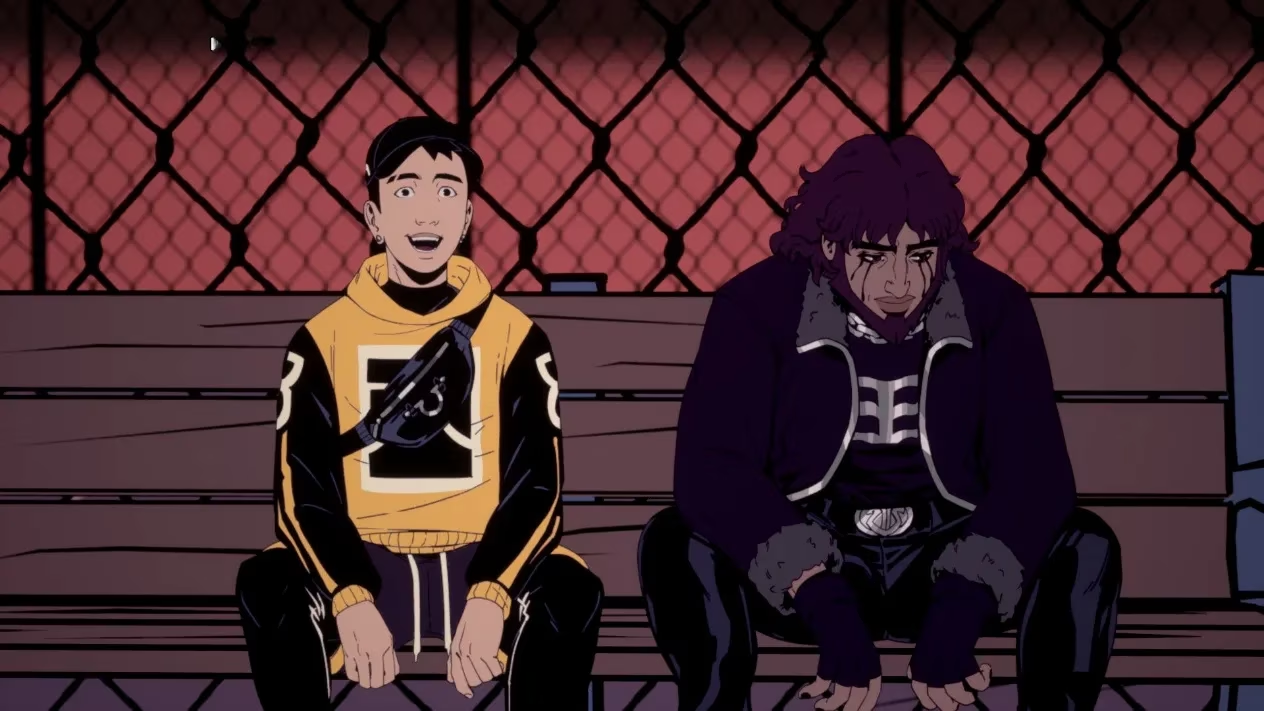
For the actors, returning to the world of Stray Gods was a unique and joyful experience. Erika Ishii, who voices Hermes, initially felt relief at not having to sing a major number but was thrilled to explore the character's sweeter, more encouraging side. "I love how sweet and wholesome and encouraging Hermes is," Ishii said. "Having a buddy comedy, with just this sad boy [Orpheus], and this sweet little optimistic being, was really, really joyful."
Anthony Rapp, reprising his role as Orpheus, described the opportunity as an "honor" that felt like a "profound understatement." As a longtime fan of branching narrative games like Dragon Age, getting a behind-the-scenes look at the process was fascinating. He highlighted the extraordinary technical challenge of the interactive music, which composer Austin Wintory mapped out with complex charts. "It's a breakthrough, a profound artistic and technical endeavor," Rapp remarked. The recording process itself, often done solo in a booth with director Troy Baker guiding him via Zoom, was a "fun puzzle" of navigating branching dialogue and song snippets.
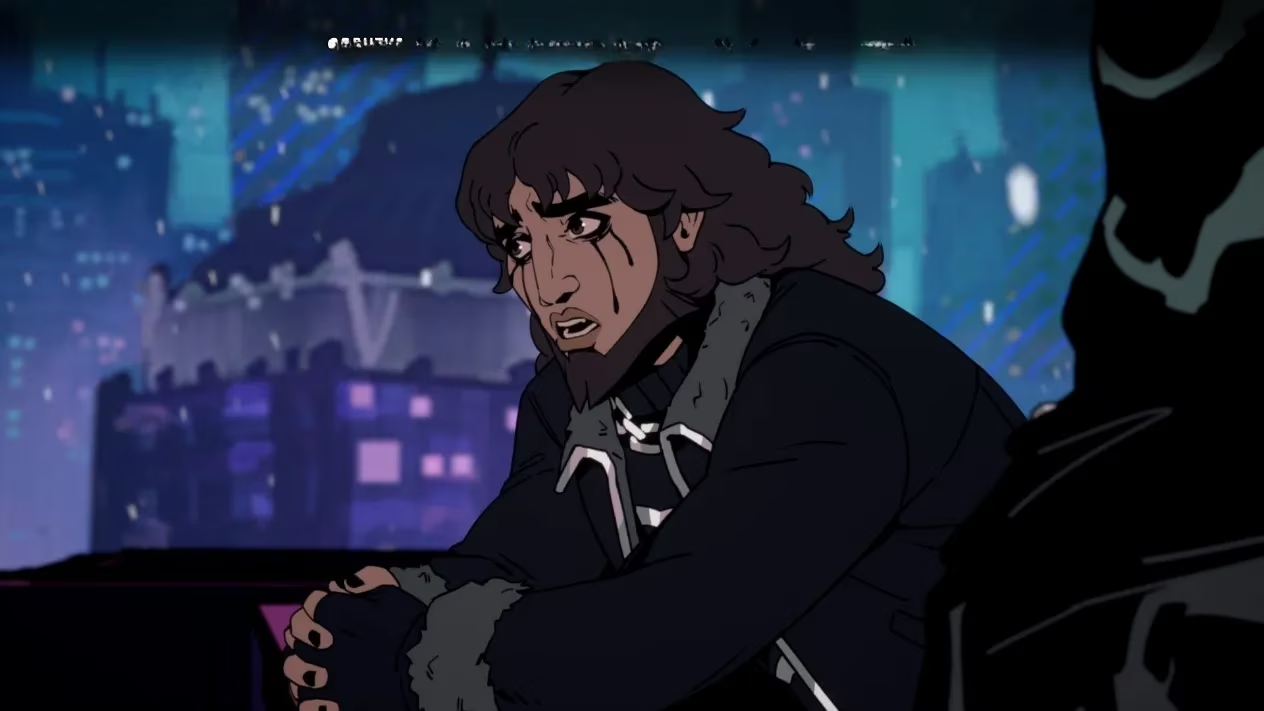
One song, in particular, stood out to Rapp—a delicate finale where Orpheus finds a moment of peace. "The delicacy of the lyrics and the beauty of the music... it just felt like I could just lean into that and ride that wave in a way that was very, very special as an actor," he shared. "Music communicates in ways that words alone don't, so as an actor, when it's a song like that, I feel like I just dive in, and it takes me where it needs to go."
Evolving the Interactive Songcraft
A year of experience since the base game's release allowed the Summerfall team to refine their collaborative process for the DLC. Gaider explained that by the end of the main game, they had finally "figured out how to do the process." The key lesson was earlier and more integrated collaboration. Instead of Gaider planning everything structurally and handing it off, the team—Gaider, Wintory, and the lyricists—would walk through song structures together from the start. "Then they would just do a little bit of the song and come back and say, 'Here's a snippet, what do you think?'" he said.
This newfound confidence allowed for more playful experimentation. The "Back from the Dead Tour" song was conceived as a playground for Wintory, where the primary choice was how to interact with the song itself rather than driving a major narrative branch. Gaider even tried his hand at writing lyrics for a couple of DLC songs, a task he found daunting after struggling with it during the main game. To his relief, Wintory's response was positive: "'No, this is actually really good.' I was like, 'Oh, thank God.'"
A Musical Future for Gaming?
The unique mechanics of Stray Gods naturally lead to the question: what other game franchises could benefit from a musical twist? The cast and creator had varied and enthusiastic answers.
-
Erika Ishii advocated for universal application: "I think that every franchise should have a musical DLC... I want Halo the musical, I want Apex Legends the album... Dark Souls the musical! Absolutely, that would get me to play a Souls game."
-
Anthony Rapp considered emotionally intense narratives like The Last of Us, where music could add a powerful layer, though he acknowledged the challenge with its linear design. He agreed with Gaider's pick of The Witcher, noting its bard character, Jaskier, is a "perfect door opener to that style of storytelling."
-
David Gaider elaborated on The Witcher idea, imagining a Jaskier-themed episode where the musical numbers are all in the bard's head. "It's all in Jaskier's head, so they're not actually singing, but this is how he views everybody," he mused. He loves the idea of subverting tonal expectations, much like Buffy the Vampire Slayer did with its seminal musical episode "Once More, with Feeling," which tackled serious seasonal arcs through song.
Looking Beyond the Musical
While the Orpheus DLC was a love letter to fans, the team at Summerfall Studios is ready to explore new creative frontiers. "I think everyone has worked a long time on a musical. I think we're okay with putting that aside, at least for now," Gaider stated. The studio's philosophy, led by Gaider, Liam Esler, and Elie Young, is to pursue projects that are "different and a little bit weird."
Gaider acknowledges the challenging funding landscape of 2026, where risk-aversion is common. The goal is to find concepts that are commercially viable yet still satisfy the team's core drive. "If I'm going to live in indie," Gaider reflected, "the reason I'm here has to be because I can do something that satisfies my need for whimsy." The Stray Gods experiment, from its angsty base game to its comedic DLC, has proven that innovative, emotionally resonant storytelling can find its audience, paving the way for whatever whimsical, uncharted project Summerfall Studios dreams up next.