As a gamer who has spent countless hours navigating the narrative labyrinths of RPGs, I've always been sensitive to pacing—those invisible metronomes that dictate when to sprint, when to pause, and when to let the beauty of a side quest wash over you. So when YouTuber Whitelight dissected the elusive magic of “good pacing” in Batman: Arkham Asylum, I nodded along. He argued that you can't really teach it; it's a feeling that demands fast parts, slow parts, and an unwavering attention that neither disrupts the other. That observation didn't just resonate inside the digital walls of Rocksteady's masterpiece—it echoed through my recent revisits to two anime series that have become masterclasses (and cautionary tales) in adaptive rhythm: Demon Slayer and Bungo Stray Dogs. In 2026, looking back at their full runs, I realize their pacing experiments are exactly the kind of gameplay mechanics I'd expect from a developer who sometimes forgets that the player—or viewer—needs to breathe.
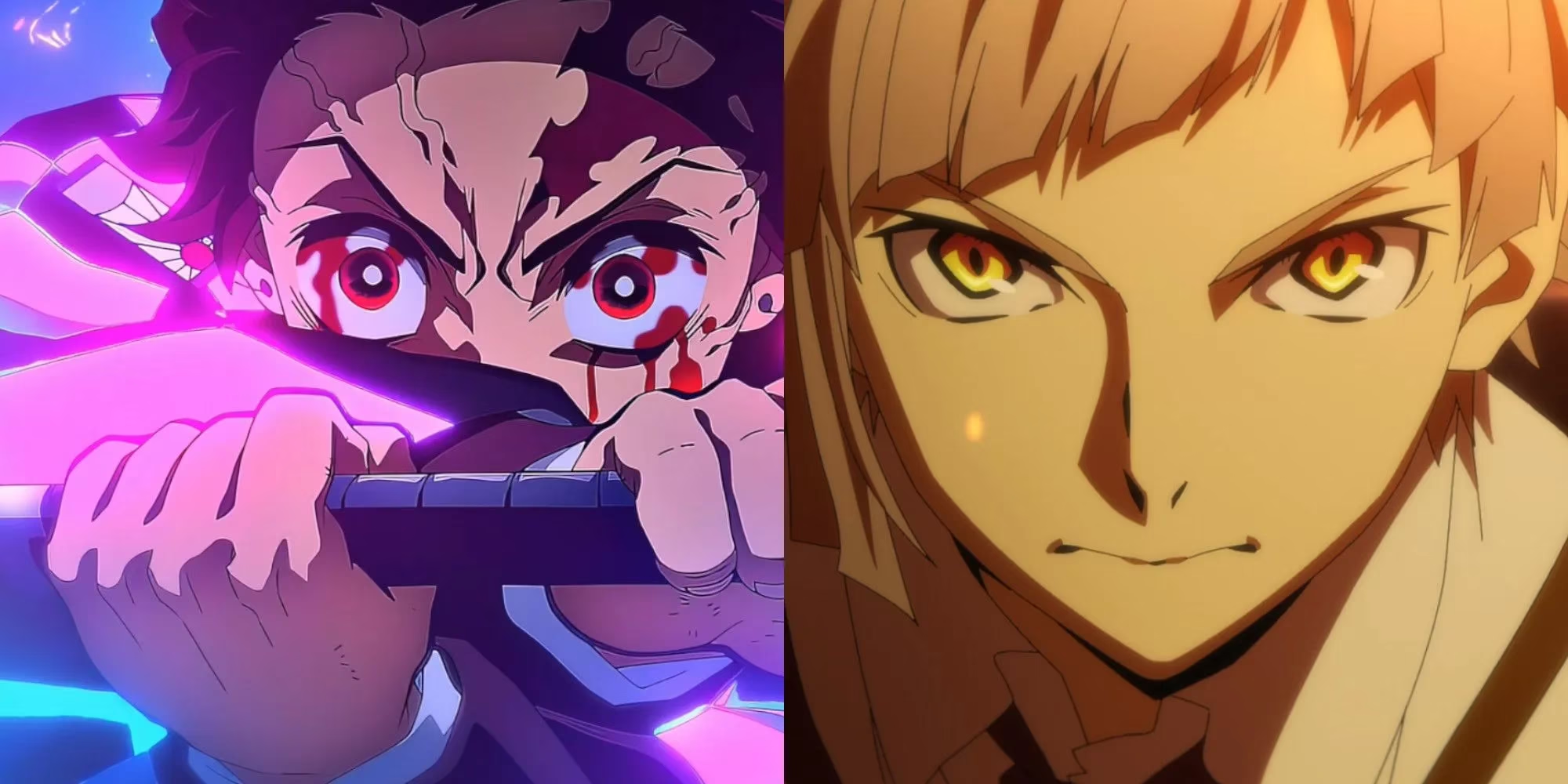
Let me set the stage like I would for a dual-protagonist RPG. Both of these shows exploded into the mainstream thanks to lovable casts, jaw-dropping artwork, and action setpieces that could rival the best boss fights. Demon Slayer, birthed from Koyoharu Gotouge’s manga and adapted by Ufotable under Haruo Sotozaki, felt like a polished action-adventure game with a clear end boss. Bungo Stray Dogs, from Kafka Asagiri and Sango Harukawa, adapted by Bones and Takuya Igarashi, was more like a sprawling neo-noir detective sim—heavily character-centric, loaded with side stories, and without an obvious endgame. At first glance, comparing them seems like pitting a lightning-fast hack-and-slash against a slow-burn visual novel. But their shared struggle with pacing revealed universal truths about how narrative timing can make or break the experience, whether you're holding a controller or a remote.
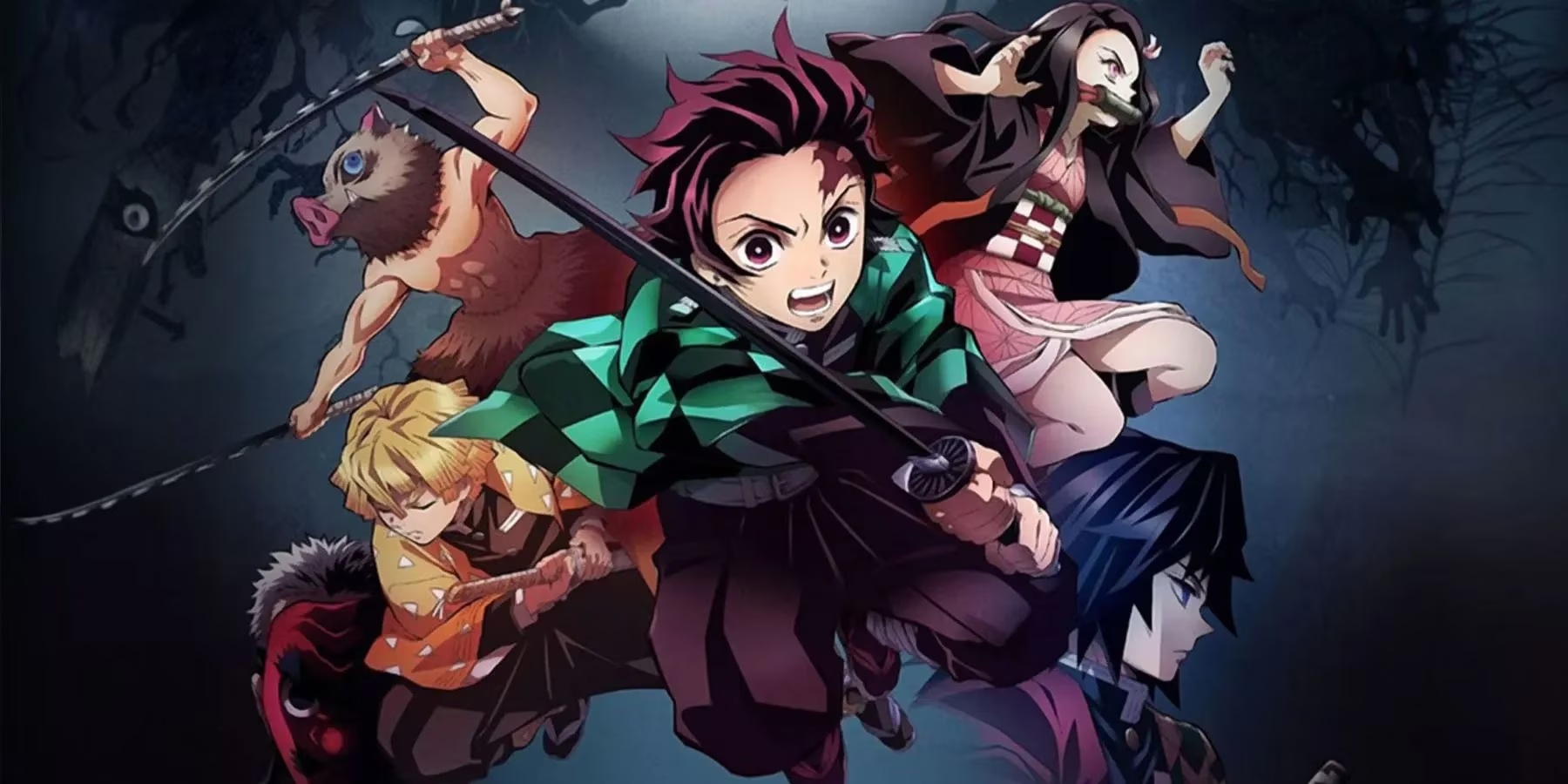
The Opening Salvo: When the Tutorial Hook Grips You
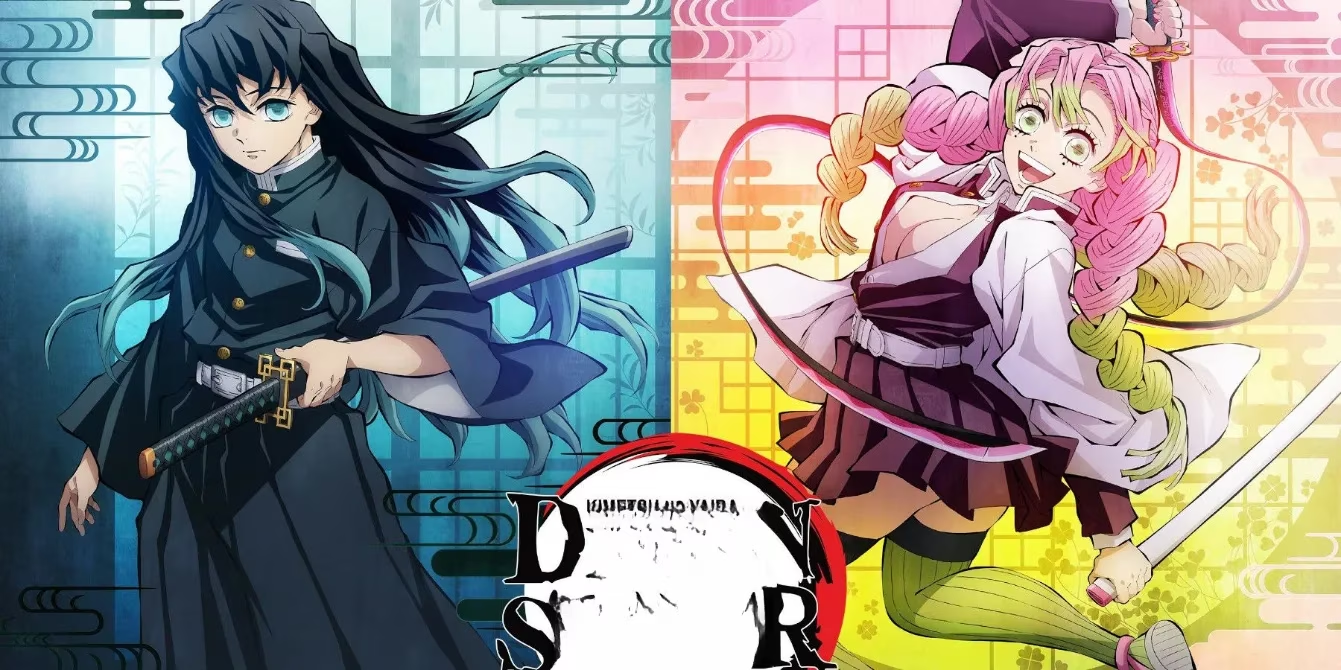
Demon Slayer Season 1 was my version of the perfect opening chapter. I remember binge-watching those 26 episodes in 2019 like I was grinding through an impeccably paced action RPG. The story had a clean tutorial area—Tanjiro's family tragedy, the introduction of Nezuko, and the first training montage—before unleashing a cascade of escalating conflicts. Every episode felt like a new quest that fed directly into the main storyline, culminating in a boss rush against the Spider Demon family. I was completely hooked. The pacing was blistering yet smooth, much like a game that understands exactly when to cutscene and when to hand back control. The fact that the manga was already nearing its end only intensified my excitement; I expected the adaptation to sprint toward the finale with the same fervor.
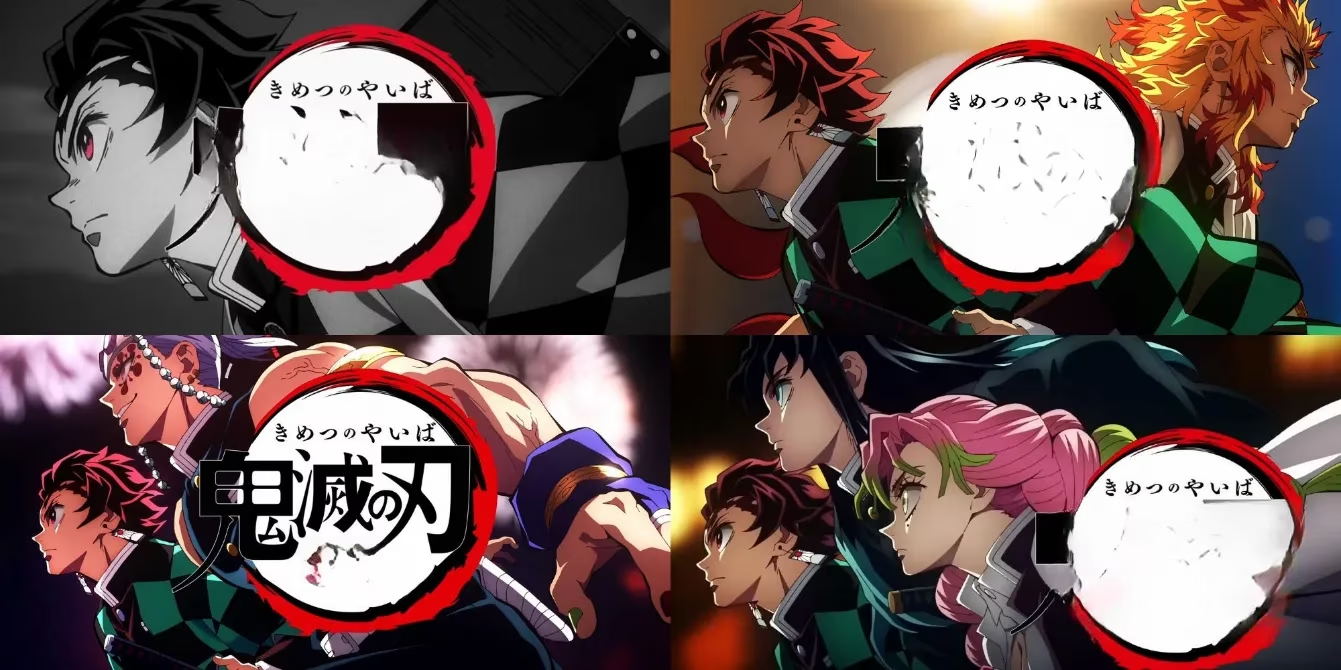
Then came Mugen Train, the equivalent of a mandatory mid-game expansion that redefined everything. As a gamer, I’ve seen this before: a studio releases a standalone DLC that becomes so wildly successful it changes the franchise's business model overnight. The film broke records, proved that a canon continuation in cinema form was viable, and suddenly the road to the final boss was paved with gold. But here’s where the pacing fork in the road appeared. Instead of bundling post-Mugen Train content into a second season, the story morphed into isolated “arcs.” The Entertainment District, Swordsmith Village, Hashira Training—each became its own short season, like episodic expansions sold separately. As cynical as it sounds, this felt less like artistic vision and more like a monetization strategy I’d expect from a live-service game. The result? A magnifying glass was held over the narrative's weaker points.
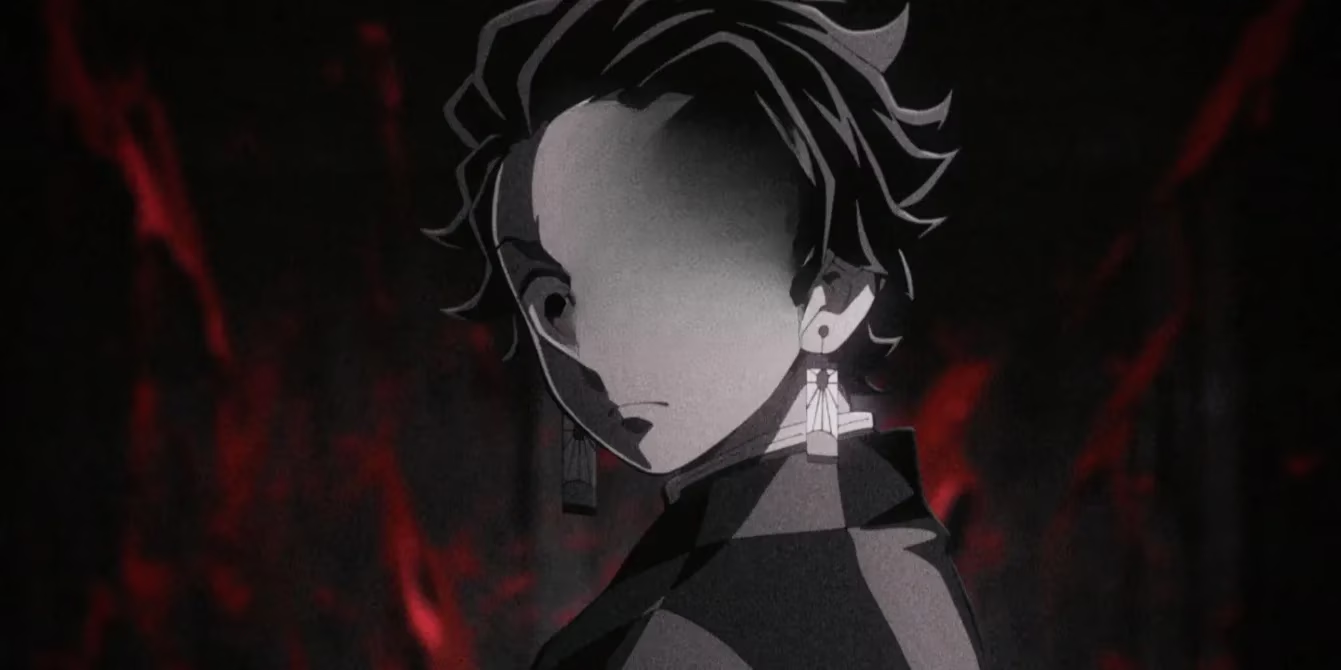
From my gamer’s chair, Demon Slayer suddenly had a pacing problem that mirrored an over-reliance on repetitive side quests. Characters like Tanjiro and his comrades aren't designed with dramatic, arc-to-arc transformations; their charm lies in simple, earnest emotion. But stretching them across artificially prolonged segments made the cracks show. The Swordsmith Village Arc, for example, offered stunning visuals and some spectacular boss battles, yet the interstitial moments felt like filler dialogue scenes you couldn’t skip. The urgent rhythm of Season 1 had been replaced by a slow, methodical plodding that left me occasionally checking my phone—the gamer equivalent of waiting for a loading screen to finish.

The Opposite Glitch: When You Speedrun the Main Quest
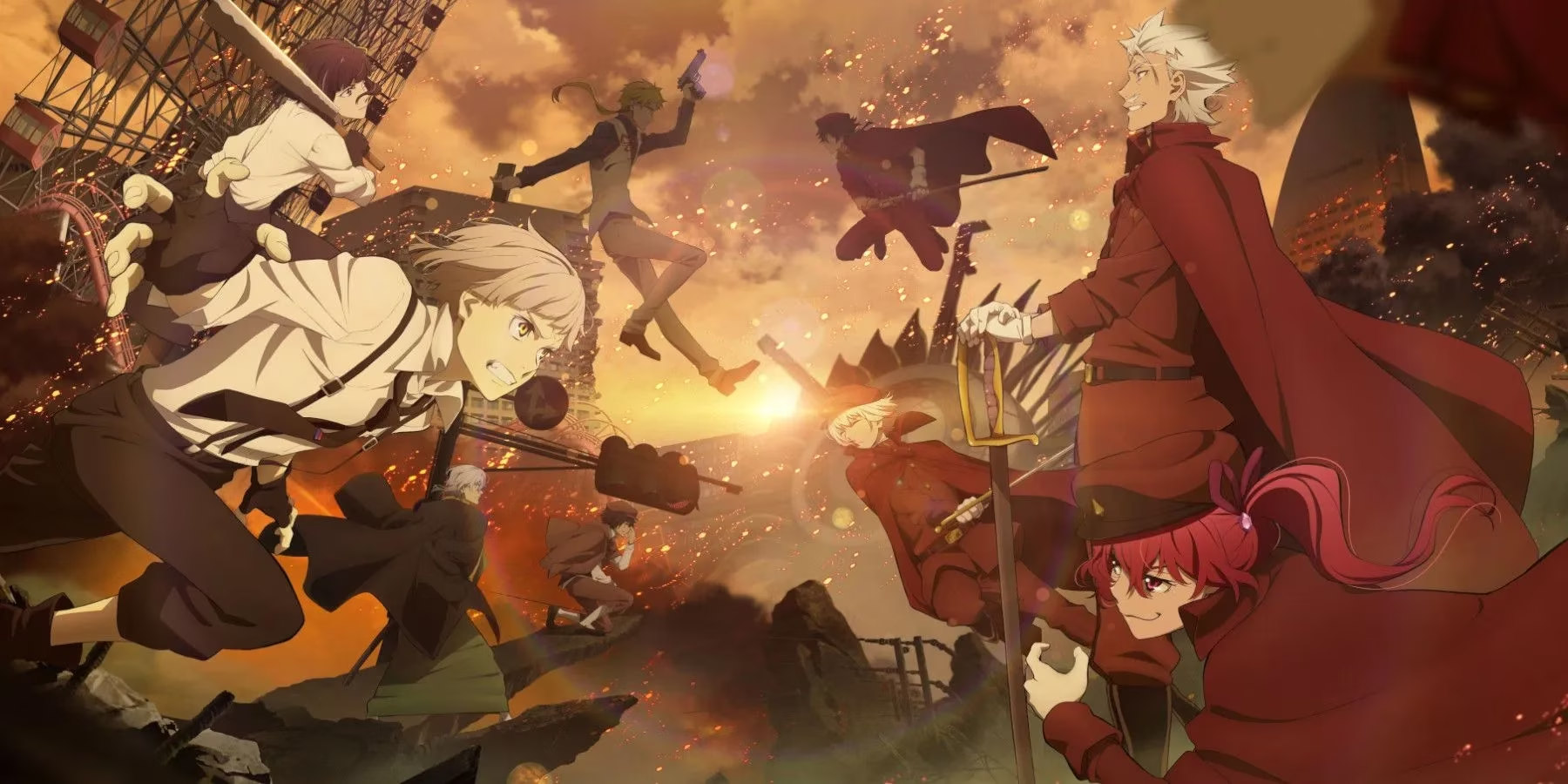
If Demon Slayer suffered from the dreaded “pacing bloat,” Bungo Stray Dogs has always flirted with the opposite sin—a speedrun that sometimes skips crucial dialogue. I began the series in 2016, and its structure immediately felt novel. Instead of a straightforward manga adaptation, Bones Studios wove in light novels written by Asagiri himself, starting with episodes 6 and 7 of Season 1 and the entire first four episodes of Season 2. This was a risky authorial choice, akin to a game that integrates lore books and side novellas into the main quest line, demanding that you absorb supplementary material to understand the whole picture. For a while, it was brilliant. Season 2’s lean adaptation of the Dark Era and Guild War arcs was a masterclass in tense, relentless pacing—only eight episodes for the latter, yet every twist hit like a well-timed quick-time event.
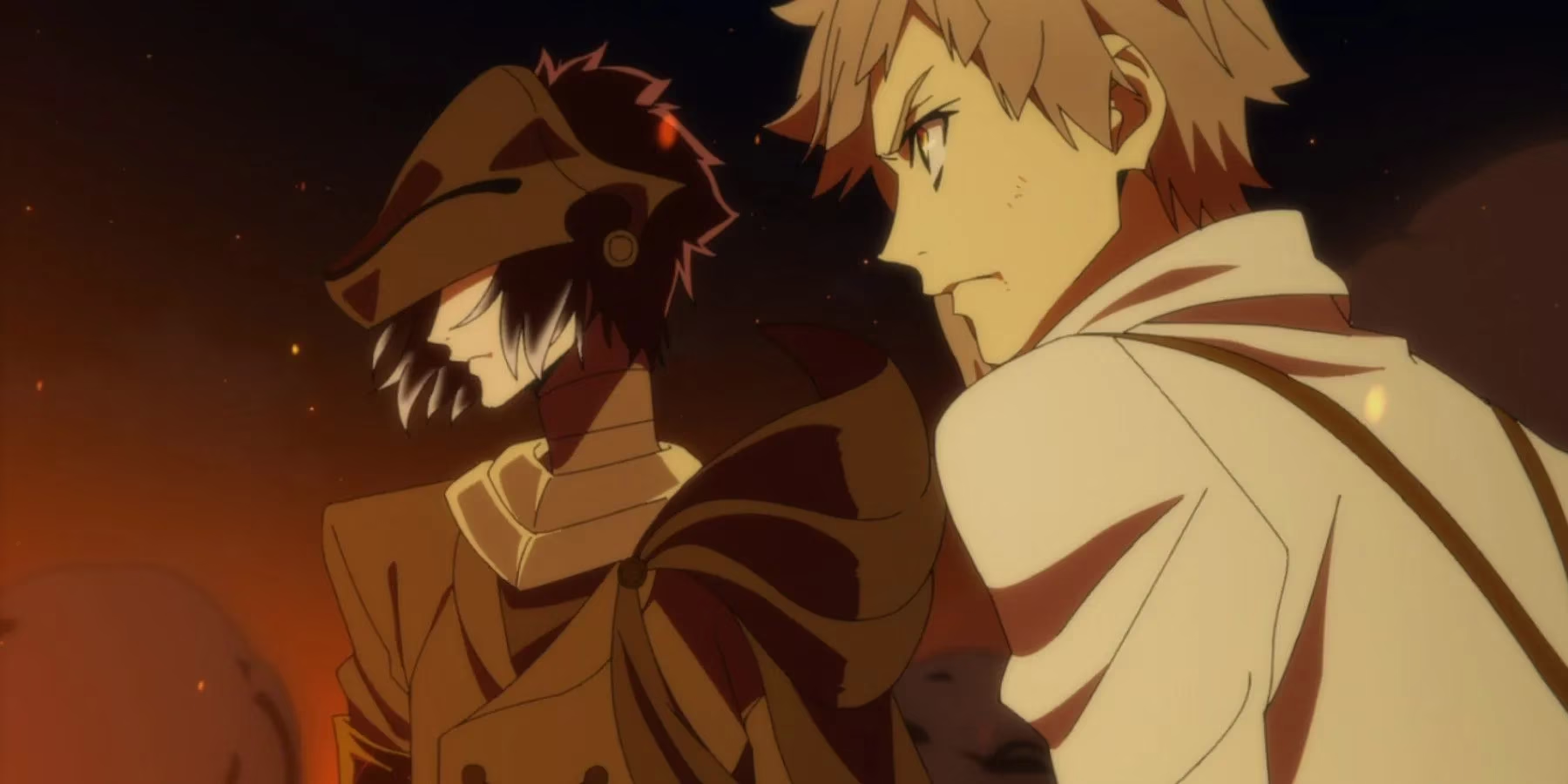
Season 3 maintained that tight grip, but by Season 4, my fellow manga-reading friends and I started sweating. The anime was rapidly closing in on the source material, a fate I know all too well from game adaptations that outrun their written lore. In its haste, Bungo Stray Dogs began sacrificing character-building moments. I adored Sigma’s quiet, introspective scenes in the manga—they were the kind of optional conversations that round out a party member’s backstory. In the anime, they were cut or rushed, making his motivations feel thinner. When I discussed this with my guildmates (yes, we all watch anime), the shared sentiment was that the story needed to breathe. The arcs were being treated like mandatory speedrun challenges: clear the objective, minimize downtime, move on. But a great story, like a great RPG, thrives on the moments between battles.
Interestingly, Bungo Stray Dogs’ pacing gamble felt more forgivable to me because it stemmed from an ambition I respect: a desire to create a “complete adaptation” that merges main and supplementary content. It’s the equivalent of a developer releasing a definitive edition with all DLC integrated from the start. The stumbling block became clear when Season 5 caught up entirely to the ongoing manga, leaving the series at a narrative checkpoint with some novels still left to adapt. As a player, I almost wished for a “new game plus” option—a chance to replay the story with the missing scenes restored.
Leveling Up the Conversation: What Gamers Know About Rhythm
Both Demon Slayer and Bungo Stray Dogs taught me that pacing isn’t just about cutting or expanding—it’s about fidelity to the emotional cadence of the source material. As a gamer, I’ve experienced this in remakes and remasters. Some games need expanded epilogues; others suffer when a developer adds too many “quality of life” fetch quests. Demon Slayer thrives on brevity and emotional crescendos, yet its post-Mugen Train structure artificially extended the mid-game. It’s as if after defeating a major boss, I was forced to grind through minor monster dens for hours before the next story beat could unlock. Bungo Stray Dogs, on the other hand, has always been a sprint against the manga’s progression, and when forced to skip crucial narrative loot, it left its inventory feeling a bit empty.
Looking back from 2026, I realize these pacing stumbles aren’t unique to anime; they mirror the eternal tug-of-war in game design between tight, curated experiences and sprawling open worlds. Fewer would criticize Demon Slayer if the manga were still running, just as a live-service game’s drip-feed content feels natural when the story is live. Similarly, Bungo Stray Dogs’ quickstep would feel like a masterful abridged tale if the cut elements didn’t involve core character growth. Ultimately, both series remain triumphs, but their pacing flaws are like bugs that jolt you out of immersion—reminders that even the most beautiful animation needs its silence, and the fastest action demands its quiet campsite rest.
As I sit here, controller in hand and streaming queue full, I’ve learned to appreciate these rhythm hiccups the way I appreciate a game with a flawed but ambitious narrative. They teach us that the best stories—whether interactive or not—are felt in the pulse, not just the plot points.