As a dedicated player who has spent countless hours in the punishing worlds crafted by FromSoftware, I've always been intrigued by the wave of Soulslikes that followed in their wake. The promise of new worlds to conquer, new bosses to master, and new formulas to experience is intoxicating. Yet, over the years, my journey through these inspired titles has been a tale of two extremes. For every gem that captures the magic, there exists a counterpart that feels like a pale, broken imitation—a promise whispered in the dark that fades before dawn. In 2026, looking back at this crowded landscape, I feel compelled to recount my experiences with the games that, despite their ambitions, left me not with the satisfying ache of victory, but with the hollow frustration of wasted potential.
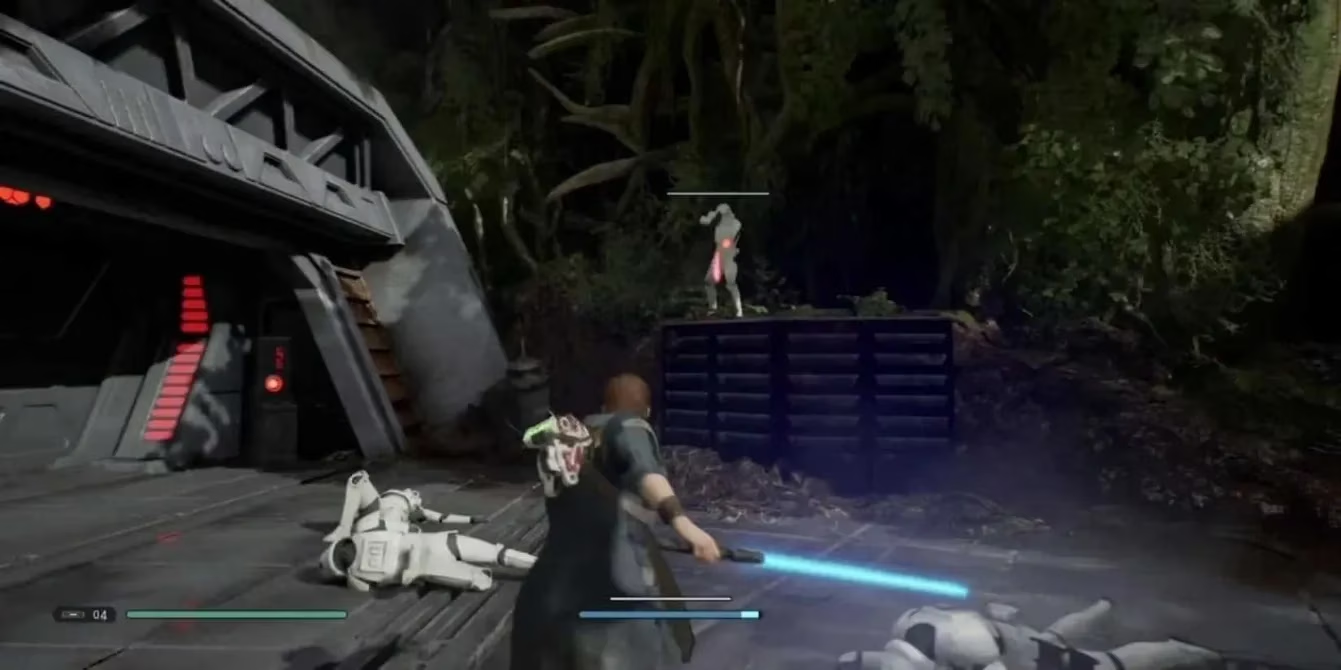
Let's start with the one that stings the most because it comes wrapped in a universe I love. Star Wars: Jedi Fallen Order felt, to me, like a beautifully painted lightsaber with a faulty crystal. From a distance, it shimmered with potential, a genuine attempt to marry Souls-like mechanics with Star Wars lore. Yet, wielding it revealed fundamental flaws. The map system was a labyrinthine nightmare, less a guide and more a malicious prankster leading me in circles. Exploration was hampered by frustrating one-way paths, and the platforming sections were a festival of cheap deaths that felt less like skill-testing challenges and more like the game arbitrarily deciding my fate. The combat, while serviceable, lacked the depth and punishing precision that defines the genre. It was a foundation, yes—one that Jedi Survivor would later build upon magnificently—but playing it felt like rehearsing a symphony with an out-of-tune orchestra.
Then there was Salt and Sacrifice. Coming from the sublime Salt and Sanctuary, my expectations were sky-high. What I got was a dish where someone had confused the recipe. The original was a masterful 2D translation of Dark Souls' essence; the sequel felt like a committee had thrown "Monster Hunter" and "Souls" into a blender without understanding either. The Mage Hunts became a tedious grind, the bosses felt uninspired, and the core progression loop was more punishing in its repetition than in its challenge. It was the gaming equivalent of a beloved band releasing a follow-up album of nothing but poorly mixed b-sides—a shadow that only highlighted the brilliance of what came before.
My heart genuinely ached for Estencer. Here was a game, the labor of a solo developer, that wore its Bloodborne inspiration on its tattered sleeve. Its Gothic visuals were like stumbling into a forgotten, oil-painted nightmare. But its promise was a mirage. The difficulty wasn't a fair test of reflexes and knowledge; it was a capricious god. Dodge windows were tighter than a corset on a giant, and some boss attack patterns seemed mathematically designed to be unavoidable. Navigating its world without a map or distinct landmarks was like trying to solve a puzzle in a pitch-black room. It was a nearly-story, a game that pulsed with potential but was shackled by its own unrefined execution.
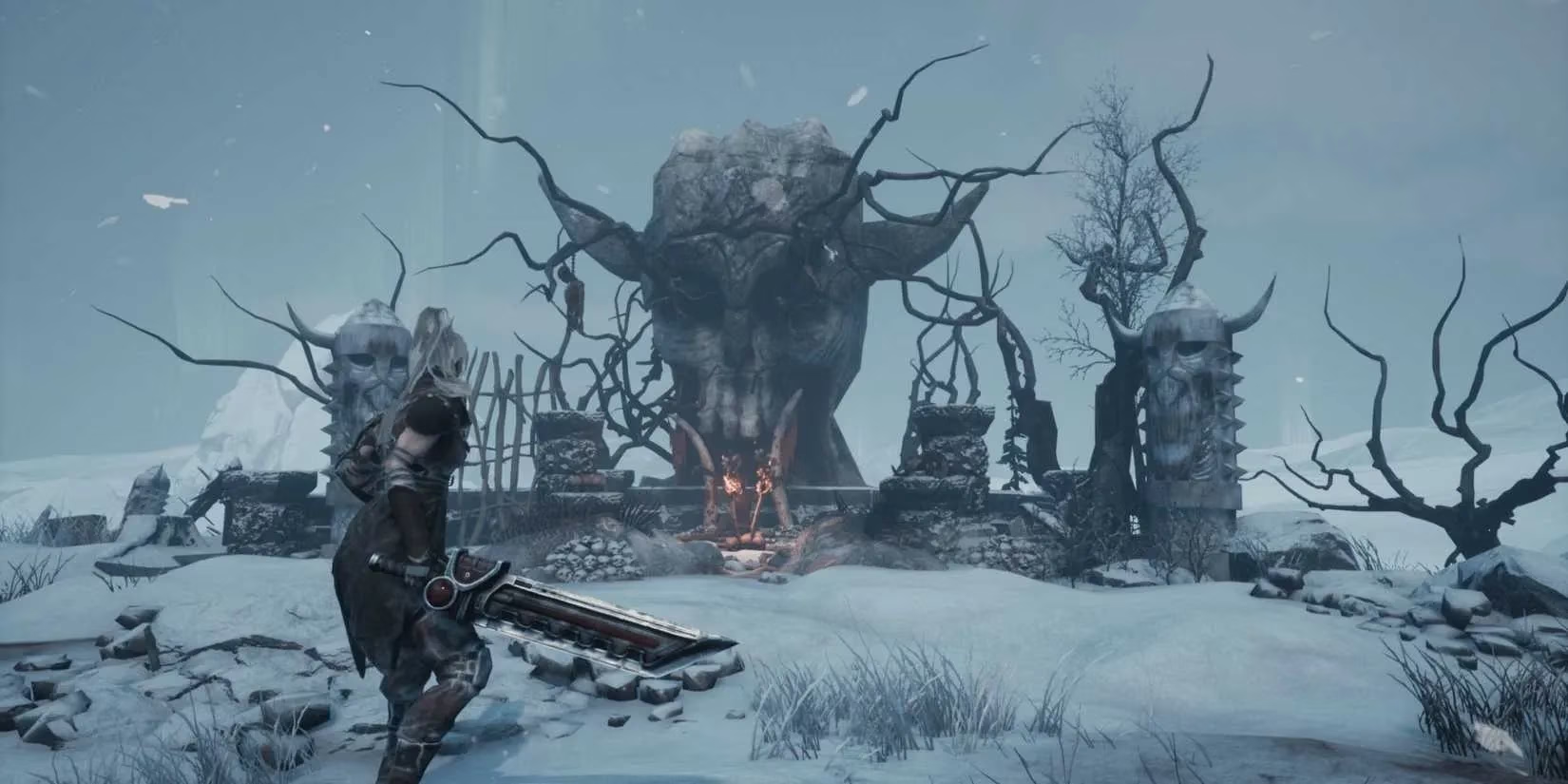
Morbid: The Lords of Ire was an exercise in profound mediocrity. It was a Souls-like that had checked boxes on a list without understanding why those boxes existed. The world was a generic, bleak tapestry, the story evaporated from memory the moment I heard it, and the bosses fell over with a whimper. The combat itself was janky—a dodge that felt like wading through syrup and hitboxes that seemed to operate on their own whims. It was less a challenging adventure and more like watching paint dry on a crumbling wall.
In my search for a sci-fi fix after Remnant 2, I stumbled into the trap of Immortal: Unchained. The premise was alluring: a gun-based Souls-like in a rich sci-fi setting. The reality was a profound disappointment. The enemy AI was as predictable as a broken clock, the shooting mechanics felt dredged from a bygone era and not in a charming way, and the balancing was so off-kilter that some builds felt like trying to fight a tank with a water pistol. It was a game that looked solid from the trailer but disintegrated upon contact, like a sandcastle at high tide.
Speaking of Remnant, discovering Chronos: Before the Ashes from the same studio was a shock. Its aging mechanic was a novel idea, forcing strategic shifts in playstyle. But that single spark was lost in a sea of blandness. The combat was basic, the story failed to grip, and the world only held interest as a museum of references to its superior sibling. Playing it after the dynamic, co-op joy of Remnant 2 felt like going from a gourmet meal to stale crackers.
The original Lords of the Fallen (2014) is a curious artifact. It's baffling that this game spawned the excellent 2023 reboot. It was a Souls-like that fundamentally misunderstood the assignment. Its shortcuts were illusory, its difficulty came from bloated health bars rather than clever design, and its bosses were utterly forgettable. It felt like an action RPG that had a Souls-like skin hastily stapled on at the last minute. Playing it was a chore, a lesson in how not to capture the essence of the genre.
Then we descend into the true abyss. Dolmen promised a horrific fusion of Dark Souls and Dead Space. What it delivered was an insult to both legacies. Switching between clunky shooting and sluggish melee combat was a nightmare. The gunplay was unresponsive, the hitboxes were a mystery, and the sci-fi world was as exciting as a spreadsheet. It was a game built entirely from borrowed parts, each one malfunctioning.
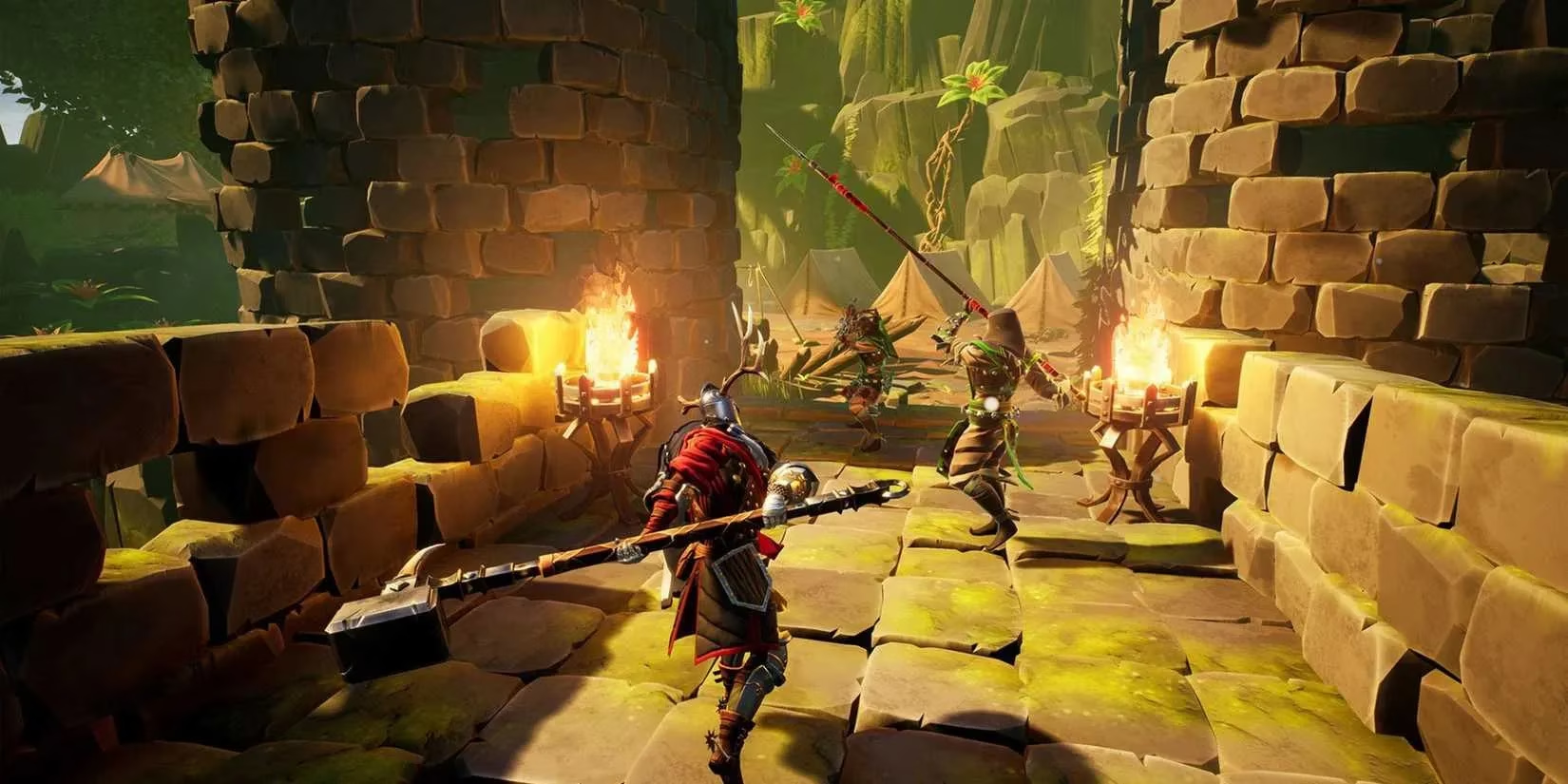
Stray Blade treated me not as a player, but as a child who needed constant hand-holding. Its "Dark Souls for dummies" moniker was earned not through accessibility, but through patronizing simplicity. The quippy protagonist felt utterly out of place, the world was a series of generic fantasy biomes, and the combat lacked any depth. The skill tree system, tied arbitrarily to weapons, prevented any meaningful build crafting. It was the gaming equivalent of being served unseasoned gruel and being told it's a feast—deeply unsatisfying and vaguely insulting.
Finally, we reach the nadir: Deathbound. This game is a tragedy, because buried within it is a genuinely interesting narrative concept, a clash of necromancy and faith. But to experience it, you must endure one of the most poorly executed combat systems I've ever encountered. The laggy, vital class-switching mechanic in combat was a constant frustration. Bosses swung wildly between laughably easy and infuriatingly cheap due to poor design. The world was a linear, confusing slog. Deathbound wasn't just a bad Souls-like; it was an active deterrent, a warning sign to others. It was like finding a beautifully crafted lockbox, only to discover it's sealed shut with industrial glue.
My journey through these titles has been a masterclass in what separates a great Souls-like from a failed imitation. It's not just about difficulty or bonfires or stamina bars. It's about fair challenge, rewarding exploration, precise combat, and a cohesive, immersive world. These failed games are like moths drawn to a flame, captivated by the light of FromSoftware's success but lacking the substance to withstand its heat. They remind me that in the world of Soulslikes, ambition without understanding is a path leading only to disappointment. For every Lies of P or Hellpoint that gets it right, there are these cautionary tales—games I suffered through so you, perhaps, don't have to.