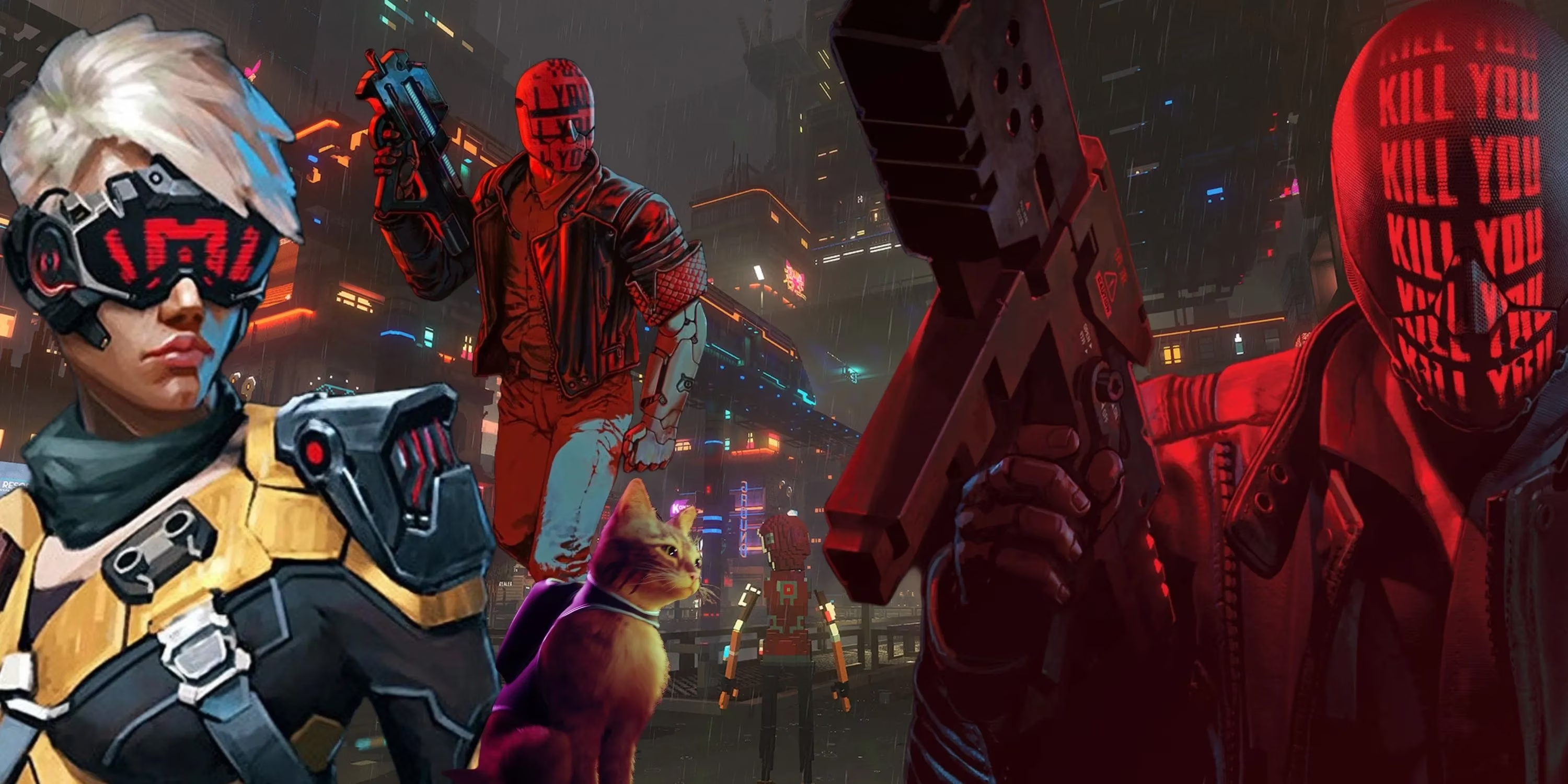
I still remember the exact moment I fell in love with cyberpunk. It wasn't watching Blade Runner, or reading Neuromancer—it was sitting in front of my monitor at 1 AM, rain streaking down a virtual city's neon-lit streets, completely lost in a world of corporate towers, glowing implants, and broken dreams. Over the last few years, I've found myself drawn not to the massive, hundred-hour AAA blockbusters, but to something more intimate: the independent cyberpunk games that carve out their own strange corners of the genre. Each one has left a mark on me, and I want to take you through the ones that genuinely surprised me.
The Ascent
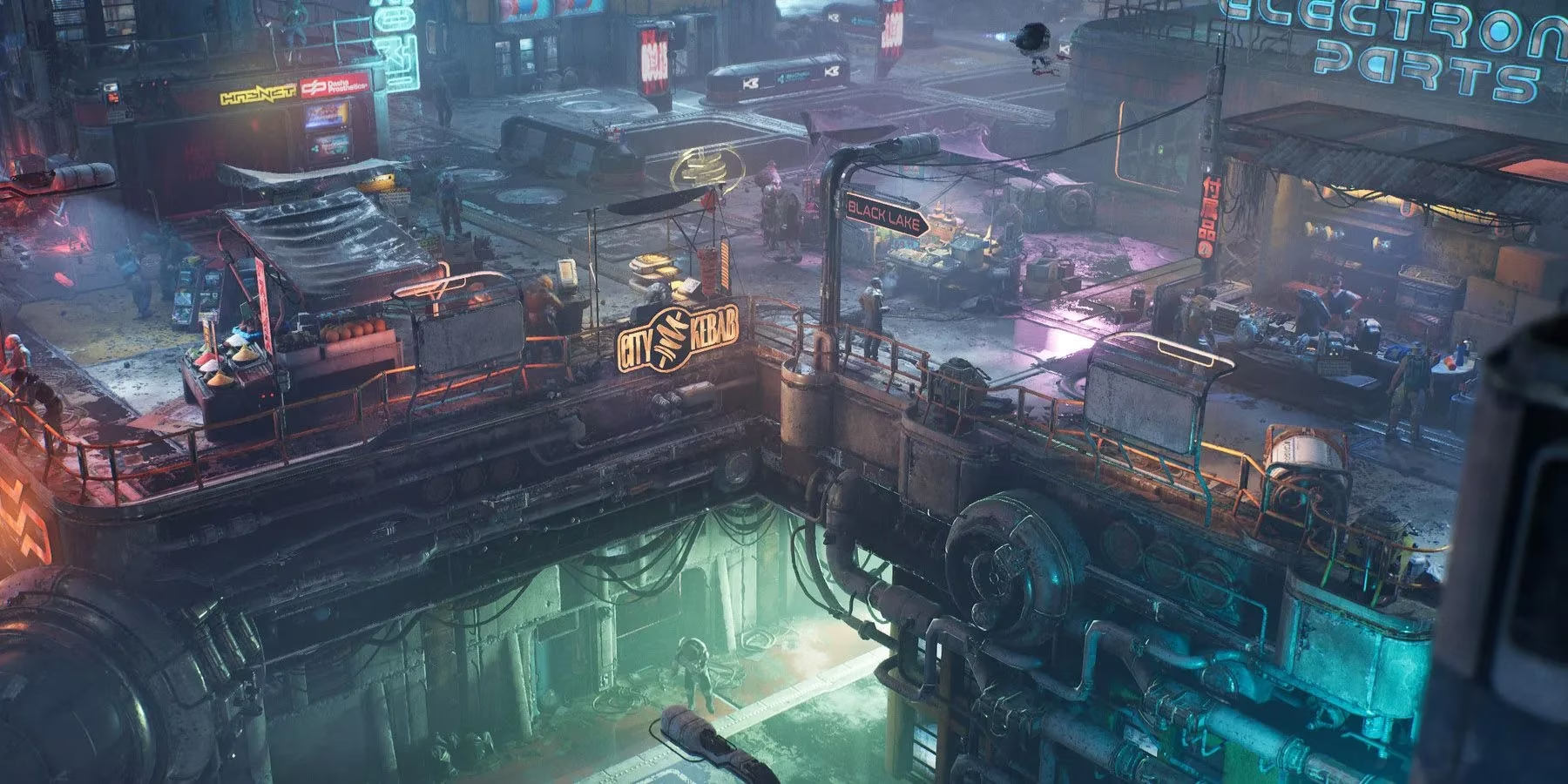
I didn't expect to lose entire weekends to a twin-stick shooter, but The Ascent had other plans. Dropped into a cyberpunk underworld ruled by gangs, I remember just standing still for a while, panning the camera across its jaw-dropping, carefully lit environments. The synth-wave soundtrack pulses underneath everything, giving even the quietest loot runs a strange, electric tension.
What really sold me, though, was playing it with three friends. The local and online co-op transformed what could have been a solitary grind into chaotic, laughter-filled firefights. Yes, the launch had bugs—some of them genuinely frustrating—but the atmosphere and voice work kept pulling me back. There's something about those vistas that feels like stepping into a living painting of chrome and neon.
Cyber Shadow
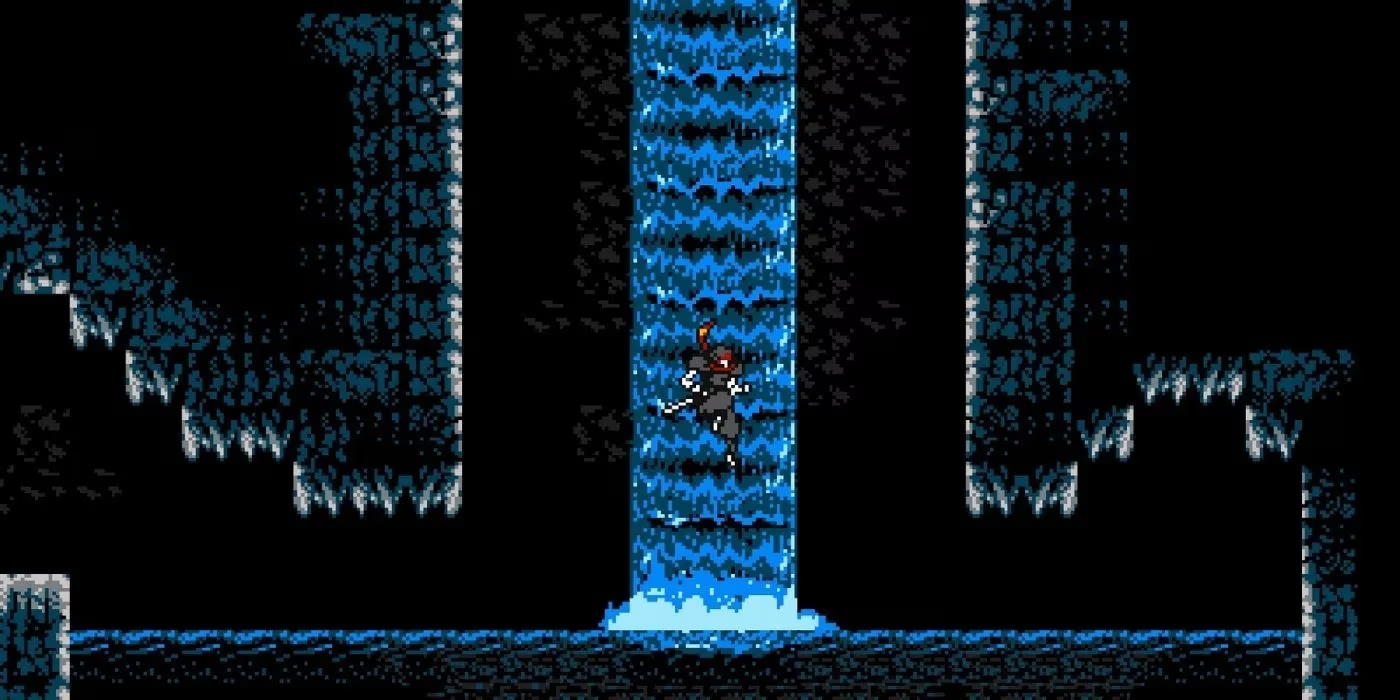
Then came Cyber Shadow, a game that humbled me in ways I didn't think possible. Published by Yacht Club Games—the same minds behind Shovel Knight—this action platformer is tough-as-nails in the truest sense. I died... a lot. Like, an embarrassing number of times.
But here's the thing: I never wanted to stop. The old-school pixel-art aesthetic feels ripped from a lost 8-bit cartridge, and every boss battle is a carefully choreographed dance of pattern recognition and timing. The story is classic, pulpy cyberpunk—nothing revolutionary, but delivered with such earnestness that I couldn't help but root for its masked protagonist. If you've been craving a challenge that rewards patience, this is it.
Cloudpunk
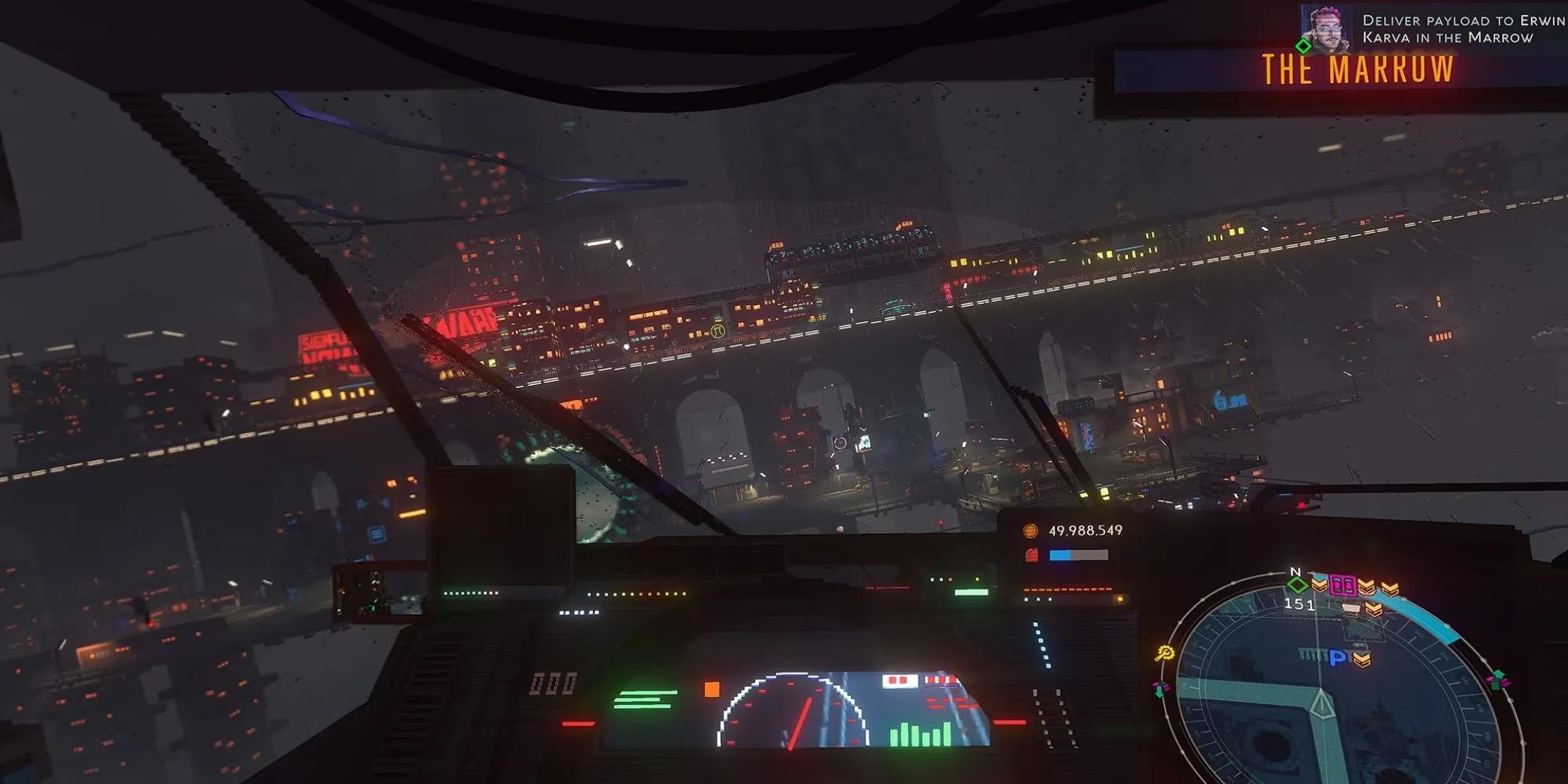
After Cyber Shadow's relentless difficulty, Cloudpunk felt like a deep breath of rain-scented air. You play as a delivery driver named Rania navigating the voxel-built, rain-soaked city of Nivalis. And honestly? That's pretty much the loop—making deliveries, talking to strange passengers, and slowly unraveling stories in a city that feels alive despite being made of blocks.
The genius of Cloudpunk is its restraint. It's a neo-noir, story-focused experience that never demands twitch reflexes. Instead, it invites you to sink into its moody synth soundtrack and gorgeous 3D voxel graphics, letting the atmosphere do the heavy lifting. Nivalis became a character in its own right for me—so much so that the developers later expanded the concept into a full cyberpunk life sim named after the city. Even without that, Cloudpunk stands on its own as a narrative gem.
Citizen Sleeper
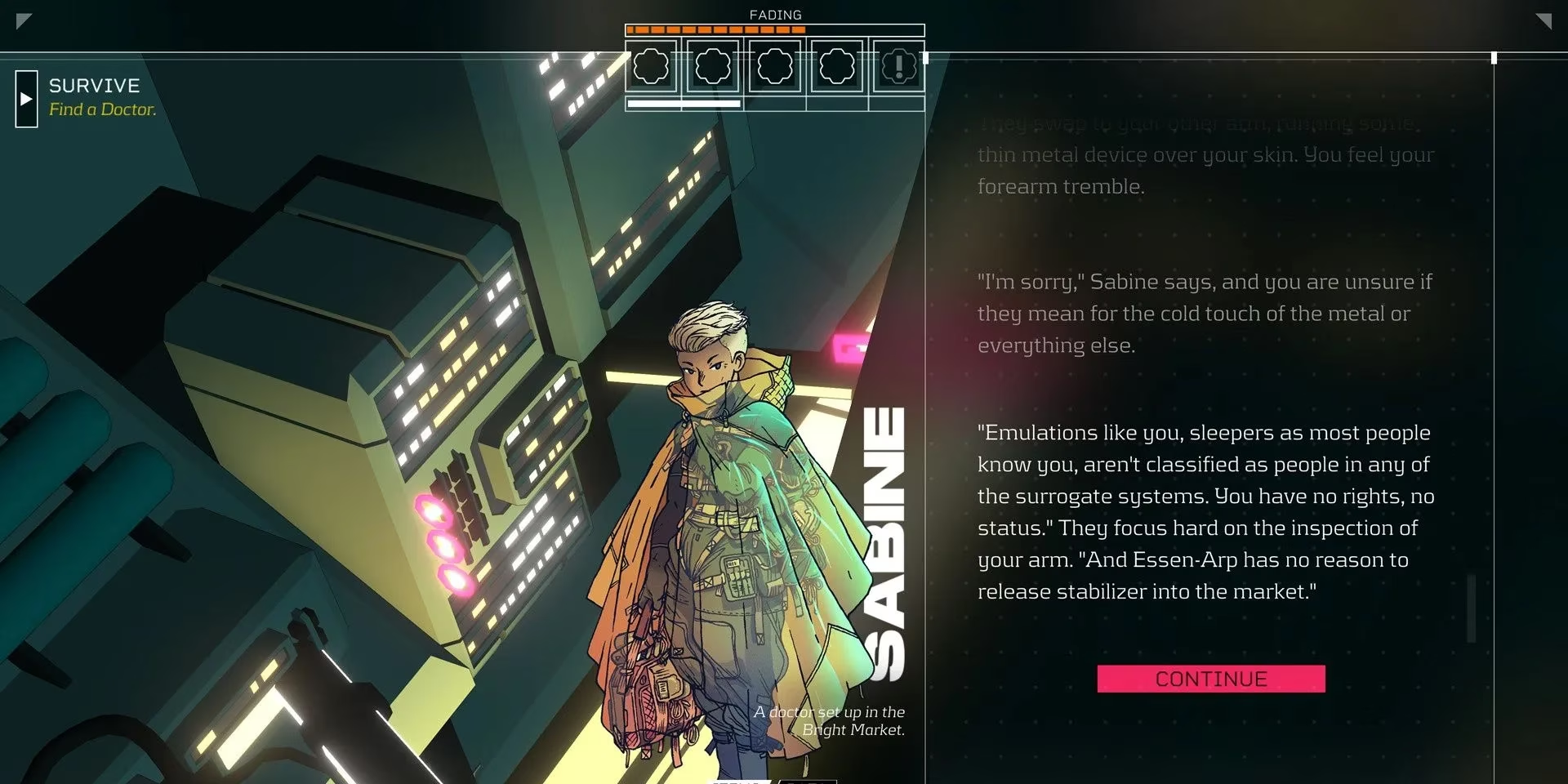
If Cloudpunk was a breath of air, Citizen Sleeper was a quiet gut punch. This cyberpunk RPG draws heavily from tabletop games, using dice-throwing as a core mechanic to determine your fate on a lawless space station. I came in expecting strategy; I left with one of the most memorable narrative experiences I've had in years.
The visuals are minimal, but I came to appreciate how much emotion the developers wring from cleverly crafted environments and evocative character portraits. Every citizen on that station felt like a real person with real struggles, and each dice roll carried weight. It's not a game for action seekers—there's no combat to speak of—but if you want a cyberpunk story about survival, humanity, and small acts of connection, nothing else on this list comes close.
Stray
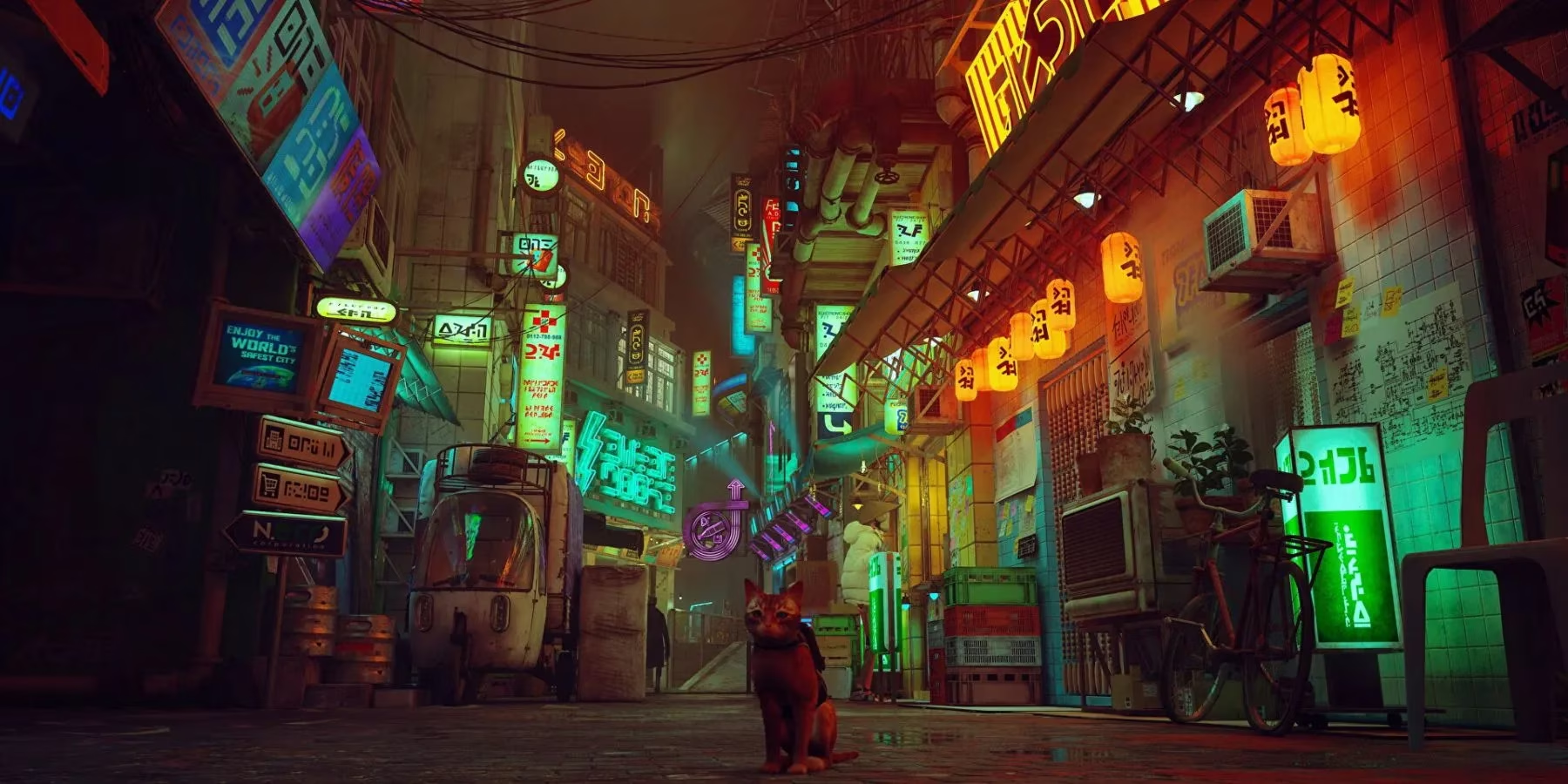
I have to admit, I picked up Stray mostly out of curiosity. A game where you play as a stray cat wandering a cyberpunk city filled with walking, talking robots? It sounded like a gimmick. I was wrong.
Stray is an adventure game at its core, built around platforming and exploration rather than complex mechanics. But the hand-crafted locations, the clean visuals, and the atmospheric sound design create an immersive experience that completely won me over. I spent hours just scrambling across rooftops, knocking things off ledges (as one does), and talking to robots with surprisingly poignant stories. It's a short game, but every moment feels intentional. The attentive art direction makes its cyberpunk city feel strangely warm despite the neon and rain.
Showgunners
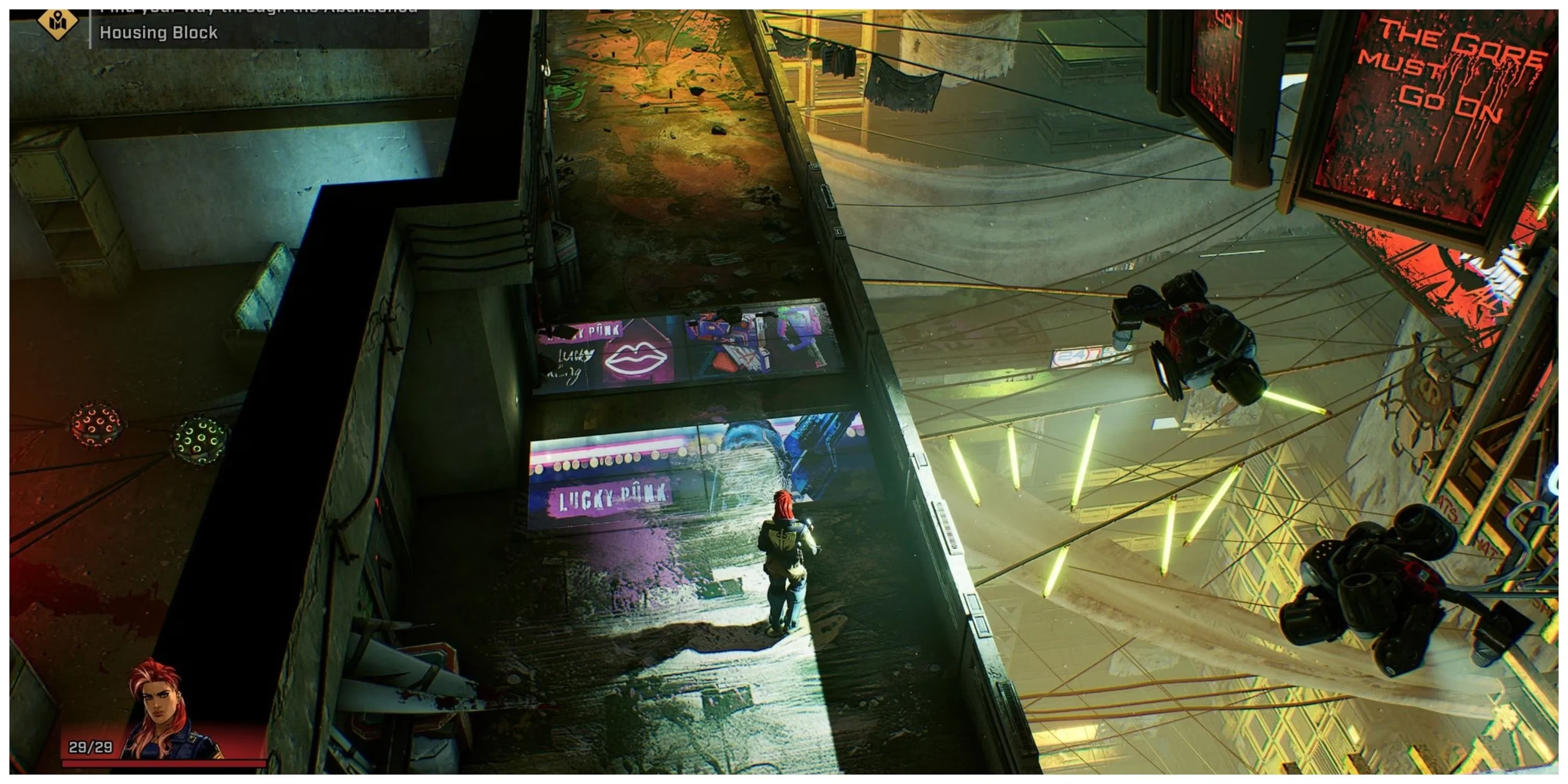
Showgunners came to me at exactly the right time. Inspired by the late-80s sci-fi film The Running Man, this turn-based tactics game drops you into a fictional hyper-violent game show where survival is entertainment. What makes it special is how it blends two distinct modes: real-time exploration with puzzle solving, and tactical turn-based combat with your party.
The tone is where Showgunners really separates itself. It's more comical and pulpy than anything else on this list, embracing an absurd, over-the-top 80s sci-fi energy rather than pure cyberpunk gloom. The variety of environments and hazards keeps every arena feeling fresh, and I found myself laughing between tense tactical decisions. It's consistently entertaining, and a great reminder that cyberpunk doesn't always have to be grim.
RUINER
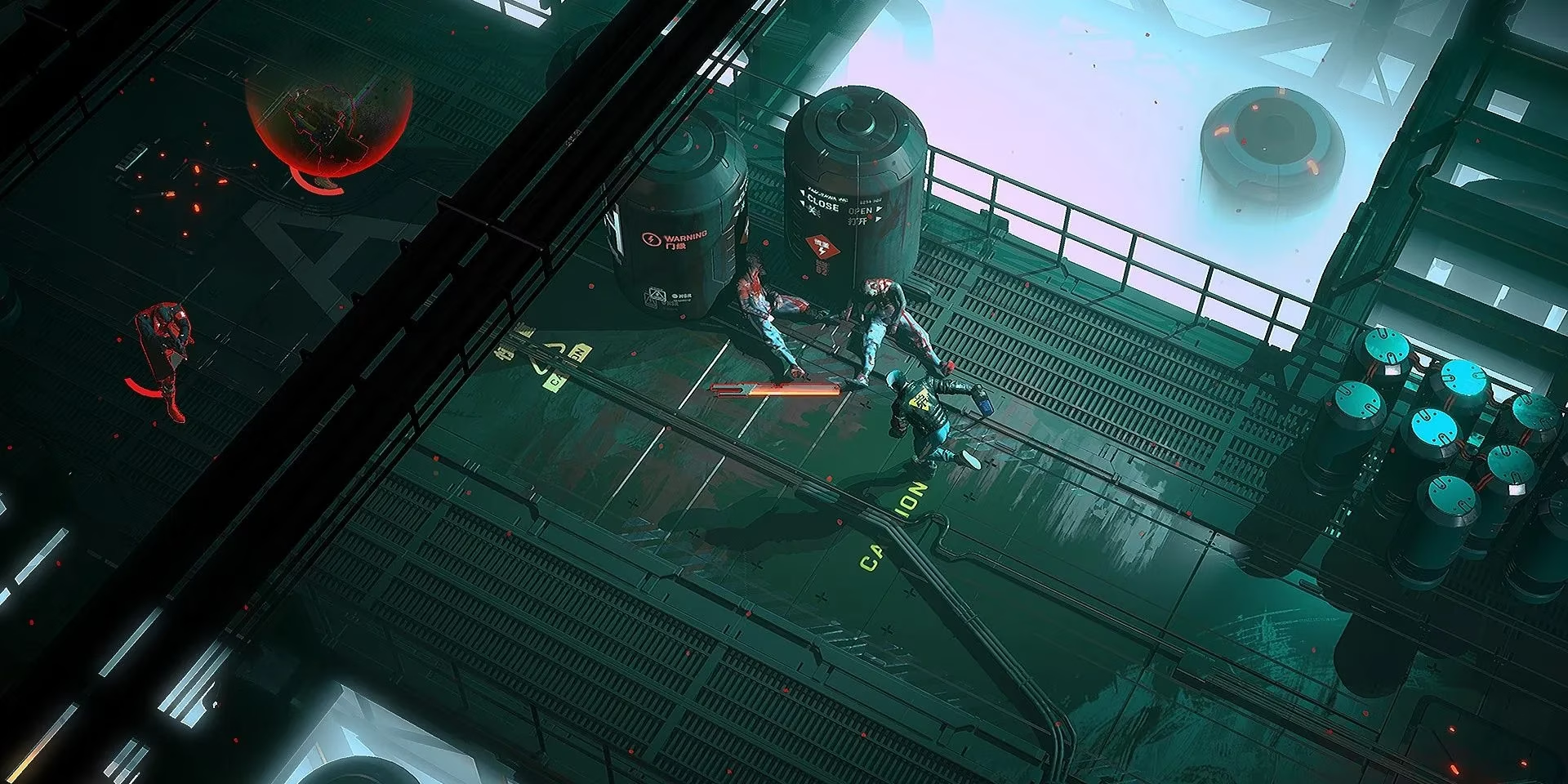
Then there's RUINER, the game that taught me exactly how quickly I could die in a top-down shooter. This one is fast, brutal, and unapologetically unforgiving. The aesthetic is striking—a clean-cut visual style with a stark, limited color palette and beautifully lit environments that make every explosion feel cinematic.
People often compare it to Hotline Miami, and the DNA is there, but RUINER distinguishes itself through its cyberpunk theme, skill tree, and dodge mechanic that turns combat into a fluid, almost dance-like rhythm. The narrative is loose—arguably the loosest on this list—but that barely matters when you're dodging bullets and clearing rooms with style. It's action-packed from beginning to end, and one of the most visually stunning twin-stick shooters I've ever played.
Cyber Knights
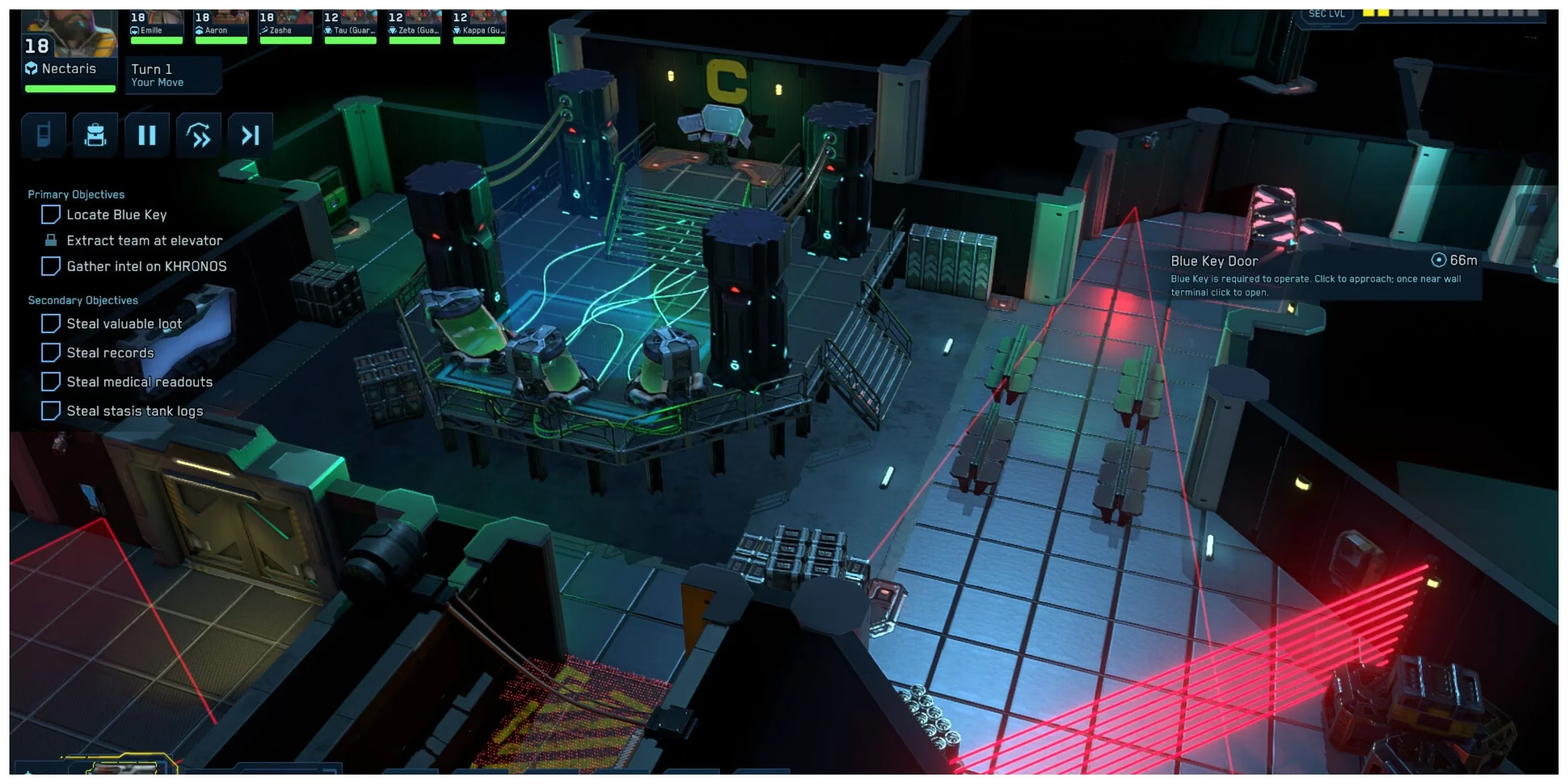
Finally, Cyber Knights rounded out my journey through the indie cyberpunk scene. Developed by Trese Brothers—who you might know from the sci-fi sandbox Star Traders: Frontiers—this squad-based tactics game had me hooked from the first turn. It's built on XCOM-style turn-based combat, but adds a unique security system and elements of stealth that make every encounter feel like a puzzle with multiple solutions.
What impressed me most was the depth of its RPG systems. Taking jobs, mastering the turn-based tactics, and watching my crew evolve felt genuinely rewarding—a complete cyberpunk package that kept me coming back. On top of everything, it's a deep and complex experience that proved there's still room for thoughtful, systems-driven design in the indie space.
A Quick Look Back
| Game | Genre | Signature Strength |
|---|---|---|
| The Ascent | Twin-stick shooter | Visual atmosphere & co-op |
| Cyber Shadow | Action platformer | Retro pixel challenge |
| Cloudpunk | Narrative delivery | Rainy neo-noir vibes |
| Citizen Sleeper | Dice-driven RPG | Emotional storytelling |
| Stray | Adventure | Immersive cat exploration |
| Showgunners | Turn-based tactics | Pulpy 80s energy |
| RUINER | Twin-stick shooter | Brutal stylish combat |
| Cyber Knights | Squad tactics | Deep RPG systems |
Looking back across these games, I'm struck by how little they actually have in common beyond the genre label. One is a brutal reflex test; another is a quiet dice-driven meditation. Some are linear and punishing; others are open and forgiving. What unites them is a willingness to grab different elements from cyberpunk—the neon, the corporations, the implants, the despair—and take them in their own unique directions.
If you're like me, drawn to the aesthetic and atmosphere of cyberpunk but burned out on the same old open-world formulas, I can't recommend these indie gems enough. They reminded me why I fell in love with the genre in the first place: not for the scale, but for the feeling of standing in the rain under a neon sign, uncertain of what comes next, and choosing to move forward anyway. 🌧️