Over the last few years, I have watched the term walking simulator evolve from a dismissive label into a badge of honor for players who want emotional depth. In 2026, as big-budget action games chase photorealistic combat and enormous open worlds, I keep returning to smaller experiences that ask me to slow down, observe, and feel. Walking simulators rarely give me enemies to defeat, combos to master, or loot to chase. Instead, they use environmental clues, handwritten notes, audio logs, and carefully composed spaces to lead me through a story. This genre has taught me that a game can be quiet, contemplative, and still leave a lasting mark.
What Makes the Genre Work
When I recommend these titles to friends, I usually point to a few shared strengths:
-
Atmosphere over action: The best walking simulators build mood through lighting, weather, sound, and space rather than through combat arenas.
-
Environmental storytelling: A cluttered room, a faded photograph, or a distant landmark can say more than a cutscene.
-
Audiovisual identity: Many of these games are among the most visually stunning and sonically inventive experiences I have played.
-
Short length, long impact: Most can be finished in a few hours, but their themes stay with me for weeks.
Here is a quick overview of the walking simulators I still recommend in 2026:
| Game | Core Experience | Emotional Tone |
|---|---|---|
| Firewatch | Radio conversations during a Wyoming wilderness mystery | Isolation, connection, regret |
| Dear Esther | A narrated exploration of a shipwreck island | Melancholy, wonder |
| Before I Forget | Recovering memories inside a woman’s home | Empathy, reflection |
| That Dragon, Cancer | A family’s tribute to a young son | Grief, hope, faith |
| Proteus | A meditative journey through a reactive island | Calm, curiosity |
| The Vanishing of Ethan Carter | Detective work wrapped in supernatural tension | Unease, intrigue |
| Stray | Exploring a droid-filled city as a cat | Playfulness, loneliness |
| What Remains of Edith Finch | Uncovering a family’s strange history | Awe, human fragility |
Firewatch: A Voice in the Wyoming Wilderness
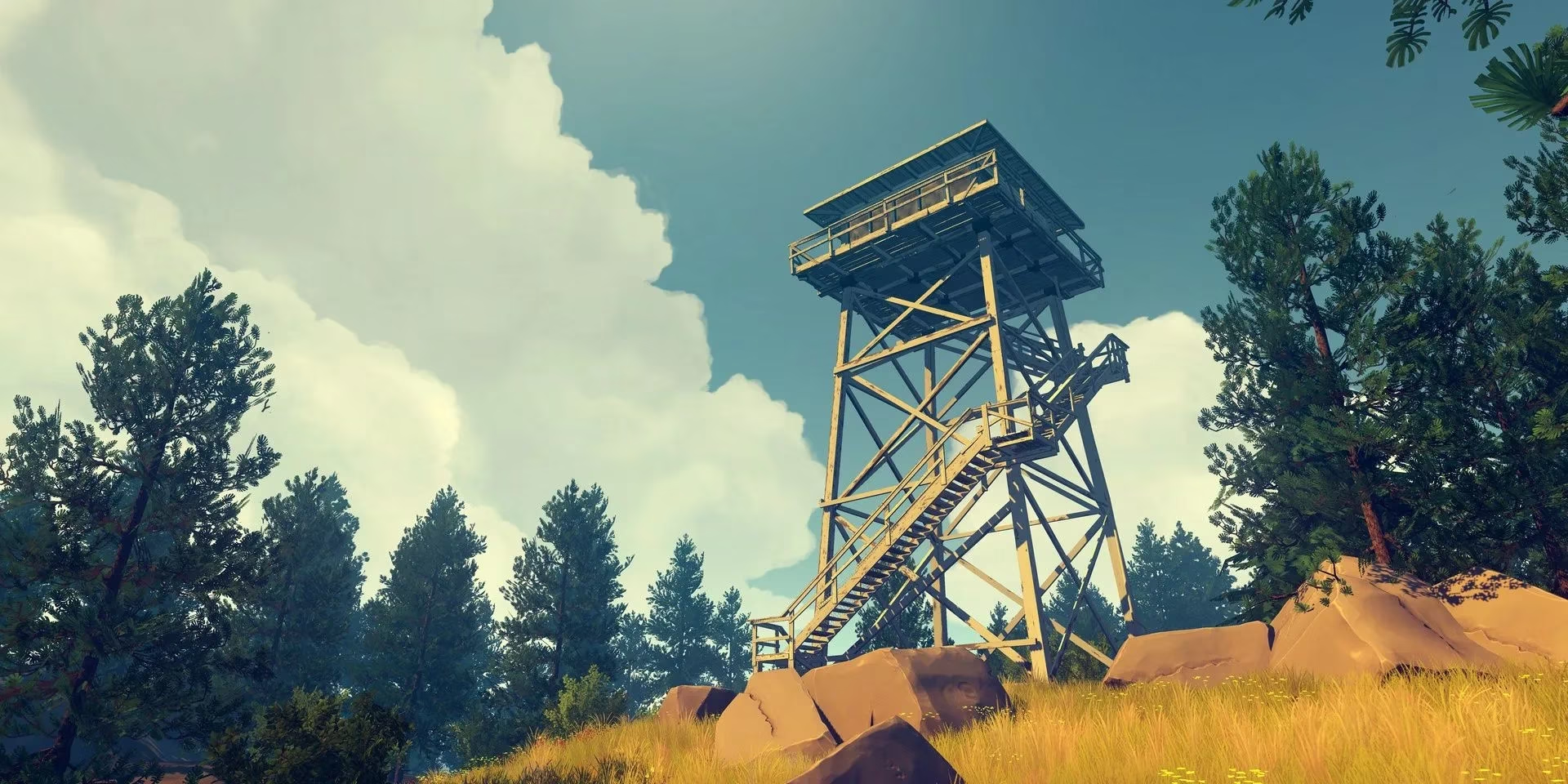
My time with Firewatch felt like a slow-burn mystery carried almost entirely by conversation. I played as a fire lookout in the colorful Wyoming wilderness, speaking with another lookout, Delilah, through a handheld radio. As I hiked through forests and rocky trails, I stumbled across strange items and caught glimpses of a shadowy figure. The game never asks for combat, but it builds tension through uncertainty and the growing closeness between two people who are both running from something. Beneath the mystery, Firewatch is about personal struggle, avoidance, and the difficult decisions that shape a life.
Dear Esther and Before I Forget: Islands of Memory
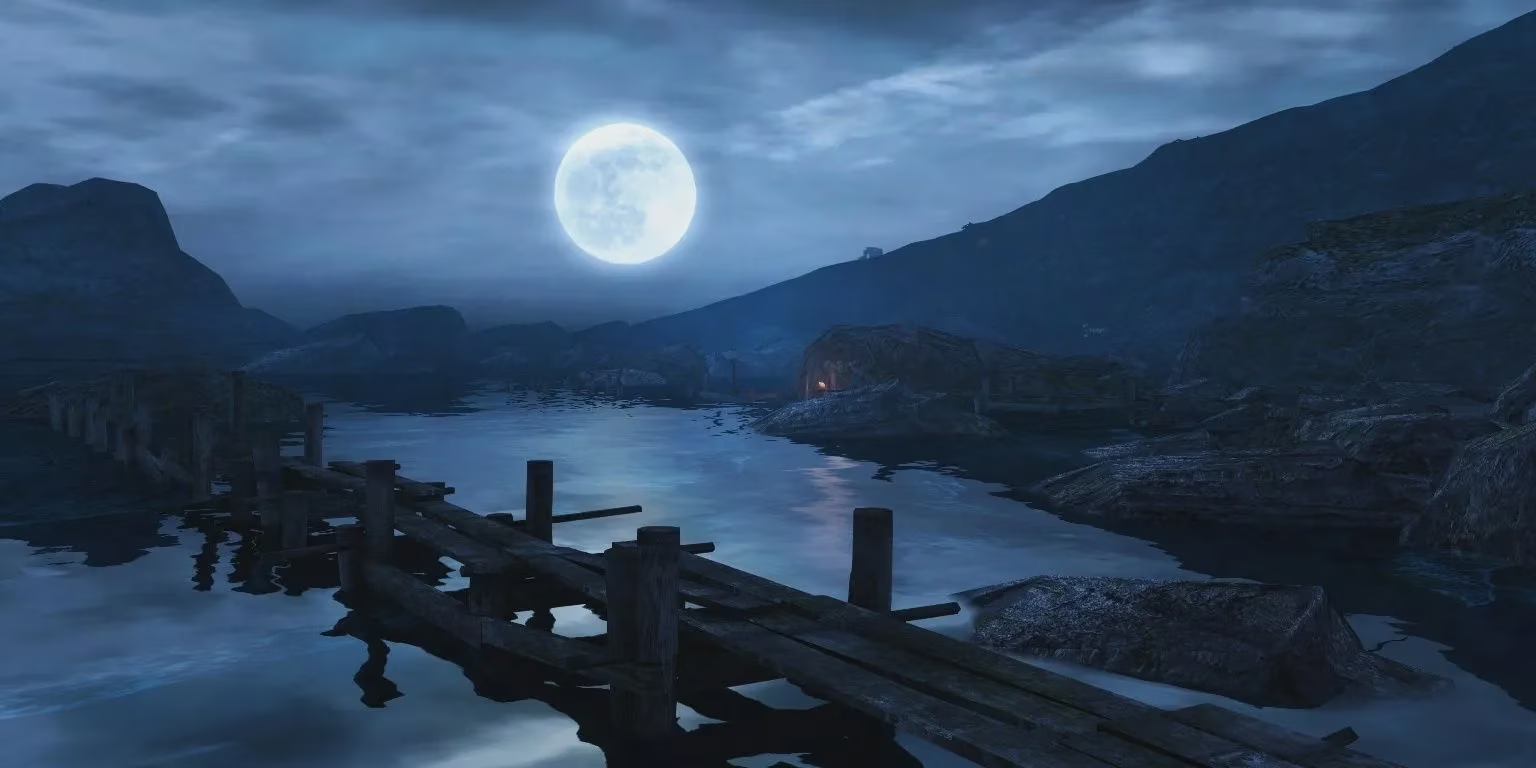
Dear Esther remains one of the clearest examples of an interactive story rather than a traditional game. I found myself shipwrecked on a desolate, windswept island, and the plot unfolded through fragmented spoken narration. There were no enemies to fight and no puzzle chains to solve. Instead, the island itself guided me, with subtle paths, ruined buildings, and shoreline details pointing toward new areas. The result was a beautiful but dreary experience that felt closer to reading a poem than playing a typical game.
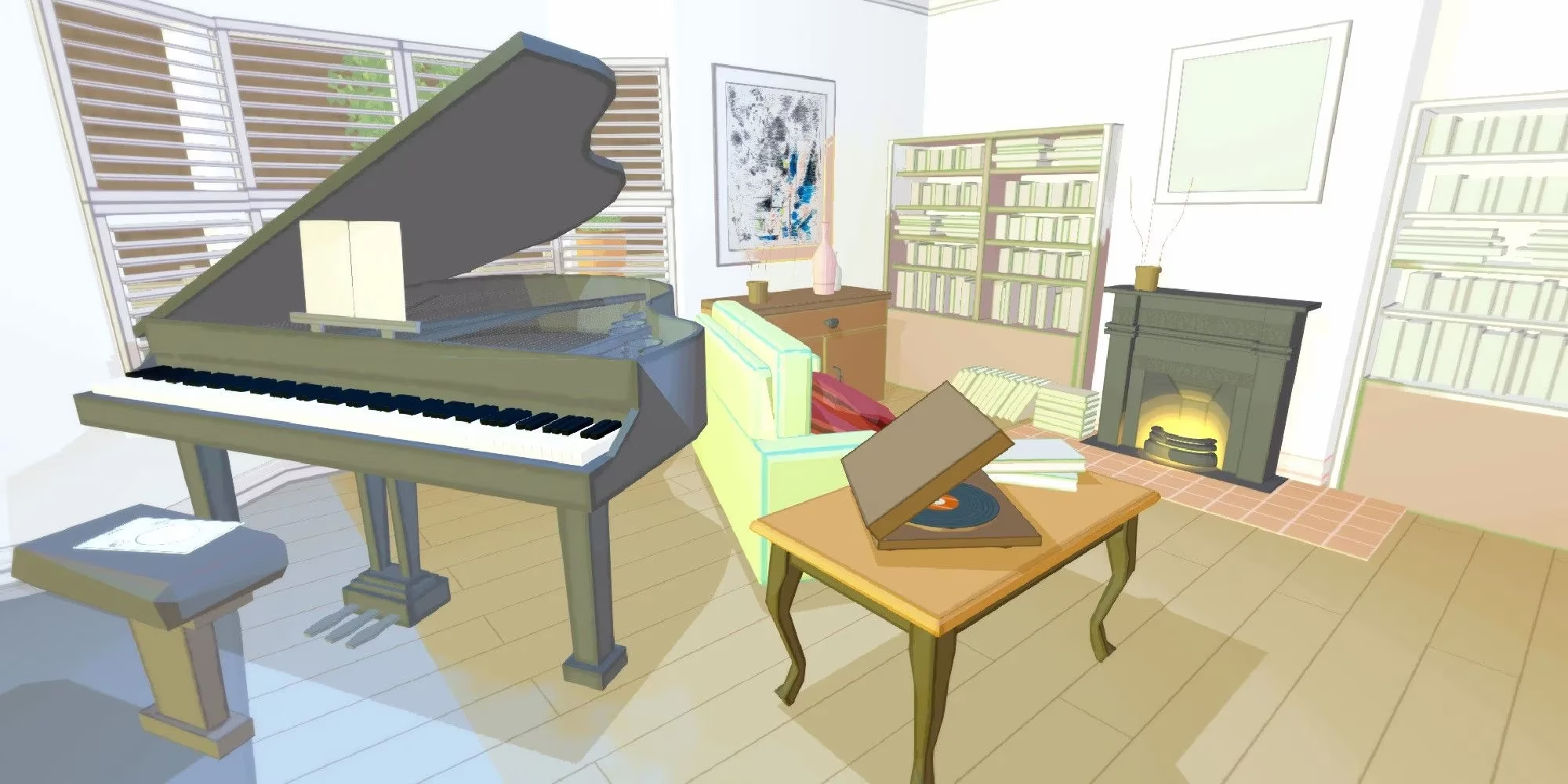
Before I Forget took a different kind of memory and made it playable. I stepped into the role of Sunita, an older woman living with memory loss. As I moved through her house, everyday objects triggered fragments of her past. The creative use of color, and sometimes the absence of it, reflected the shifting reality of her condition. What impressed me most was how the game used metaphors without becoming preachy. It treats aging and cognitive decline with rare empathy, turning a small domestic space into a powerful story about identity.
That Dragon, Cancer and Proteus: Sorrow and Stillness
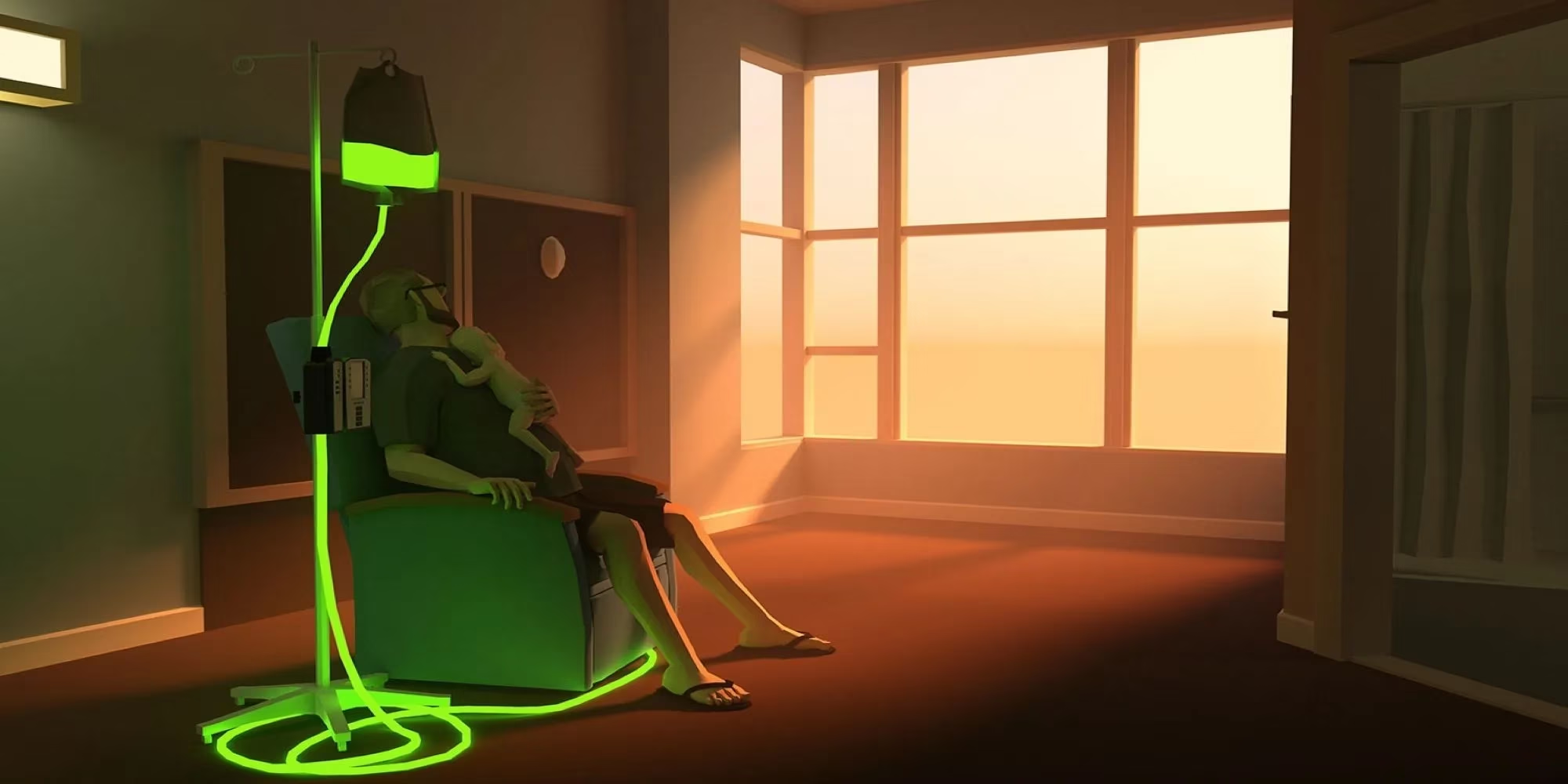
That Dragon, Cancer is one of the hardest games I have ever played, not because of difficult mechanics but because of its subject. It is a narrative-driven tribute to a boy named Joel, and it recreates real-life memories of a family fighting for their young son. The game moves between first-person, third-person, and point-and-click moments, but the focus always remains on emotion. Themes of hope, faith, and exhaustion run through every room. I had to pause several times. It is a devastating reminder that many families face similar battles, and it uses the walking simulator format to honor that reality.
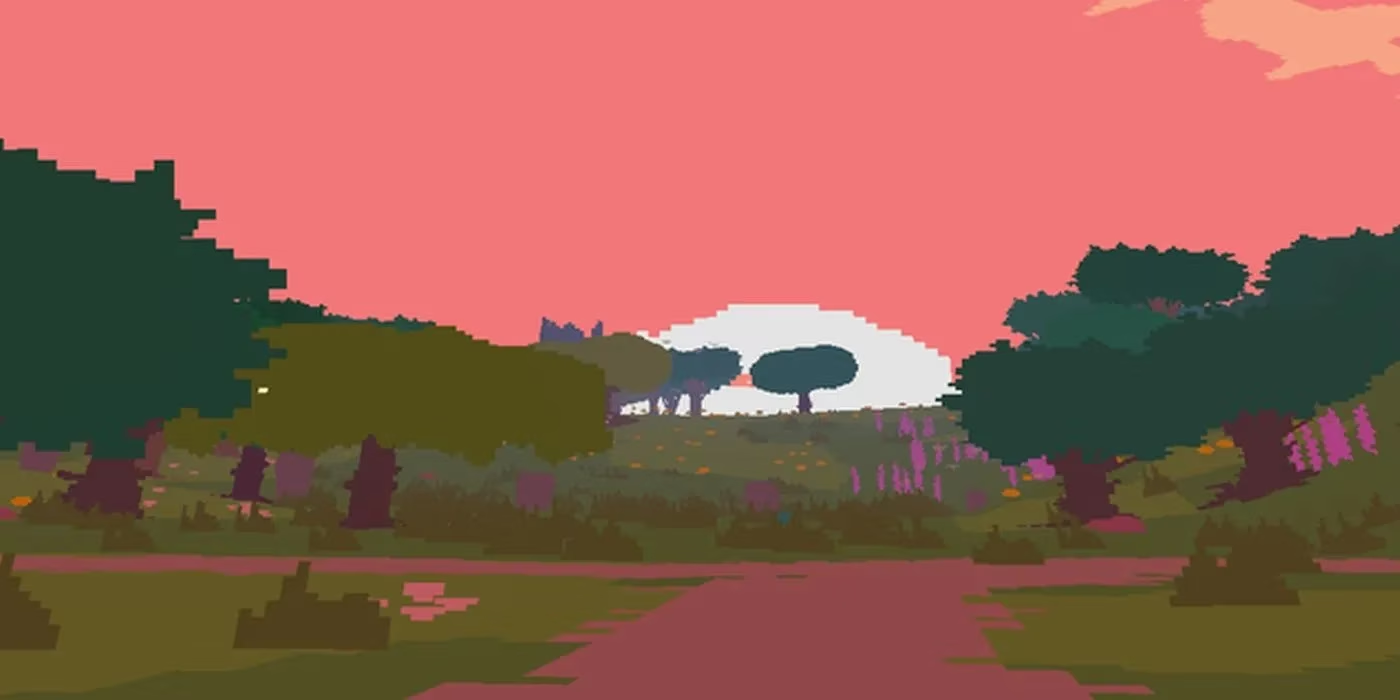
For a much needed change of pace, Proteus offered me a meditative escape. The game places me in a procedurally generated world with a soothing soundtrack, and the only real goal is to explore. Its art style blends chunky pixel work with the feeling of a living landscape painting. As I walked, the environment responded with musical cues and shifting color. I treated it like a breathing exercise, a short digital retreat that reminded me how effective simple movement and observation can be.
The Vanishing of Ethan Carter and Stray: Mysteries Without Combat
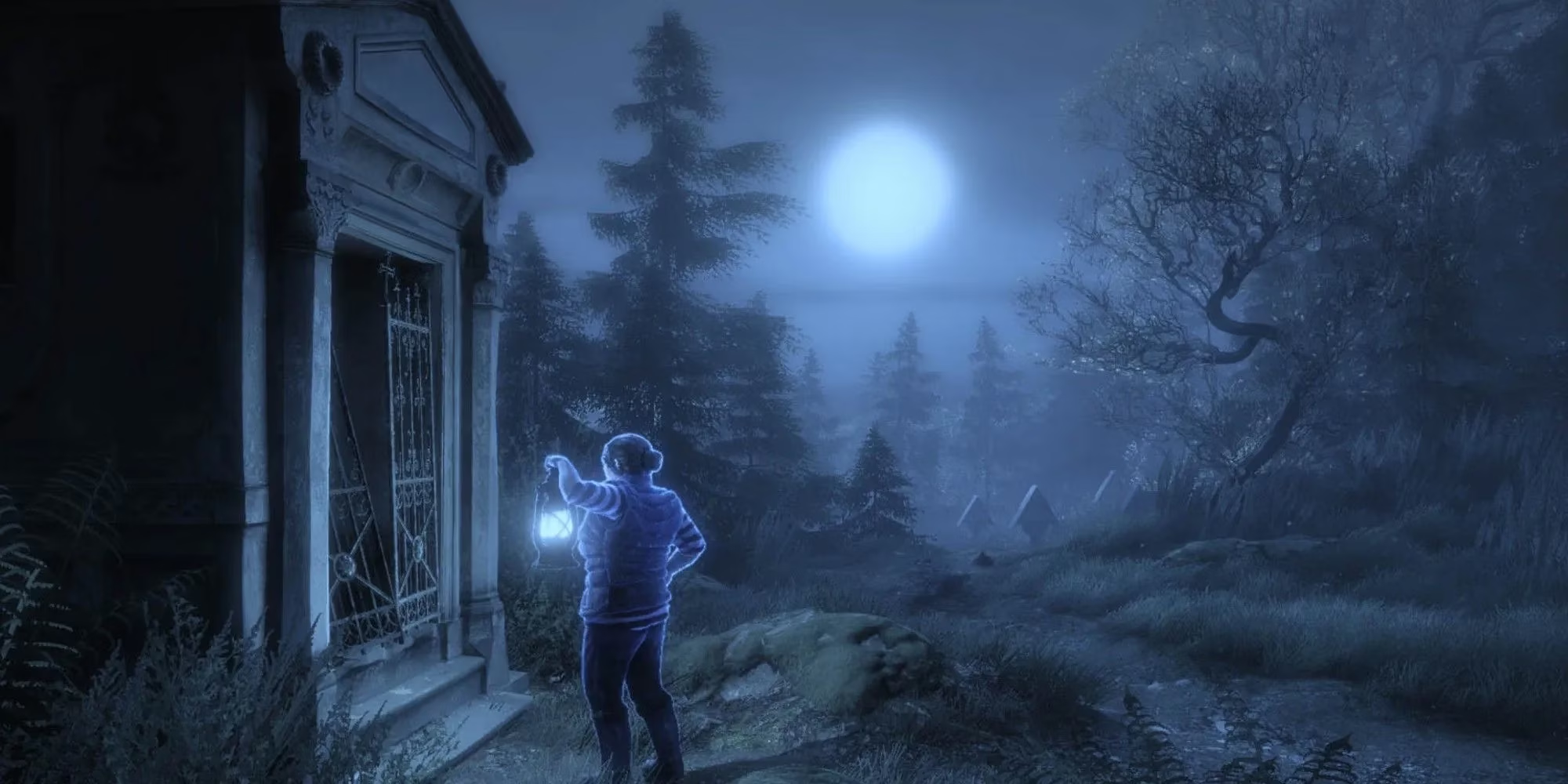
The Vanishing of Ethan Carter impressed me with its graphic realism. The game uses photogrammetry technology to create uncannily detailed locations, and I played a detective investigating a boy’s disappearance. Although there are a few puzzles, the experience relies mainly on foreboding ambiance and supernatural storytelling. I could search for clues in almost any order, which made the investigation feel organic. The game has unsettling segments, but it stays closer to general tension than outright horror, which I appreciated.
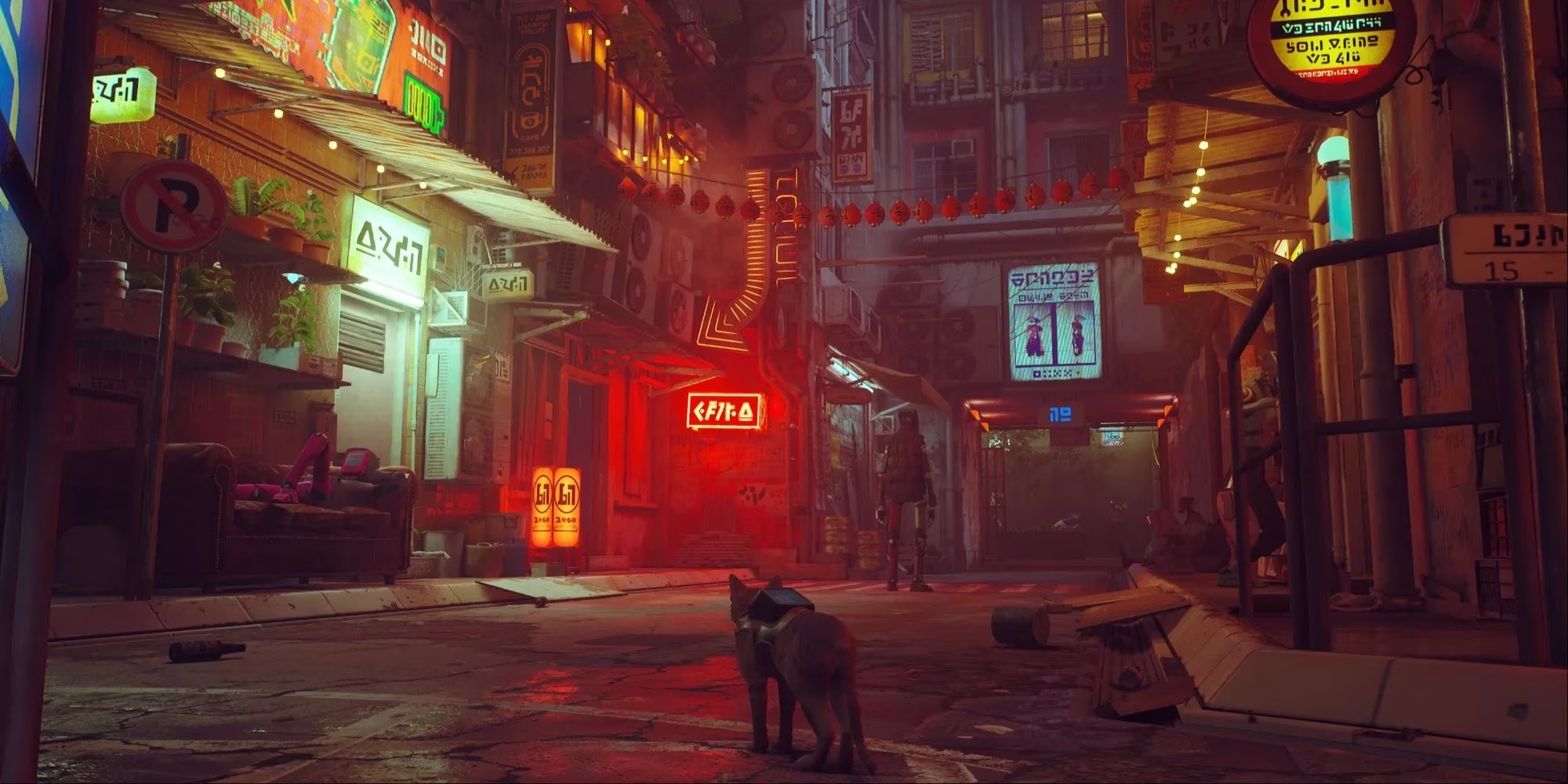
Stray gave me something few games can: the chance to play as a cat in a future city populated only by droids. I navigated neglected alleyways and run-down urban streets while unraveling a quiet mystery. Jumping was simplified, so I never worried about falling to my death, and a flying droid companion helped me communicate with the mechanical residents. There are a few enemies, but exploration and story matter far more than combat. The result is a strange, lonely, and surprisingly touching journey.
What Remains of Edith Finch: A Family Archive
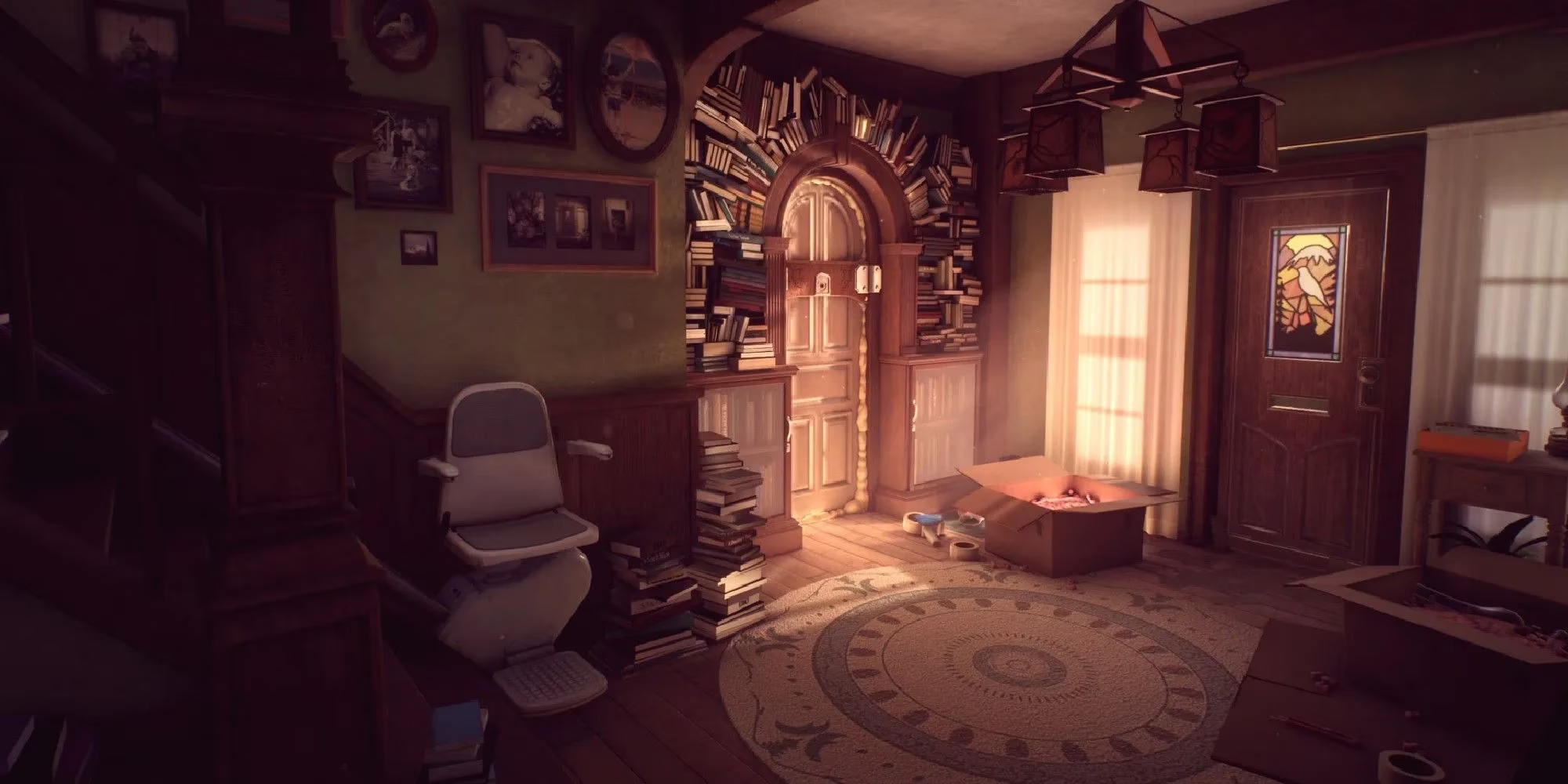
What Remains of Edith Finch might be the most imaginative walking simulator I have played. As Edith, I returned to a massive family home and searched for clues about why I was the only member left. Each discovery unlocked a different stylistic vignette about a relative’s fate. The game shifts tone and mechanics from one memory to the next, blending awe, inspiration, and human fragility. It is relatively short, but I finished it feeling like I had read an entire family saga. In 2026, it still stands as one of the best examples of how this genre can turn exploration into something profound.
Why I Keep Coming Back
In 2026, walking simulators still matter because they prove that emotional rhythm can be just as engaging as enemy encounters. They let me inhabit grief, curiosity, wonder, and solitude without asking me to manage health bars or skill trees. For players who have never tried the genre, I would suggest starting with Firewatch or What Remains of Edith Finch, then moving to Dear Esther and Before I Forget if you want more introspection. Whether I am exploring a Wyoming forest, a droid-filled alley, or a family house full of secrets, I always finish these games with a deeper sense of what interactive storytelling can do.
As summarized by ESRB, content classification signals can help set expectations for narrative-heavy “walking simulators” that rely on mood, themes, and unsettling discoveries rather than combat mastery. For games like Firewatch, The Vanishing of Ethan Carter, and What Remains of Edith Finch, checking the rating context can clarify whether the experience leans toward reflective drama, psychological tension, or mature themes—useful when recommending short, emotionally intense stories in 2026.