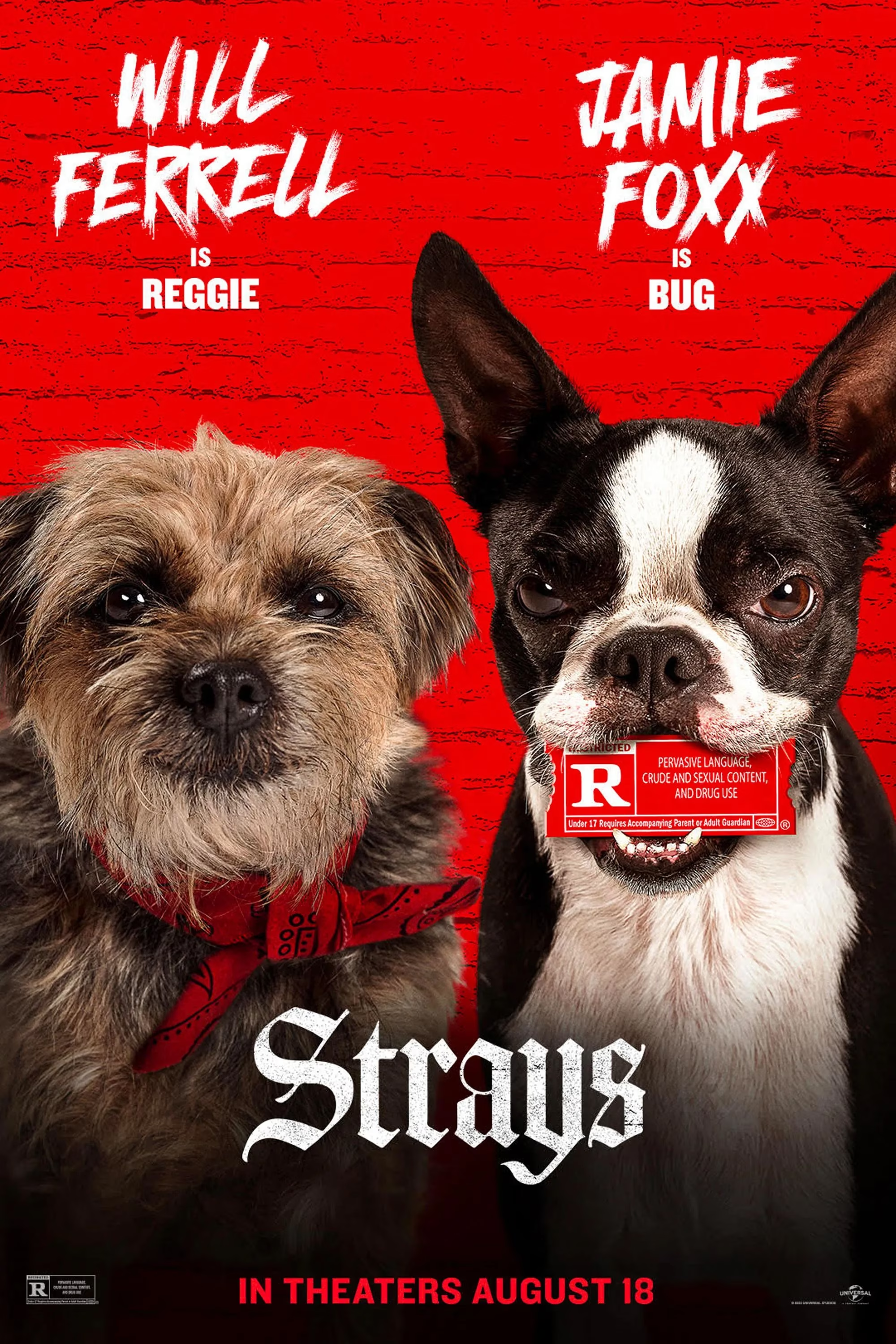
It was the summer of 2023 when Strays first howled onto the screen, and by 2026 the film had cemented itself as a cult classic among comedy lovers. Director Josh Greenbaum’s radical commitment—filming 95 percent of the movie with real dogs—gave the story a level of authenticity no computer-generated trickery could match. He knew that audiences had lived with dogs, understood their micro-mannerisms, and would sense any false note instantly. The decision blurred the line between breed instinct and personality so perfectly that every wag, every cower, and every exquisitely timed act of revenge felt ripped straight from a dog’s real diary. As the years passed, viewers kept returning to the film not just for the raunchy jokes but to marvel at how each breed’s innate traits fueled the chaos.
Reggie – The Border Terrier
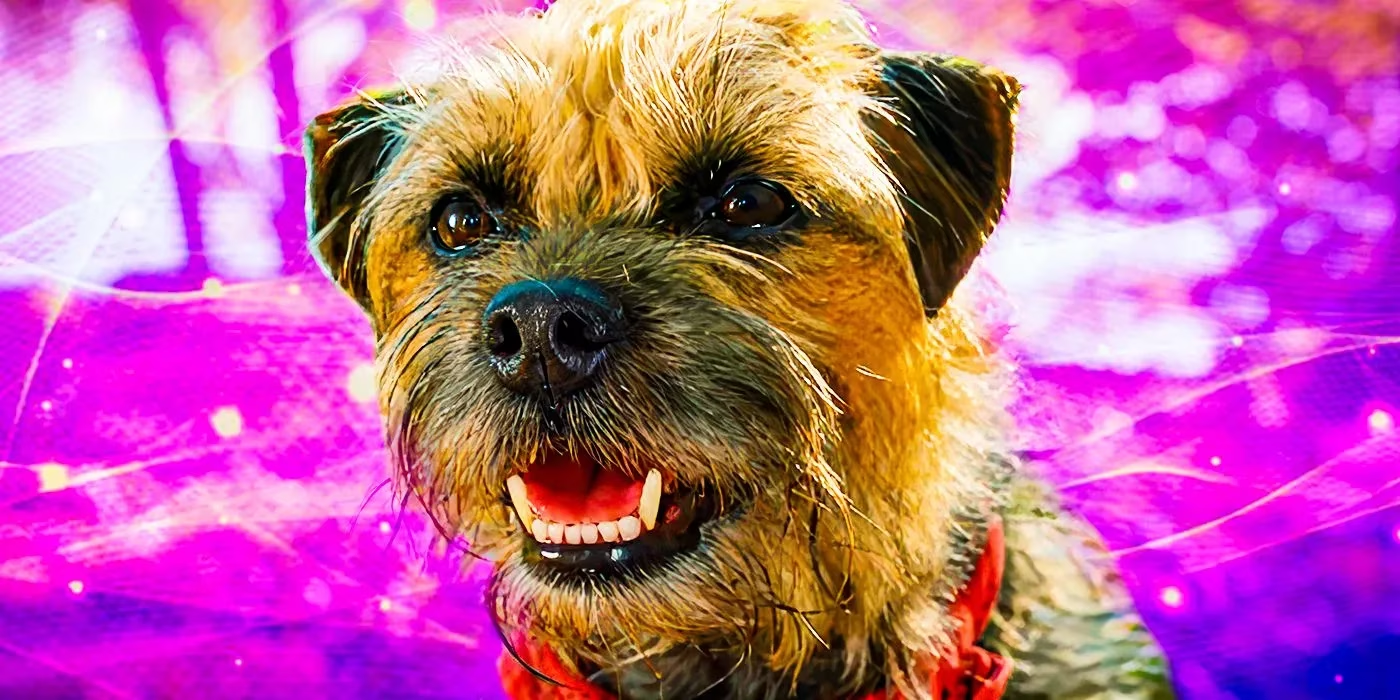
The heart of Strays belonged to Reggie, a Border Terrier whose optimism defied all logic. His breed is famously pleasant and people-oriented, and Reggie took that to an extreme so pure it bordered on heartbreaking. Even after Doug, his vile owner, dumped him in an unfamiliar city, Reggie kept interpreting cruelty as a game of hide-and-seek. That endearing cluelessness powered his quest for closure rather than blind rage. In a scene that 2026 audiences still paused to screenshot, Reggie’s real Border Terrier face contorted into a forgiving smile as he stared at the man who had abandoned him. Will Ferrell’s voice layered on a goofy sincerity, making Reggie the emotional anchor of a very R-rated adventure.
Bug – The Boston Terrier
If Reggie was the soul, Bug was the spark. This Boston Terrier arrived in his signature tuxedo markings, practically vibrating with street-smarts and unfiltered attitude. The breed is known for bonding fiercely with families, especially children, which explained why Bug had already loved a little girl named Emma and would later find a new human in Riley. His rapid-fire mentorship—teaching Reggie the ways of the stray life—felt like a natural extension of a Boston’s alert, almost theatrical personality. By 2026, fan edits of Bug’s most quotable lines were still cycling through social media, a testament to the pairing of Jamie Foxx’s delivery with a real dog whose expressions never missed a beat.
Maggie – The Australian Shepherd
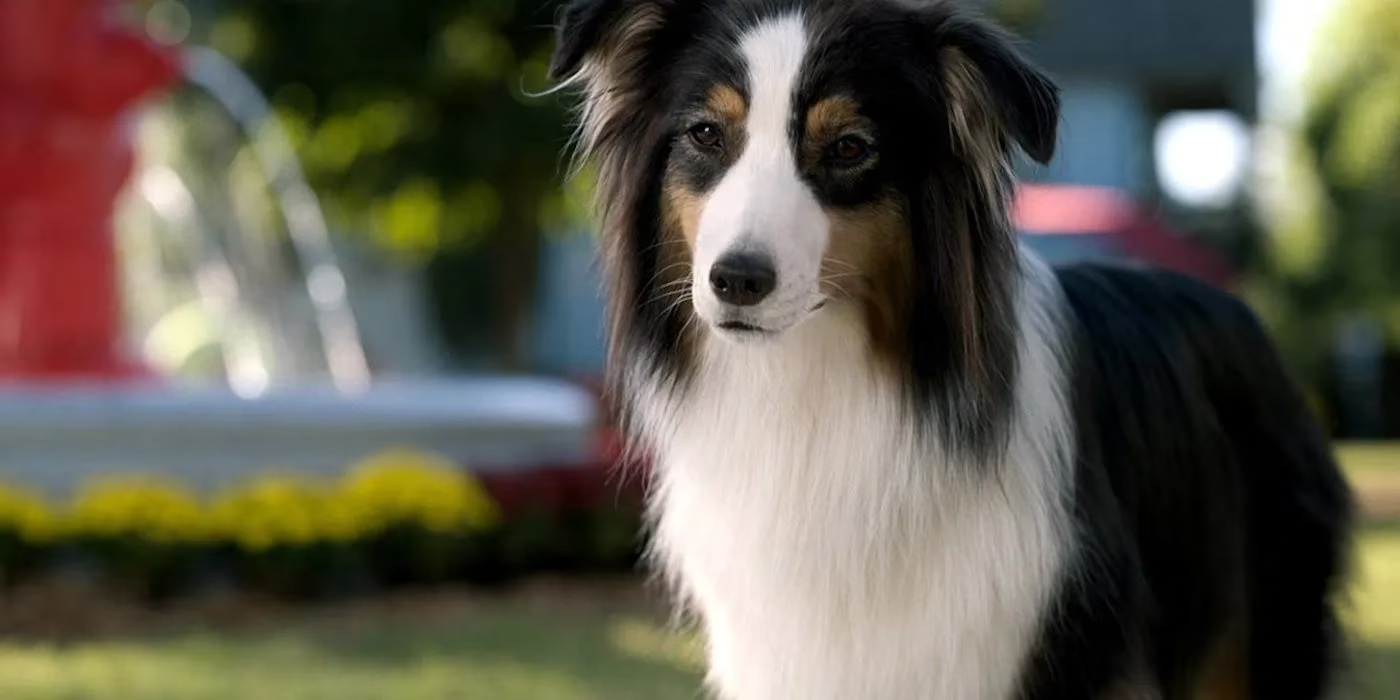
Maggie, the Australian Shepherd, elevated the pack with her stop-and-stare intelligence. Australian Shepherds were bred to herd, track, and solve problems, and Maggie embodied every one of those skills. She sniffed out danger before anyone else, corralled her chaotic friends with a flick of her tail, and famously outperformed actual police dogs during a pivotal search scene. The film turned her real herding instinct into a superpower, and Isla Fisher’s voice gave her a no-nonsense warmth that made her the group’s reluctant den mother. Even three years later, the image of Maggie side-eyeing a confused human while professional canines floundered remained a meme for “overqualified and underappreciated.”
Hunter – The Great Dane
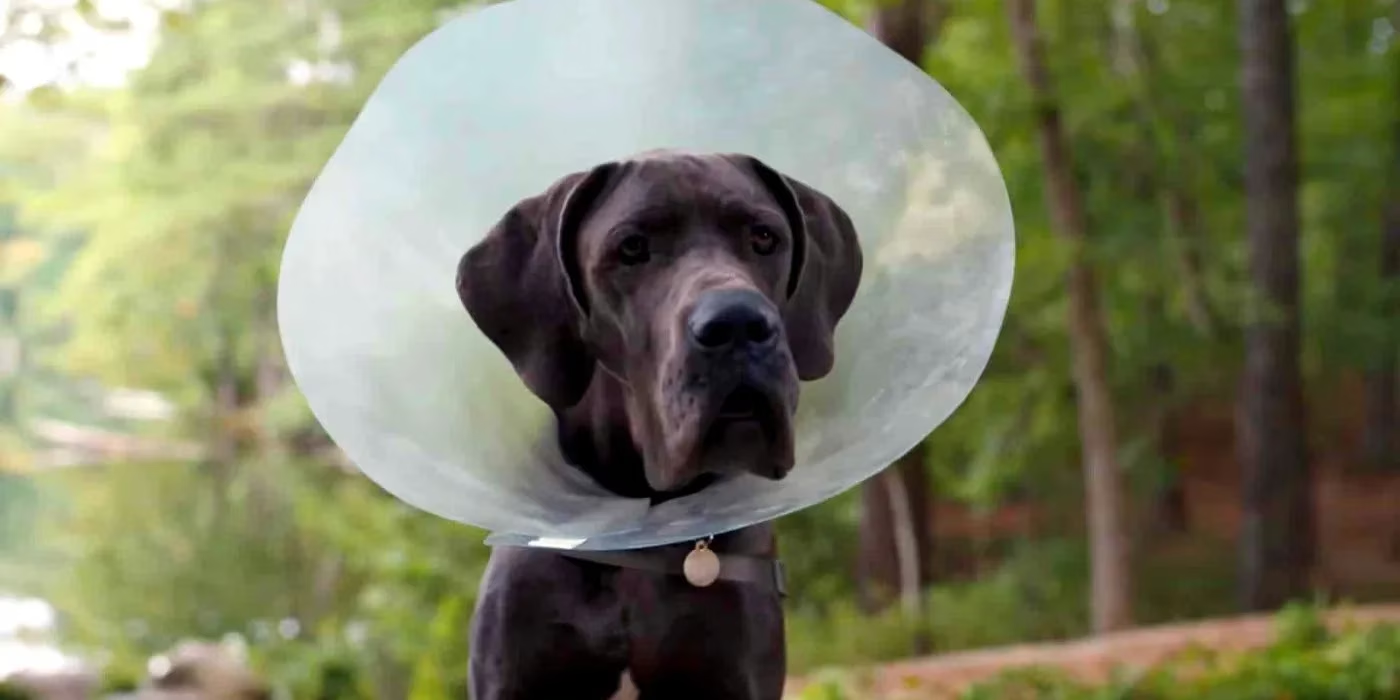
Hunter, the Great Dane, was a study in glorious contradiction. Towering over every other animal, he should have been the team’s enforcer. Yet his breed’s “gentle giant” reputation flipped into trembling, soft-spoken anxiety the moment a squirrel appeared. Randall Park’s halting tone gave Hunter a delicate interior life that clashed brilliantly with his massive frame. In one sequence that 2026 retrospectives still celebrated, Hunter attempted to hide behind a lamp post, entirely convinced of his own invisibility. That moment captured the comedic magic of using a real Great Dane: the camera didn’t need to exaggerate, because the dog’s uncertain posture already told the whole joke.
Rolf – The German Shepherd
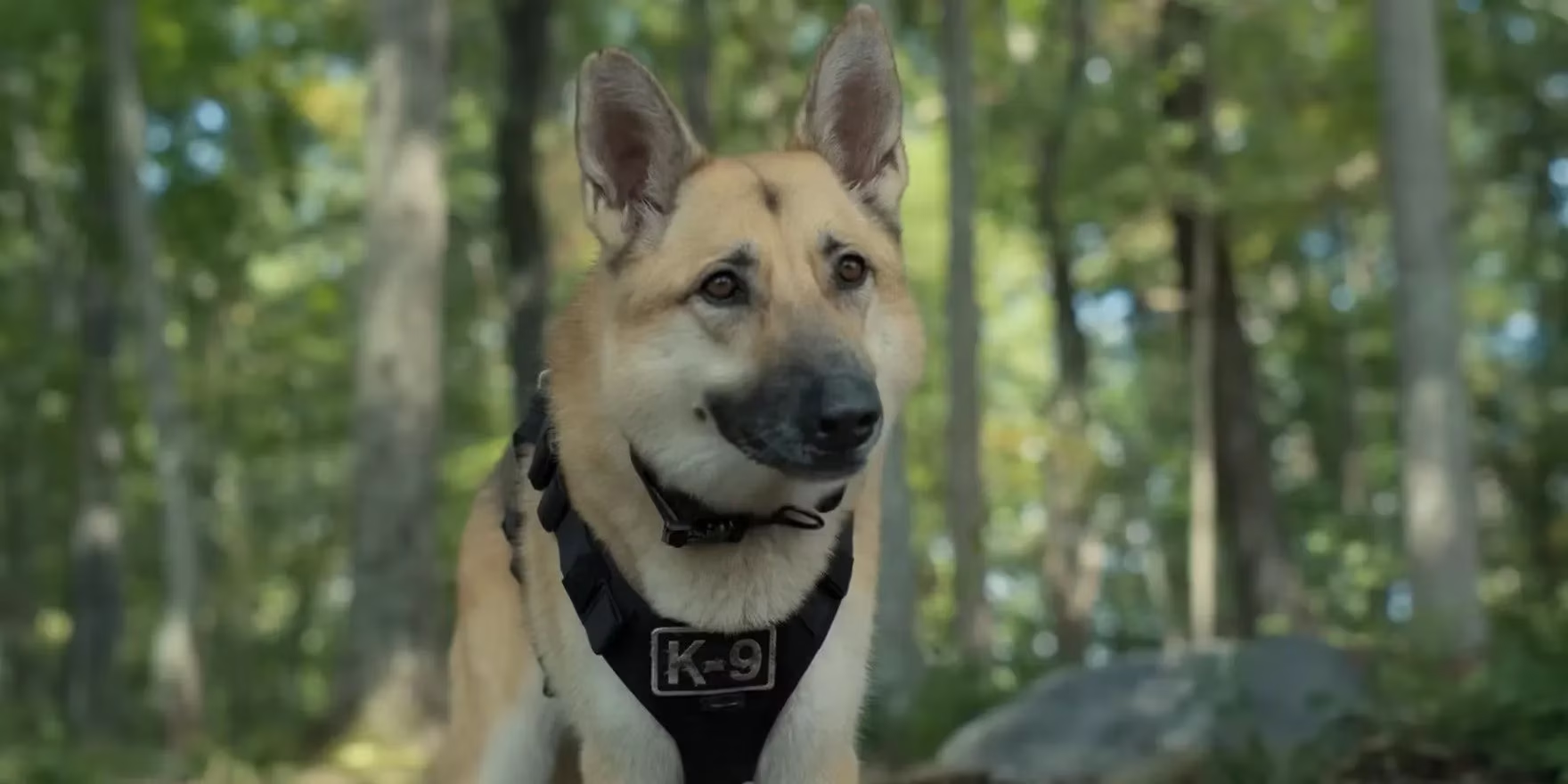
Representing law and order was Rolf, a German Shepherd police dog who wore his duty like a badge. The breed’s trainability and work ethic made him a natural for the uniform, and Rob Riggle voiced him with rigid, almost parody-level authority. Rolf’s brief appearances—sniffing out strays or locking eyes with his former colleague Hunter—were masterclasses in stone-faced comedy. He arrested dogs the way a traffic cop writes tickets, without a flicker of doubt. By 2026, breed enthusiasts often cited Rolf as the most accurate depiction of a working German Shepherd in modern cinema, a credit to the real animal’s discipline during filming.
Chester – The Bulldog
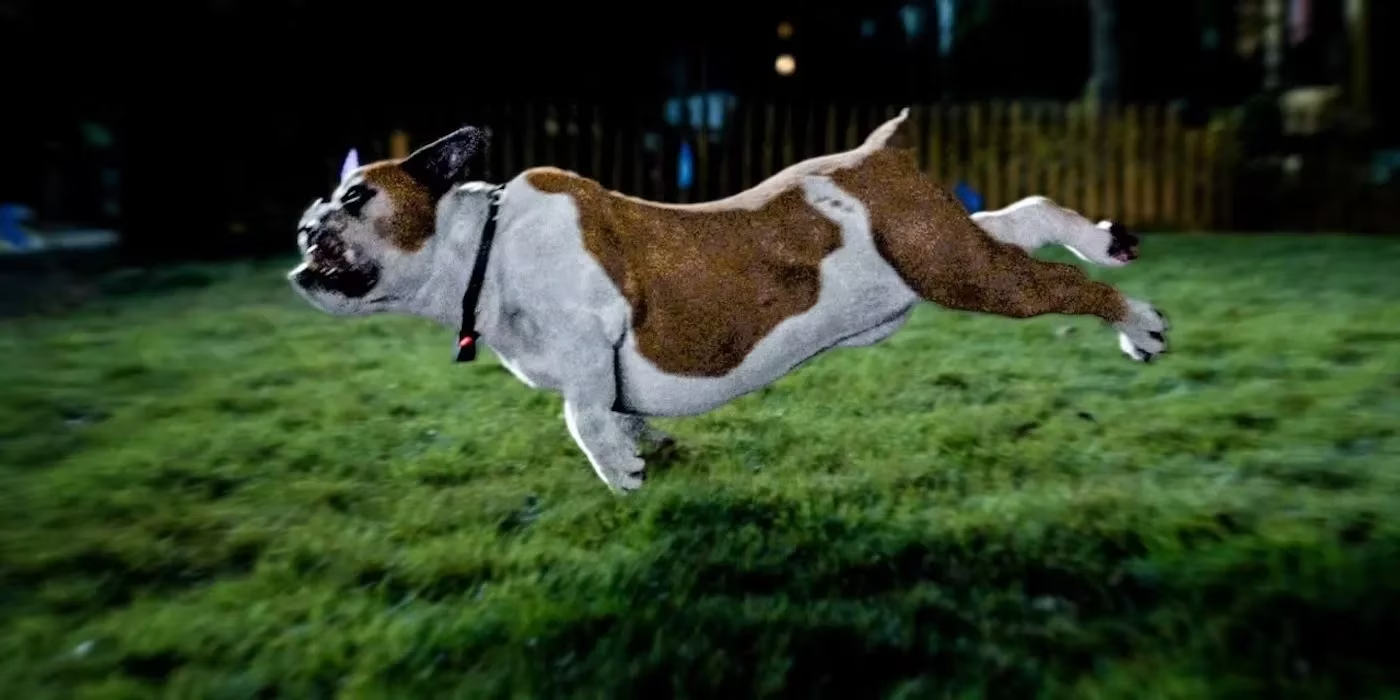
Chester the Bulldog inhabited a suburban prison wrapped in an invisible fence. His breed’s popularity with families didn’t save him from a shock collar that zapped him if he dared leave the lawn. The film turned that sad reality into biting satire, and the real Bulldog’s jowly, earnest expression sold every ounce of longing. A freeze-frame of Chester in mid-leap, reaching for freedom, became an emblem for anyone who ever felt trapped by well-meaning captivity. While Strays delivered laughs, Chester’s segments slyly asked whether bulldog breeding and electric containment were punchlines worth questioning. Audiences in 2026 still debated that uncomfortable truth.
Gus – The Labrador
Then came Gus, the Labrador who hijacked every expectation. Labradors are cinema’s go-to narrators for wholesome family tales, so when Josh Gad’s warm voice began describing his owner’s daily life, viewers settled in for something sweet. Strays had other plans. After Bug dismissed Gus’s “lame human story,” the Labrador casually revealed that his owner was, in fact, a serial killer. The camera caught the real Lab’s oblivious, tail-wagging smile as Reggie and Bug recoiled in horror. That single twist still caught newcomers off guard in 2026, a testament to how cleverly the film weaponized breed tropes.
The Supporting Pack
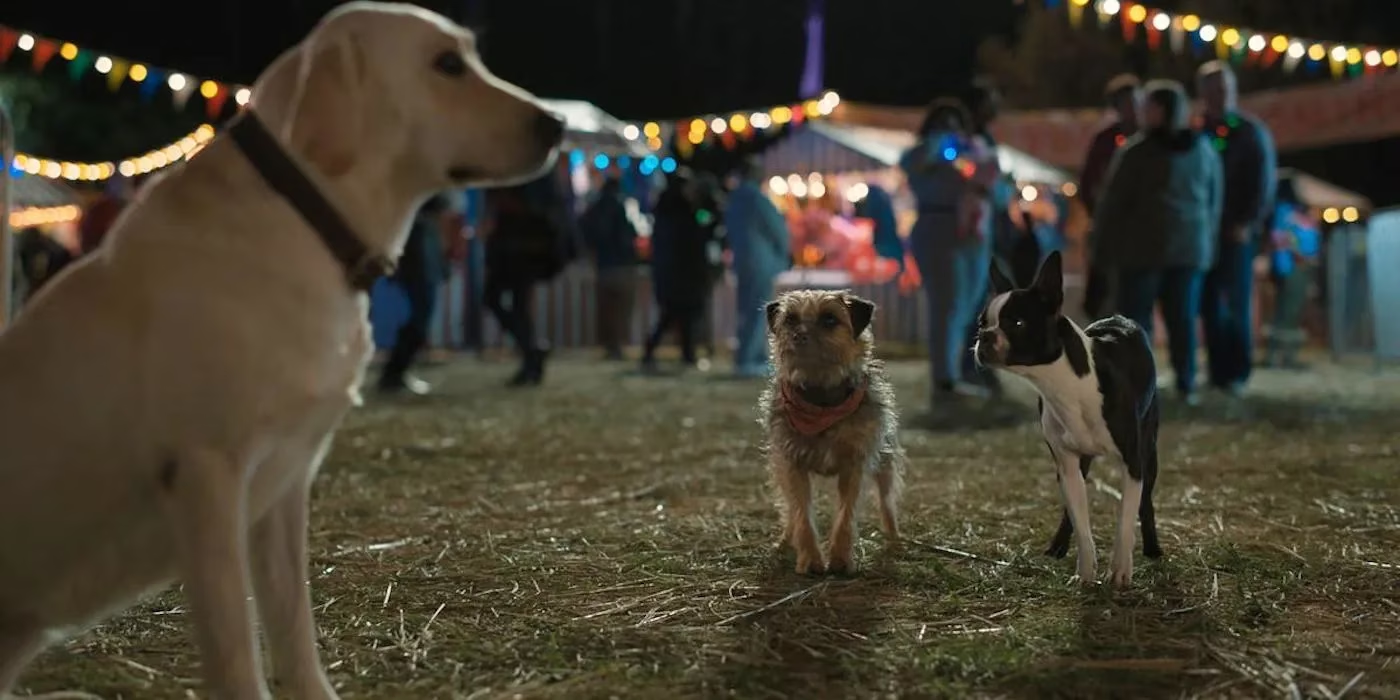
A constellation of other breeds rounded out the cast, each chosen for traits that could be amplified into comedy. Bella, a Pomeranian, preened like a valley-girl princess, her spoiled demeanor a perfect match for a dog that had replaced Maggie as the favorite. Finn, a Rottweiler, loomed with territorial menace before Bug’s sharp tongue dismantled his bravado—an inside joke about a breed often misunderstood as purely aggressive. And then there was Shtstain, a Chihuahua whose horrific name Reggie gently untangled, proving that the Border Terrier had grown wise enough to recognize cruelty and offer kindness in its place. That small, tender beat still warmed hearts in 2026, a reminder that even the filthiest comedy could carry a genuine soul.
By 2026, the official poster of Strays—the pack staring down the audience with equal parts mischief and solidarity—hung in dorm rooms, shelters, and indie theaters as a badge of honor. The film’s legacy wasn’t just its foul-mouthed dialogue or its undignified sight gags; it was the revelation that real dogs, steered by real breed instincts, could be funnier than any CGI creation. Greenbaum’s experiment proved that when you trust a Border Terrier’s relentless hope or a Great Dane’s trembling uncertainty, you unlock a comedy that ages into something resembling truth. Three years later, Strays still howled loud.