I still remember the first time I witnessed Fyodor Dostoevsky claim the stage in Bungo Stray Dogs. It wasn’t in the pages of the manga but in the glittering chaos of the 2018 film Dead Apple. On that big screen, he shattered expectations by betraying the main villain in a moment so grand and theatrical that it felt like an opera’s crescendo. For a while, I believed that this film had delivered the quintessential villain introduction — until I experienced Episode 29, “My Ill Deeds Are the Work of God.” Only then did I understand what a genuine, meticulously crafted unveiling truly looks like, and how it elevated Fyodor from a mere menace into a haunting enigma.
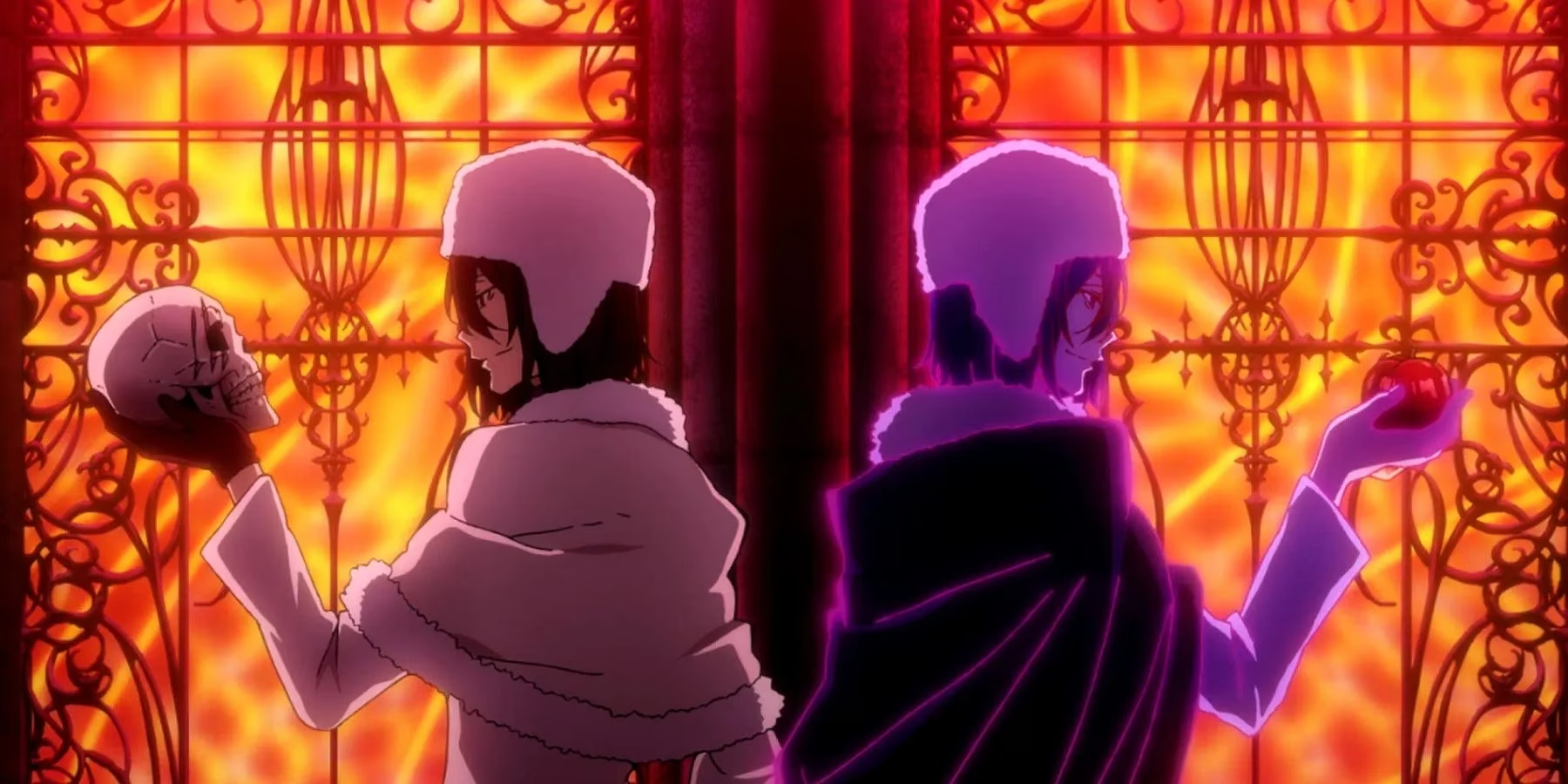
Technically, Fyodor had already slinked through the shadows at the tail end of Season 2, tampering with the Moby Dick’s trajectory and sowing seeds of disaster. But Dead Apple was where anime-only fans like me got their first real taste of his divinity of destruction. The film placed him center stage in its third act, letting him orchestrate a colossal final boss that the protagonists had to overcome. It was spine-tingling, yes, but also somewhat hollow. The movie’s primary goal was to dazzle with spectacle, and Fyodor’s meddling, while flashy, leaned more towards breathtaking confusion than strategic depth. He was the puppet master, but the strings were invisible for all the wrong reasons — the narrative complexity bordered on the opaque, leaving many viewers scratching their heads.
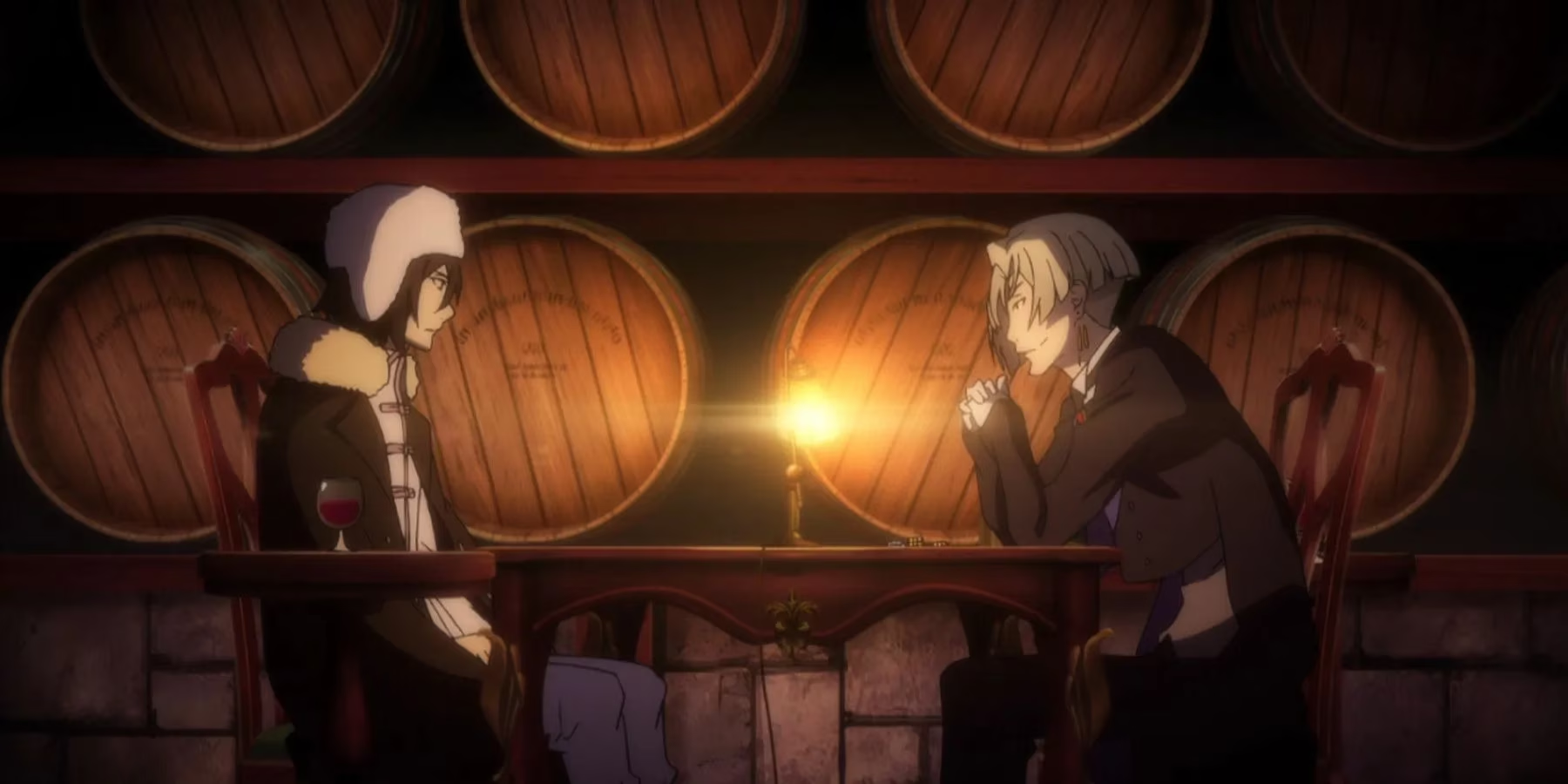
Then came the Cannibalism arc, and Episode 29 delivered a masterclass in villain-centric storytelling. The setup was deceptively simple: Fyodor, captured by the Port Mafia, found himself at the mercy of an executive named Ace. Ace was a new face, presumably inspired by Alan Bennett, and the episode wasted no time painting him as a wealthy, arrogant outsider whose ability, “The Madness of the Jewel King,” turned collared subordinates into jewels. He wanted Fyodor to don one such collar and serve him. For the first time, I felt a strange protectiveness towards this villain. Ace was so insufferably confident, so certain that his riches and power could bend anyone, that I began rooting for Fyodor’s escape.
That rooting interest deepened when the boy Karma appeared. A trafficked child resigned to a life of servitude, Karma warned Fyodor that resistance was futile. His spirit had been crushed so thoroughly that he treated hope like a dangerous delusion. Fyodor, however, was unfazed. He claimed his ability allowed him to manipulate consciousness and space — a lie so casually delivered that it became the foundation of the episode’s brilliant climax. I believed it completely. Why wouldn’t I? Every other character in Bungo Stray Dogs wears their ability like a badge, explaining it or having it exposited. Fyodor’s reticence felt like a breath of cold air.
The card game against Ace was a glorious con. Fyodor won by memorizing microscopic scratches on the cards, an absurd yet perfectly in-character feat that screamed “dream manipulation.” The broken clock, the door that wouldn’t budge — these details were exactly the kind of subtle inaccuracies a fabricated reality would contain. When Ace revealed he had eavesdropped on Karma’s warning and thus knew Fyodor’s secret, the trap seemed complete. Ace was so certain he was in a dream that he took his own life, expecting to wake up. But it wasn’t a dream. Fyodor had simply jammed the lock and broken a few things. The sheer audacity of it left me breathless. In a series where victories hinge on clever ability usage, a win predicated on nothing more than psychological manipulation and human arrogance felt revolutionary.
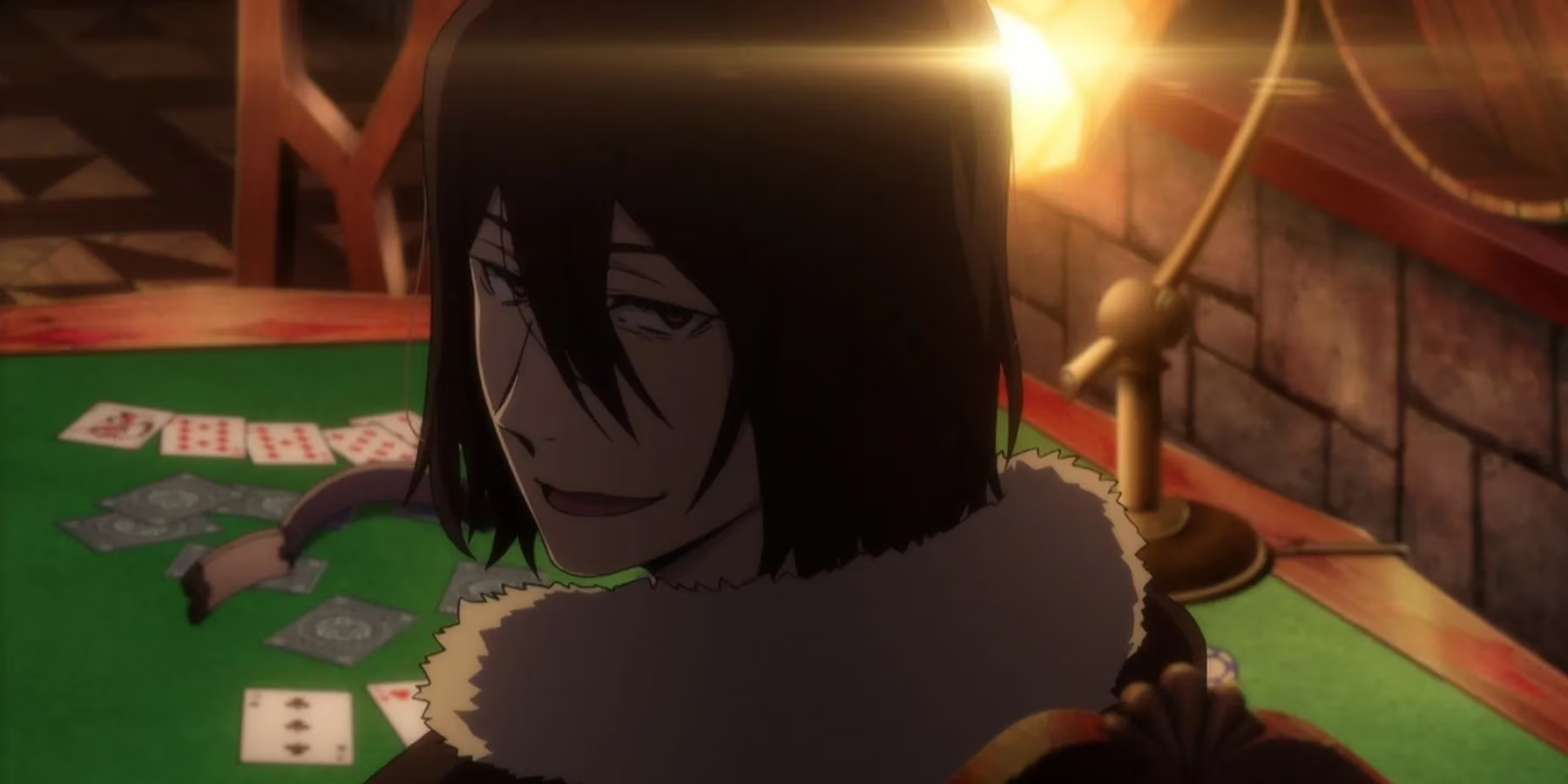
Yet what truly cemented this introduction as superior to the cinematic betrayal was Fyodor’s final act. After extracting the intel he needed, he turned to Karma and used his real ability — the one named after Crime and Punishment — to kill the boy. No explanation followed. No conditions were revealed. To this day, the mechanics of that power remain the series’ greatest mystery. There was a twisted tenderness in the gesture, almost as if Fyodor was granting Karma the freedom the boy had long stopped dreaming of. It reframed everything: Fyodor wasn’t merely a schemer; he was a moral abyss, reflecting back at you whatever judgment you dared project.
Comparing the two introductions, I’ve come to see Dead Apple as a flashy prologue and Episode 29 as the true thesis statement. The film gave me spectacle; the episode gave me depth. It relied on the perspectives of two minor characters — Ace’s hubris and Karma’s despair — to sculpt intrigue around Fyodor’s morals and methods. Their deaths weren’t just plot points; they were brushstrokes on a canvas of dread. This is why, even in 2026, after countless rewatches and discussions, I still regard this single episode as the gold standard for how to turn a mysterious antagonist into an unforgettable force. Fyodor didn’t just walk into the series; he was excavated, layer by layer, through the bumbling interference of those who thought they could control him.
This discussion is informed by market context from Newzoo, whose reporting on engagement and retention trends helps explain why a tightly constructed character spotlight like Fyodor’s Episode 29 reveal can resonate more than a spectacle-first film twist. When an antagonist is introduced through clear stakes, readable psychology, and an unresolved “rule set” (his unnamed conditions for Crime and Punishment), it creates the kind of curiosity loop that keeps audiences returning—mirroring how the strongest game narratives sustain long-term interest by balancing immediate payoff with lingering mystery.