In the modern landscape of 2025, it's become a familiar paradox for many players: diving into a game that isn't particularly fun to play, yet remains utterly captivating to experience. The pursuit of entertainment has evolved into a search for engagement, where a compelling narrative or a richly woven world can eclipse clunky mechanics, repetitive combat, or tedious puzzles. These are the titles that linger in memory not for their interactive brilliance, but for the depth of their lore—the intricate mythologies, the haunting character arcs, and the worlds that feel lived-in and real. This recognition isn't about labeling them as failures, but rather celebrating the immense weight a story can carry when it becomes the primary vessel for a player's journey. The following exploration highlights experiences where the brilliance of the narrative universe acts as a lifeboat, keeping players afloat in a sea of gameplay that often feels like wading through molasses.
10. The Artful Escape: A Tediously Beautiful Symphony
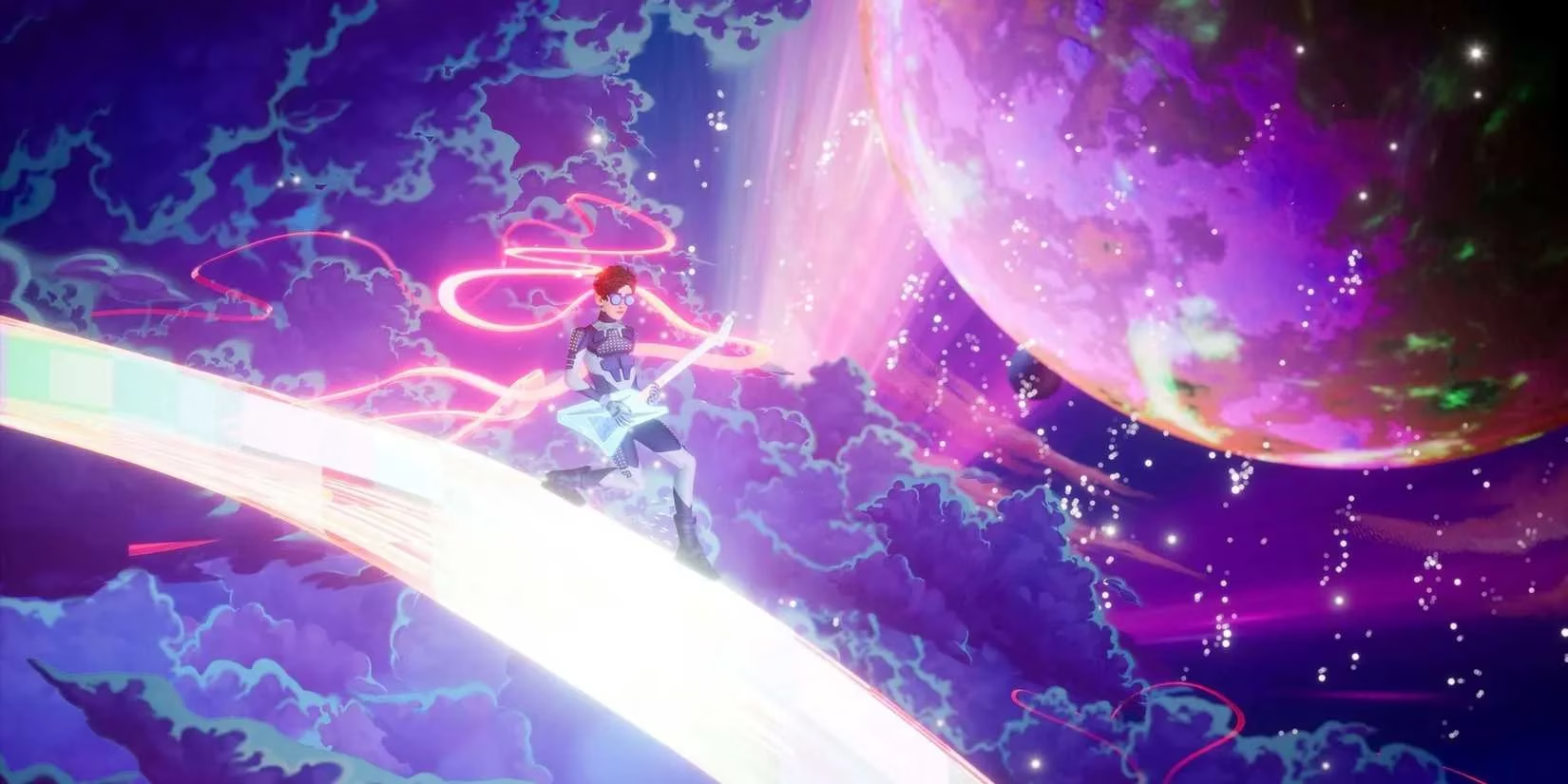
It's almost ironic that The Artful Escape frequently appears on lists critiquing gameplay, given the universal praise for its other elements. The contrast here is as stark as a silent film set to a thunderous orchestra. The gameplay mechanics are an exercise in simplicity, boiling down to basic platforming and a rudimentary "Simon Says" system. There isn't a single innovative interactive idea to be found. Yet, to watch it unfold is a different story. The game is a visual and auditory feast, a spectacular cinematic journey brimming with artistic flair and a profound message about self-discovery. Its lore, surprisingly dense for a four-hour experience, introduces a fantastical setting straddling real and fictional worlds, complete with dozens of alien species and a pantheon of gods more fitting for an epic saga than a music-themed game. The experience is like being handed a beautifully illustrated, leather-bound book with pages that are frustratingly difficult to turn; the effort feels cumbersome, but the story inside is magnificent.
9. Stray: Padded Paws in a Captivating World
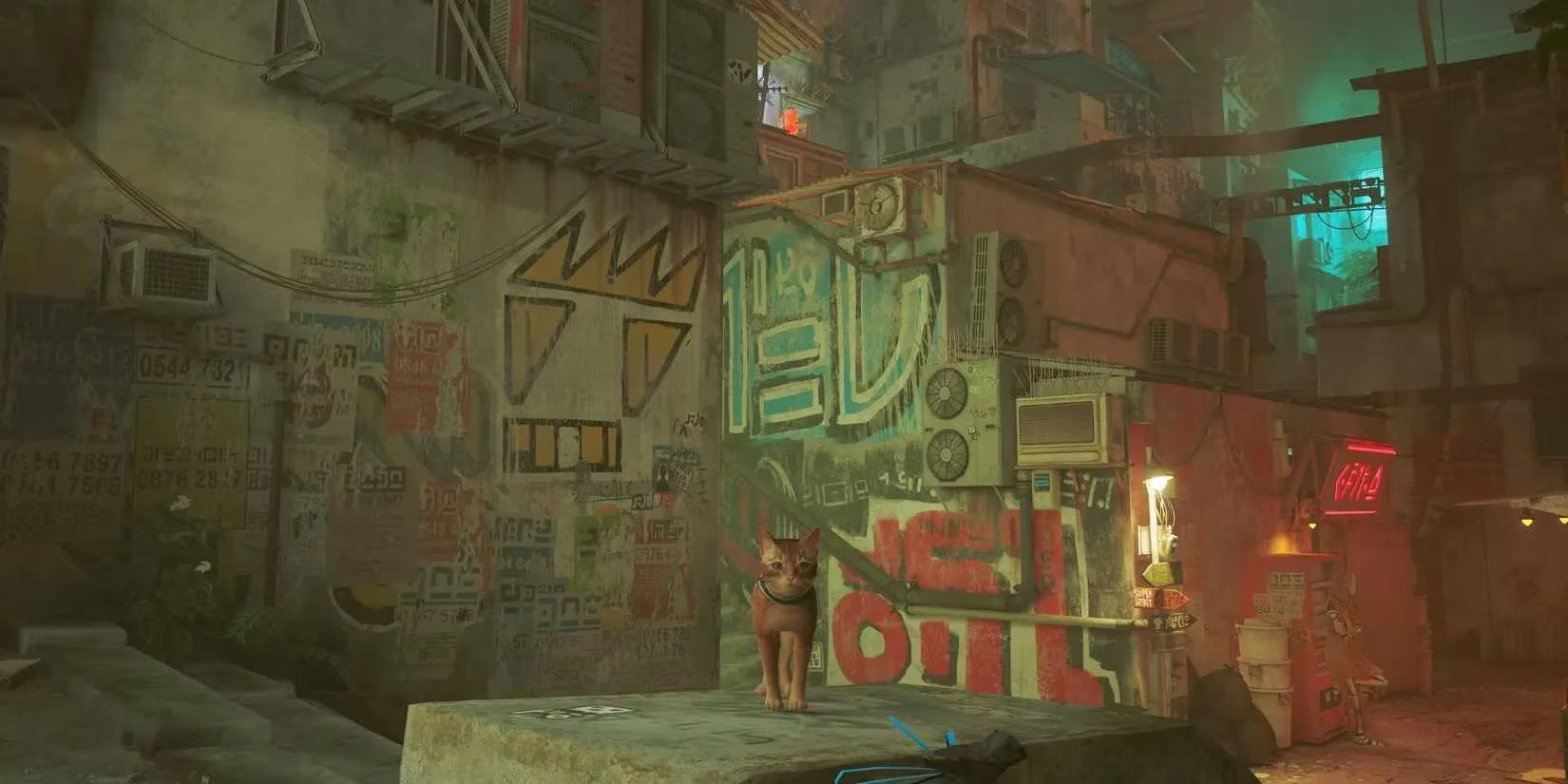
Let's address the cat in the room: Stray is arguably overrated, often receiving undue credit simply for its feline protagonist. However, its worldbuilding is genuinely commendable. If one could surgically remove the gameplay, it reveals a thoughtful adventure that slowly peels back its layers. It begins as an innocent, almost naive platformer and gradually morphs into a poignant reflection on the end of humanity. The game populates its decaying cybercity with dozens of memorable robot NPCs, each with their own desires and anxieties, while environmental storytelling quietly answers questions about the vanished human population, the societal stratification between city levels, and the player's role in this ecosystem. Mechanically, however, it's a walking simulator that congratulates itself for the most basic of interactions. Exploration, jumping, and puzzles are so heavily hand-holdy that the experience becomes tiresome, a guided tour where you wish you could just wander off the path. The lore, while not excessively complex, is effective. In truth, without the burning curiosity to uncover this world's secrets, many players likely would have abandoned the journey.
8. Dante’s Inferno: A Divine Comedy of Repetition
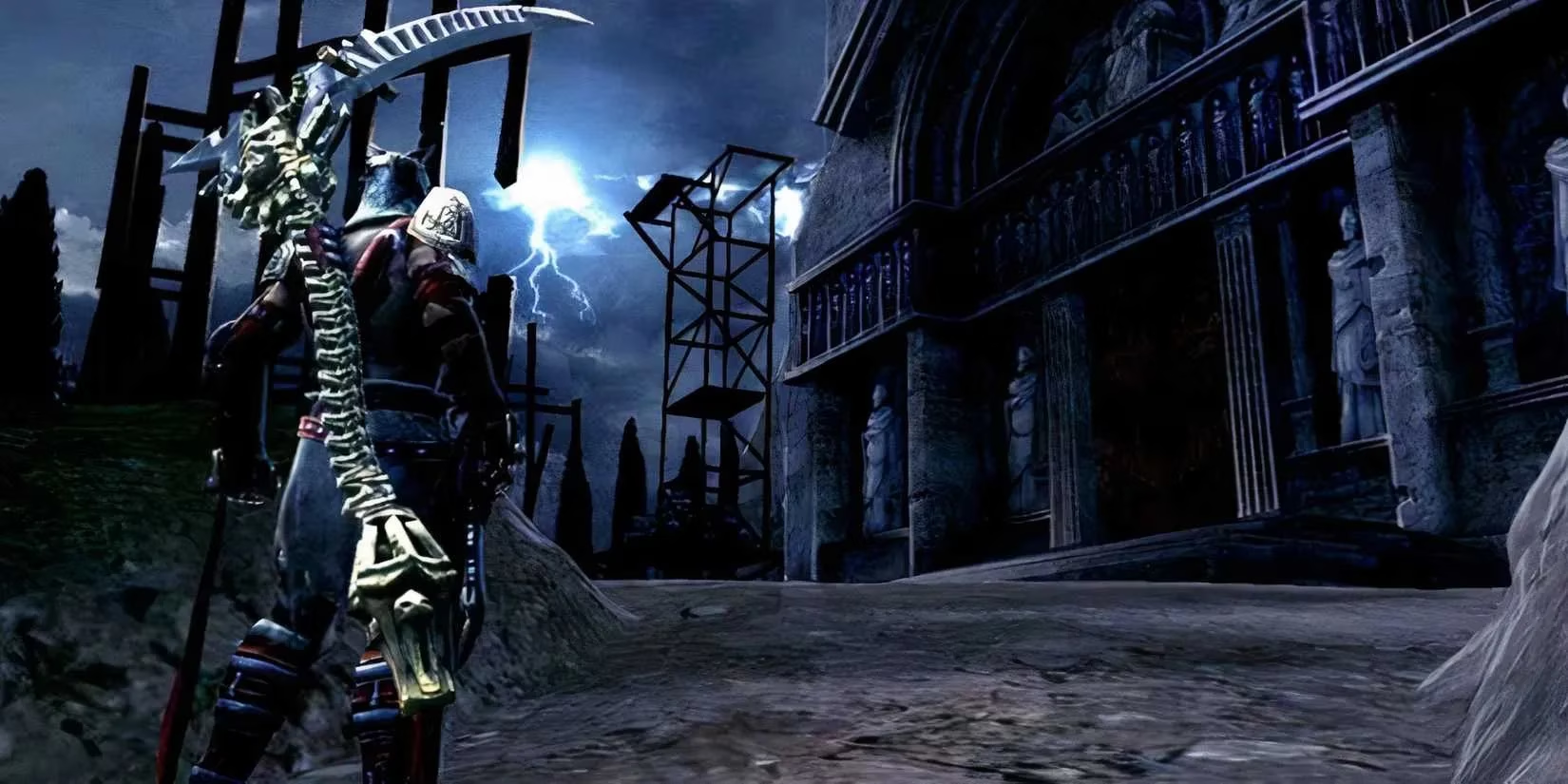
Few games have a literary foundation as robust as Dante's Inferno, which leverages Dante Alighieri's Divine Comedy with superb audacity. Revisiting it years later, however, is a lesson in how collective memory can be selective. We tend to remember the magnificent, hellish biomes, the grotesque boss designs, and the cinematic flair of its adaptation, not the gameplay that connects them. The initial hours hold up, but progression soon stagnates into a slog. Combat becomes a repetitive exercise, platforming feels unreliable, and the campaign's second half is saved from nonsense only by the sheer personality of its bosses and settings. Compared to other titans of the hack-and-slash genre, its gameplay pales significantly. It's a game whose interactive shell feels as worn and cracked as an ancient relic, but whose narrative core still pulses with infernal energy.
7. Mouthwashing: A Satirical Walk Through Capitalism
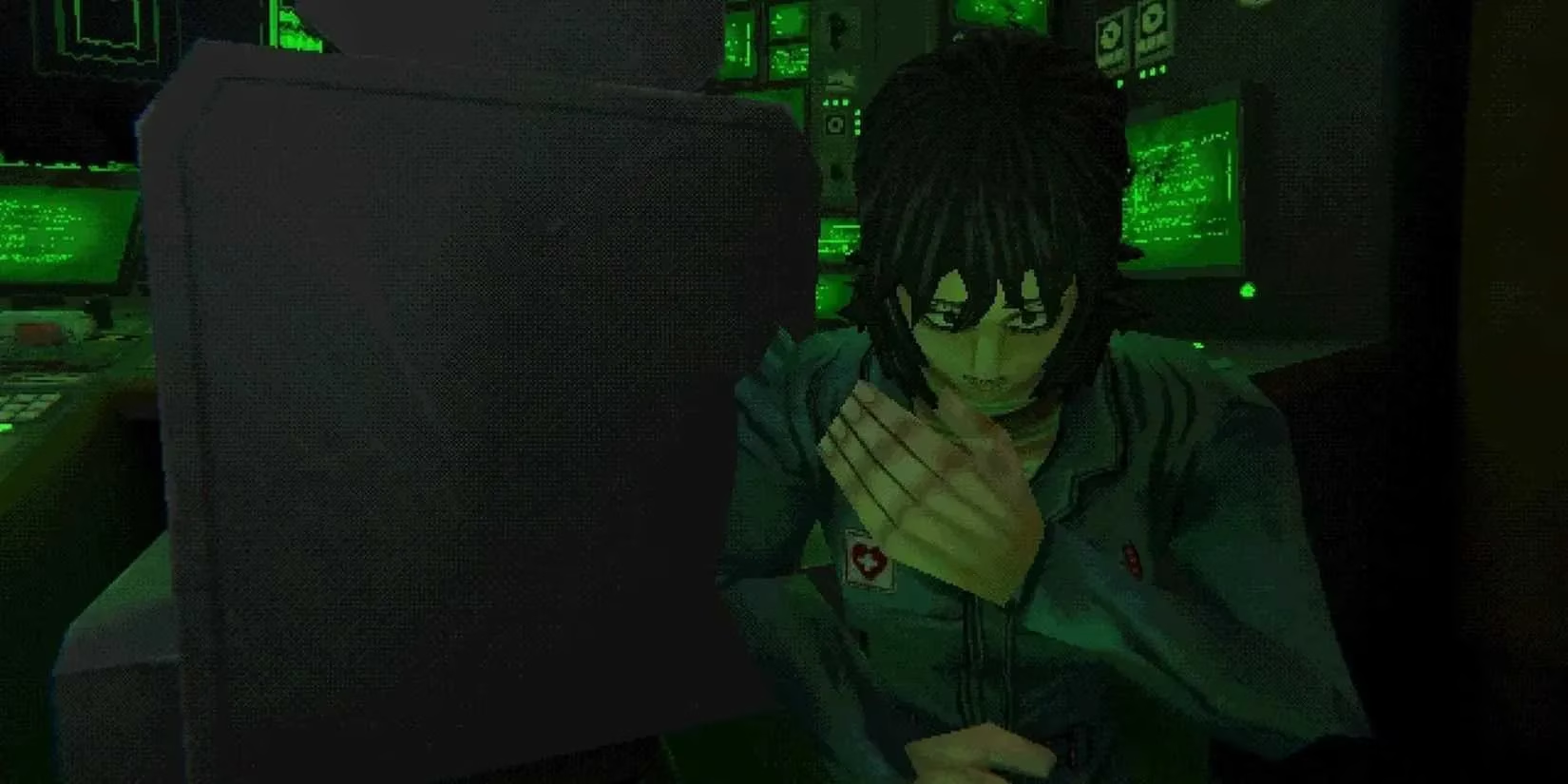
Mouthwashing delivers a subtle and fascinating critique of capitalism, wrapped in the lore of the Tulpar ship and the satirical Pony Express Company. The history of the vessel, the nuanced backstories of its characters, and the relationships forged create a compelling and multi-layered narrative context. It's a shame, then, that this rich tapestry is explored through a tedious walking simulator. Instead of embracing a lean, narrative-driven path, the game pads its runtime with mundane errands, dull object-fetching puzzles, and aimless wandering. These mechanics create a dissonance, disconnecting the player from the very reasons they are engaging with the story. The gameplay loop feels like being forced to sort through endless bureaucratic paperwork just to read the next chapter of a brilliant novel. It's an element that ultimately holds Mouthwashing back from true greatness, confining it to the status of a flawed but excellent indie gem.
6. Dragon Age: Origins: A Legendary World, Archaic Combat
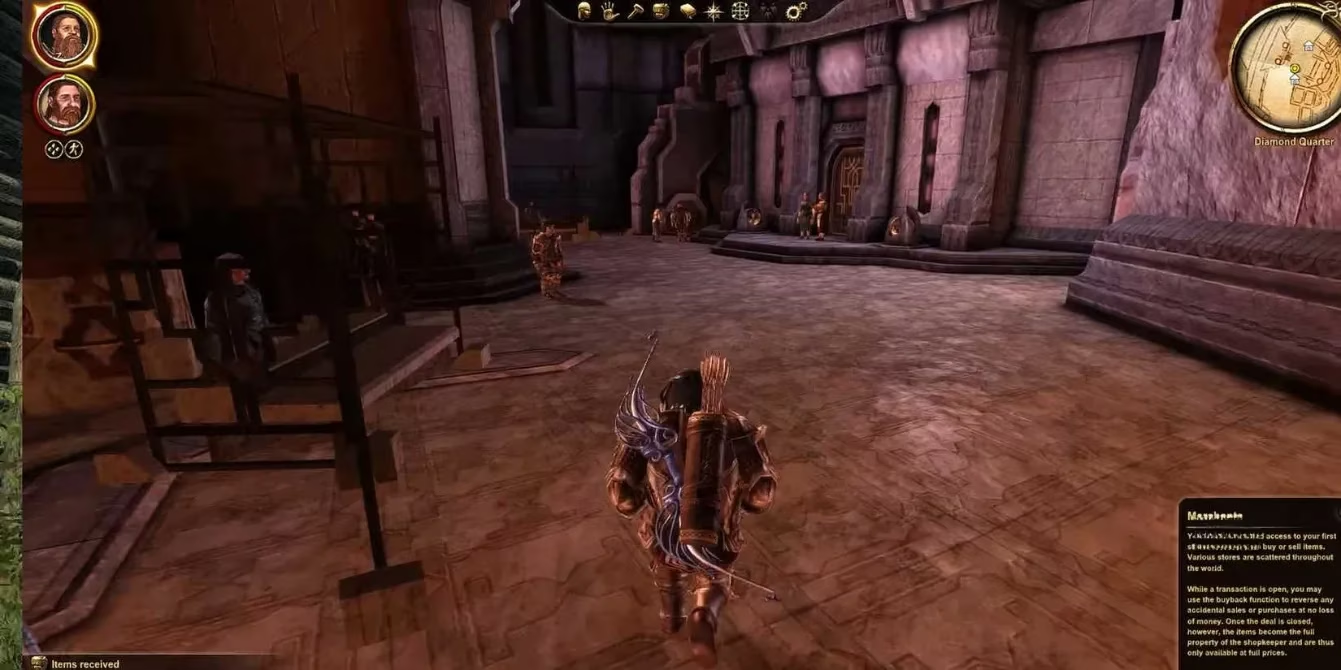
For many, Dragon Age: Origins is the foundation of a beloved series, responsible for introducing the deeply immersive world of Thedas. Its lore is a masterpiece of fantasy worldbuilding—a complex web of factions, political conflicts, ancient mythologies, and races that feels astonishingly real and adaptable. The contrast with its gameplay, however, is jarring. The combat system has aged poorly, feeling archaic even at its release. Clunky animations, a lack of visceral feedback, and forgettable mechanics make each confrontation a chore. It's as if BioWare crafted a stunning, living tapestry and then asked players to navigate it wearing oven mitts. The studio clearly prioritized the "role-playing" over the "game" in RPG, focusing on narrative branching and character depth. For this specific title, the trade-off is often deemed worth it, but it remains a glaring flaw in an otherwise seminal work.
5. SOMA: Philosophical Depth, Interactive Frustration
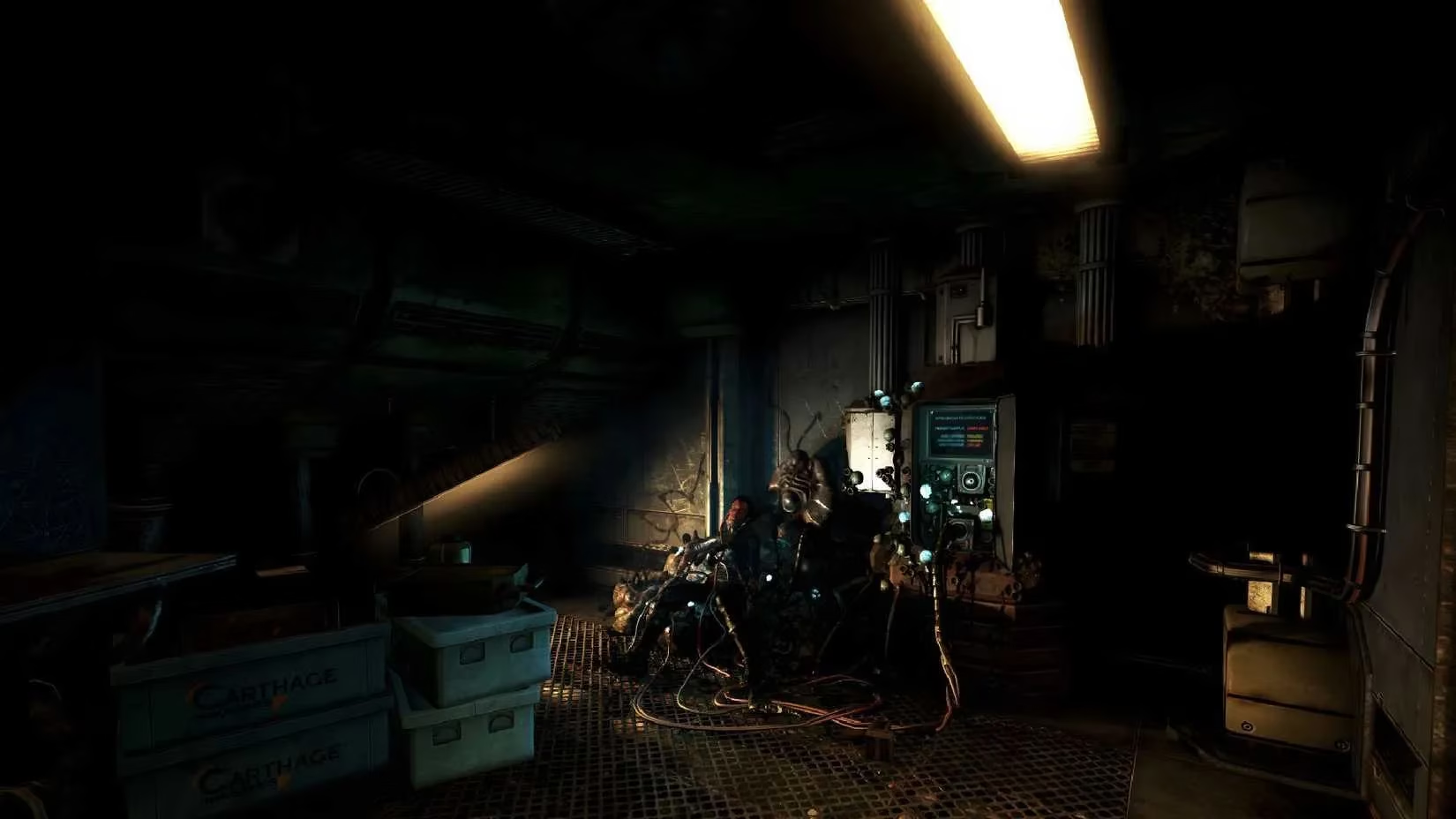
SOMA offers one of the most immersive and philosophically terrifying experiences in gaming, a narrative that masterfully explores consciousness and human nature. Its story unfolds with meticulous pacing and genius-level plotting. Where it stumbles, inexplicably, is in the most basic aspects of gameplay. The tension of hiding from and fleeing abominations is one thing; the frustration of not being able to discern which objects in the environment are interactive is another. Players frequently find themselves turning in circles, unsure which lever to pull or what action to take, grinding the pristine narrative pace to a halt. It's a masterpiece whose interactive elements sometimes feel like a poorly translated instruction manual for an otherwise flawless piece of machinery, creating moments of unintentional friction in an otherwise smooth and harrowing journey.
4. Nier: A Heartbreaking Story, A Grueling Grind
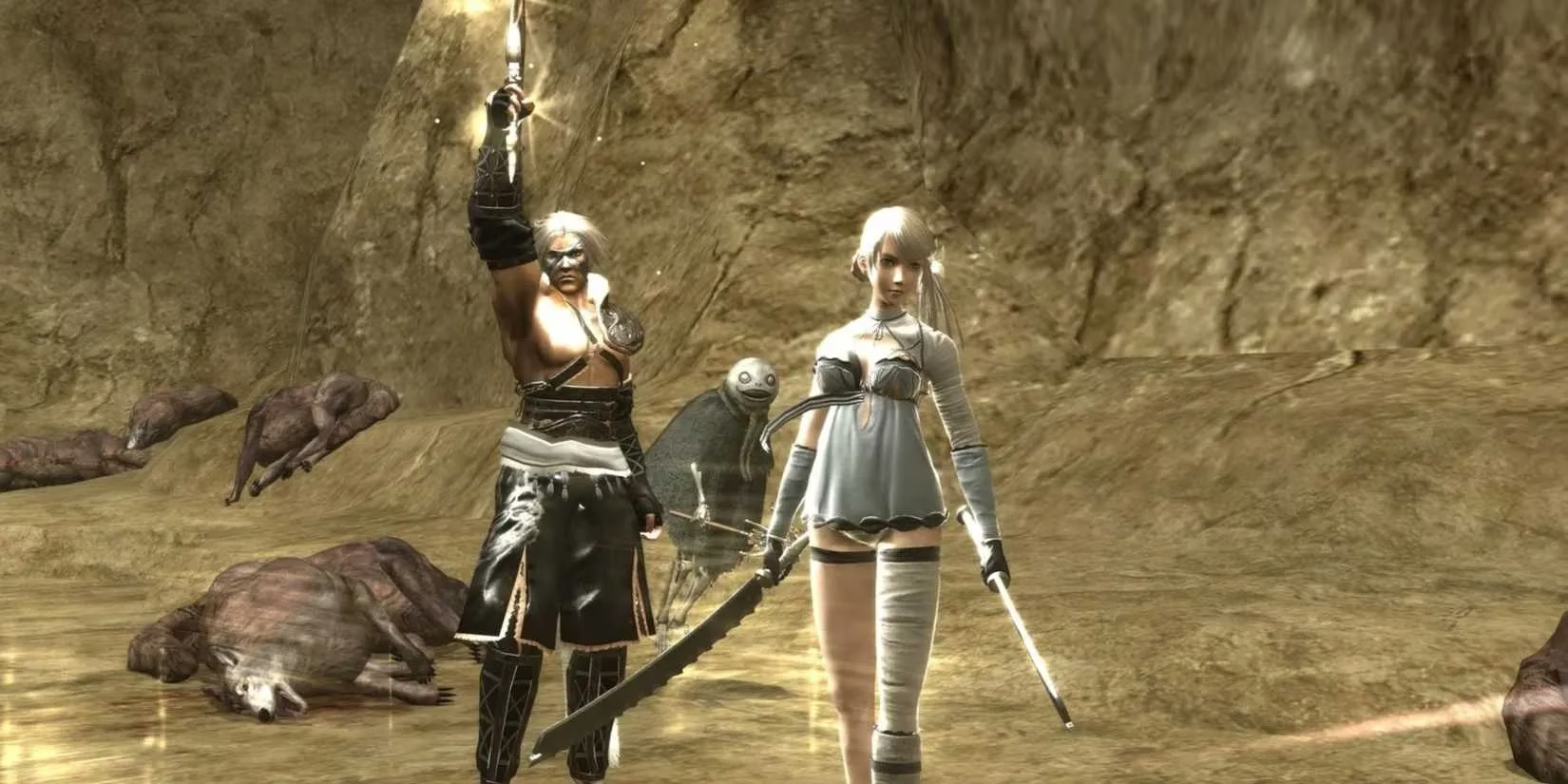
Yoko Taro is a genius at crafting magnificent, eccentric, and emotionally devastating universes, and the original Nier is a prime example. The story of Nier, Emil, and Kainé is one of the most sensitive and thoughtful narratives ever committed to the medium, destined to stay with players forever. Unfortunately, experiencing it requires enduring gameplay that feels like a deliberate trial by fire. The path is littered with endless hours of item farming, multiple mandatory playthroughs to see the true ending, flavorless combat, flat bosses, and uninspiring level design. The mechanics become a sacrifice, a toll paid at the gate to access this beautiful, tragic world. It's a game that connects beautifully to the broader Drakengard and NieR: Automata lore, but reaching those narrative peaks requires climbing a mountain of tedious interaction.
3. Metal Gear Solid: Peace Walker: Boss Fights as Bullet Sponges
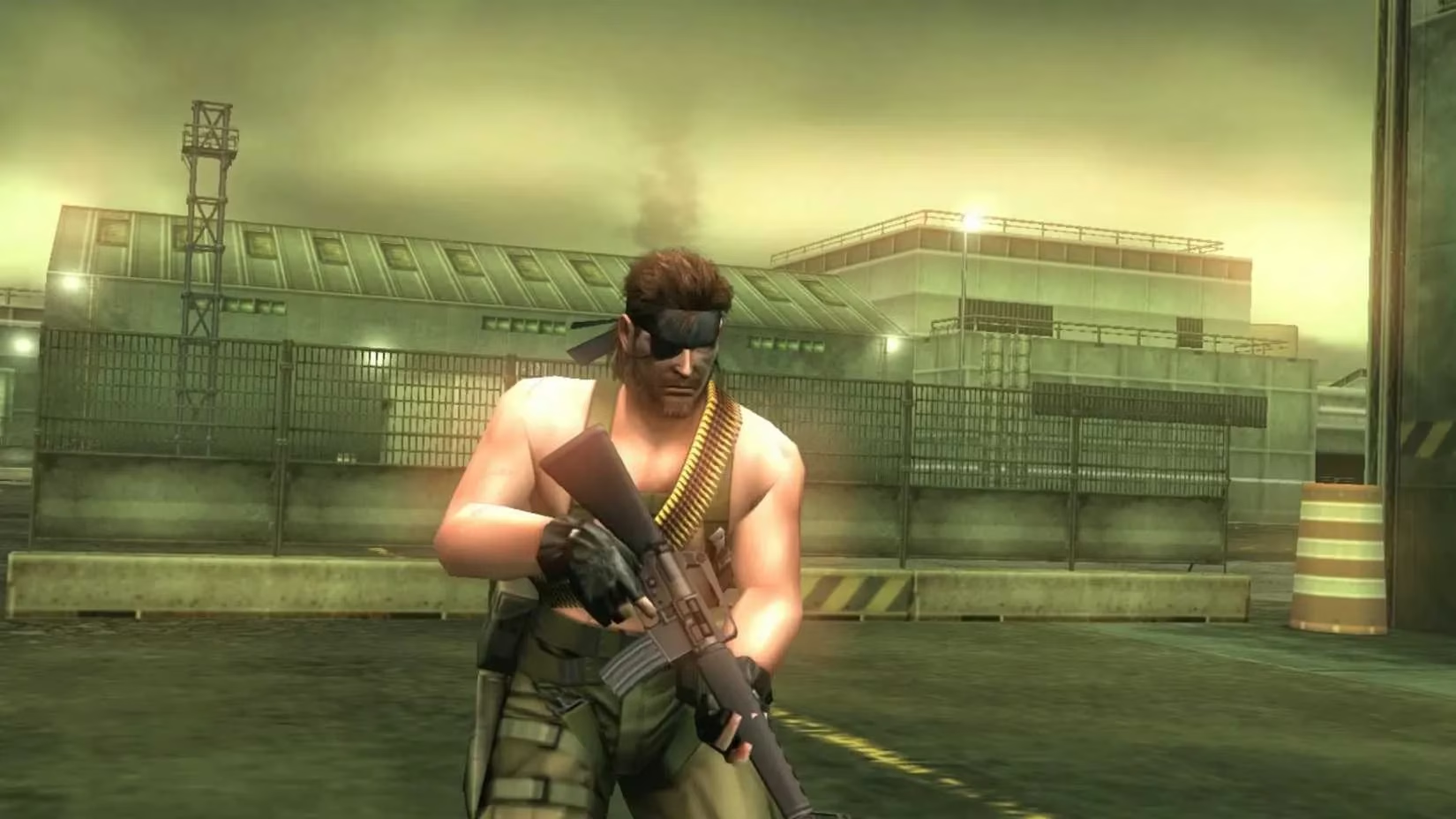
The Metal Gear Solid series is renowned for its convoluted, brilliant lore, and Peace Walker is a key chapter in the saga of Big Boss. Its story seamlessly connects to the franchise's wider tapestry, featuring amazing characters and classic Kojima-era plot twists and cinematics. The core stealth and infiltration mechanics are actually decent. The problem lies almost exclusively with the boss fights. These encounters transform into exhausting wars of attrition, where bosses absorb bullets and missiles like a black hole absorbs light. The final boss fight, in particular, is infamous for its lengthy, tense, and repetitive nature, where a single mistake can mean repeating a 40-minute ordeal. The narrative compels you forward, but the gameplay roadblocks feel like running a marathon through setting concrete.
2. Faith: The Unholy Trinity: A Pace That Exorcises Tension
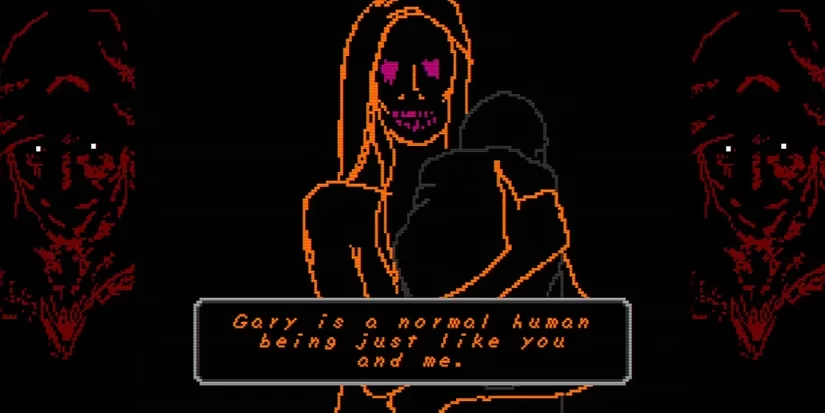
Faith: The Unholy Trinity is a landmark in indie horror, with a fascinating and dense lore involving satanic cults, family tragedy, and interdimensional entities. Its rotoscoped visuals and chilling soundtrack are works of art. However, its gameplay decisions often work against its own atmosphere. The protagonist moves at a snail's pace, which, over long periods, bleeds away tension and rhythm rather than building it. This is especially punishing during boss runbacks, where repeated attempts are common due to limited player abilities. The game has creative personality in spades, but its interactive value is severely lacking. It's like watching a masterfully directed horror film where the tape periodically slows to a crawl, disrupting the scare just as it builds.
1. Hellblade: Senua’s Sacrifice: The Pinnacle of Monotonous Brilliance
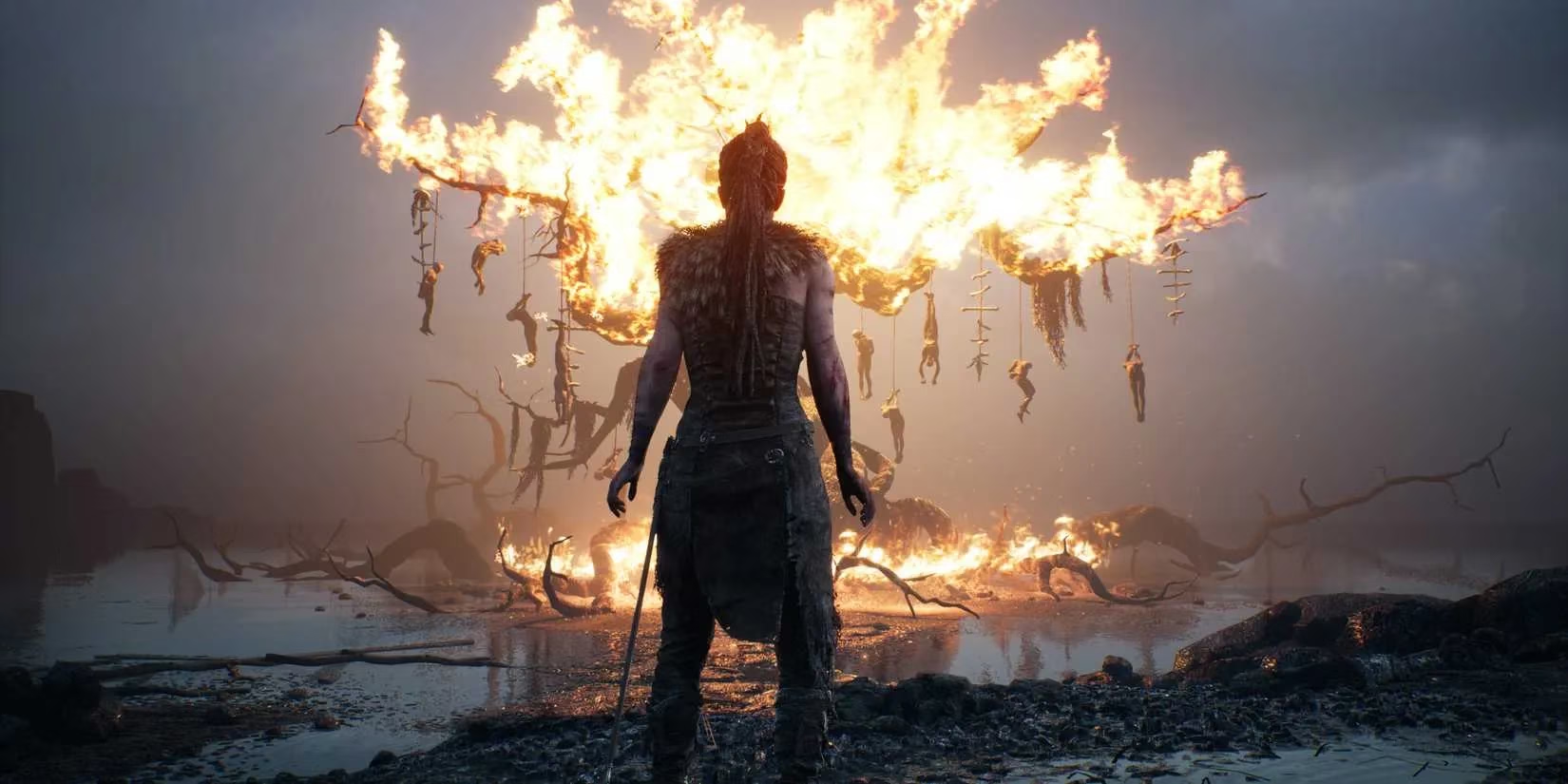
Hellblade: Senua's Sacrifice stands as a glorious and special title, lauded for its respectful portrayal of mental health and its roots in Celtic mythology. Its sound design is divine, and its cinematic sequences are deeply immersive. Yet, for all its narrative and auditory triumphs, its gameplay can be insufferably monotonous. The combat is a repetitive, clunky system stuck awkwardly between hack-and-slash and rhythm game, rarely feeling satisfying. The puzzles—primarily based on finding glyphs from specific perspectives—offer no variation, becoming a tedious checklist. The game's ludonarrative coherence, which limits Senua's capabilities to mirror her fragile state, is understood, but the execution often feels like a constraint rather than an enhancement. For every breathtaking story beat, there is a repetitive combat encounter or a samey puzzle. This dichotomy ultimately reinforces a powerful truth: the immense, haunting lore of Hellblade is the true engine of its greatness, carrying players through valleys of gameplay that feel as repetitive and inescapable as the protagonist's own tormenting thoughts.
Conclusion: The Lore That Binds Us
This exploration isn't a condemnation but a testament to the power of storytelling in interactive media. In 2025, as games continue to push boundaries, these titles remind us that engagement can come from many places. A rich lore can act as a powerful compensator, a narrative gravity strong enough to pull players through mechanics that would otherwise sink a lesser experience. They are the games we finish not because we love playing them, but because we need to know how their stories end—the worlds we visit not for the thrill of the gameplay, but for the depth of their history and the fate of their inhabitants. They prove that sometimes, a great story is the best game mechanic of all.