In the ever-evolving landscape of media adaptations, the announcement of an Until Dawn movie often sparks a familiar debate: fidelity versus reinvention. As we move into 2026, this conversation has only intensified, with audiences and creators alike grappling with the best way to translate interactive experiences into cinematic ones. The initial reaction to news that the film would feature a different setting and cast from the beloved 2015 video game was met with understandable skepticism. After all, why borrow a name if you plan to change its very soul? Yet, history offers a compelling counterpoint, suggesting that such a bold departure might not be a betrayal, but a necessary evolution—a chrysalis from which a new, yet familiar, creature can emerge.
The Precedent of World War Z: A Blueprint for Success
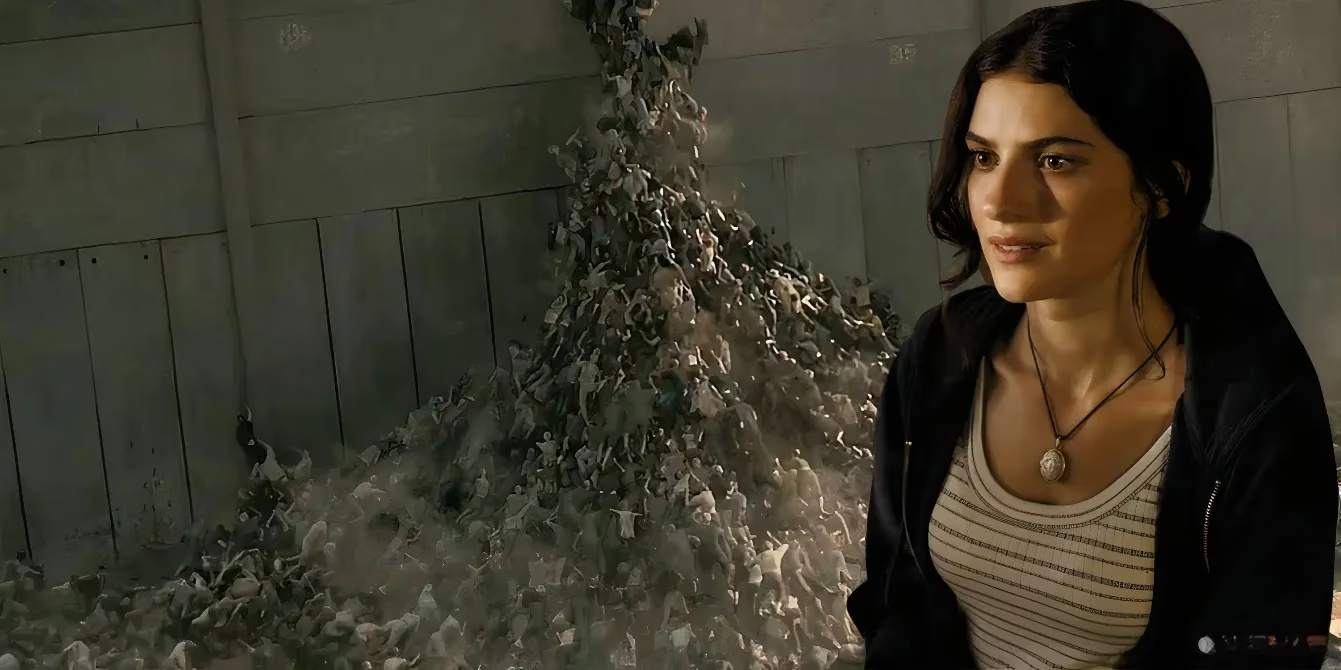
The journey of World War Z from page to screen serves as a masterclass in adaptation alchemy. When the film was first announced, fans of Max Brooks' meticulously crafted oral history novel envisioned a sprawling, episodic tale of global survival. What arrived in theaters was something entirely different: a fast-paced, action-centric thriller anchored by a single protagonist. The initial fan backlash was as predictable as a jump scare in a dark corridor. Critics lamented the loss of the source material's unique structure and geopolitical commentary, seeing the changes not as an adaptation but an evisceration.
However, the film's subsequent success was undeniable. It became a box office juggernaut, grossing over $540 million worldwide, and carved out its own identity as a tense, globe-trotting zombie epic. The lesson was clear: divergence is not inherently destructive. By freeing itself from the novel's specific narrative constraints, the movie was able to explore the core theme—humanity's struggle against an overwhelming, mindless threat—through a lens better suited for a mainstream cinematic audience. It was less a direct translation and more a thematic remix, proving that the spirit of a story can survive, and even thrive, outside its original vessel.
The Heart of Until Dawn: More Than Just a Cabin
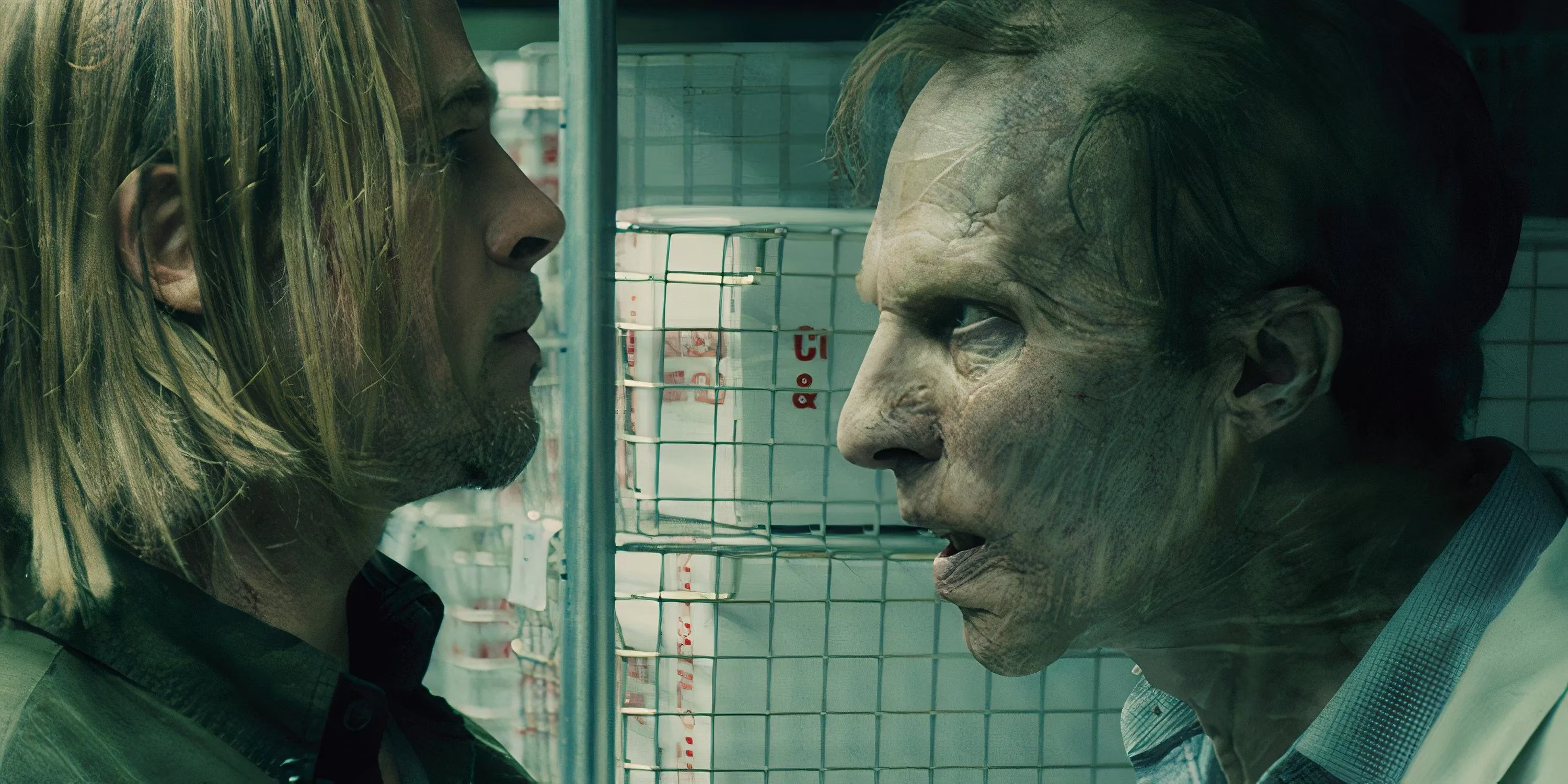
To understand the potential of the Until Dawn film, one must first dissect what made the game so captivating. Until Dawn wasn't just a horror story; it was a personalized nightmare simulator. Players weren't mere observers; they were puppet masters holding the fragile strings of eight young lives in a remote mountain lodge. The game's genius lay in its "butterfly effect" mechanic, where every seemingly minor choice—to investigate a noise, to trust a friend, to run or hide—rippled outwards with potentially deadly consequences. This interactivity was the game's backbone, a feature as integral to its identity as its teen-horror tropes and twist-filled plot.
A direct, shot-for-shot adaptation would be like trying to capture lightning in a bottle only to find the bottle empty. The magic—the anxiety of choice, the ownership of consequence—simply cannot be replicated in a passive medium. A film cannot ask its audience to decide if Sam should hide or run; it must show her doing one or the other. Therefore, a strict adherence to the game's plot would inevitably feel like a hollow shell, a beautiful but inert diorama of a once-living world.
The Case for Creative Liberation
This is where the proposed changes become not just acceptable, but excitingly necessary. By introducing a new setting and fresh characters, the filmmakers are granted a crucial gift: creative freedom. They can distill the essence of Until Dawn—the paranoia, the escalating dread, the life-or-death stakes of every relationship—and pour it into a new mold.
-
For New Audiences: A standalone story acts as a welcoming gateway. Not every moviegoer has navigated the Blackwood Mountains, and a film bogged down by game-specific lore would alienate the broader horror audience. A new narrative allows the film to stand on its own terrifying feet, much like World War Z did for viewers who'd never opened Brooks' book.
-
For Veteran Fans: For those who know every secret of the original game, a direct retelling offers diminishing returns. The scares are expected; the twists, foreseen. A completely new story, however, is an uncharted forest. It invites players back into a familiar genre playground but with new corners to explore, new monsters in the shadows, and the thrilling possibility of fresh Easter eggs and subtle nods to the game's legacy.
-
For the Story Itself: Liberated from the game's specific branching paths, the film can craft a more traditionally tight, cinematic narrative. It can explore pacing, suspense, and character development in ways optimized for a two-hour runtime, rather than being shackled to the interactive pacing of a 10-hour game.

Embracing a New Dawn
Ultimately, the Until Dawn movie faces a challenge akin to translating a symphony into a solo piece: the instruments and scale may change, but the melody can remain hauntingly recognizable. The game's core themes—the fragility of life, the weight of decision, and the monsters both supernatural and human—are versatile enough to thrive in a new environment. A successful adaptation would function like a prism, taking the white light of the game's concept and refracting it into a new, vibrant spectrum of horror.
As the 2026 release approaches, the most promising path forward is not one of slavish recreation, but of inspired reimagination. Just as World War Z found its pulse by forging a new path, the Until Dawn film has the opportunity to honor its source material not by copying its footsteps, but by walking confidently in the same thematic direction. It could become a spiritual sequel in film form, a nightmare that feels both comfortingly familiar and terrifyingly new. In doing so, it might not only succeed as a film but also reignite interest in the original game, creating a symbiotic relationship where each version of the story enhances appreciation for the other. The dawn is coming, and it may just shine on an entirely different, yet equally terrifying, mountain.