As a gamer, I've always been captivated by the urban landscapes that serve as more than just digital backdrops in my favorite titles. These virtual cities are living, breathing environments that shape my journey, define the atmosphere, and often become characters in their own right. In 2025, with technological advancements pushing the boundaries of immersion, I find myself reflecting on some of the most unforgettable cityscapes that have defined my gaming experiences. These are places where every alleyway tells a story, every district has a unique personality, and exploration itself becomes the core of the adventure.
Seattle in The Last of Us Part II: A Haunting Memorial
Seattle in The Last of Us Part II remains one of the most emotionally resonant settings I've ever navigated. The city is simultaneously inviting and profoundly desolate—a paradoxical space where nature has aggressively reclaimed the urban landscape. Wandering through its districts, I encountered overgrown streets, crumbling landmarks, and constant echoes of a past civilization that can never be restored. What makes this setting so powerful is how environmental storytelling takes center stage. Every abandoned note, every carefully placed artifact, and every subtle visual detail works to bring the city's tragic history to life. Despite its collapse, the city feels unnervingly alive with danger, both from hostile human factions and the ever-present infected. It's not merely a battleground; it's an emotional landscape where every corner contributes to a pervasive atmosphere of loss, resilience, and grim survival.
The Playground of Power in Infamous Second Son
The city in Infamous Second Son stands in stark contrast as a vibrant playground designed for superhuman expression. From the bustling downtown core to the electrifying neon-lit nightlife districts, the entire urban environment is built with vertical exploration and creative freedom in mind. As I scaled skyscrapers and glided between rooftops, the city itself became an integral part of the gameplay. Its design emphasizes sheer scale and spectacle, but what truly impressed me was its dynamic reactivity. The urban landscape visibly reflects my moral choices—whether I embraced chaotic destruction or strived for heroic justice. This interplay between morality, exploration, and environmental feedback created one of the most engaging and responsive urban sandboxes of its generation, where my actions left a permanent mark on the city's visual and social fabric.
Night City: The True Star of Cyberpunk 2077
If any virtual metropolis deserves the title of a true protagonist, it's Night City in Cyberpunk 2077. This layered megacity is a breathtaking spectacle of towering skyscrapers, omnipresent glowing advertisements, and dense, labyrinthine backstreets. It's a place overflowing with culture, corruption, and staggering inequality. My exploration here was endlessly rewarding, revealing countless details: from clandestine underground clubs and black markets to the imposing, sterile fortresses of mega-corporations. Each distinct district, from the affluent Heywood to the chaotic Pacifica, perfectly mirrors the game's core themes of technological transcendence, social decay, and unrestrained excess.
The city's density is truly staggering. Verticality isn't just a feature—it's a fundamental design philosophy. Rooftops, multi-level apartments, and hidden vertical passages constantly offer secrets and vantage points far beyond the street-level chaos. Despite its often overwhelming and brutal nature, Night City thrives as one of the most ambitious and meticulously crafted virtual cities ever conceived. It rewards curious players not only with deep narrative threads and complex side quests but also with purely visual, breathtaking spectacles around every corner.
The Broken Soul of Revachol in Disco Elysium
Revachol, from Disco Elysium, presents a masterclass in how emotional and historical depth can surpass physical scale. This is no glittering metropolis; it's a broken, weary remnant of a failed revolution. Its streets are lined with crumbling architecture and populated by citizens burdened by history and hardship. Exploring Revachol felt less like charting a map and more like performing an archaeological dig into the soul of a city in perpetual decline. Every dialogue with its residents, every interaction with a crumbling landmark, and every internal monologue tied directly into Revachol's complex identity. The city breathes through its people, its layered past, and the philosophical choices I made while wandering its neighborhoods. It stands as proof that a cityscape can be compelling not through size or graphical fidelity, but through unparalleled writing and atmospheric cohesion.
A Gothic, Plague-Stricken London in Vampyr
Vampyr transported me to a uniquely haunting version of London, gripped by the Spanish flu pandemic in 1918. The city is shrouded in perpetual fog and divided into distinct districts, each one a microcosm struggling with disease, poverty, and escalating violence. Exploration here was tense and consequential, as I witnessed firsthand the fragile state of each community. My choices as both a doctor and a vampire had direct, tangible effects on whether these districts would stabilize or spiral further into ruin and despair. The atmosphere is rich with gothic unease—a beautiful dread permeates the dimly lit alleys, crumbling docks, murky Thames waters, and looming cathedral spires. Navigating this city meant constantly wrestling with its fragile moral and physical balance, making every decision feel weighty and woven into the world's evolution.
The Unmatched Scale and Detail of Los Santos in Grand Theft Auto V
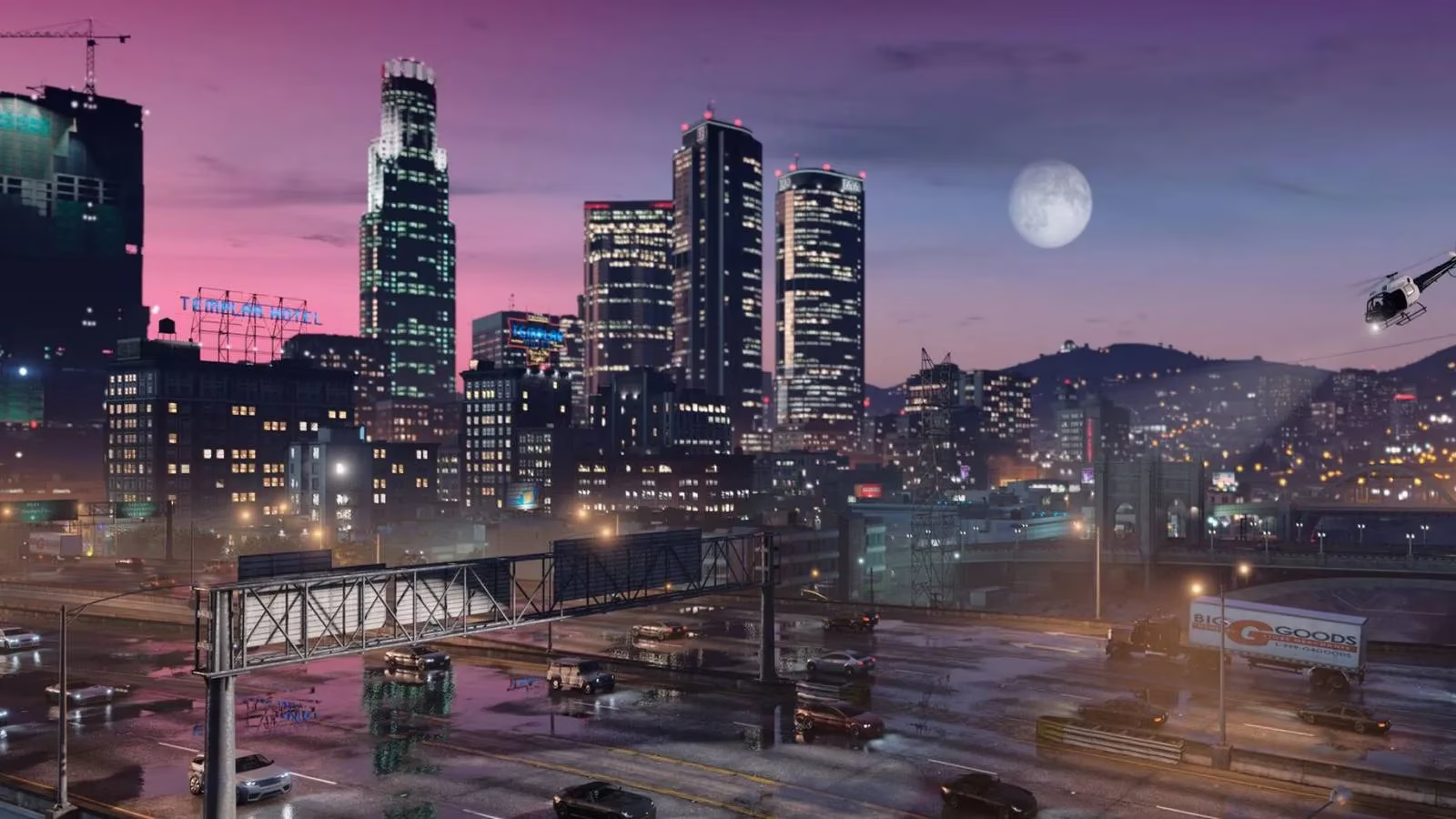
Los Santos, the sprawling metropolis of Grand Theft Auto V, remains a gold standard for urban immersion and sheer scale. Inspired by Los Angeles, it offers an incredible variety: bustling urban streets, luxurious Vinewood mansions, sprawling suburbs, and a vibrant, dense downtown core. The freedom to explore this landscape by car, plane, boat, or on foot is still unparalleled. Countless activities, random encounters, and hidden secrets are woven seamlessly into the city's fabric, ensuring it always feels alive with unpredictability. The attention to detail—from the behavior of NPCs to the changing radio stations as I drove through different neighborhoods—makes every return visit feel fresh and rewarding. It's a testament to world-building that continues to influence the open-world genre years after its release.
The Cinematic Pulse of Hong Kong in Sleeping Dogs
Sleeping Dogs recreates Hong Kong with a stunning, cinematic verve that perfectly captures the city's unique energy. The environment pulses with life, from the crowded, noisy markets to the sleek, neon-drenched nightclubs. Exploring this city, both on foot and in thrilling vehicular chases, was a constant delight because of its incredible density and distinct sense of place—every corner felt alive and purposeful. The city is deeply tied to the gameplay; high-octane street races, brutal martial arts battles in back alleys, and tense undercover police missions all unfold across Hong Kong's varied districts. The atmosphere masterfully blends traditional elements with hyper-modernity, creating a setting that is incredibly enticing to explore and one that feels authentically lived-in.
A Feline Perspective in the Cyberpunk City of Stray
Stray offered me one of the most unique and intimate urban exploration experiences by casting me as a stray cat in a mysterious cyberpunk city. The city's alleys, pipes, rooftops, and neon-lit pathways are ingeniously designed for feline agility, offering a completely fresh take on verticality and scale. From this low vantage point, the city feels simultaneously massive and intimately detailed. The atmosphere is what makes it truly unforgettable: the city is populated not by humans, but by melancholic robots, creating a world of uncanny silence and poignant loneliness. Here, exploration is not just encouraged—it's the narrative's driving force. Progress is guided by curiosity, and the city is best experienced through the quiet wonder of simply wandering, observing, and interacting with the environment from a perspective we rarely see. It’s a beautiful reminder that sometimes, the most compelling worlds are those we experience not as powerful heroes, but as small observers navigating the giant, intricate spaces others have built and abandoned.
Why These Cities Stay With Us
Reflecting on these incredible settings, I realize their lasting power comes from a few key elements they often share:
| City Element | Impact on Player Experience |
|---|---|
| Environmental Storytelling ️ | Transforms exploration into narrative discovery, making the city itself a history book. |
| Reactive Worlds ⚡ | Cities that change based on player choices create a powerful sense of agency and consequence. |
| Verticality & Scale ️ | Encourages looking beyond the street level, adding layers (literally) to exploration. |
| Atmospheric Identity 🌃 | A strong, consistent mood (e.g., gothic dread, neon chaos, post-apocalyptic grief) creates deep immersion. |
| Gameplay Integration | When the city's design is integral to movement, combat, or puzzle-solving, it ceases to be just a backdrop. |
As we move forward in 2025, I'm excited to see how developers will continue to evolve these concepts. Will we see cities with fully simulated ecosystems and daily cycles for every NPC? Could AI-driven storytelling make each player's urban journey truly unique? The potential is limitless. For now, I’ll keep returning to these digital metropolises—getting lost in their streets, uncovering their secrets, and appreciating the incredible artistry that turns code and pixels into places that feel like home, nightmare, and everything in between. After all, the best game cities aren't just places we visit; they are worlds we inhabit, and their memories linger long after the console is powered down. ✨
The following breakdown is based on data referenced from Statista - Video Games, which provides comprehensive statistics and market insights into the gaming industry. Statista's research highlights the growing demand for immersive open-world environments, noting that player engagement and retention rates are significantly higher in games featuring richly detailed cityscapes and dynamic exploration mechanics—trends clearly reflected in the titles discussed throughout this blog.