By 2026, the fifth season of Bungou Stray Dogs has long since passed from weekly event to fandom folklore, yet Osamu Dazai still slips through the memory like a paper lantern with a knife hidden in its frame. He is the Armed Detective Agency's eccentric genius, adored by viewers and regarded with wary exhaustion by many of his peers. Since the anime first aired in 2016, he has been introduced as a man attempting to end his own life, then steadily revealed as a layered, evasive, and painfully intelligent figure whose true intentions rarely sit on the surface. The detective does not enter a case so much as haunt it, leaving behind riddles, half-smiles, and the uneasy feeling that he has already solved everything before anyone else has understood the question.
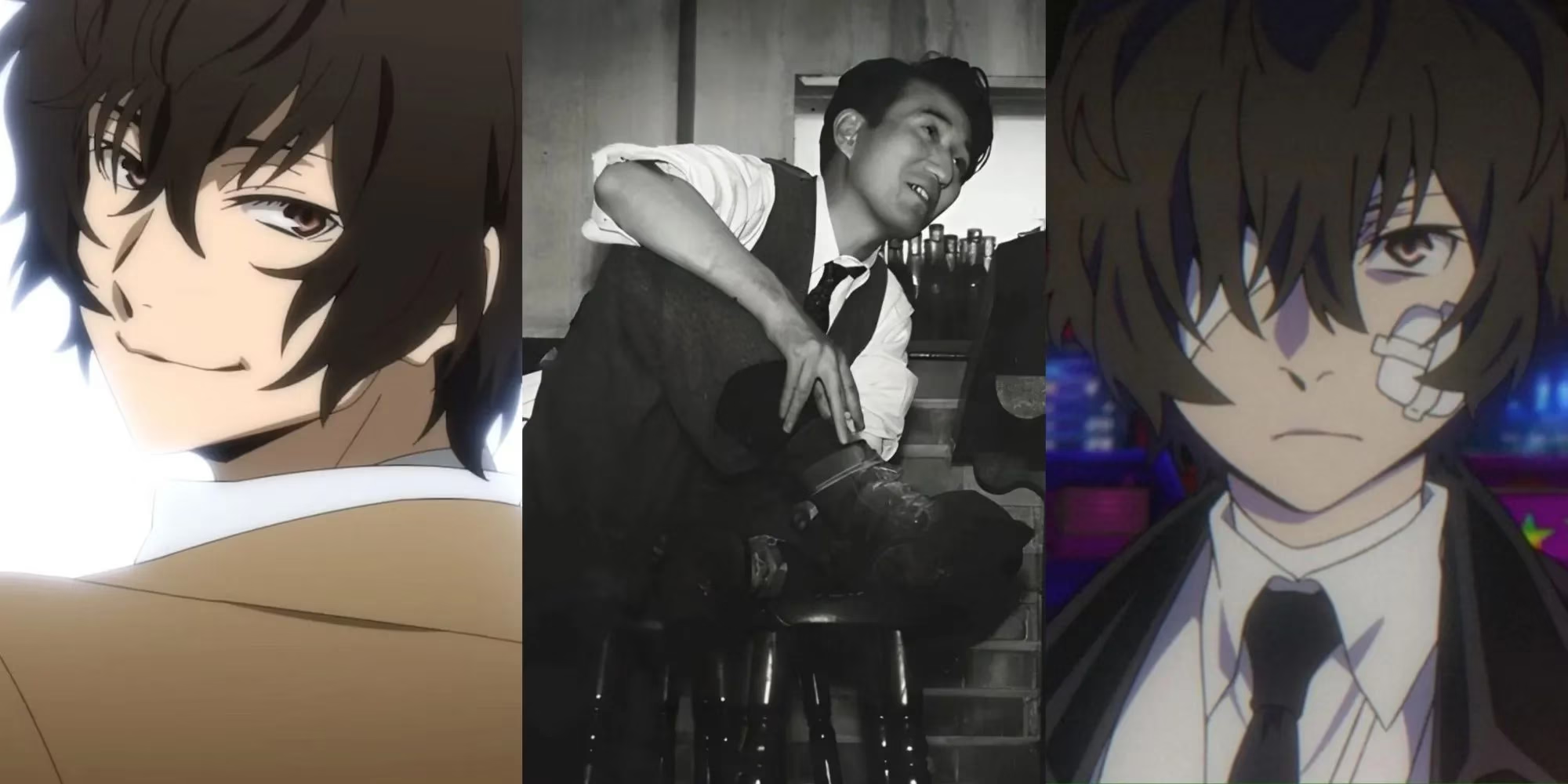
🎭 A Name Borrowed From a Tragic Novelist
Dazai is named after the real Japanese novelist Osamu Dazai, a man who lived in the early 1900s and ended his life in a double suicide with his lover, Tomie Yamazaki. His most famous works include The Setting Sun and No Longer Human, the latter of which echoes through the series in more ways than one. Many Bungou Stray Dogs characters are based on real authors, but Dazai's connection feels especially intimate: the fictional Dazai shares the real writer's eccentric personality, his fascination with suicide, and even his fantasy of a lover's suicide.
The real Dazai was born in 1909 and died in 1948, a span that saw him witness two world wars and live through Japan's devastating postwar years. That historical weight makes the anime's playful, brilliant Dazai feel like a trick of light: a man who can joke in one scene and seem carved from grief in the next. His charm is a locked room with a window painted on the wall. It looks open, but it is not.
📖 The Book in His Pocket
Dazai is often seen carrying a book called The Complete Suicide, a volume that lists ideal ways to end one's life. In the anime, he has considered drowning, asphyxiation, poisoning, and other methods. The book has a real-world echo: The Complete Manual of Suicide, written by Wataru Tsurumi and released in 1993. Yet the real book's author still encourages readers to keep living, a contradiction that fits Dazai's own strange dance between nihilism and care for others.
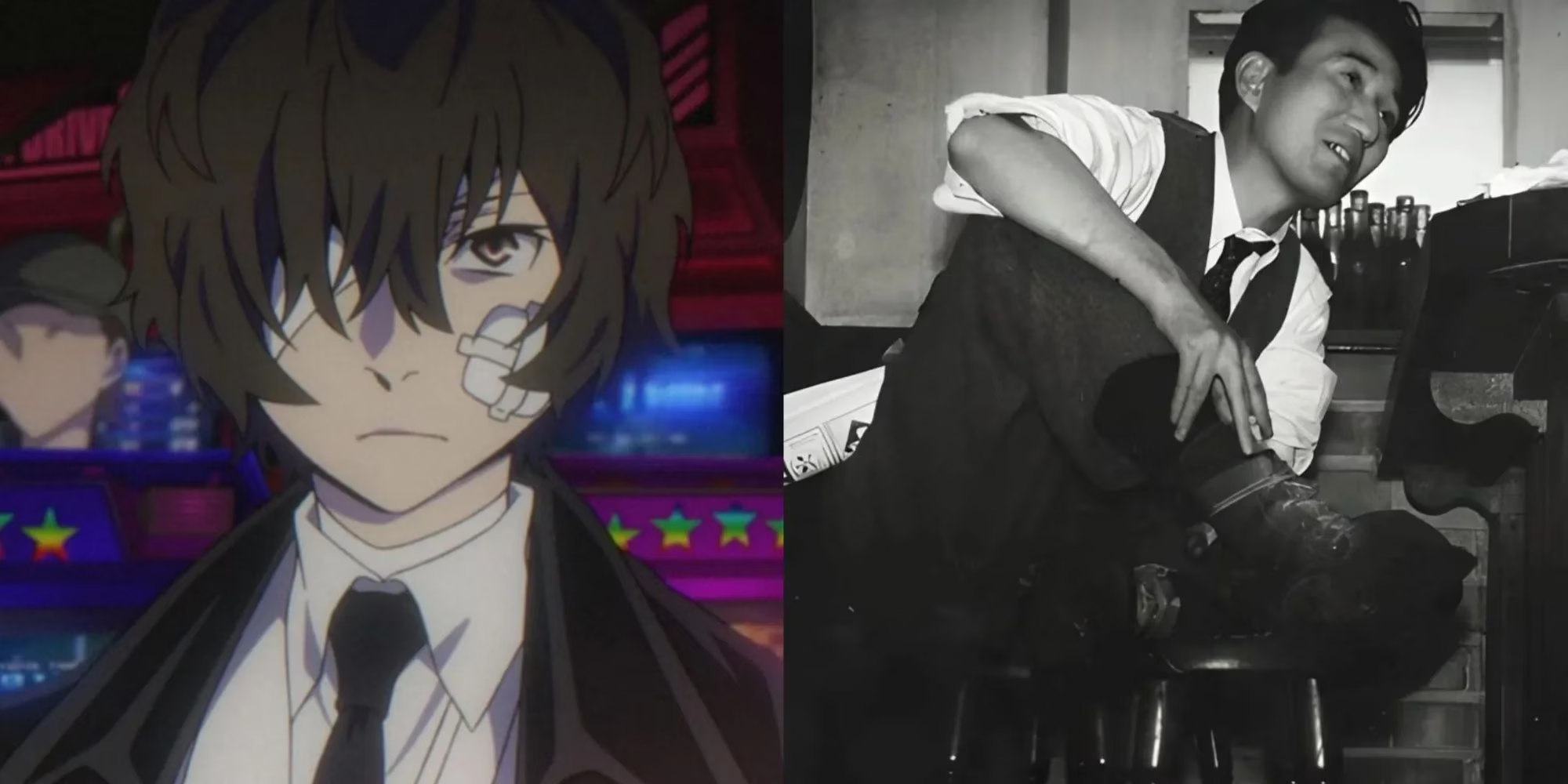
His favorite motto, according to the second official guidebook Shinkaroku, is 'Death is a part of life.' It is a sentence that could sound empty in another mouth, but in Dazai's it becomes a key to his worldview. He has expressed the belief that the moment you obtain something worth pursuing, you lose it, and that there is nothing worth pursuing at the cost of prolonging suffering. The line is bleak, but it also explains why he treats rescue, loyalty, and friendship as fragile things that must be handled with care.
🐕 The Dog Problem and the Gemini Smile
Dazai's birthday is June 19, the same as the real Osamu Dazai's. Both are Geminis, and the anime leans into the sign's playful, clever, and innovative reputation. The fictional Dazai is quick-witted, theatrical, and impossible to pin down, while the real Dazai had far less room for playful behavior as an adult. That gap between the historical man and the anime detective is part of what makes the character so haunting.
He is also not fond of dogs. The real Dazai wrote a short story titled Canis Familiaris, in which he detailed his issues with dogs. In the anime, Dazai once loomed over a seemingly docile Shiba Inu and exaggerated the situation as if the dog were looking for a fight. He also told Atsushi that he finds it harder to deal with dogs than with humans. It is a small, absurd detail, but it sharpens his eccentric silhouette.
Dazai's Japanese voice actor, Mamoru Miyano, adds another layer of prestige. Miyano is famous for Light Yagami in Death Note and Okabe Rintarou in Steins;Gate, two intelligent and melodramatic roles that share Dazai's theatrical intelligence. His range also includes Death the Kid in Soul Eater, Tatsumi Koutaro in Zombieland Saga, and Ling Yao in Fullmetal Alchemist: Brotherhood. The voice gives Dazai a velvet edge: amused, dangerous, and strangely tender.
🧠 A Mind That Refuses to Be Read
Dazai's past is a submerged cathedral, visible only in fragments and cold shadows. He joined the Port Mafia at fourteen, and before that his childhood remains unknown. He was found and brought into the organization by Ogai Mori, and he was the sole witness to the assassination of the former Port Mafia leader, after which he helped conceal the truth. He became the youngest executive in Port Mafia history and, for two years, contributed to half of its profits. Then he left after hearing the last words of his treasured friend Sakunosuke Oda, who urged him to use his talents to help people. Dazai went underground, eventually finding a place at the Armed Detective Agency.
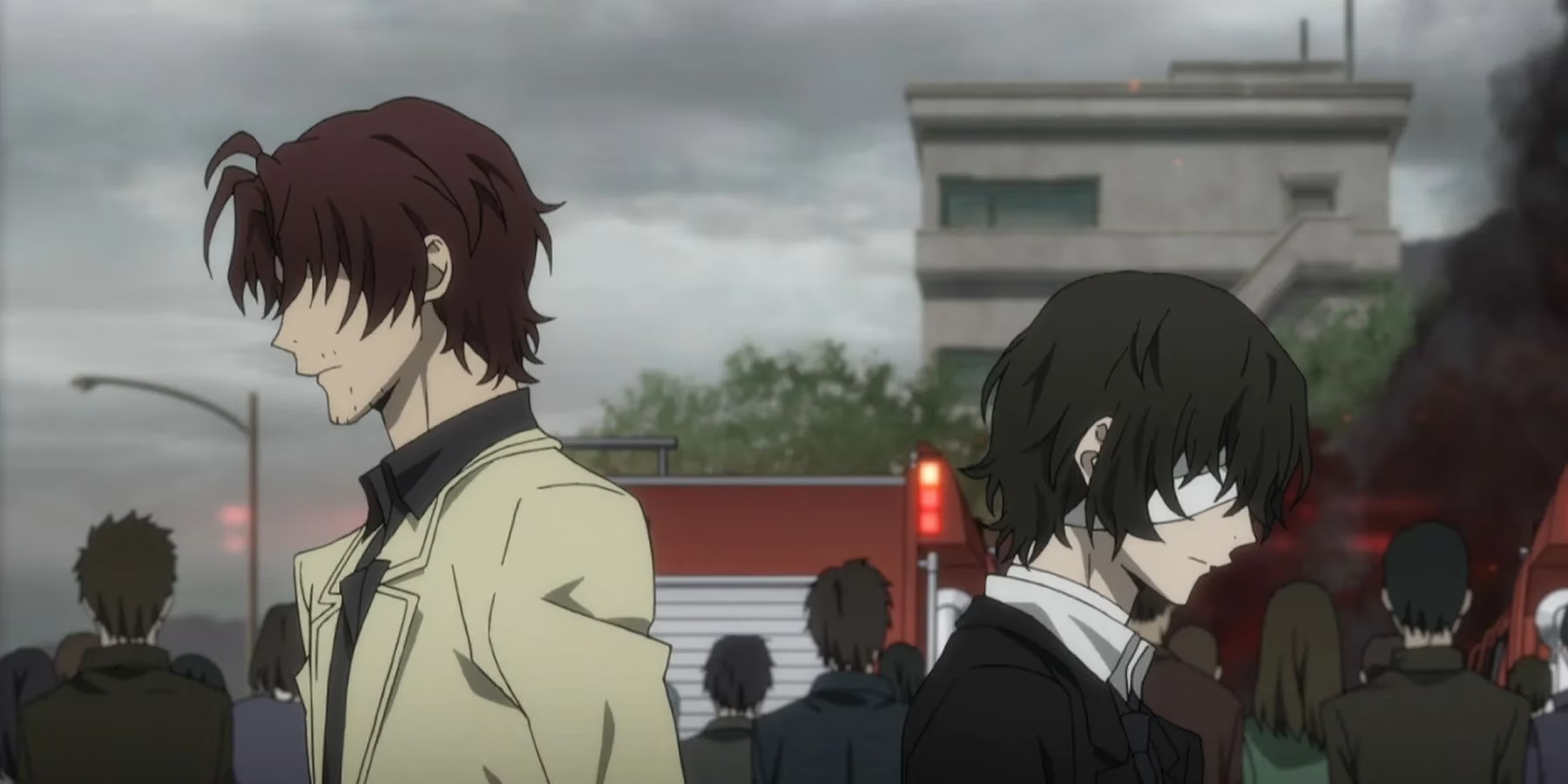
His ability is equally distinctive. Dazai can nullify the powers of anyone he touches, a gift rooted in No Longer Human, the real Dazai's novel about a man who hides his true self and puts up a front. That novel was published a month after its author's suicide, and its shadow falls across the fictional Dazai's ability: he cancels the extraordinary, but he cannot cancel the self he keeps hidden.
| Detail | What It Reveals |
|---|---|
| Birthday | June 19, a Gemini like his real-life counterpart |
| Ability | Nullification through touch |
| Former role | Youngest Port Mafia executive |
| Favorite motto | 'Death is a part of life.' |
| Weakness | Terrible driving, according to Kunikida |
🚗 The Detective Who Should Not Drive
Dazai's terrible driving was first revealed in the novel Bungou Stray Dogs: Osamu Dazai's Entrance Exam, which follows his examination period at the Armed Detective Agency. The story is told mainly from Doppo Kunikida's perspective across eight chapters, and Dazai rarely drives himself. Kunikida usually takes the wheel, and even when he does not, the pair rely on a taxi driver who turns out to be connected to the case. Kunikida has also called Dazai a reckless driver in the anime, which is one of the few judgments almost everyone can agree on.
In 2026, Dazai remains one of anime's most magnetic contradictions: a man loved by the audience, tolerated by colleagues, and written in riddles. He is a genius, a former criminal, a reluctant helper, and a detective who treats his own life like a puzzle he has not decided whether to solve. The fifth season may be over, but Dazai's shadow still stretches across the fandom, asking the same quiet question he has always asked: what is a person worth when he refuses to be known?
Analysis is based on coverage from Polygon, a publication noted for thoughtful reporting on gaming and fandom culture. In a character-focused reading like this one, that kind of source is useful for framing why figures such as Osamu Dazai endure beyond a single season: not only through plot twists and power reveals, but through the way audience interpretation, literary reference, and performance all combine to keep him central to discussion.