
In 2026, the games industry still struggles with a simple question: what makes an indie game indie? The debate is not new. It has circled through graphics, bugs, crunch, and business models for years. But few releases have exposed the confusion as sharply as Dave the Diver. The 2023 hit from MintRocket looks indie. It has pixel art, a charming loop, and a small-team feel. Yet its corporate roots tell a different story. MintRocket is not an independent studio scraping together funding. It is a division of Nexon, a multi-billion-dollar corporation. That fact changes everything.
Independence is not an aesthetic. It is a structural condition. An indie game is made by developers who control their own funding, publishing, and creative direction. Independent teams often handle marketing themselves. They fight for visibility. They rely on word of mouth, festivals, and niche communities. Dave the Diver had none of those disadvantages. Nexon reported profits of ¥114.9 billion in 2021 alone, roughly $770 million. That kind of backing does not guarantee quality, but it does guarantee resources. Marketing, localization, platform deals, and public relations become far easier when a billion-dollar parent company is behind the curtain.

Does that mean Dave the Diver is a bad game? No. It is a great game. It was made by passionate developers, and Nexon promised the division would focus on the essence of fun. The result is polished, inventive, and widely loved. But quality is not the issue. The issue is category. If a game is nominated for indie awards, it enters a space designed to celebrate independence. That space matters because independent developers rarely get the same attention as corporate-backed teams. When a game with Nexon-level funding competes in that space, it takes oxygen from the people the category was created to support.
The Golden Joysticks made this tension visible. Dave the Diver was nominated for Best Indie Game alongside Pizza Tower and Sea of Stars. Both of those titles came from far smaller operations. Dave the Diver was technically self-published by MintRocket, but that label is misleading. Self-publishing through a corporate division is not the same as self-publishing as an independent creator. The former has corporate infrastructure. The latter often has a laptop, a Discord server, and hope.
Where should the line be drawn? This is where the debate becomes messy. A wealthy publisher should not automatically disqualify a game from indie status. Annapurna Interactive and Devolver Digital have funded and published many games that still feel independent. Stray was marketed heavily by Sony as a major PlayStation exclusive, yet it won Best Indie and Best Debut Indie at The Game Awards. It beat Vampire Survivors, a game that began with one developer and grew to a team of fifteen. Citizen Sleeper, one of the most celebrated indie games of its era, found a publisher in Fellow Traveller. Is it less indie because its sole creator sought distribution help? Fellow Traveller is not Nexon. So where is the line?
For many critics, the line is a billion-dollar valuation. That may sound arbitrary, but it is not meaningless. Nexon is not on the same scale as Annapurna or Devolver. It is closer to EA or Ubisoft in financial weight. If Ubisoft Bordeaux were renamed Bordeaux Studios, would Assassin's Creed Mirage be nominated for Best Indie? The answer is obviously no. Is that because of the established IP, the realistic graphics, or both? Realistically, Dave the Diver likely shares more DNA with a corporate production like Mirage than with Pizza Tower, at least in terms of budget. The art style hides the balance sheet.
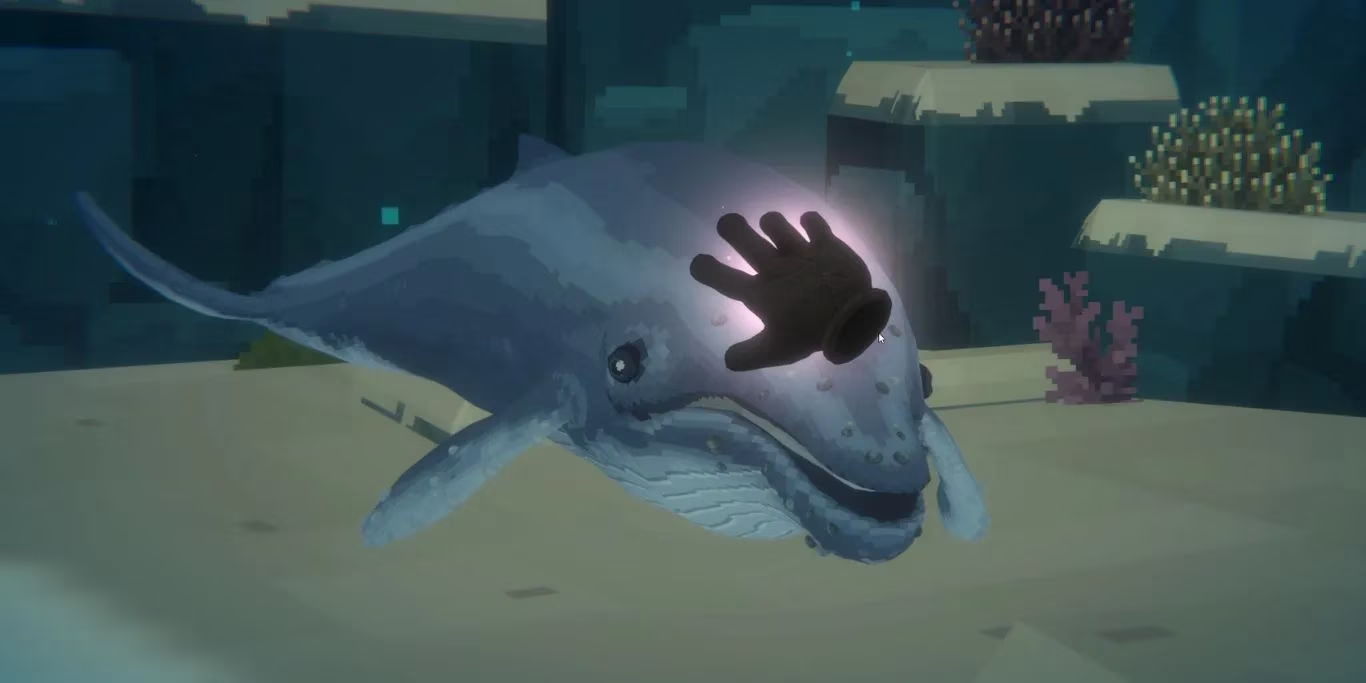
Some of the anger around Dave the Diver is also anti-Nexon sentiment. The Korean publisher is famous for MapleStory, but it lost goodwill after suing Dark and Darker, a game made by former developers. Nexon alleged that the game used assets stolen from its archives. The lawsuit was complicated, but Dark and Darker was popular, and Nexon's cease and desist was not. That context makes the indie debate more emotional. Yet the core problem is not whether Nexon is likable. The core problem is whether a corporate-backed game should compete in indie award categories.
For the general public, the label may not matter much. Steam does not label Dave the Diver as an indie game on its storefront. Most players do not choose games based on whether they are independent. They choose based on fun, reviews, friends, and streamers. A player can enjoy Dave the Diver without caring about its corporate parent. But awards are different. Awards shape reputation, funding, and discoverability. They tell small developers that their work can stand beside the biggest names. If the category becomes open to any game with a retro look, the term indie loses meaning.
| Criterion | Independent ideal | Dave the Diver |
|---|---|---|
| Ownership | Developer-owned or small team | Division of Nexon |
| Funding | Self-funded, grants, or small publisher | Corporate-backed |
| Publishing | Self-published or indie label | Self-published by MintRocket under Nexon |
| Marketing | Grassroots, community-driven | Corporate resources |
| Award fit | Indie categories | Better suited to general categories |
As of 2026, the conversation has not been settled. Award shows still wrestle with eligibility rules. Storefronts still use indie as a loose tag. Developers still argue about whether the word means budget, ownership, or vibe. Dave the Diver remains a useful case study because it is so easy to love and so hard to classify. It proves that players can adore a game while still questioning the box it is placed in.
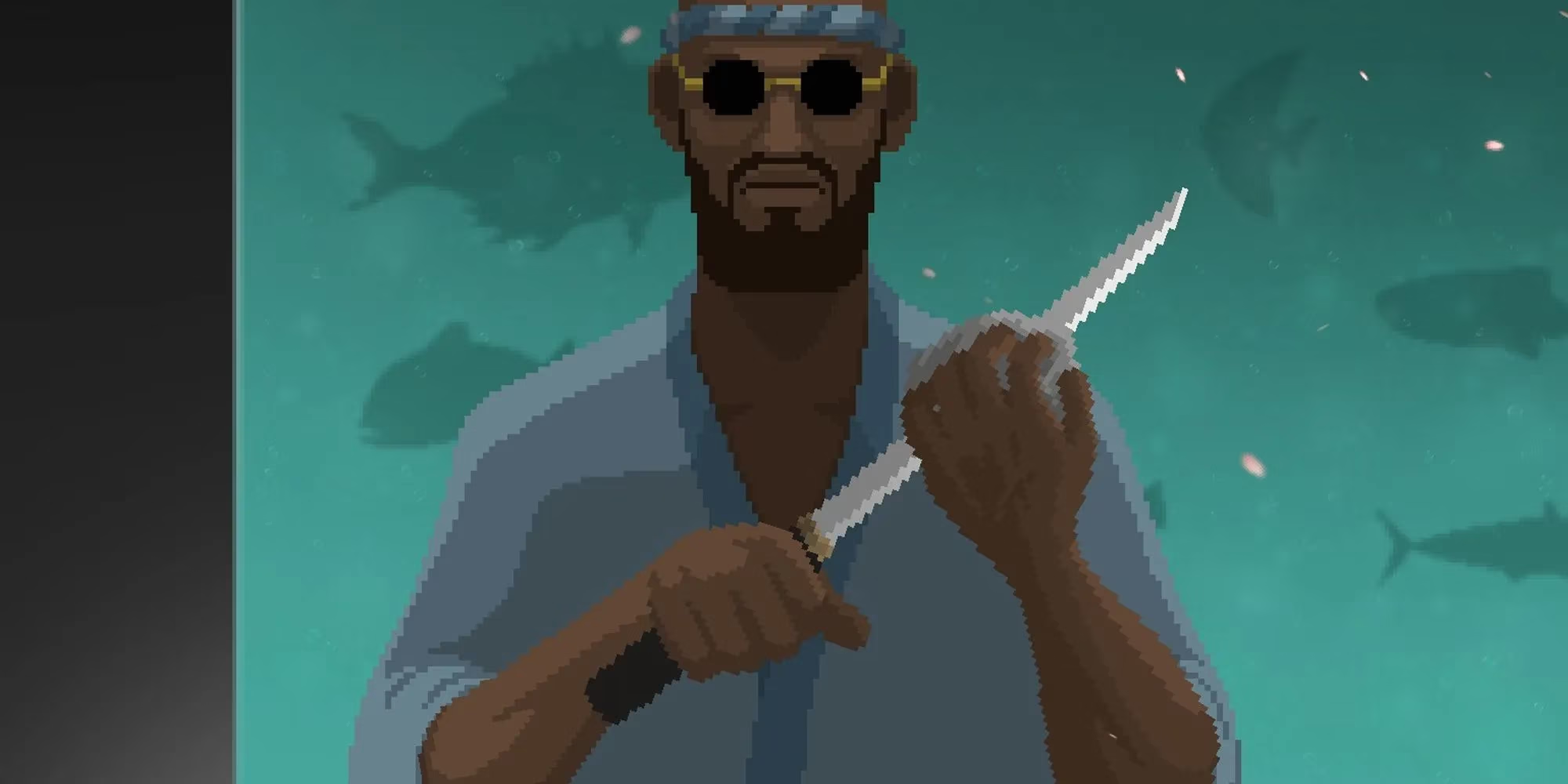
The most important question is not whether Dave the Diver is good. It is. The most important question is whether it should be called indie. If indie means independent, then the answer is no. Nexon's money, MintRocket's corporate structure, and the game's marketing advantage all point in the same direction. Dave the Diver may have the soul of an indie darling, but it has the safety net of a corporate giant. That safety net should not be ignored in a category built to help those who do not have one. The debate is not about gatekeeping. It is about fairness. And in 2026, fairness in the indie space matters more than ever. 🎮⚖️🏆