In the world of Bungo Stray Dogs, abilities are as varied as the literary figures who inspire them. Yet one of the series' most intriguing rules concerns not how powers are used, but how they can be passed down. The rare practice of transferring an ability to a family member has become a quiet but crucial thread in the stories of Kyouka Izumi and Mizuki Tsujimura, two young women whose inherited gifts are inseparable from grief, control, and the shadow of their mothers.
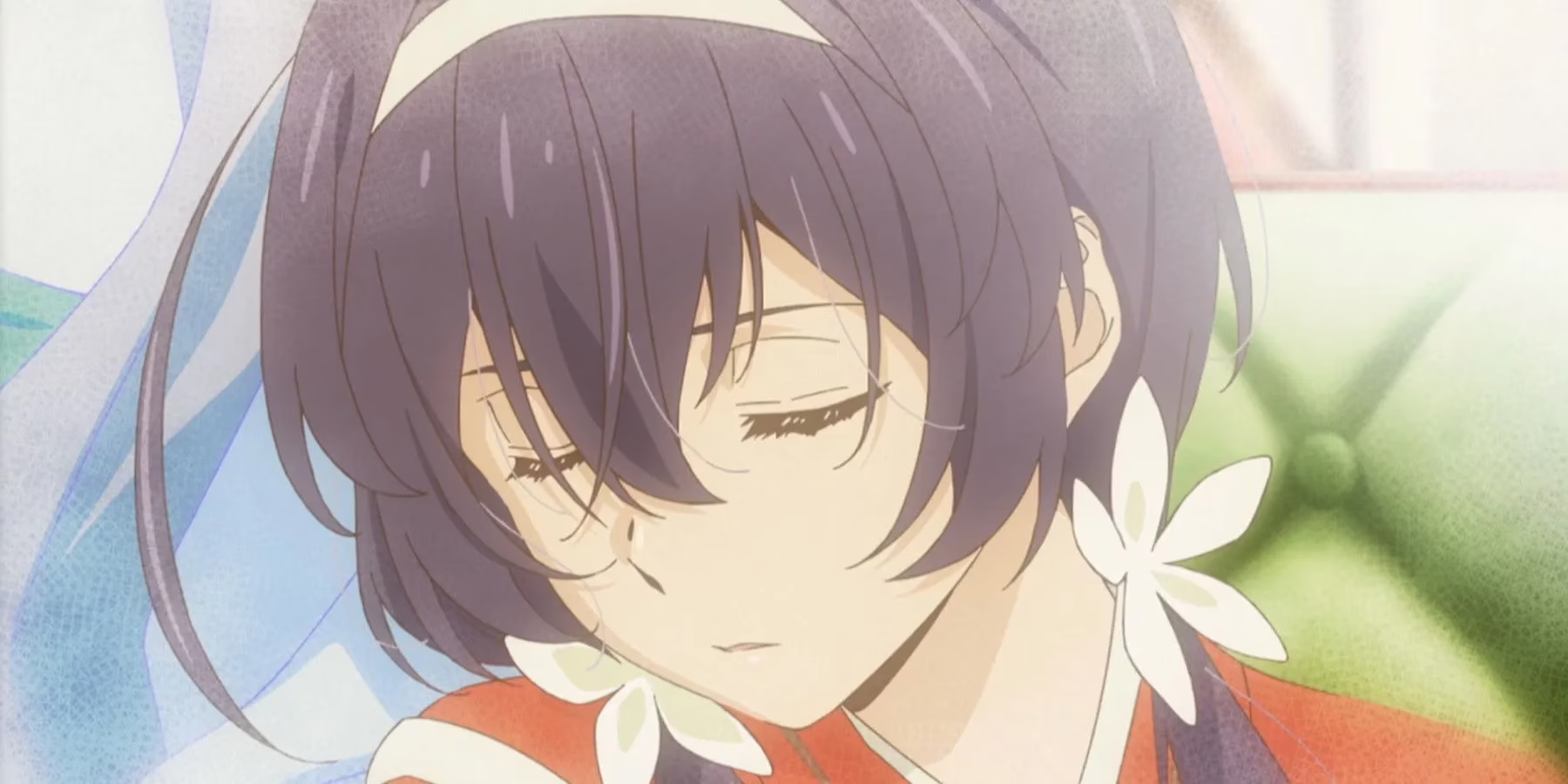
Kyouka's early arc hinges on a strange limitation. She cannot summon Demon Snow at will. The sword-wielding spirit appears only when commanded through her cell phone, and even then it acts less like a loyal partner and more like a dangerous inheritance. At first, this reads as a metaphor for captivity. Kyouka is a Port Mafia assassin, trained and used by others. Her inability to control her own ability mirrors her lack of freedom. Season 3, however, reveals that the limitation is also literal. In Episode 31, Herurisu / Portrait of a Father, Kyouka and Atsushi set out to retrieve documents. After Lucy interferes, the trio finds a dossier that exposes the truth about Kyouka's parents. An assassin tried to kill them. While defending themselves, they fell under a mind-control ability and nearly killed their own daughter.
To save Kyouka, her mother gave Demon Snow a single order: protect her at any cost. Demon Snow obeyed. It killed Kyouka's parents. Kyouka grew up believing the ability was hers, and she hated it for destroying her family. Learning that it came from her mother does not instantly heal that wound. It complicates it. Atsushi then explains that abilities can be transferred, particularly between family members. The dossier adds another clue: Kyouka's mother learned the method from 'a gifted who controlled black shadows.' The series does not name this woman, but it does introduce another character whose life mirrors Kyouka's in striking ways.
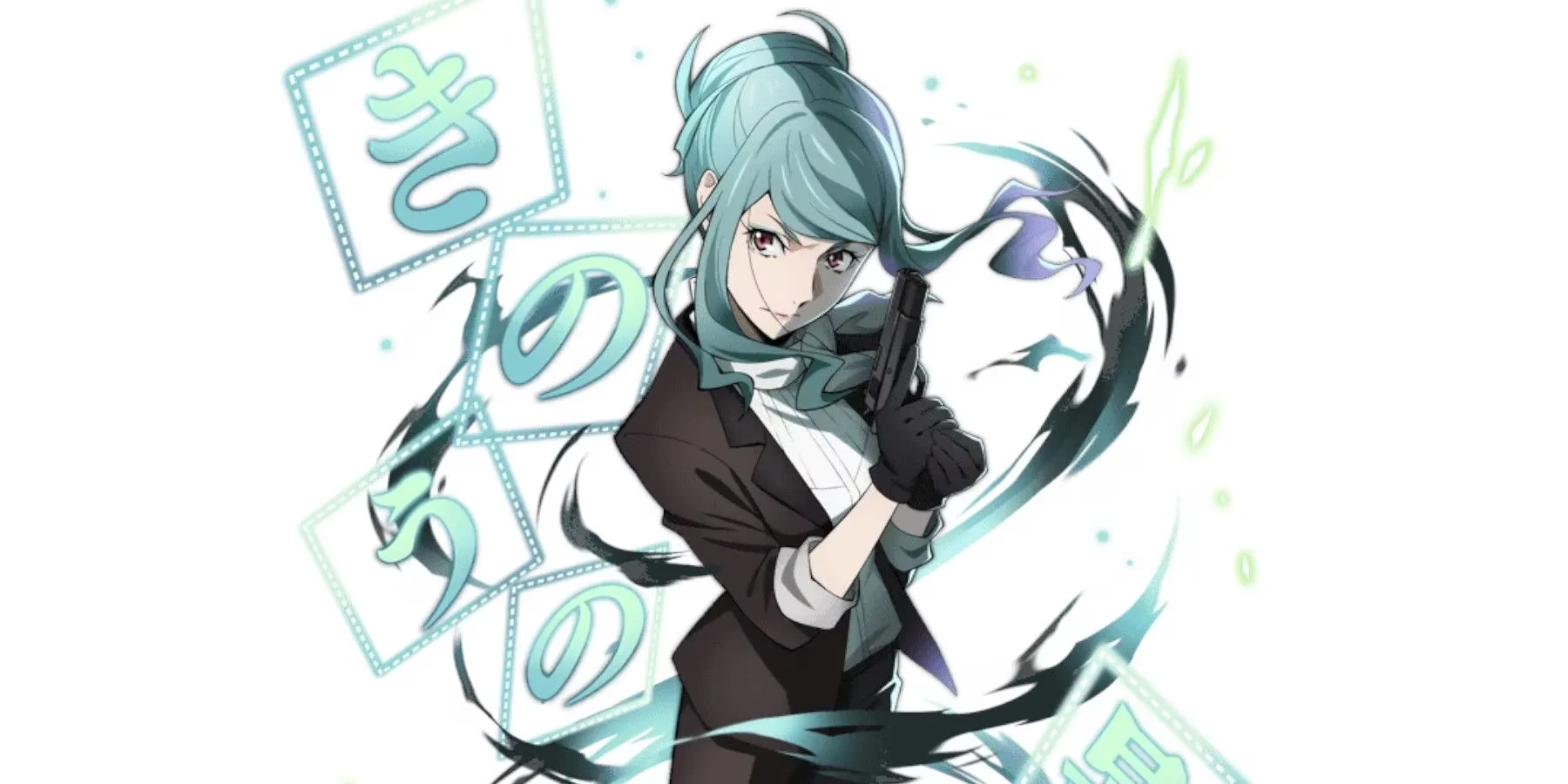
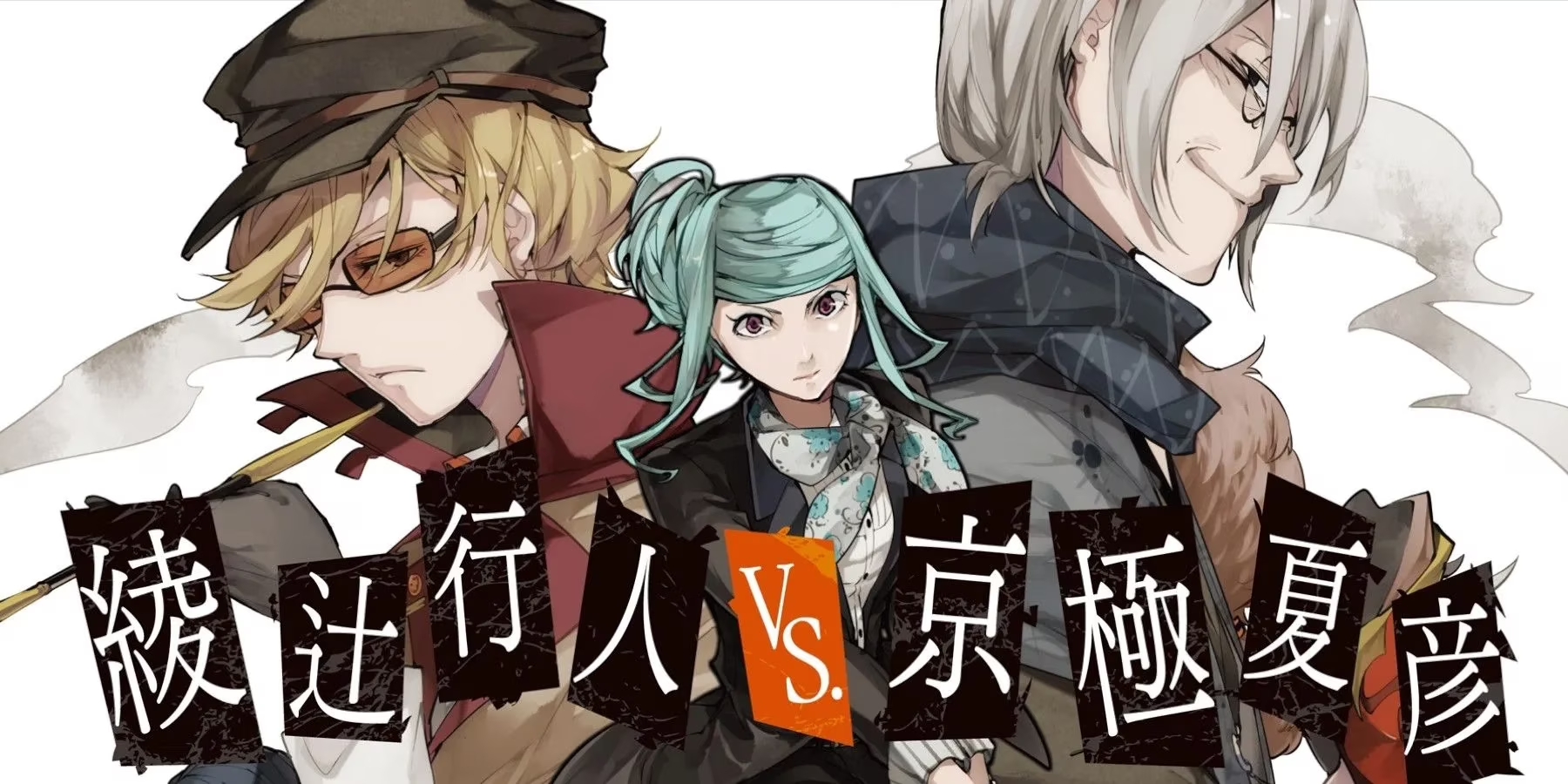
Mizuki Tsujimura belongs to the Gifted Special Operations Division. She is also the deuteragonist of Bungo Stray Dogs Gaiden, a spin-off novel written by Kafka Asagiri in 2016. Western anime-only fans may know her only from a cameo in the 2018 film Dead Apple. In that film, Chuuya Nakahara calls out to her as if she is a familiar face, leaving many viewers confused. The novel has not received an official English translation, which is unfortunate because Mizuki's lineage directly connects to Kyouka's. Like Kyouka, Mizuki inherited her ability from her mother. Her power is called Yesterday's Shadow Tag, and it allows her to manipulate shadows. She can create small shadows and control them, but the ability also has a far deadlier function that she cannot command.
Mizuki's mother ordered Yesterday's Shadow Tag to kill anyone Mizuki tried to kill before Mizuki could do it herself. The goal was to free her daughter from the guilt of taking a life. That detail, especially the manipulation of shadows, makes it very likely that Mizuki's mother is the same mystery woman who taught Kyouka's mother how to transfer abilities. The parallel is too precise to ignore. Both daughters carry powers shaped by a mother's desperate love. Both mothers used an ability to protect their child in a way that also trapped them. And both transfers came with conditions.
| Character | Inherited Ability | Mother's Command | Limitation |
|---|---|---|---|
| Kyouka Izumi | Demon Snow | Protect Kyouka at any cost | Partial transfer; activation via phone; control develops later |
| Mizuki Tsujimura | Yesterday's Shadow Tag | Kill anyone Mizuki tries to kill before she can | Deadliest function is out of her control |
The mechanic itself is fascinating because it is rare, family-bound, and imperfect. Kyouka's transfer happened suddenly, and Atsushi concludes that it was only partial. That is why she can use Demon Snow only through her phone. Mizuki's situation suggests that a caveat would likely exist even if the transfer had been complete. Her mother's instructions bar her from the most lethal applications of Yesterday's Shadow Tag. In Kyouka's case, the phone dependency may not even be the greatest cost. Other characters, such as Doppo Kunikida, rely on physical objects to use their abilities. A larger problem is that Kyouka could not control Demon Snow at all until she officially joined the Armed Detective Agency. This resembles Atsushi, who only gained control over his tiger powers after passing the entrance exam and receiving Fukuzawa's blessing. The series has yet to show an inherited ability that passes down with no deviation.
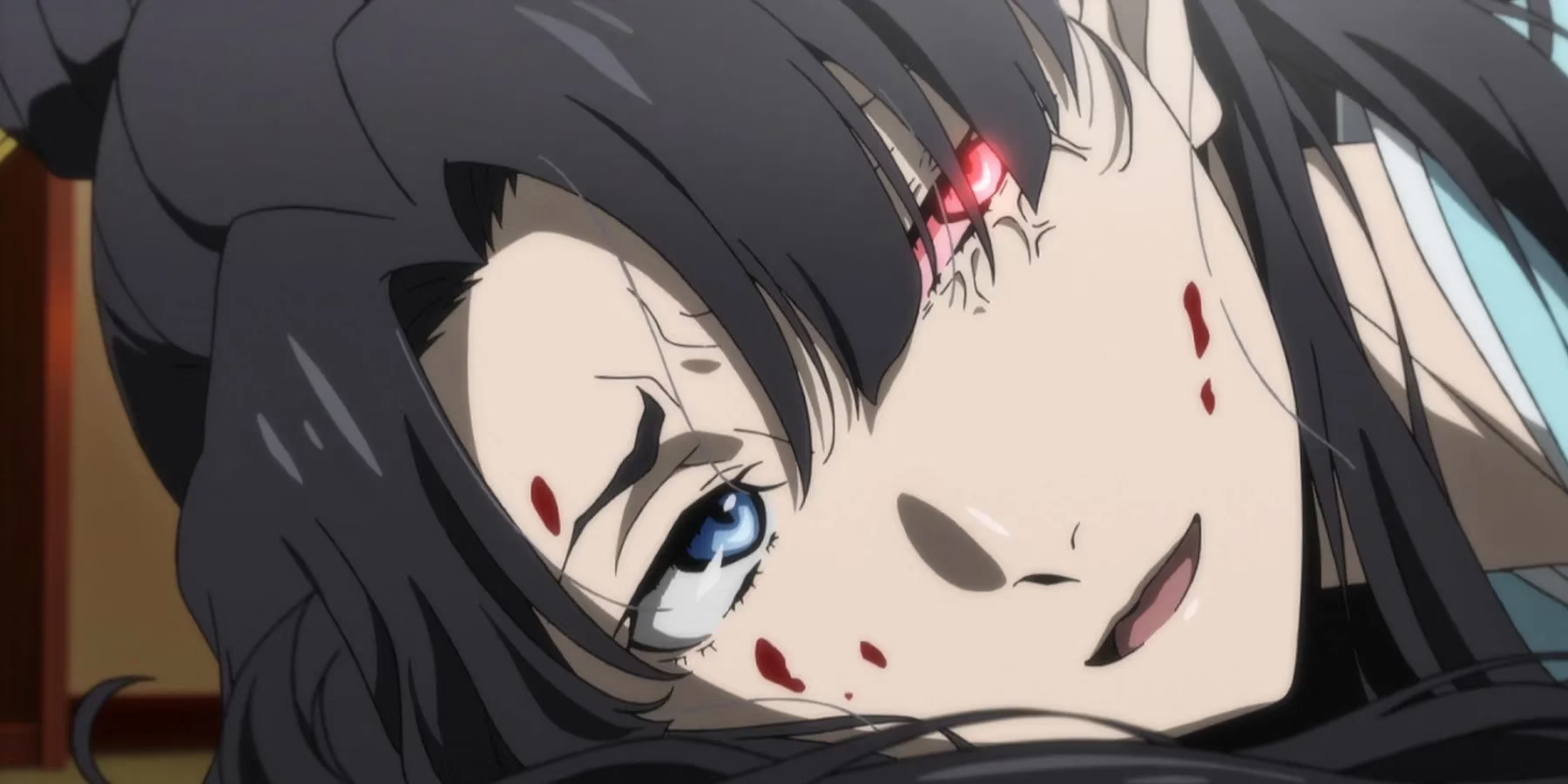
Those limitations matter less as rules than as character details. In both known cases, an ability is a sudden parting gift from a parent who lived mysteriously and died even more mysteriously. Such gifts cannot fill the void left by the people who once held them. Like trauma, they are burdens. Kyouka and Mizuki must learn to live with powers that were meant to protect them but also caused irreversible pain. That is where Bungo Stray Dogs finds its emotional core. The spectacle of Demon Snow and Yesterday's Shadow Tag is thrilling, but the real story is about two young women refusing to be defined by the shadows their mothers left behind. As the franchise continues into 2026, these inherited abilities remain some of its most compelling evidence that power in Bungo Stray Dogs is never just power. It is memory, inheritance, and a choice about what to do next.