Psycho-Pass still casts a long shadow over cyberpunk anime in 2026. The series imagines a future in which an AI system plays judge, jury, and therapist, measuring citizens' mental states and deciding who belongs behind bars. That premise keeps its grip because the real world has spent the past decade arguing about algorithms, surveillance, and predictive policing. The show does not pull its punches: it asks whether a society can be safe and free at the same time, then lets the question hang in the air.

For viewers who finished Psycho-Pass and want another story with a mind on its mind, the anime landscape offers plenty of dark mirrors. The titles below mix crime, technology, psychological suspense, and social critique. They are not all cyberpunk, but they share the same uncomfortable question: what happens when systems built to protect people start to hollow them out?
| Title | Core Hook | Psycho-Pass Overlap |
|---|---|---|
| Monster | A surgeon hunts the child he saved | Ethics, evil, institutional failure |
| Terror in Resonance | Teenage terrorists challenge Tokyo | Conspiracy, state secrets, moral ambiguity |
| Blade Runner: Black Lotus | A replicant seeks her past | Identity, revenge, corporate power |
| Plastic Memories | Androids near the end of their lives | Humanity, love, programmed limits |
| Steins;Gate | Text messages sent to the past | Conspiracy, timelines, consequences |
| Ergo Proxy | Rogue androids gain self-awareness | Philosophy, dystopia, control |
| Darker Than Black | Contractors with powers and no emotions | Policing, syndicates, human cost |
| Akira | A psychic teen threatens Neo-Tokyo | Corruption, power, social decay |
| Bungō Stray Dogs | Literary figures with supernatural gifts | Crime-solving, rival agencies, mystery |
| Cyberpunk: Edgerunners | A street kid becomes a mercenary | Body modification, despair, survival |
10. Monster
Monster is a psychological thriller about Dr. Kenzo Tenma, a gifted neurosurgeon whose life unravels after he disobeys orders and saves a young boy named Johan instead of the city's mayor. Years later, Tenma learns that Johan has become a serial killer and feels responsible for the monster he saved. The story follows his journey to stop Johan while wrestling with ethical dilemmas and the nature of evil. In 2026, its slow-burn dread feels more relevant than ever, because it asks whether good intentions can be trusted when the system rewards obedience over conscience.
9. Terror in Resonance
Terror in Resonance follows two teenagers, Nine and Twelve, who form a group called Sphinx and carry out high-profile attacks in Tokyo. Their motives remain mysterious, but their actions are methodical and tied to a larger purpose. Detective Kenjirou Shibazaki and a troubled girl named Lisa Mishima become entangled in their trail. The series unpacks the tragic backstory of Nine and Twelve while exposing the darker underbelly of society. It is a political thriller that keeps its cards close, then deals them out with a cold hand.
8. Blade Runner: Black Lotus
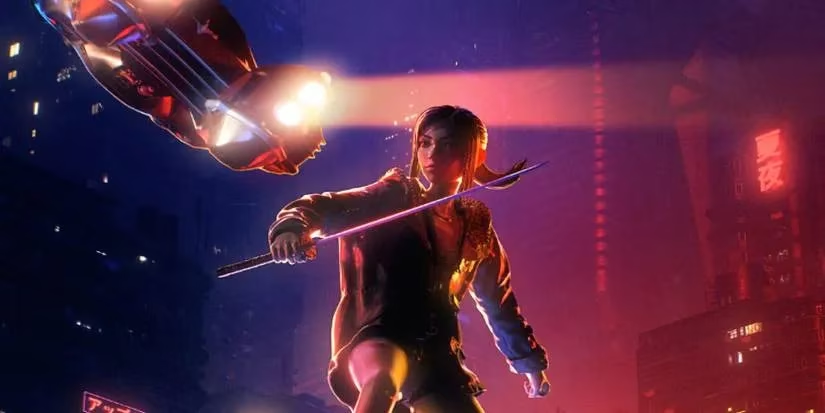
Blade Runner: Black Lotus is a Japanese-American CGI animated series inspired by the Blade Runner films and created with Crunchyroll and Adult Swim. Set in 2032, it follows a female replicant named Elle who wakes up in Los Angeles with no memories and a black lotus tattoo on her shoulder. The 13-episode series blends action with a journey of self-discovery and revenge. Like the best Blade Runner stories, it treats identity as a borrowed coat, and it asks who gets to decide when a person is real.
7. Plastic Memories
Plastic Memories mixes sci-fi and romantic drama in a future where androids with human-like personalities, known as Giftias, live alongside people. Giftias have a limited lifespan, and Tsukasa Mizugaki works at the Terminal Service Department, retrieving those close to their end. He partners with a Giftia named Isla, and together they face the emotional weight of saying goodbye. As Tsukasa and Isla grow closer, the series explores love, loss, and the cruelty of programmed limits. It is quieter than Psycho-Pass, but its questions about humanity cut just as deep.
6. Steins;Gate
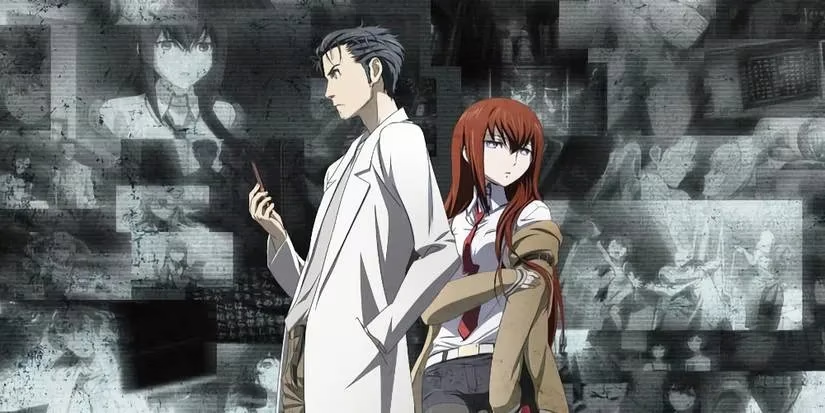
Steins;Gate follows Rintarou Okabe, a self-styled mad scientist who stumbles onto a method for sending text messages into the past using a modified microwave. That breakthrough drags him and his lab members into conspiracies, cover-ups, and danger from a secret scientific organization called SERN. As they alter timelines and experience different realities, they confront the consequences of tampering with time. The series wears its sci-fi chaos on its sleeve, but underneath the humor and dread sits a sharp study of destiny and responsibility.
5. Ergo Proxy
Ergo Proxy is a dystopian noir set in a future where humans coexist with androids known as AutoReivs. Government investigator Re-l Mayer probes a series of murders committed by rogue AutoReivs infected with the Cogito Virus, which grants them self-awareness. Her path crosses with Vincent Law, an immigrant with a mysterious past. Together they uncover dark secrets about their city, Romdeau, and the nature of their reality. The show is dense, moody, and philosophical, and its questions about consciousness remain stubbornly timely.
4. Darker Than Black
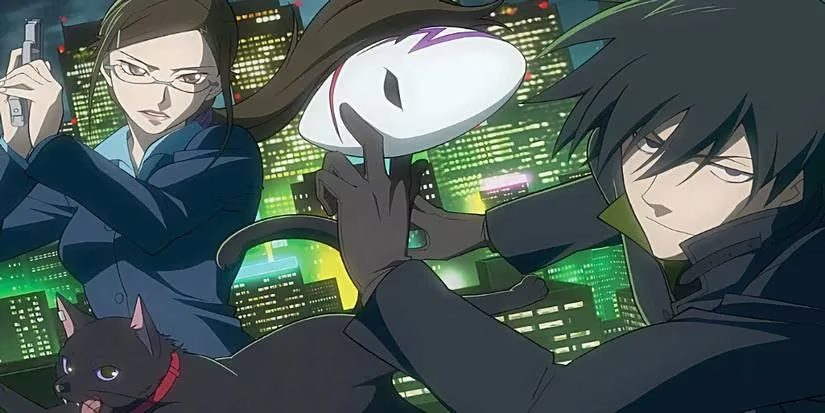
Darker Than Black takes place in a world altered by two anomalies, Heaven's Gate and Hell's Gate. These gates produce Contractors, individuals with supernatural abilities who lack ordinary human emotions. The story follows Hei, a powerful Contractor working for a syndicate while disguised as a Chinese student. Episodic missions sit alongside a larger plot about the gates, the purpose of Contractors, and Hei's personal quest. The series makes emotion the price of power, and that bargain gives every action a bitter aftertaste.
3. Akira
Akira is a groundbreaking cyberpunk film set in dystopian Neo-Tokyo in 2019, a city rebuilt after a mysterious explosion. The story centers on two friends, Tetsuo and Kaneda. After a motorcycle accident, Tetsuo develops psychic abilities and becomes the target of a government project. Kaneda dives into the city's underbelly to save him. Against a backdrop of corruption, alienation, and rampant technology, Akira explores the misuse of power and the cost of social decay. Its animation and storytelling still hit like a shockwave.
2. Bungō Stray Dogs
Bungō Stray Dogs is a supernatural action series set in a world where literary figures possess supernatural abilities. The story follows the Armed Detective Agency, a group of gifted individuals who solve mysteries the police cannot handle. Atsushi Nakajima, an orphan who can transform into a tiger, becomes entangled with the agency after meeting Detective Osamu Dazai. Together they face threats, especially from the Port Mafia, a criminal organization with gifted members. The series combines action, comedy, and mystery with references to literature and authors, and it knows how to keep a case moving.
1. Cyberpunk: Edgerunners
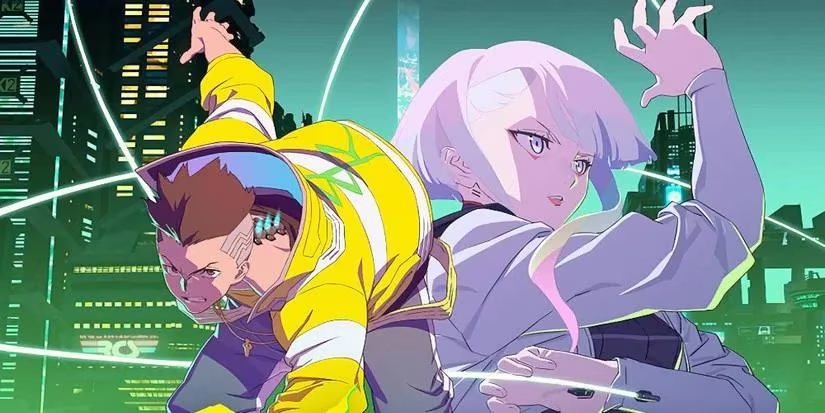
Cyberpunk: Edgerunners is an anime spin-off of Cyberpunk 2077. It follows David Martinez, a street-smart youth in Night City, a megacity consumed by technology and body modification. Facing the possibility of losing everything, he chooses the life of an edgerunner, a mercenary outlaw also known as a cyberpunk. Across 10 episodes, the series tracks his struggle through a grim landscape of existential despair, survival, and human resilience. Night City chews up dreamers and spits out legends, and the show captures that brutal bargain with style and sorrow.
Taken together, these titles show why Psycho-Pass remains a gateway rather than a destination. They do not offer easy answers about crime, technology, or free will. Instead, they let the questions linger, and in 2026 that is exactly what thoughtful anime fans are still looking for.