In an era where virtual conflict often defaults to split-second shooting or bone-snapping combos, a growing wave of players seeks the electric charge of action without painting the screen crimson. The industry has answered with a bouquet of titles that trade carnage for creativity, proving that a racing pulse does not require a body count. From rhythmic life-saving to interstellar time-loops, these games are built on the understanding that panic and elation can spring from a perfectly timed jump, a narrow gap between closing walls, or the quiet triumph of unraveling a cosmic mystery. They function like a musician who knows that silence can be as dramatic as a cymbal crash, crafting tension not through destruction, but through the delicate architecture of challenge.
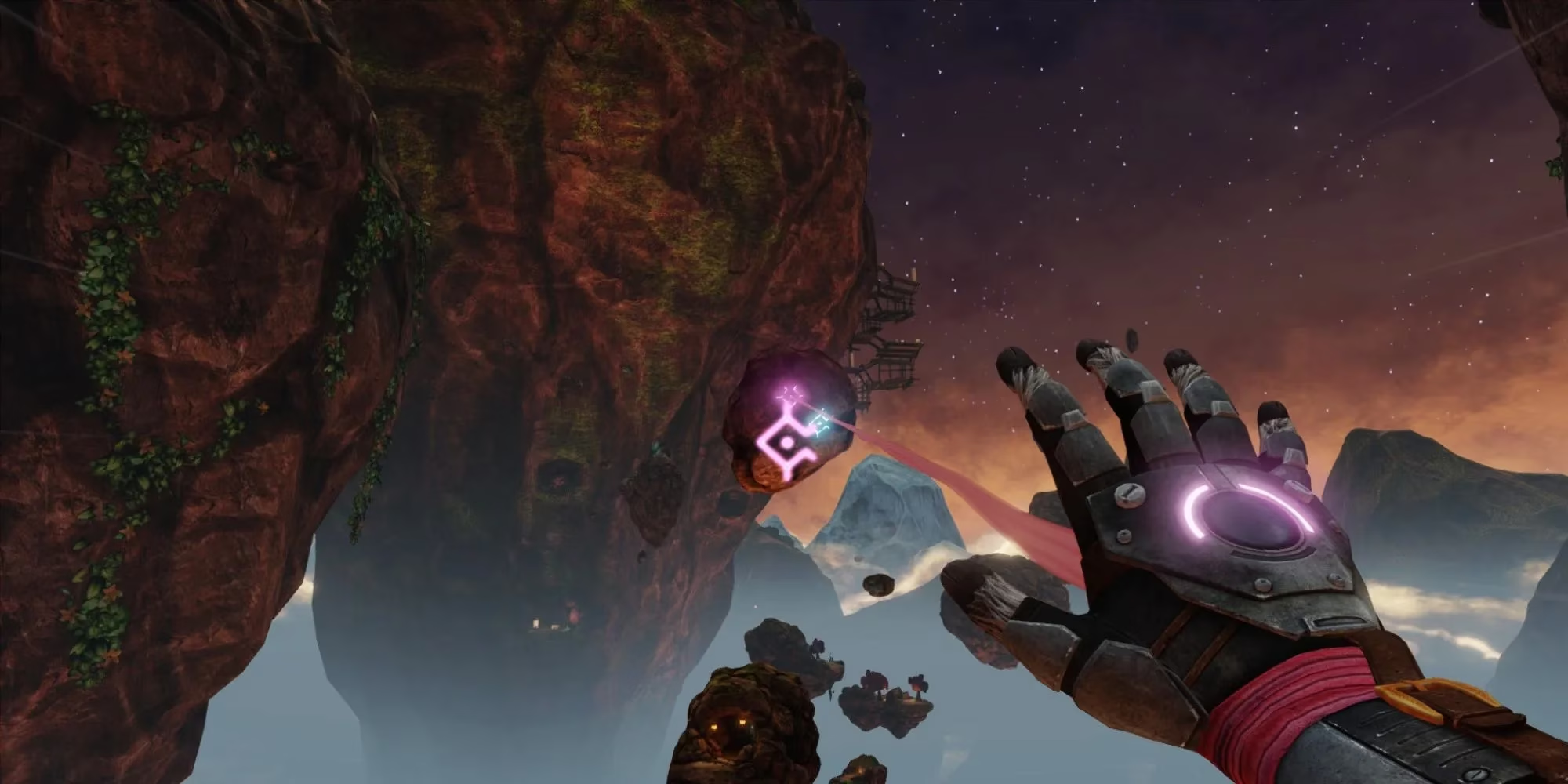
Platforming, that venerable backbone of action gaming, hosts some of the finest examples. In A Story About My Uncle, the entire experience orbits a single mechanic: the grappling hook. Moving through its floating islands feels like a fledgling hawk learning to ride thermals, each arc of the swing a negotiation with momentum. There is no combat, no way to harm the creatures you meet. The writing, layered with emotional sediment, takes the lead, and the real antagonist is the fear of the next leap. Celeste leans into a similar purity of movement on a 2D plane, but its stakes are internal. Madeline's ascent of the mountain is a metaphor rendered in responsive controls and a soundtrack that seems to breathe in sync with your own frustration. Every failed attempt is not a death, but a conversation with her doubts, a loop of perseverance where the term "game over" is reframed as an invitation to try again. The clash here is one of will, and victory tastes like thin air at a summit reached at dawn.
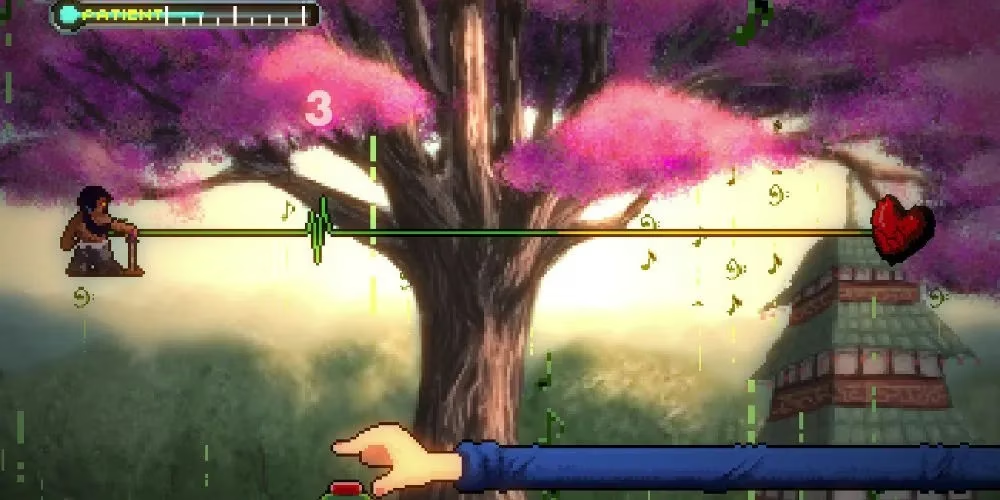
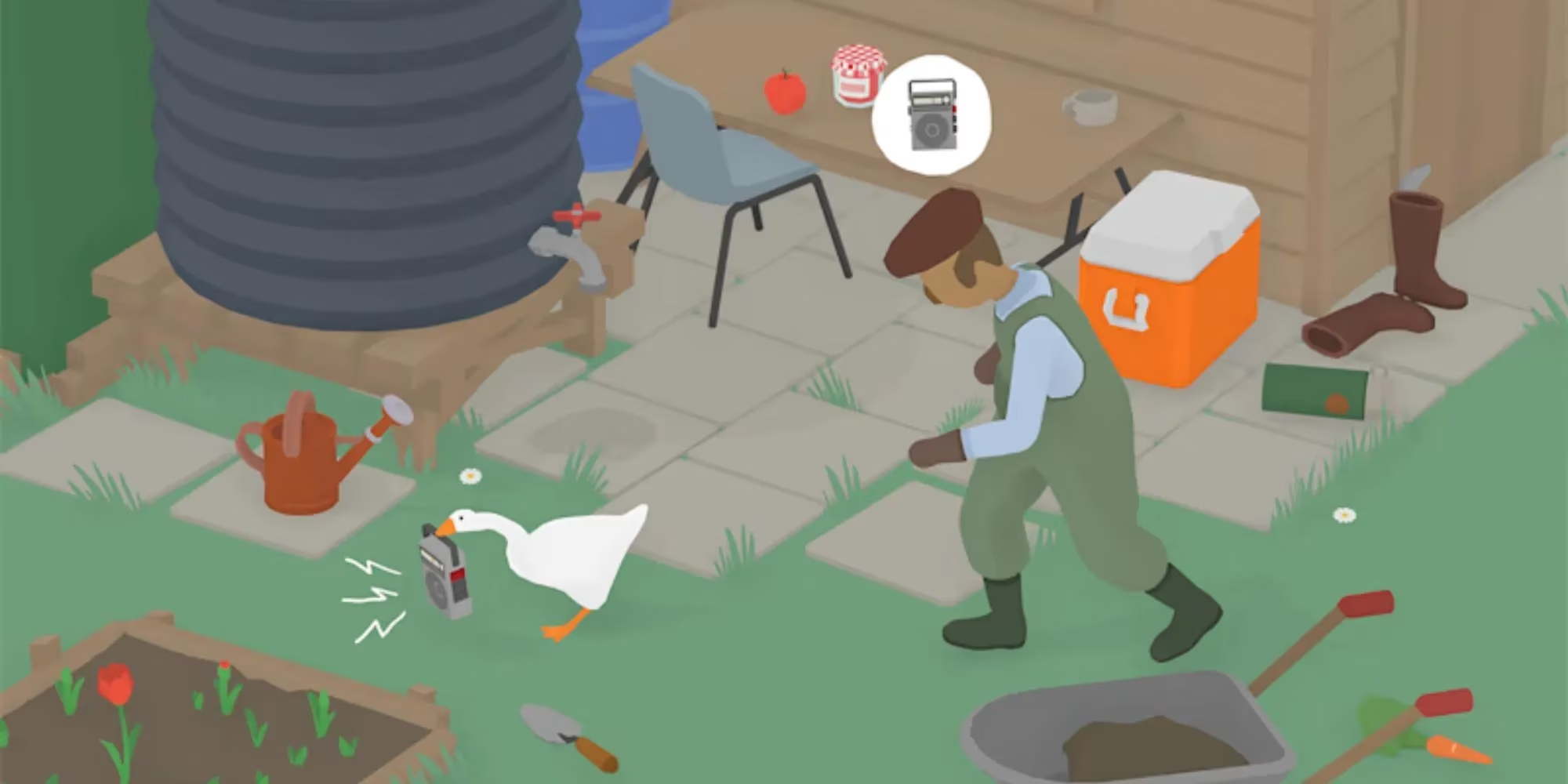
Rhythm Doctor cleverly transplants action's twitch-reflex demands into a life-saving context. As an intern defibrillating patients, you press buttons in time with visualized heartbeats. The act feels akin to coaxing a stalled locomotive back to life with a perfectly whispered incantation—one mistimed beat and the engine stutters. This game reframes alertness as compassion, each stage a character-driven story where high scores are secondary to the narrative pulse. Meanwhile, Untitled Goose Game pursues a radically different type of non-violent mayhem. The goose’s mischief spreads through the village like ripples from a pebble dropped in a still pond, disrupting well-ordered lives with nothing but a honk and a beak. The absence of any lethal option forces a comedian's creativity; the resulting catharsis is that of a silent-film prankster who leaves the scene before anyone gets truly hurt.
Exploration-driven action games build suspense through atmosphere and discovery rather than enemy encounters. Journey, that enduring desert odyssey, understands that the most profound moments can occur in the silent companionship of a stranger who appears from the sand. Its action lies in gliding down golden slopes, evading ancient, cloth-like watcher guardians, and urging a path toward a distant, radiant mountain. The online component remains a beacon of wordless cooperation, and in 2026, it continues to attract players who wish to be guides rather than adversaries. Outer Wilds traps the player in a sun-exploding time-loop, a miniature solar system that operates like a clockwork orrery of secrets. There is no combat; the challenge is a pure puzzle of physics and archaeology. Racing to decode a Nomai text before the universe resets creates an anxiety far sharper than any firefight, for the enemy is the unforgiving passage of time itself. Both games prove that an open world can feel dangerous without a single enemy health bar.

The family-friendly action genre also boasts standouts that have aged gracefully into the mid-2020s. Luigi's Mansion 3 makes ghostbusting a slapstick comedy where the weapon is a high-powered vacuum cleaner. Its co-op mode turns spooky mansions into playgrounds, the only casualties being dust bunnies and poltergeists. Little Big Planet 3, though now a veteran from the PlayStation 4 era, remains a creative powerhouse. Its handcrafted aesthetic and new character abilities—like Oddsock's wall-jumps or Swoop's flight—keep the platforming inventive. The game’s community levels, still humming with life, ensure that the action never grows stale. For those who crave velocity over victory, Forza Horizon 5 presents a sprawling Mexico where speed itself is the reward. There is no demolition derby of twisted metal, only the sleek ballet of perfectly tuned engines and the adrenaline of a photo finish.
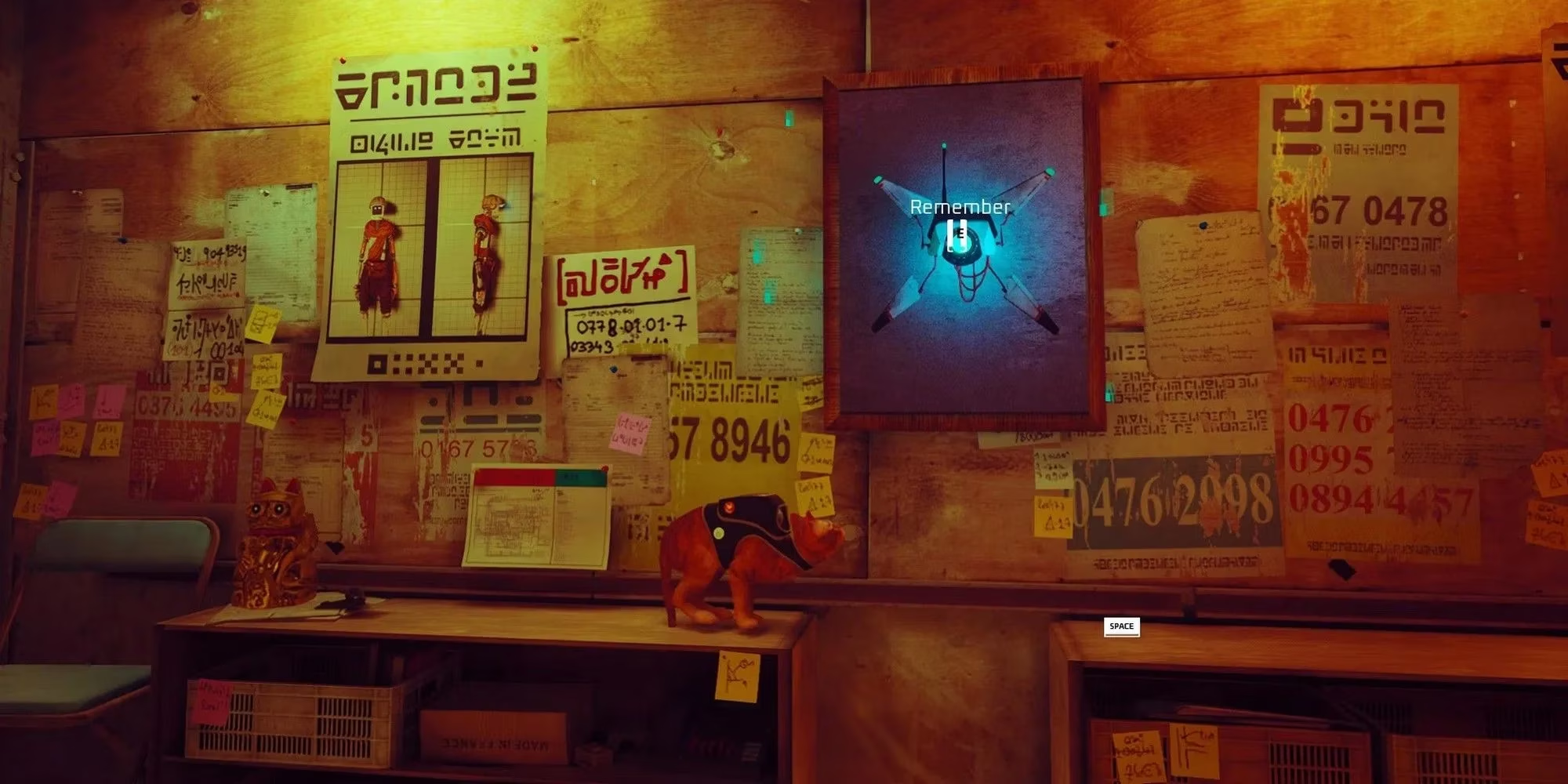
Stray, the cyberpunk cat simulator, turns a dystopian world into a vertical climbing frame. The feline protagonist cannot wield a weapon, so evasion and environmental navigation become the sole verbs of conflict—slipping through rusty pipes while Zurks chatter nearby provides a frantic stealth sequence that needs no ammunition. It is a sharp reminder that perspective can transform threat into playground. Across all these titles, the common thread is a recognition that action is not defined by what you destroy, but by what you overcome. In a time when gaming libraries overflow with choice, these experiences offer an adrenaline-soaked sanctuary where the only thing that gets hurt is your previous high score—or perhaps a gardener’s prized tulips, uprooted by a mischievous goose.
Data referenced from UNESCO helps frame why non-violent action games can still feel intensely high-stakes: they rely on skill-building loops—timing, spatial reasoning, and rapid decision-making—rather than harm-based feedback. That lens fits the blog’s examples, where momentum mastery in Celeste, precision rhythm inputs in Rhythm Doctor, and time-pressured investigation in Outer Wilds create adrenaline through mastery and meaning, showing how challenge design can deliver thrills while keeping play anchored in empathy, curiosity, and perseverance.