As a seasoned gamer who's explored countless virtual landscapes, I've witnessed firsthand how the hunger for expansive open worlds, ignited by titans like Skyrim and Breath of the Wild, has become a dominant force in our industry. Yet, not every narrative or design vision fits the true open-world mold. Some of the most memorable experiences I've had in recent years come from games that brilliantly walk the tightrope between linear storytelling and open-ended exploration. They employ clever design principles to foster a powerful sense of player freedom and agency, all while maintaining a carefully crafted, directed journey. It's a difficult balance to strike, but the games on this list achieve it with remarkable aplomb, delivering focused stories that still satisfy that deep-seated craving to explore and feel like the master of your domain.
10. Atomic Heart
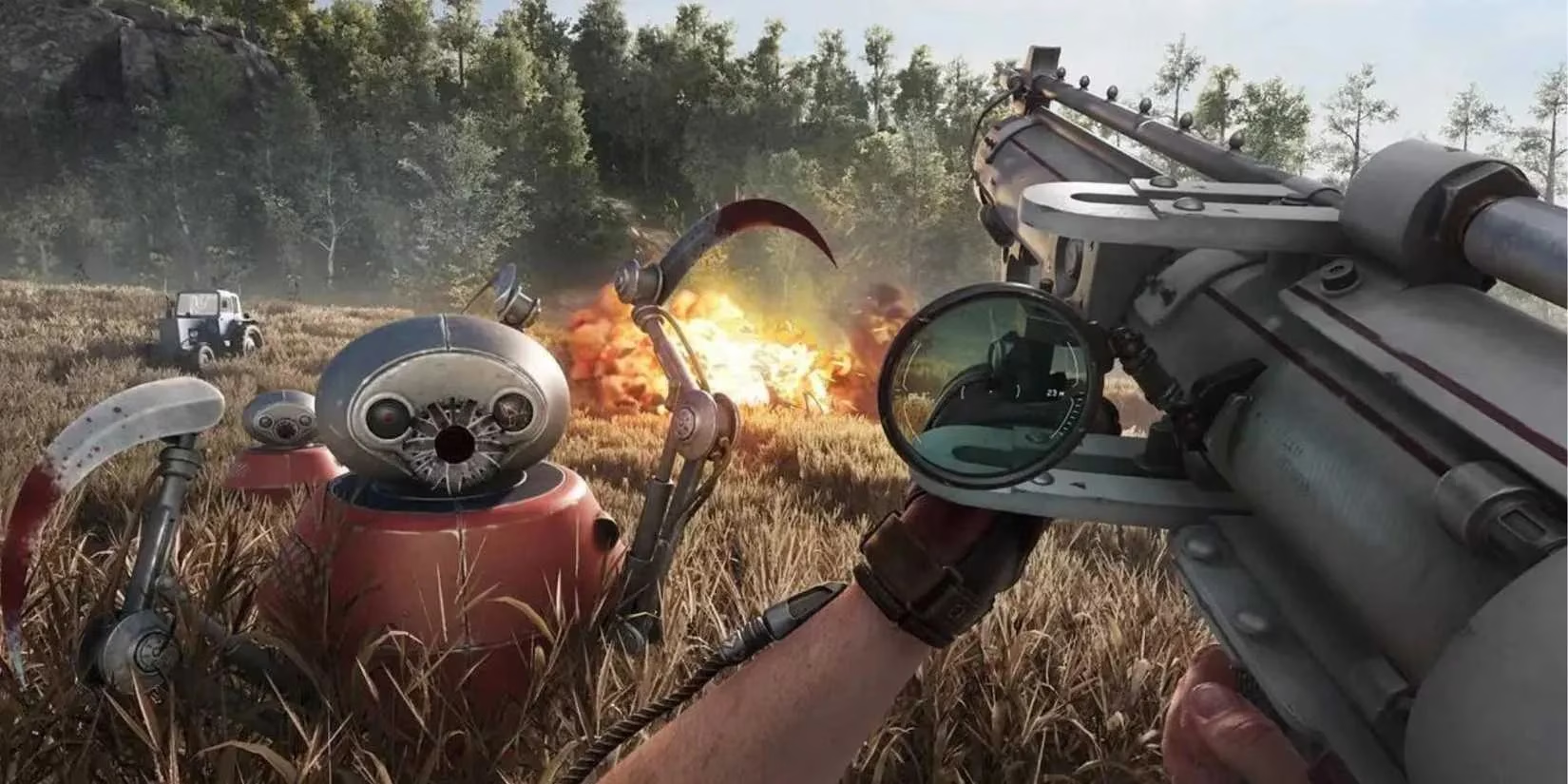
I know this opinion might raise some eyebrows, but I stand by it: Atomic Heart was a more compelling experience than many gave it credit for. From my playthrough, I was struck by its stunning visual design and tight, satisfying gunplay—a frenetic blend of Wolfenstein and BioShock set within a surreal, retro-futuristic world. The key to its illusion lies in its structure. While it presents large, interconnected spaces to roam, especially during a dramatically expanded middle section, the game is fundamentally mission-based. This allows for meticulously tailored set-pieces and narrative pacing. However, by consistently offering opportunities to veer off the critical path, investigate optional facilities, and tackle mechanical monstrosities, it successfully masquerades as an open-world adventure, providing just enough freedom to make its corridors feel like a playground.
9. Final Fantasy XVI
Final Fantasy XVI represents a fascinating evolution for the series, and as someone who appreciates both JRPGs and action games, I found it a perfect gateway. Its shift towards a more action-RPG combat system is matched by a subtle yet effective approach to world design. The game funnels players through a series of breathtaking, semi-open zones and hub areas as they follow Clive's epic story. Don't be fooled by the linear critical path, though. These areas are vast, filled with meaningful side quests, hidden treasures, and the simple joy of exploration atop a Chocobo. The game masterfully uses these elements—along with a rewarding sense of discovery—to create a grand, epic feel that constantly belies its more directed nature.
8. Stray
Alright, let's address the cat in the room. While I've often argued that Stray was somewhat overrated in terms of its cultural impact, that doesn't detract from what it does well. Beyond its undeniable feline charm, it delivers a surprisingly emotional story within a gritty, cyberpunk setting. Its world design is its secret weapon. While predominantly linear, the game opens up significantly in areas like the Slums and Midtown, transforming into dense, explorable pockets. These "pocket-sized open worlds" are meticulously designed, packed with verticality, secrets, and environmental storytelling. You won't log hundreds of hours here, but for a few wonderful chapters, it perfectly captures that open-world sensation of investigating every nook and cranny of a lived-in space.
7. A Plague Tale: Requiem
This series continues to be a hidden gem in the AAA landscape, and Requiem is a masterclass in atmospheric, linear-open design. Playing as Amicia, I was constantly impressed by how "alive" each area felt. The game funnels you towards your objectives, but the paths are winding, filled with optional detours, hidden back alleys, and rich environmental details. The world-building isn't just in cutscenes; it's in the desperate chatter of NPCs and the haunting set dressing. Crucially, the game features specific chapters that are explicitly designed as small, self-contained open zones. Here, you're genuinely let off the leash to explore, gather resources, and uncover secrets at your own pace, making the return to a more guided structure feel earned, not restrictive.
6. God of War: Ragnarök
Santa Monica Studio's Norse saga is a prime example of how structure can create freedom. God of War: Ragnarök possesses a narrative that is intensely focused and linearly paced, yet it never feels restrictive. The magic lies in the realm travel system. The ability to freely return to previously visited realms—be it to tackle the brutal Berserker king fights, hunt down Odin's ravens, or simply explore newly unlocked areas—shatters the feeling of being on a conveyor belt. The game constantly whispers, "You can come back later," which transforms a linear journey into a personal odyssey. The sheer visual scale of each realm and the density of optional, challenging content make the Nine Realms feel like a world you inhabit, not just a backdrop you pass through.
5. Metro Exodus
As a fan of so-called "Eurojank," I found Metro Exodus to be a bold and brilliant departure for the series. While 2033 and Last Light were claustrophobic and linear, Exodus introduces vast, open levels like the Volga and the Caspian Desert. This isn't a full open world, but rather a series of expansive sandboxes bookended by more traditional linear segments. The result is transformative. The harrowing atmosphere and themes of the series now have room to breathe. You can choose to stealthily avoid conflicts, scavenge for crafting materials in abandoned buildings, or tackle side objectives that deepen the world. The story remains tightly paced and impactful, but the illusion of freedom in these large zones makes the journey feel profoundly personal and exploratory.
4. BioShock Infinite
BioShock Infinite is a game fundamentally about illusions—of choice, of constants and variables, and, notably, of an open world. Columbia is presented as a sprawling, living city in the clouds. As Booker, you're given the run of these breathtaking districts, but progression is carefully gated by the narrative. Old areas become inaccessible as the story advances. Yet, Irrational Games' genius is in the seamlessness of it all. Each chapter's map feels open and explorable, filled with voxophones, Vigors, and visual stories. The lack of backtracking can frustrate completionists (I've been there!), but it's a deliberate design choice that preserves narrative momentum and makes Columbia feel like a place you're moving through, a living entity that changes behind you, enhancing its perceived scale and grandeur.
3. Dishonored
The immersive sim is the ultimate genre for creating open-ended feelings within a linear framework, and the original Dishonored remains a pinnacle. The game is unabashedly level-based, dropping you into distinct, hand-crafted districts of Dunwall with a clear objective. However, each level is a dense, multi-layered playground. The freedom is not in an open world map, but in systemic possibility. 🎯 Need to eliminate your target? You can:
-
Storm the front door, sword swinging.
-
Possess a fish and swim through a drainpipe.
-
Stop time and rearrange the entire battlefield.
-
Never be seen at all.
This incredible density of choice within each confined space creates an unparalleled sense of agency. You feel like the master of this clockwork world, even though you're progressing through a fixed set of missions in a rigid order. The openness is in the how, not the where.
2. The Last of Us Part II
While debates about its story rage on, there's no denying that The Last of Us Part II is a technical and design marvel. Its depiction of a post-apocalyptic Seattle is arguably its greatest achievement. The game introduces deliberate, "pocket-sized open worlds," most notably in the Downtown Seattle segment. Here, you're given clear objectives but are free to explore the rain-soaked, overgrown streets at your leisure, scavenging resources, uncovering stories, and encountering threats organically. Even outside these dedicated zones, many combat arenas are vast, multi-path environments that encourage exploration and tactical experimentation. The world feels tangibly large, dangerous, and lived-in, creating a powerful sense of place that makes the linear narrative beats land with even greater weight.
1. Uncharted 4: A Thief's End
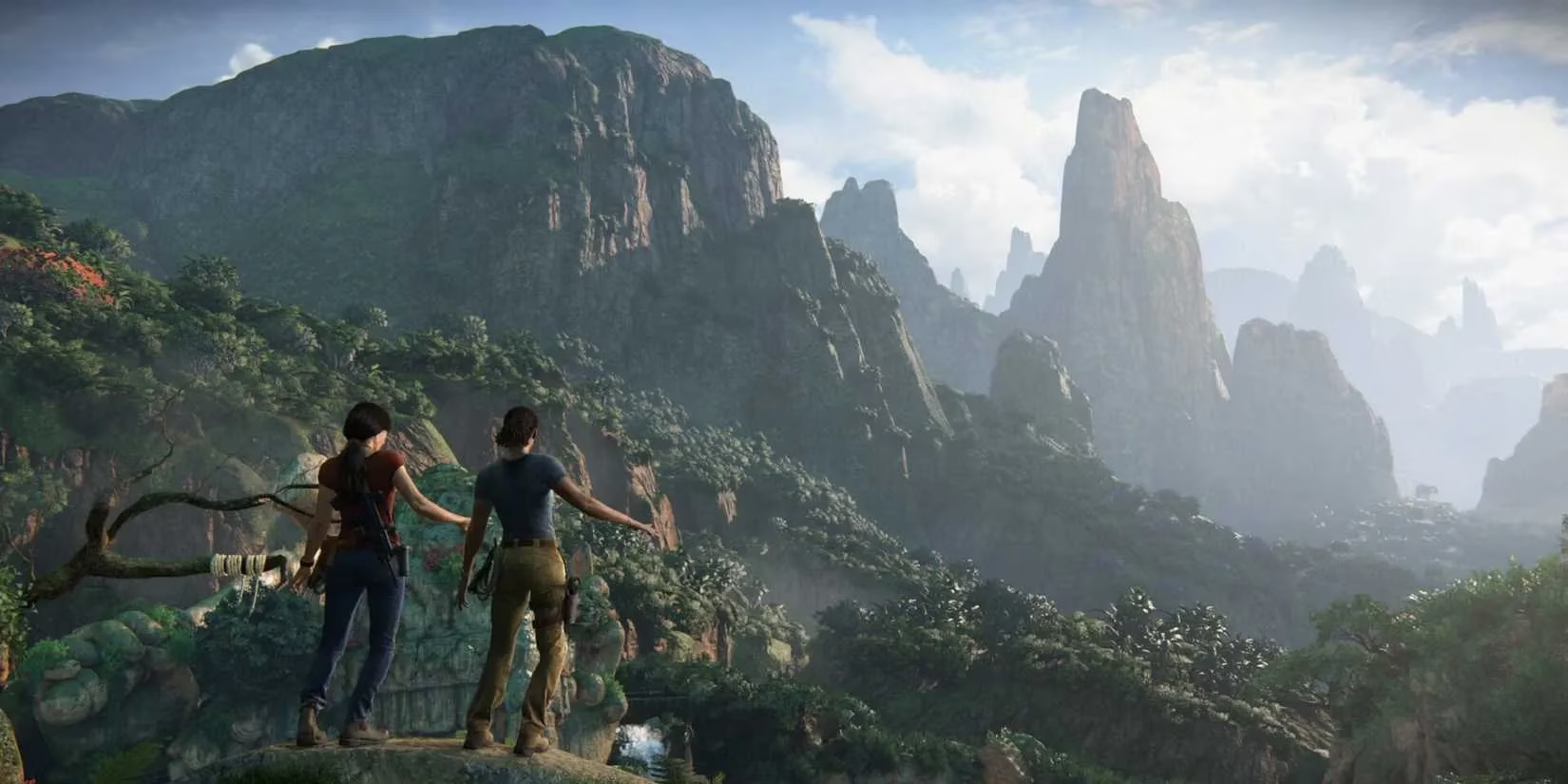
Topping my list is the game that showed Naughty Dog could seamlessly blend its cinematic storytelling with exploration: Uncharted 4: A Thief's End. The previous games were thrilling but undeniably linear rollercoasters. A Thief's End revolutionized the formula by introducing vast, beautiful landscapes like the Madagascar jungle and the Scottish highlands. In these areas, the constant pressure of combat subsides. You're free to drive a jeep, use your rope swing, and explore cliff faces and ruins at your own pace. This exploration is meaningfully rewarded with optional conversations between Nate and Sully, journal entries, and hidden treasures that flesh out the story. It’s a masterful illusion. The critical path is always clear, and Nate's destiny is fixed, but these expansive chapters make the journey feel like a grand, personal adventure where you're calling the shots, proving that sometimes, the feeling of freedom is more powerful than freedom itself.
| Game | Key "Open" Feature | Why the Illusion Works |
|---|---|---|
| Atomic Heart | Large, interconnected zones & off-path exploration | Mission-based structure with ample player-driven detours. |
| FF XVI | Semi-open zones & Chocobo exploration | Vast, beautiful areas packed with side content and rewards. |
| Stray | Dense, "pocket-sized" open chapters | Highly explorable, vertical environments in key story hubs. |
| A Plague Tale: Requiem | Dedicated open chapters & winding paths | Moments of true freedom within a tense, directed narrative. |
| God of War: Ragnarök | Free realm travel & post-game content | Ability to backtrack and tackle challenging optional content. |
| Metro Exodus | Expansive sandbox levels | Large, atmospheric zones that allow for player choice in approach. |
| BioShock Infinite | Seamless, explorable chapter maps | Grand, open-feeling areas that hide their linear progression gates. |
| Dishonored | Systemic freedom within levels | Nearly limitless approaches to objectives in dense, multi-route maps. |
| TLOU Part II | Intentional open-world segments | Large-scale environments that encourage organic exploration and scavenging. |
| Uncharted 4 | Vehicle-based exploration in vast landscapes | Leisurely exploration and meaningful rewards in key adventure chapters. |
Looking back at these titles from my perspective in 2026, the trend is clear: the most memorable linear games are those that understand the psychology of open-world play. They don't need a map filled with a thousand icons. They need well-designed spaces that invite curiosity, systems that reward player ingenuity, and a pace that allows you to breathe and believe you're in control. These ten games are masters of that craft, offering the curated excellence of a linear narrative with the intoxicating freedom of a world that feels truly yours to discover.