As a hardcore gamer, I've lost count of how many times I've nodded along in conversations about legendary titles... only to realize I was just parroting second-hand opinions I'd absorbed from forums, reviews, and video essays. In 2026, the digital ecosystem has become a sprawling, intricate web where you can become an 'expert' on a game without ever booting it up. Certain titles, whether due to their mythical status, niche appeal, or sheer inaccessibility, have cultivated fanbases where vocal admiration often masks a startling lack of firsthand experience. Let's pull back the curtain on ten iconic games that everyone pretends to love—but secretly, maybe, didn't actually play.
10. Uncharted 2: Among Thieves
The Cinematic Mirage
For the longest time, I avoided the Uncharted series. Yet, the chorus was deafening: Uncharted 2: Among Thieves was the undisputed peak. The praise always orbited the same sun—its 'cinematic' spectacle. 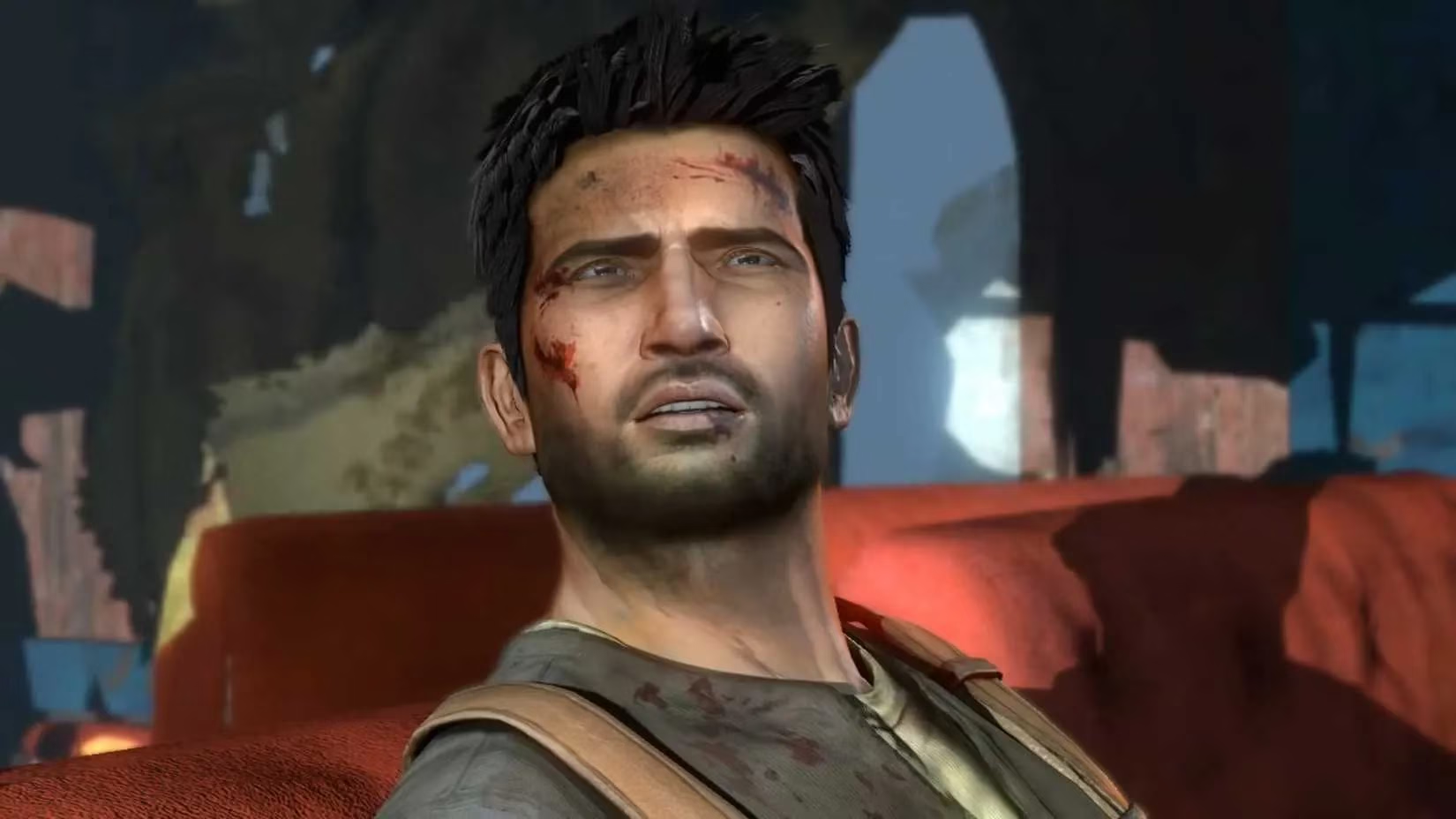
Finally playing it was like discovering the grand cathedral everyone worships is, in fact, a beautifully painted facade with a fairly simple hall inside. It's a solid, fun adventure, but the deep dives into its plot, gameplay nuance, or atmospheric tension? Those conversations are as rare as a sensible decision from Nathan Drake. The relentless focus on its movie-like qualities feels like a tell—either the game doesn't offer much else to dissect, or people are discussing the only aspect you can glean from a trailer. Its reputation is a polished trophy on a shelf everyone admires but few have held.
9. Stray
The Feline Phenomenon
Oh, Stray. I genuinely believe this game will be remembered fondly, but not for the reasons most people cite today. Its launch was an episode of mass hysteria. 
I seldom hear about its haunting, post-humanist cityscapes or its subtle environmental storytelling. The discourse begins and ends with: "You play as a cat! 🐈" And yes, that's a fantastic hook! But reducing it to that feels like praising a gourmet meal solely for the fancy plate it's served on. The game itself is a competent, atmospheric walking simulator with some light puzzles. Yet, the internet collectively put on cat-ear headphones and purred in unison, often overlooking the need to actually engage with the experience beneath the adorable exterior. It became a cultural token, a shared reference point that required no controller input.
8. Half-Life
The Museum Artifact
To call Half-Life anything less than a landmark would be heresy. It reshaped the FPS genre. But in 2026, its significance often feels archaeological. 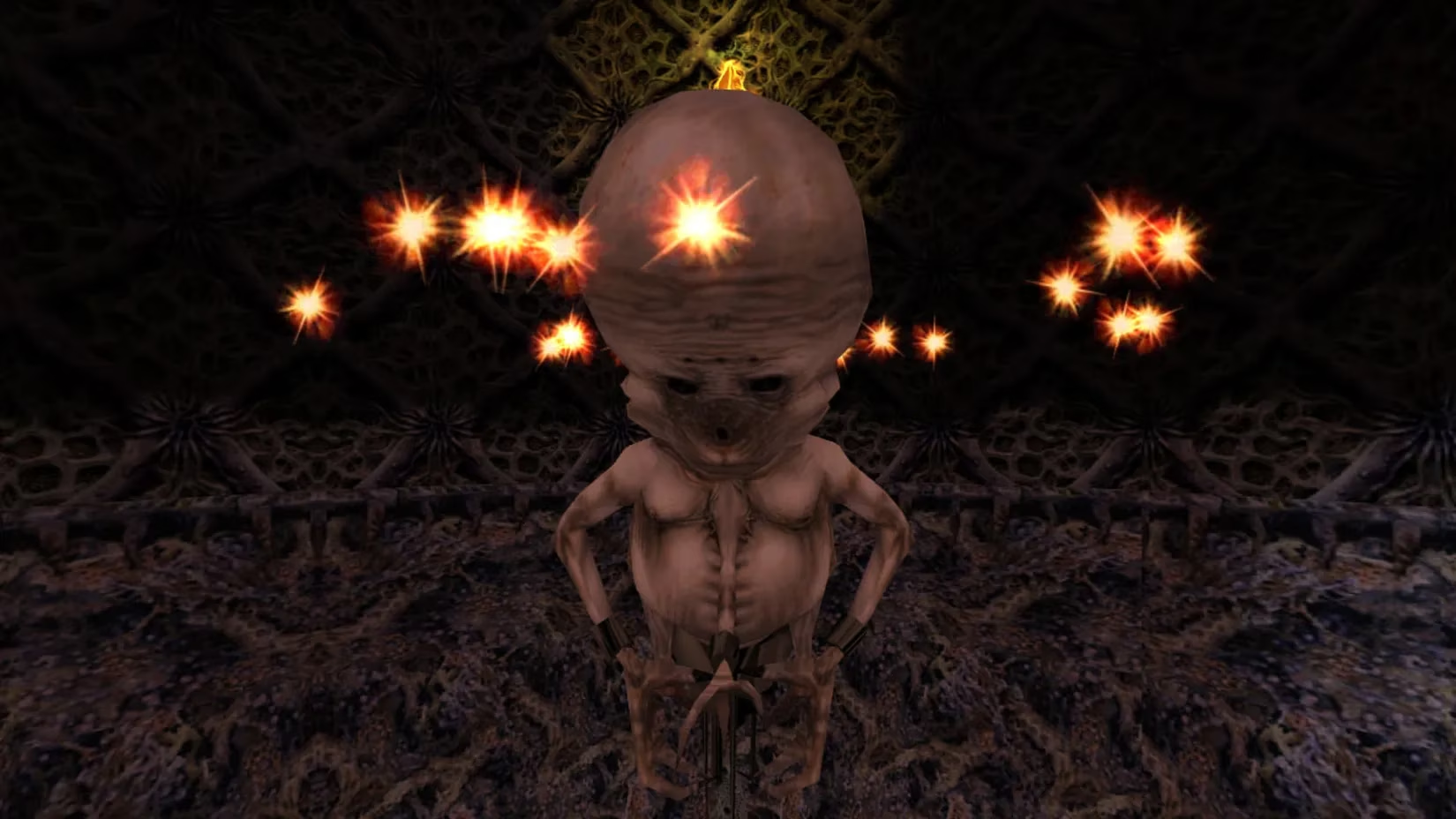
Many know its legacy—the narrative immersion, the silent protagonist Gordon Freeman—but how many have recently navigated the Black Mesa Research Facility without the crutch of nostalgia or the enhanced Black Mesa remake? It’s the gaming equivalent of a foundational scientific paper: universally cited, rarely read in its original, cumbersome form. People respect the name, the history, the ripple effect it created. But the original experience itself? It's a revered fossil, more studied about than actually interacted with. Recommending Black Mesa over the original isn't just a graphical preference; it's an admission that the source material has become a historical document, best appreciated through a modern lens.
7. Journey
The Echo Chamber of Awe
Journey is a transcendent piece of art. That's not up for debate. Its inclusion here is a plea, not a critique. 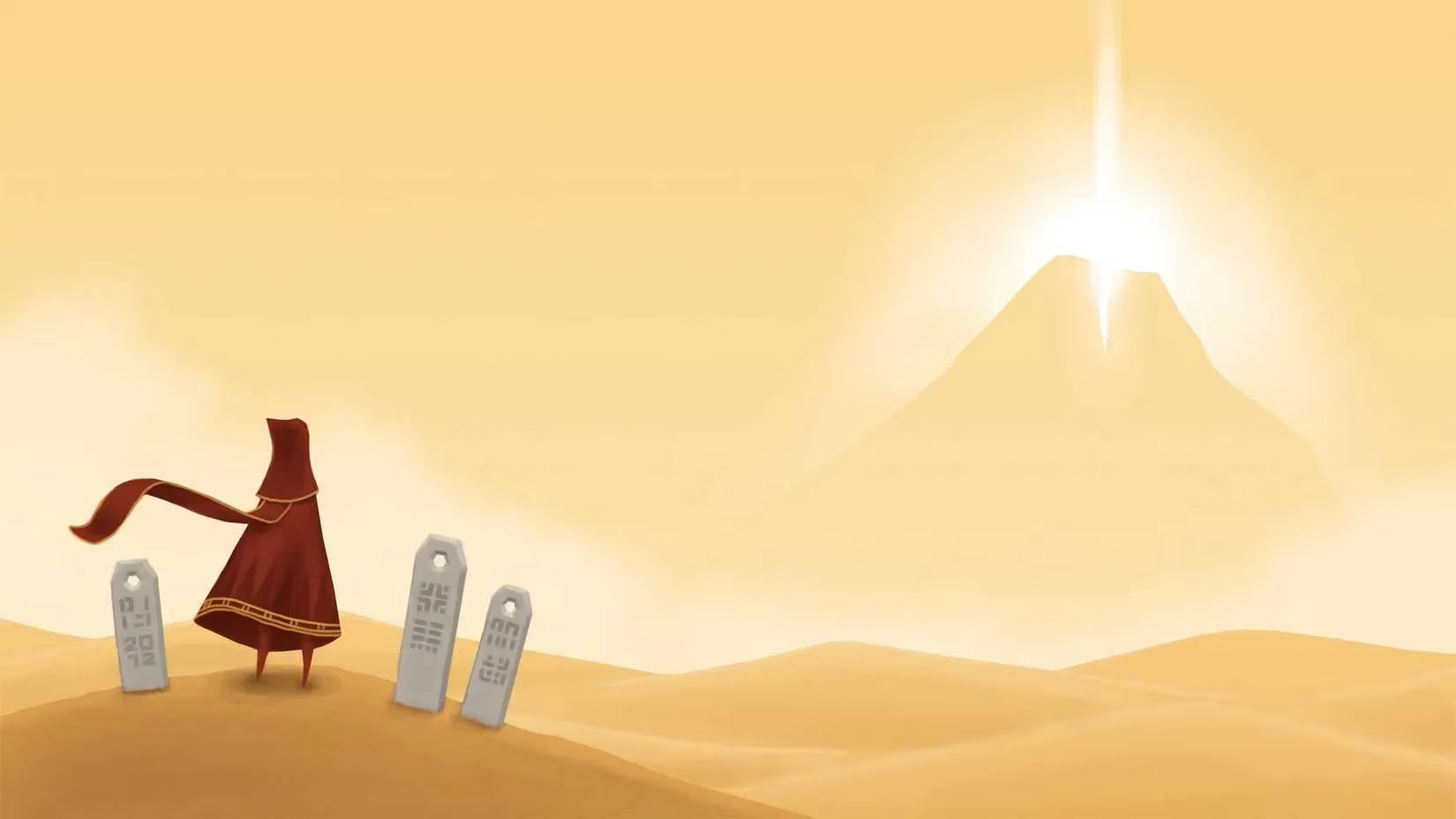
Its status is so monumental that it has generated a powerful consensus. You can feel its emotional weight through video essays, listen to its breathtaking score, and absorb the universal praise. Consequently, many adopt the prevailing opinion—"It's a moving masterpiece"—as their own, without the personal pilgrimage across the dunes. Its reputation has become a self-sustaining aurora, beautiful to observe from afar but requiring a personal journey to truly feel its warmth. The danger is that the shared cultural understanding of Journey sometimes replaces the need for the intimate, wordless connection it was designed to foster.
6. Cry of Fear
The Meme-Born Mythos
This is where internet cults are born. Cry of Fear didn't conquer the mainstream; it permeated the subconscious of horror forums and YouTube deep dives. 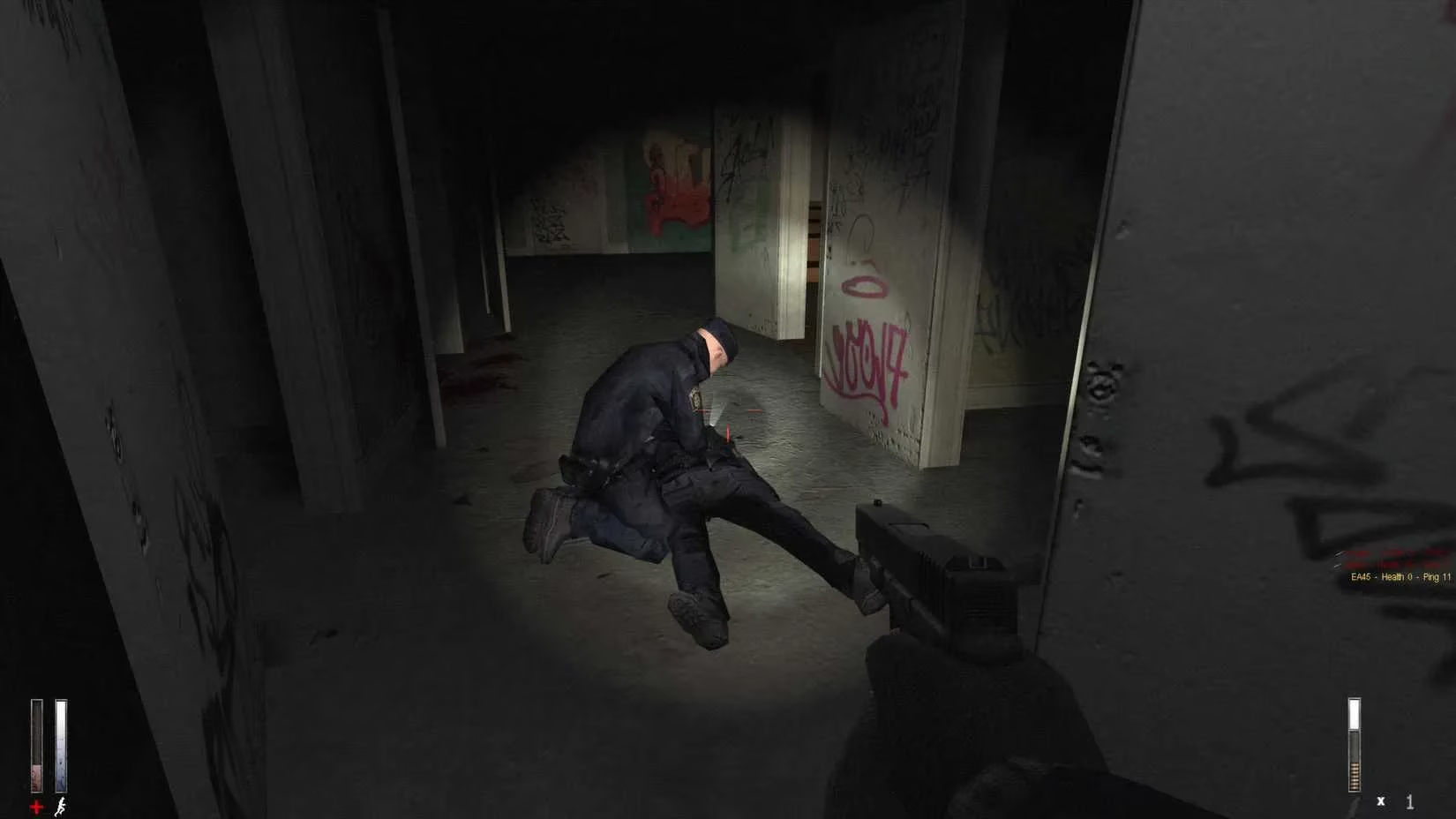
Its praise is built on a potent cocktail of edgy tone, disturbing story beats, and a relentless wave of memes and theories. The idea of Cry of Fear—the grim, Swedish, psychological horror experience—often outweighs the reality of its janky Half-Life mod origins and sometimes-questionable execution. Its fanbase is a cathedral built more on shared lore than on firsthand gameplay. You can know every twist, every monster, every fan theory, and recite its atmospheric dread without ever facing its clunky controls. It’s the ultimate example of a game whose legend is played more in collective discussion than on any individual PC.
5. Ori and the Blind Forest
The Siren's Call of Beauty
Let's be clear: Ori and the Blind Forest is a visual and auditory symphony. Its opening minutes are an emotional masterclass. 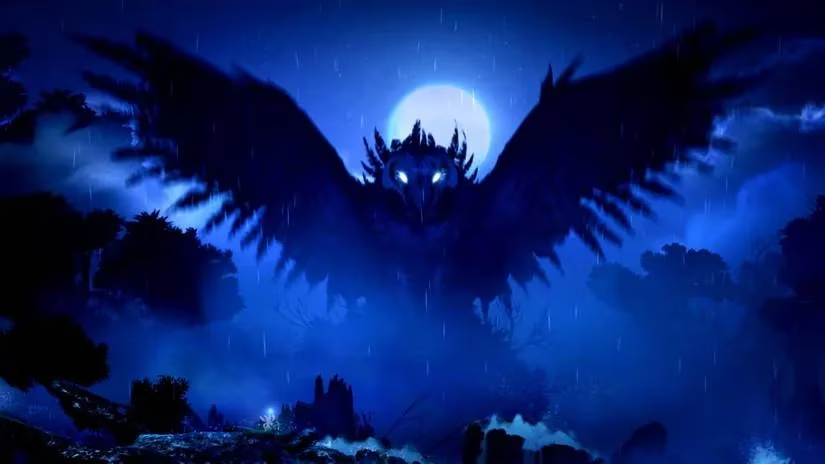
But here's the open secret no one in the fan-art circles wants to admit: the gameplay can feel like trying to perform ballet in slightly-too-tight shoes. Its controls and save system (Spirit Wells) are often clunky compared to the buttery refinement of its sequel, Will of the Wisps. Yet, the discourse is dominated by its gorgeous art and score. Criticizing its mechanical shortcomings feels like criticizing a rainbow. Its breathtaking aesthetics act as a dazzling smokescreen, allowing it to be celebrated widely by an audience that may have watched a "All Cutscenes" video but never grappled with its occasionally frustrating platforming. The sequel fixed nearly everything, but the original's reputation remains largely untarnished by its flaws.
4. Dante’s Inferno
The Cult of the "Underrated"
Dante's Inferno has achieved a fascinating meta-status: it's famously "underrated." So famously, in fact, that its underrated-ness is now overrated. 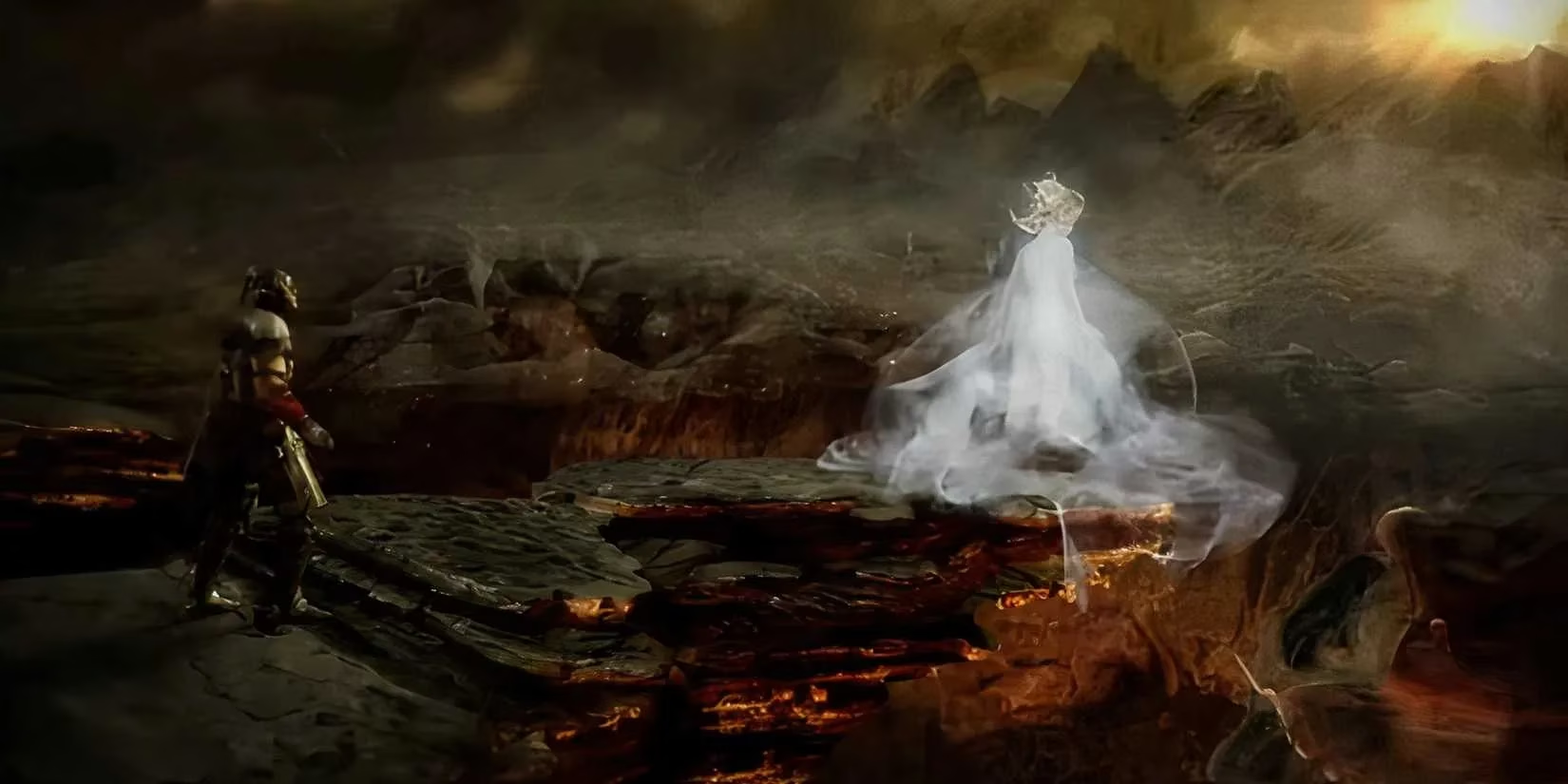
On paper, it's the perfect edgy pitch: a God of War clone set in the Circles of Hell with visceral combat and taboo-busting imagery. The first half delivers on this violent promise spectacularly. But then... it deflates. Repetition sets in, progression stalls, and the creative hellscapes give way to monotony. Yet, the conversation never gets that far. It's always about the shocking opening, the cool scythe, the "they don't make games like this anymore" vibe. It’s the poster child for selective memory, a game whose compelling premise and explosive first impression have granted it a lifetime pass. Discussing it is less about its actual 8-hour journey and more about championing its audacious concept.
3. Demon’s Souls
The Venerated Ancestor
FromSoftware's pantheon is now crowded with gods. But the original Demon's Souls is the stern, archaic patriarch few in the family have actually had a long conversation with. 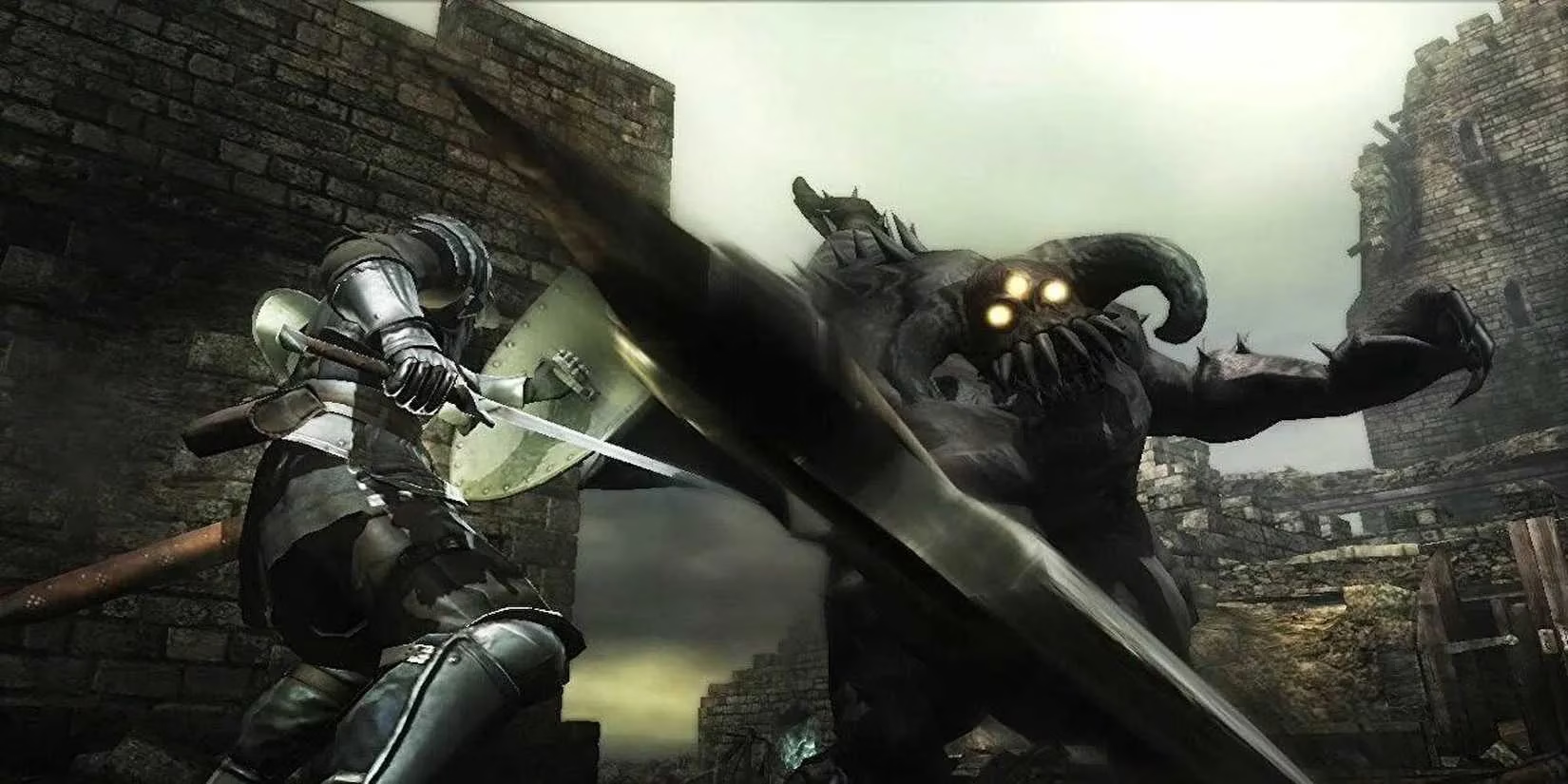
It's clunky, punishing in often-frustrating ways (hello, item burden!), and was trapped on the PS3 for over a decade. The 2026 remake made it beautiful but didn't fully modernize its brutal soul. Everyone in the Soulsborne fandom respects it. They'll cite its world tendency, its pioneering online features. But play it? That's a different story. It's the one game in the series where criticism is treated like blasphemy, yet admission of never playing it is the silent, shared sin. Its legacy is so immense that it's easier to universally praise its foundational role than to confront its raw, unrefined reality.
2. Metal Gear Solid 2: Sons of Liberty
The Prophetic Textbook
In 2026, MGS2 is less of a game and more of an oracle. Its predictions about digital society, information control, and AI are cited in think-pieces more than its gameplay is discussed on forums. 
And there's a reason for that. Actually playing it is a commitment. You're battling early-2000s controls, a deliberately convoluted plot, and the infamous bait-and-switch with Raiden. It's much more comfortable to read about why its themes are genius than to manually crawl through the Big Shell, fumbling with the codec. It has become a cultural reference point, a piece of required reading that most have only skimmed the summary of. Everyone agrees it's a masterpiece—a prescient, complex one—but that agreement often exists at a comfortable distance from the act of playing. It's the gaming equivalent of citing 1984: you know what it represents, even if you haven't turned every page.
1. BioShock Infinite
The Lighthouse of Collective Amnesia
My own journey with BioShock Infinite has been a rollercoaster from awe to sober reassessment. And I know I'm not alone. 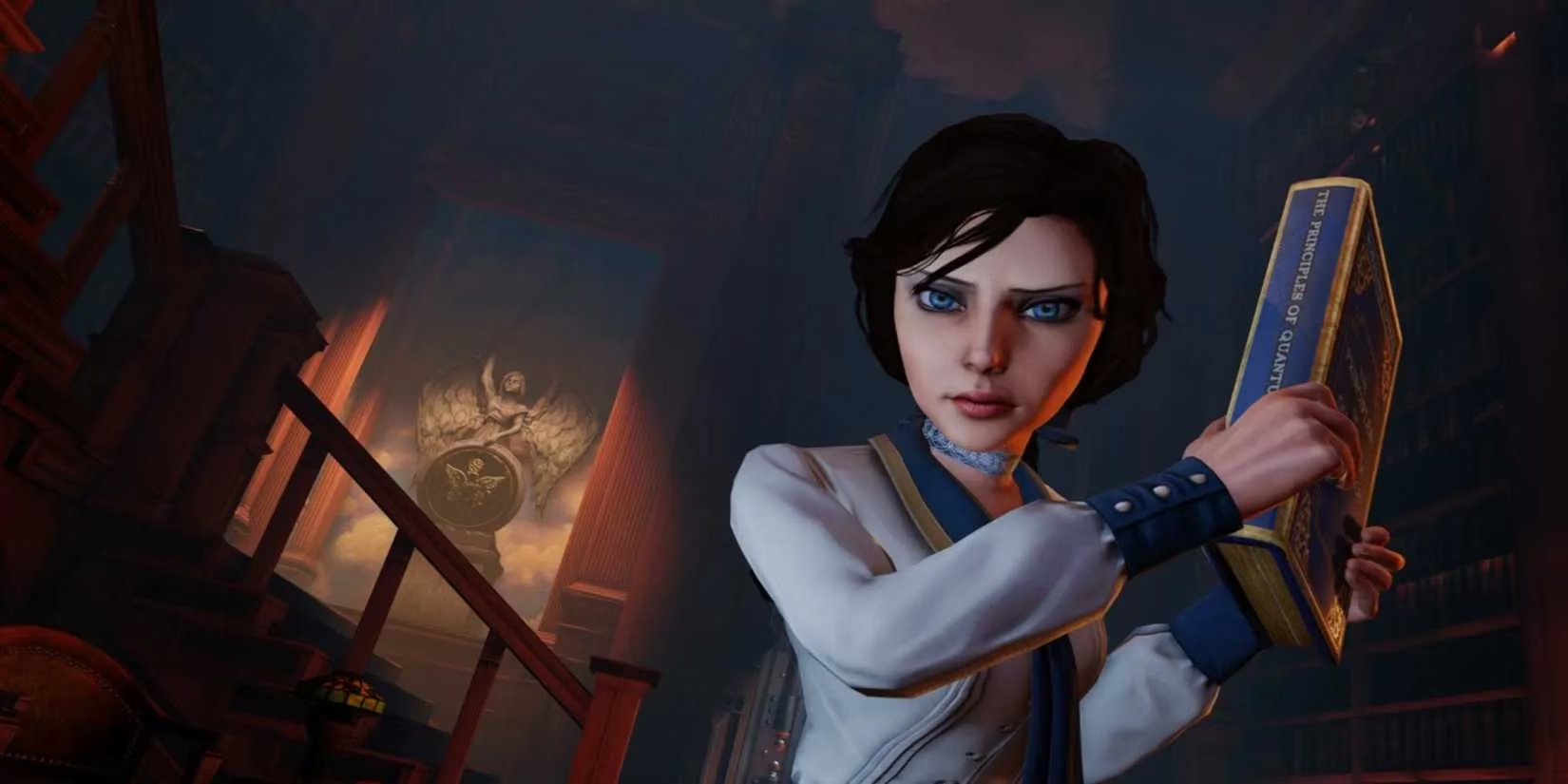
The dominant narrative still hails it as a generational titan. The talking points are always the same: the stunning city of Columbia, the mind-bending ending, Booker and Elizabeth. But what about the other half of the experience? The gunplay that feels like a generic shooter, the undercooked factions like the Vox Populi, the narrative holes you could sail a airship through? These elements are the unwanted furniture in the beautiful house of Columbia, often ignored in discussions. The original BioShock sparks debate—about its philosophies, its flaws, its genius. Infinite often sparks unanimous, surface-level praise. This unanimity feels suspicious, like a consensus formed in the afterglow of its spectacular launch rather than through critical, contemporary replay. Its legacy is protected by a powerful, shared memory that glosses over its rougher edges, making it the ultimate game more often defended than deeply dissected.
So, what's the takeaway? In our hyper-connected age, a game's cultural footprint can far outpace its actual player base. We build shared mythologies around these titles, discussing them as symbols, as landmarks, as talking points. There's nothing inherently wrong with that—it's part of how culture works. But as gamers, we should strive to distinguish between admiring a monument and actually walking its halls. The next time someone rhapsodizes about the 'perfect pacing' of Uncharted 2 or the 'flawless gameplay' of Ori, maybe, just maybe, ask them about a specific moment, a tricky jump, a hidden detail. You might be surprised by what you—and they—discover. 🎮✨